by Daniel Stefanski | Aug 1, 2023 | News
By Daniel Stefanksi |
Reaction was mixed to the news that the Arizona Legislature passed a Prop 400 compromise on Monday, after an agreement was forged with the Governor’s Office.
Republican Senate President Warren Petersen claimed victory after his chamber gave the proposal the green light, calling it “the most conservative transportation plan in our state’s history.” Petersen added, “The guardrails, taxpayer protections and funding allocations in the text of this bill reflect the priorities of voters, to reinvest their tax dollars in the transportation modes they use most.”
Democrat Governor Katie Hobbs was diplomatic in her statement, saying, “Today, bipartisan leaders invested in the future of Arizona families, businesses, and communities. The passage of the Prop 400 ballot measure will secure the economic future of our state and create hundreds of thousands of good-paying jobs for Arizonans. I am glad we were able to put politics aside and do what is right for Arizona.”
Some legislative Democrats took the legislation’s approval to point political fingers at their Republican counterparts. Senate Democratic Leader Mitzi Epstein wrote, “As is customary, Republicans have waited until the very last minute to pass widely popular legislation that invests in the daily lives of Arizonans….Our state should not have had to wait until July 31st to see this measure, which has had legislative support since the start of session, get sent to the ballot. However, with the support of Arizonans cities and towns, I am proud to join my Democratic colleagues in delivering the key votes needed to send the extension of the regional transportation tax back to the voters of Maricopa County.”
Members of the Arizona Freedom Caucus were adamantly opposed to the bill since the weekend, when they appeared to have read a draft of the legislation. After Prop 400 passed, the Freedom Caucus tweeted, “Legislative conservatives near unanimously opposed this horrible bill. Conservative watchdog groups unanimously opposed it. The bill may have been better than the communists at @MAGregion’s horrific plan, but that’s a ludicrously low bar for success. This bill was antithetical to conservatism.”
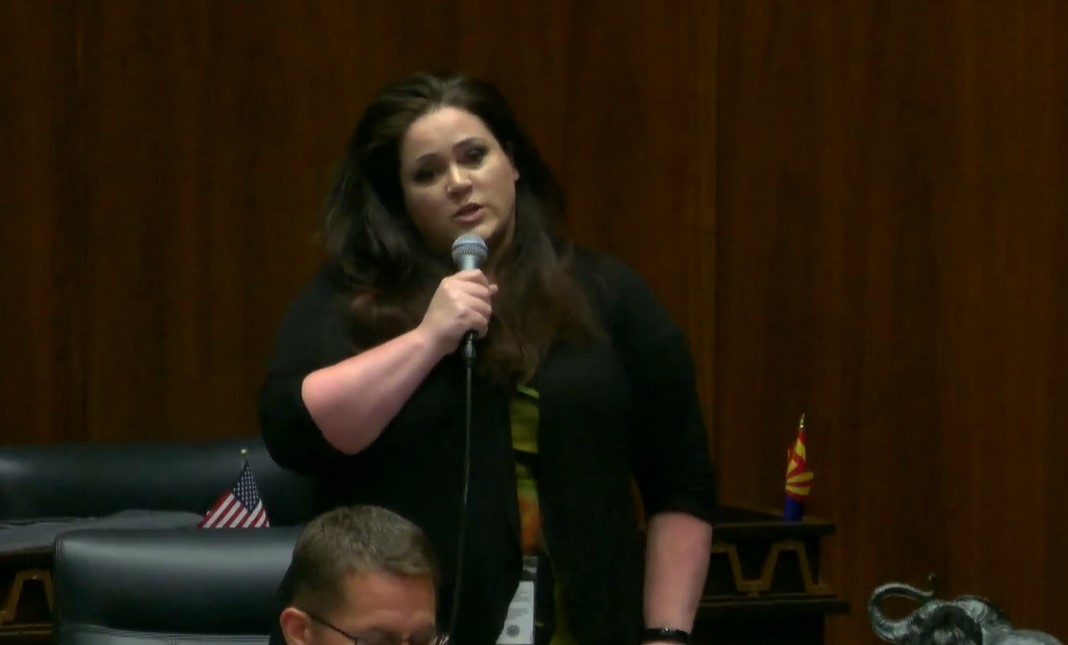
Freshman Republican Representative Austin Smith, who has become one of the leading voices in the Arizona Freedom Caucus this legislative session, was one of the most-outspoken members against the bill since the weekend. He explained his vote on Twitter, posting, “I voted NO on the prop 400 transporation excise tax for Maricopa County. Taxpayer dollars are not ours to dish out haphazardly – especially to the tune of 20 BILLION dollars with potential consequences that ruin valley transportation.”
Some legislative Republicans, including Representative Jacqueline Parker, were already thinking about messaging against the ballot measure in hopes that voters could stop the plan from becoming finalized. Parker tweeted, “Now it’s up to the voters in Maricopa county to read the 47 page bill & see if it’s worth $20 Billion. I recommend looking at provisions on pages: 8, 15, 16, 18, 21, 22, 34, & 35, which absolutely allow plenty of leeway for cities to implement their road diet, & transit expansion.”
The breakthrough on the Prop 400 compromise took place after Governor Hobbs vetoed a Republican proposal in June. At that time, Hobbs stated, “I just vetoed the partisan Prop 400 bill that fails to adequately support Arizona’s economic growth and does nothing to attract new business or create good-paying jobs.”
In May, the governor created unrest over ongoing negotiations, allegedly sending out a tweet that highlighted her fight with Republicans at the Legislature at the same time she was meeting with Senate President Warren Petersen.
Petersen, one of the most conservative members in the state legislature, championed the importance of the bill, asserting that officials had “secured a good, responsible product for the citizens of Arizona to consider in 2024, giving voters the option to enhance critical infrastructure that our entire state relies upon.”
Daniel Stefanski is a reporter for AZ Free News. You can send him news tips using this link.
by Daniel Stefanski | Jul 31, 2023 | Education, News
By Daniel Stefanski |
A coalition of Arizona lawmakers are pushing back against the recent ruling from the U.S. Supreme Court on President Joe Biden’s student debt cancellation efforts.
Earlier in July, a group of Arizona Democrat legislators wrote a letter to President Biden, calling on his administration to “deliver its campaign promise to cancel student debt.”
The legislators, led by Representative Cesar Aguilar, expressed their collective outrage over the Supreme Court opinion in June, which overturned the president’s student debt cancellation plans. They wrote, “While members of the Court’s majority enjoy vacations paid for by billionaires, this ruling shows blatant disregard and disrespect for the 43 million American borrowers being crushed by student debt and desperate for relief.”
In their letter, the lawmakers included information about Arizonans who were in line to benefit from the president’s debt cancellation scheme that was thwarted by the nation’s high court, stating, “Nearly 900,000 Arizonans stood to benefit from your Student Loan Cancelation Plan – 12.4 percent of our state’s population. The average student loan debt in Arizona is $33,396. Your Student Loan Cancellation Plan could cancel $10,000 for those making less than $125,000 and up to $20,000 for those who are Pell Grant Recipients. Arizona has the 15th highest number of borrowers in the country and would have seen a significant financial release and economic impact.”
The Democrats warned of the consequences that could come with the Court’s decision, adding, “Without relief Arizonans will have less money in their pockets to pay for bills, goods and services strained by inflation. Less consumer spending reduces economic growth and moves the American Dream further out of reach for millions. … We urge you to act as swiftly as possible so Arizonans still recovering financially due to the pandemic can get back on their feet.”
On the last day of its recent term, the U.S. Supreme Court released its opinion in Biden v. Nebraska, striking down the president’s student loan cancellation program. Chief Justice John Roberts authored the opinion, and he was joined by Justices Clarence Thomas, Samuel Alito, Neil Gorsuch, Brett Kavanaugh, and Amy Coney Barrett.
The majority opinion stated that “the ‘economic and political significance’ of the Secretary’s action is staggering by any measure. Practically every student borrower benefits, regardless of circumstances. A budget model issued by the Wharton School of the University of Pennsylvania estimates that the program will cost taxpayers ‘between $469 billion and $569 billion,’ depending on the total number of borrowers ultimately covered.”
At that time, freshman Republican Representative Austin Smith reacted, “Cancelling student loan debt is and always will be an irresponsible and brainless ‘policy’ proposal. It deserved this fiery death at SCOTUS. Do not take astronomically large loans for a career with a salary you will never be able to pay off.”
Daniel Stefanski is a reporter for AZ Free News. You can send him news tips using this link.
by Corinne Murdock | Jul 19, 2023 | Education, News
By Corinne Murdock |
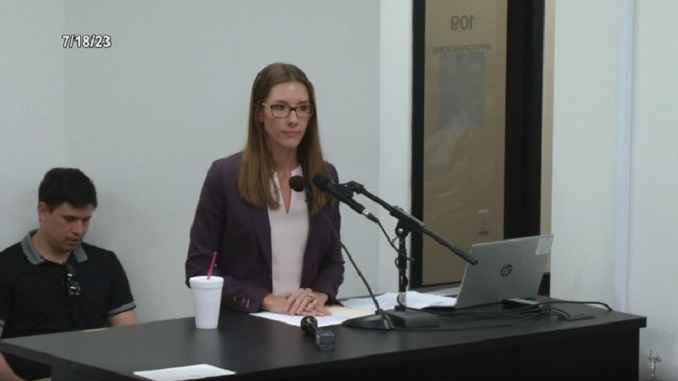
On Tuesday, a joint committee of the Arizona legislature launched an investigation into allegations of censorship at Arizona State University (ASU). Lawmakers issued a 60-day deadline to conduct the investigation.
The directive arose from the Joint Legislative Ad Hoc Committee on Freedom of Expression at Arizona’s Public Universities hearing concerning the T.W. Lewis Center, shuttered this year after the revocation of $400,000 in annual funding from its namesake, Tom Lewis, who cited “left-wing hostility and activism” as his reason for defunding the program.
Lewis’ contention arose from the efforts of 37 Barrett Honors College faculty members, who launched a coordinated campaign to prevent an event featuring prominent conservative speakers Dennis Prager and Charlie Kirk. Prager testified at Tuesday’s hearing; he also published an opinion piece on the event ahead of the hearing.
State Sens. Anthony Kern, co-chair (R-LD27), Frank Carroll (R-LD28), Sally Ann Gonzales (D-LD20), Christine Marsh (D-LD04), and J.D. Mesnard (R-LD13) served on the committee, as did State Reps. Quang Nguyen (R-LD01), Lorena Austin (D-LD09), Analise Ortiz (D-LD24), Beverly Pingerelli (R-LD28), and Austin Smith (R-LD29). Kern and Nguyen served as co-chairs.
“This is to get to the bottom of a state-funded university that is not meeting its obligation to freedom of expression and freedom of speech,” said Kern.
The center relied on an annual budget of around $1 million; ASU representatives explained that the center would live on through the classes taught, though the actual center itself and the executive director at its helm, Ann Atkinson, would be gone.
ASU Vice President of Legal Affairs Kim Demarchi explained that Lewis’ funding provided for career development and education. Demarchi testified that ASU considered what programs it could continue without Lewis’ funding, and declared that they could only sustain the faculty without Lewis’ funding. Demarchi also shared that the Barrett Honors faculty weren’t punished in any way for the letter or allegations of intimidation.
“It is possible it [their letter] has a chilling effect,” said Demarchi.
However, Demarchi clarified that a professor would have to explicitly threaten a student’s grade in order to be in violation of university policy.
Atkinson went public with the closure of the Lewis Center last month. (See the response from ASU). She told AZ Free News that the university turned down alternative funding sources that would make up for the loss of Lewis’ funding necessary to keep the Lewis Center running.
Nguyen opened up the hearing by recounting his survival of Vietnam’s communist regime as a child, and comparing that regime’s hostility to free speech to the actions of Barrett Honors College faculty.
“My understanding is that there is an effort to prevent conservative voices from being heard,” said Nguyen. “I crossed 12,000 miles to look for freedom, to seek freedom.”
Nguyen expressed disappointment that none of the 37 faculty members that signed onto the letter showed up to testify in the hearing. He said if he accused someone, he would show up to testify.
Democratic members of the committee contended that the event occurred and therefore censorship hadn’t taken place. Kern said the occurrence of the event doesn’t resolve whether freedom of speech was truly permitted, citing the closure of the Lewis Center.
ASU Executive Vice Provost Pat Kenney emphasized the importance of freedom of expression as critical to a free nation. Nguyen asked whether Kenney read the Barrett letter, and agreed to it. Kenney said the letter was freedom of expression. He claimed the letter didn’t seek cancellation of the event.
“When faculty speak out on their own like that, they’re covered on the same topic we’re here about, which is free speech,” said Kenney.
ASU representatives claimed near the beginning of the hearing that Lewis and ASU President Michael Crow had discussed the withdrawal of funding. However, toward the end of the hearing Kern announced that he’d received information from a Lewis representative that the pair hadn’t discussed the funding, and accused ASU representatives of lying.
Ortiz called the anonymous complaints from students hypotheticals because no formal complaints were lodged. She also claimed that the hearing was merely an attempt to delegitimize public and higher education. Marsh claimed that lawmakers shouldn’t consider the claims of student fears of retaliation because the students should’ve gone to ASU directly.
Nguyen asked whether ASU would defend guest speakers, such as himself, if ASU faculty were to lodge claims of white nationalism. Kenney said that, in a personal capacity, ASU faculty were free to make their claims, but not if they spoke out on ASU’s behalf.
Atkinson contested with the characterization that the Barrett faculty spoke out in their personal capacity. She pointed out that Barrett faculty signed the letter in their capacity as ASU faculty, emailed her using their ASU emails, and sent communications to students about opposing the event using ASU technology.
Ortiz announced receipt of a letter from the Arizona Board of Regents (ABOR) on the outcome of the requested investigation into the incident, the results of which Kern and the rest of the committee appeared to not have been made aware, determining that no free speech violations took place at ASU.
Marsh speculated that the professors didn’t show up because they faced death threats, citing media attention and conservative speaker Charlie Kirk’s Professor Watchlist. Kern said that would be a “lame excuse.” He also pointed out that the professors launched a national campaign and initialized bringing themselves into a bigger spotlight.
“You’re making excuses where we don’t know that’s the case,” said Kern.
Atkinson said that she could provide “dozens, if not hundreds” of students that could testify to experiencing faculty intimidation. She also claimed that Williams told her to avoid booking speakers that were political.
“We allow the speaker but you have to take the consequences,” said Atkinson, reportedly quoting Williams.
Atkinson testified that TV screen ads were removed and flyers were torn down following the Barrett Honors faculty letter. She also said she shared the information for the person responsible on June 13, yet it appears ASU took no action. ASU said they weren’t aware of any advertising for the event pulled.
Additionally, Atkinson testified that Williams pressured her to postpone the event “indefinitely.” She noted that Williams interpreted ASU’s policy of not promoting political campaigns as not allowing political speech at all.
“We were in an environment telling us that this was ‘hate speech,’” said Atkinson.
Atkinson said she was directed by leadership ahead of the event to issue a preliminary warning that the event contained potentially dangerous speech.
Gonzales told Atkinson that hate speech doesn’t qualify as constitutionally protected speech. However, the rules attorney corrected her that the Supreme Court ruled hate speech as protected.
ASU professor Owen Anderson also testified. He said that he’s previously had to get the free speech rights organization Foundation for Individual Rights and Expression (FIR) involved twice due to faculty attempts to suppress free speech. Anderson also said that faculty have attempted to restrict speech by adding anti-racism and DEI to policy on class content and annual reviews of professors.
“Insults abound, but rational dialogue is rare. What we need are administrators that call these faculty to higher conduct,” said Anderson.
In closing, Kern said he doesn’t trust ASU, the University of Arizona, or ABOR. He argued that ABOR hadn’t issued a real investigation and called their report “typical government fluff [and] garbage.” Kern also called for the firing of Barrett Honors College Dean Tara Williams.
Corinne Murdock is a reporter for AZ Free News. Follow her latest on Twitter, or email tips to corinne@azfreenews.com.
by Daniel Stefanski | Jul 16, 2023 | News
By Daniel Stefanski |
Arizona will be at the forefront of the presidential campaign come the 2024 general election, but there’s one contest that might take on more importance.
On Monday, Save Democracy Inc., an Arizona-based 501(c)(3) nonprofit educational organization, gave a preview of an election-oriented voter initiative that could be coming the state’s way in November 2024. They tweeted, “Coming Soon: A statewide initiative campaign aiming to outlaw partisan primaries.”
The post shared that this initiative would prohibit “the use of taxpayer funds to pay for private political party primaries; that all candidates (would) appear on the same ballot and compete under the same rules; and that all registered voters (would) use the same ballot to vote.”
Save Democracy Arizona’s website asks and answers the question, “Why do we need reform?” by alleging that “the current system is not working,” that “we need an even playing field,” and that “Arizona has a tradition of open elections.” On their home page, they write, “At a time when many Americans are concerned about the health of our election system, our coalition was formed to educate voters about how Arizona’s voting system currently operates. Join us as we explore alternative primary structures that could make our system work better for ALL Arizonans.”
The group’s efforts have already caught the eye of longtime Arizona Republic columnist Laurie Roberts, who wrote a piece about the likely potential for action on this front. She tweeted, “Coming soon to a neighborhood near you: A statewide initiative campaign aiming to outlaw partisan primaries. Makes total sense here, in the state where independents now outnumber Republicans and Democrats.”
In her column, Roberts elaborated on what voters might see over the coming year, opining, “(This group) has scrapped plans for an initiative to bring ranked-choice voting to Arizona. Instead, it is preparing an initiative asking voters to outlaw taxpayer-financed partisan primary elections. The Legislature and Gov. Katie Hobbs would be directed to develop a new system that puts all candidates on one primary-election ballot. With one set of rules to get there.”
The Roberts’ piece grabbed the attention of Representative Austin Smith, who has been fighting against Ranked Choice Voting since the day he entered the Arizona Legislature – and may be one of the significant reasons why there may not be a direct attempt to bring Ranked Choice Voting to Arizona via a November 2024 ballot initiative.
Smith tweeted, “Two competing initiatives!? Fun! I look forward to helping Arizonans pass HCR 2033 protecting Arizona’s primary election system and keeping the entrenched consultant class out of picking our representatives. Looks like the Arizona Freedom Caucus is effective yet again like Laurie Roberts said.”
The freshman legislator sponsored HCR 2033, which sent a question to voters on an amendment to the state constitution to “determine that a Legislature-enacted direct primary law supersedes any contrary or inconsistent provision of any charter, law, ordinance, rule, resolution or policy of any city and modifies nominee requirements for a direct primary election.”
The vote in the Senate was split down party lines – 16-13, with one Democrat (Senator Miranda) not voting. Earlier in the session, the Arizona House passed the resolution – also along party lines – 31-28, with one Democrat (Representative Shah) not voting. The legislature then transmitted the resolution to the Arizona Secretary of State.
After the Senate passed the resolution, Smith wrote, “This constitutional referral to protect our party primaries and girding us against radical experimental election systems that disenfranchise voters such as ‘ranked choice voting.’”
Daniel Stefanski is a reporter for AZ Free News. You can send him news tips using this link.
by Daniel Stefanski | Jul 3, 2023 | Education, News
By Daniel Stefanski |
Arizona elected officials found no shortage of material to react to from the U.S. Supreme Court’s latest term.
On Friday, the nation’s highest court released its opinion in Biden v. Nebraska, striking down the president’s student loan cancellation program. Chief Justice John Roberts authored the opinion, and he was joined by Justices Clarence Thomas, Samuel Alito, Neil Gorsuch, Brett Kavanaugh, and Amy Coney Barrett.
The majority opinion stated that “the ‘economic and political significance’ of the Secretary’s action is staggering by any measure. Practically every student borrower benefits, regardless of circumstances. A budget model issued by the Wharton School of the University of Pennsylvania estimates that the program will cost taxpayers ‘between $469 billion and $569 billion,’ depending on the total number of borrowers ultimately covered.”
State legislators were quick to respond to the momentous decision from the Supreme Court. Freshman Republican Representative Austin Smith tweeted, “Canceling student loan debt is and always will be an irresponsible and brainless ‘policy’ proposal. It deserved this fiery death at SCOTUS. Do not take out astronomically large loans for a career with a salary you will never be able to pay off.”
Smith also parried an attack from the House Democrats Caucus, which took to Twitter to pin the decision on Republicans. This tactic didn’t sit too well with Smith, who said, “The Constitution did this. Cope and seethe.”
On the other side of the aisle, Senate Democratic Assistant Leader Juan Mendez released a statement shortly after news broke about the opinion, writing, “Today’s decision on Student Loan Relief is all the evidence we need to rule this court as corrupt. For generations this court as been playing favorites, taking sides and receiving undisclosed donations, all while Congress has been bailing out corrupt corporations, reckless Wall Street traders and forgiving PPP loans for the wealthy.”
Senator Mendez also called on President Biden to take further action, saying, “The Court’s biased decisions can not go unanswered. The President must do everything within his power to set student loan interest rates to 0%, set minimum monthly payments to $25, and revamp current repayment plans to accept volunteerism as payment.”
Earlier this year, Democrat Attorney General Kris Mayes announced that she had withdrawn the State from a lawsuit over the president’s actions on student loans, which was initiated by her predecessor, Mark Brnovich. Mayes told KTAR News that “we’re not going to be engaging in political lawsuits at the Attorney General’s Office anymore,” and that “suing the federal government over everything is not the answer and it’s not what the people of Arizona want.” The KTAR recap of the interview noted that the first-year attorney general “said the student debt lawsuit was inappropriate and unlikely to succeed.” Instead, Mayes joined a coalition of attorneys general from around the country to support a “federal proposal to create a more affordable repayment plan for student loan borrowers.”
Daniel Stefanski is a reporter for AZ Free News. You can send him news tips using this link.