by Corinne Murdock | Sep 20, 2021 | News
By Corinne Murdock |
Last Friday, Maricopa County settled with the State Senate on both side’s election demands, with the Senate apparently compromising on nothing per the agreement. The county will hand over the remaining election materials subpoenaed by the Senate: routers, splunk logs, and digital images of ballot envelopes. They will also drop their demand that the legislature pay $2.8 million to replace the voting machines. Secretary of State Katie Hobbs – who told the county that she would likely decertify any election results that come from the audited machines – has yet to issue a statement on the settlement.
The Maricopa County Board of Supervisors convened on Friday to discuss this settlement. They ultimately decided that the election routers, splunk logs, and ballot envelopes weren’t worth $700 million in lost funds. In fact, the board decided securing those funds was worth an additional expenditure. The county will pay for a “Special Master”: an official to oversee acquisition of the routers and splunk logs. Former Republican Congressman John Shadegg will serve that role.
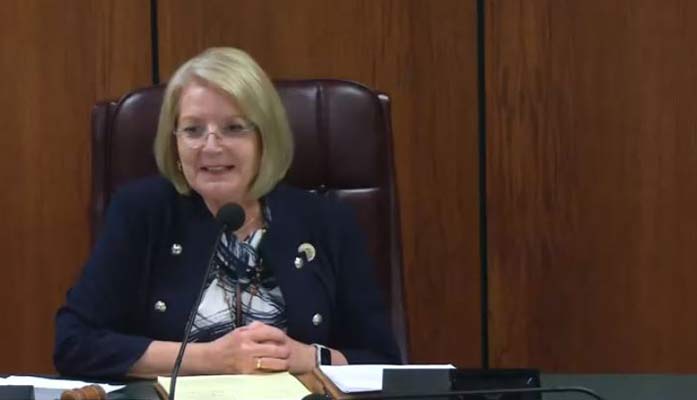
Senate Republicans tweeted the news in a statement from President Karen Fann (R-Prescott). Fann clarified that experts were sure that the audited election equipment wasn’t compromised, as the county had claimed.
“The Senate will finally get the answers to questions asked for in the subpoenas issued to the County months ago,” stated Fann. “I look forward to getting our final questions answered and wrapping up the review of the election in Maricopa County.”
https://twitter.com/AZSenateGOP/status/1439035033428185089
Shortly after, Fann released a more personalized statement of her own. She responded to critics and skeptics with clarification that the Senate hadn’t lost out on anything they were desiring.
“HUGE win for the Az Senate today! Maricopa settlement gives us all the data needed to complete the review of the routers & splunk log to the most comprehensive election audit in history,” stated Fann. “We got everything we need and more. Maricopa County goes home with its tail between its legs.”
Maricopa County officials spun a different narrative in their announcement of the settlement. The county neglected to clarify that they were still turning over the subpoenaed election materials to the Senate for inspection. Instead, they emphasized that the auditing company, Cyber Ninjas, wouldn’t be given access to those materials.
“NEW: Board votes to approve an agreement with the AZ Senate that keeps county routers & other sensitive materials out of the hands of Cyber Ninjas. The agreement also protects taxpayers and ends a legal dispute over the Senate’s ongoing election review,” stated the county. “Per Chairman @jacksellers: ‘The Cyber Ninjas will never be able to touch the routers or access our data. An independent third party can confirm what we’ve always said: the election equipment was not connected to the internet and no vote switching occurred. And our residents, law enforcement, and courts can all rest assured that their data and equipment are protected.’ The agreement with the Senate comes with a provision that the Senate President write a letter to the Attorney General stating the County has now fully complied with the Senate’s outstanding subpoenas and that further action is not warranted.”
Cyber Ninjas’s report on Maricopa County’s 2020 election will be released on Friday. Since Cyber Ninjas isn’t privy to the election materials obtained from the Maricopa County-Senate settlement, information from those materials won’t be included.
Last month, Hobbs published a full report of the audit, asserting that Cyber Ninjas’ work was more of a partisan review than a credible audit.
Read the settlement here.
Corinne Murdock is a reporter for AZ Free News. Follow her latest on Twitter, or email tips to corinne@azfreenews.com.
by Terri Jo Neff | Jul 29, 2021 | News
By Terri Jo Neff |
Twelve hours after announcing his plans to step down as the liaison for the Arizona Senate’s audit, Ken Bennett says he is back in the good graces of the audit team and will be provided full access so he can assist in review of any reports to the Senate.
Bennett told KFYI’s James T. Harris on Wednesday morning he had become “liaison in name only” and may not even be involved in the preparation of the final audit report into how Maricopa County handled the 2020 General Election because he was locked out of the audit premises by other team members at the directive of Senate President Karen Fann.
But by Wednesday evening, Bennett told colleagues that Fann had agreed to meet several demands to keep Bennett actively involved through the end of the audit. Details of the agreement are to be announced Thursday.
Bennett, a former Arizona Secretary of State, was chosen by Fann to act on her behalf with Cyber Ninjas, the company she contracted to conduct the audit. There have also been several subcontractors.
However, last week Fann became upset that Bennett released some unconfirmed audit data to an election expert, from whom it was released to the media. In addition to the lockout, Fann issued a statement Tuesday scolding Bennett for his actions even though he had publicly apologized several times.
Fann also noted in her statement that Bennett would continue his involvement in the audit which is now in the analysis phase leading up to preparation of final reports. Audit observers say those reports need to have Bennett’s blessing in order for the public to accept any of Cyber Ninjas’ findings.
Bennett, however, told Harris his continued involvement, particularly with any reports, was would not be feasible if he continued to be frozen out of the audit process. “I cannot put a rubber stamp on a product that I am being locked out of its development,” he said.
Fann and Bennett were reportedly finalizing the terms and conditions of Bennett’s continued participation with the audit on Wednesday night.
Meanwhile, Cyber Ninjas CEO Doug Logan announced Wednesday that more than $5.7 million was donated toward the cost of the audit. The funds came from five groups, including one co-founded by OANN reporter Christina Bobb and another connected to Sidney Powell, who served earlier this year as one of former President Donald Trump’s attorneys.
According to Logan, $3.25 million was received from Florida-based The America Project. There was also nearly $977,000 from America’s Future, a non-profit organization chaired by Lt. Gen. Michael T. Flynn, (USA Ret.), along with $605,000 from Bobb’s Voices and Votes.
Another $550,000 was received from Defending The Republic, whose board of directors include Powell, Flynn, MyPillow CEO Mike Lindell, and others who support claims that former President Donald Trump actually won the 2020 election. And $280,000 is reported as coming from the combined Legal Defense Funds for the American Republic and the Election Integrity Funds for the American Republic.
Logan’s company was contracted earlier this year by Fann contracted for a total payment of $150,000. The contract did not preclude Cyber Ninjas or any of the subcontractors from seeking or accepting private funding toward the true cost of the audit, which has involved more than 1,500 workers and volunteers
by Corinne Murdock | Jul 16, 2021 | News
By Corinne Murdock |
On Thursday, the Arizona Senate held a hearing on the election audit as it heads into its final days of work. Election auditors testified that they discovered a sweeping variety of discrepancies within the election proceedings, including: ballot numbers and quality, voter rolls, cybersecurity, and signature matching processes. Additionally, the auditors reported that they were still lacking the chain of custody logs and routers, which were included within the Senate’s subpoena. The three audit officials testifying were Senate Liaison Ken Bennett, Cyber Ninjas CEO Doug Logan, and CyFIR founder Ben Cotton.
Among their findings from over 80,000 hours of work, the auditors testified that they discovered a surplus of over 74,000 mail-in ballots received and counted than were mailed out, 4,000 individuals were registered to vote after the October 15 deadline, over 11,000 voters disappeared from the rolls after the election but reappeared a month later, over 17,000 voters were removed from the voter rolls after the election, thousands of duplicate ballots lacked a serial number, most ballots were vulnerable to over-voting or unintended voting due to being printed out of calibration, election security systems on the machines weren’t updated after 2019, and a sizeable number of ballots were discovered with bleed-throughs.
Notably, only 52 out of around 1,700 boxes of election materials were reportedly secured with tamper-evident tape. The remainder were secured with regular packing tape. Logan assured the Senate that they would return these boxes numbered with new seals of tamper-evident tape.
Cotton explained that system updates on election machines are crucial for cybersecurity. Without updates, any system may grow increasingly vulnerable to hackers. Since the machines weren’t updated after 2019, hackers had several years to breach the system. This may explain the 38,000 inquiries for blank passwords that the auditors reported discovering.
At least one incident of hacking likely occurred with the Maricopa County election systems in the 2020 election. Federal agents raided the home of an individual named Elliot Kerwin on November 5 over intelligence indicating that he’d breached the systems sometime from October up through Election Day.
Maricopa County claimed that it used ballot paper thick enough to prevent bleed-throughs. However, the auditors said that they discovered the opposite was true. Logan said that anything from ballpoint pens to Sharpies could cause bleed-through.
https://twitter.com/AuditWarRoom/status/1415743378776477697?ref_src=twsrc%5Etfw%7Ctwcamp%5Etweetembed%7Ctwterm%5E1415743378776477697%7Ctwgr%5E%7Ctwcon%5Es1_&ref_url=https%3A%2F%2Farizonasuntimes.com%2F2021%2F07%2F16%2Felection-auditors-report-surplus-of-over-74k-mail-in-ballots-4k-voters-registered-after-deadline-18k-voters-removed-from-rolls-following-election%2F
The SharpieGate debacle concerned this very issue. Although several court cases were filed after voters were unsure whether their Sharpied ballots counted, but ultimately that case was dismissed on jurisdictional grounds.
Senate President Karen Fann (R-Prescott) reminded viewers and the floor that this audit was devoid of political agenda or allegiance to previous President Donald Trump.
When Senate Judiciary Committee Chairman Warren Petersen (R-Gilbert) asked the three men what more they would need to finalize their report. Logan responded that they would need the routers, splunk logs, portable media and external drives, chain of custody documents, the network diagram, election management data backups, records of all papers sent to vote centers, the total of all ballots sent to eligible voters, and a full backup copy of the voter rolls.
He added that they would also need copies of the election policies and procedures, including information on ballot adjudication processes. While those documents are available in part to the public, Logan explained that there were more detailed documents given to election officials and workers that they required.
A day before the hearing, the House Committee on Oversight and Reform submitted a letter to Logan requesting information about their audit process, leadership, interactions, and findings. The request letter listed a number of grievances against Cyber Ninjas’ conduct of the audit, citing multiple times their “lack of election audit experience.”
Congress further cited reporting on the audit to bolster their claims of mismanagement. One citation included a reporter’s indication that blue pens were used during the audit in violation of Arizona election law. That reporter later retracted her claim in part, noting that those pens were during training and cleared from the floor before any live ballots were brought out.
Fann offered a parting thought on the resistance by Maricopa County, as well as Secretary of State Katie Hobbs, to this audit.
“I do not know why Maricopa County has fought this so hard,” remarked Fann.
Corinne Murdock is a contributing reporter for AZ Free News. In her free time, she works on her books and podcasts. Follow her on Twitter, @CorinneMurdock or email tips to corinnejournalist@gmail.com
by Terri Jo Neff | Jul 6, 2021 | News
By Terri Jo Neff |
A new committee tasked with reviewing Cyber Ninjas’ findings of the Senate’s ongoing audit of Maricopa County’s 2020 general election is one of the provisions signed into law last week when Gov. Doug Ducey put his signature on the Fiscal Year 2022 budget bills.
Formation of the Special Committee on the Election Audit was included by Senate President Karen Fann in an amendment to SB1819, one of the 11 budget bills. The committee will run through Jan. 1, 2022 and be made up of Democrats and Republicans who are members of the current Senate Government Committee.
The purpose of the committee, according to the new state law, is to recommend to the senate president “the appropriate legislative action based on the findings of the audit, including a call for a special session of the legislature to implement the special committee’s recommendations.”
The Fann amendment also provides leverage for pressuring Ducey to call a special session if it appears new election-related legislation is needed which cannot wait until next January’s regular session. Without an assured two-thirds vote margin in either chamber, the governor is the only option for calling lawmakers back into session to pass laws to take effect before the 2022 primary in August.
Ducey, however, has been reticent on the subject, leaving it to a spokesman to comment.
“We will wait and see what the committee recommends,” C.J. Karamargin said last month about the possibility of an election-related special session.
One reason a special session to address the election audit is so important to Republicans is that the majority of the election reform and election integrity bills introduced by GOP lawmakers during the regular session were either watered down or did not pass. And the main reason for that was the ongoing feud between Sens. Michelle Ugenti-Rita (R-LD23) and Kelly Townsend (R-LD16).
Ugenti-Rita chaired the influential Senate Committee on Government. She and Townsend butted heads throughout the session, often over the fact Ugenti-Rita refused to allow the committee to consider some of Townsend’s bills.
Then during the last week of the session, the women took turns voting against each other’s election bills, both of which contained reforms many Republican voters supported.

by Terri Jo Neff | May 28, 2021 | News
By Terri Jo Neff |
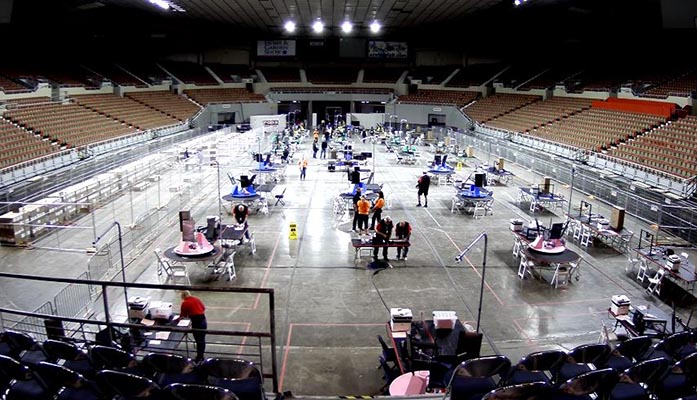
As the Senate-authorized audit of 2.1 million Maricopa County ballots continues, a judge announced Thursday he will hear arguments in a lawsuit about whether communications, reports, and other documents between Senators, their contracted auditors, and volunteers are public records.
Judge Michael Kemp of the Maricopa County Superior Court has set July 7 for oral arguments in the case filed earlier this month by American Oversight, a Washington DC-based nonprofit which has been trying since April to obtain records related to planning, procedures, costs, and payments for the election audit.
Several audit-related documents have been turned over to American Oversight by Norm Moore, the Senate’s public records attorney, before and after the May 20 lawsuit was filed. However, Moore has also responded that the Senate “does not have in its possession, custody or control” many of the documents American Oversight wants.
Those records are reportedly in the possession, custody, and control of Florida-based Cyber Ninjas, the company Senate President Karen Fann selected back in March to conduct the audit “on behalf of the Senate.” Cyber Ninjas is being paid through public funds, and is also believed to be receiving “donations” to cover the costs of its work as well as that of various subcontractors.
Other records are believed to be under the control of subcontractors as well as Ken Bennett, a former Arizona Secretary of State serving as the Senate’s liaison with the auditors.
The legal issue for Kemp is whether the companies and non-government employees involved in the audit are subject to Arizona Revised Statute 39-121, the state’s public records law. Attorneys for American Oversight contend the Senate’s position goes against the spirit and the letter of Arizona’s public records law which is based on a presumption of public access.
In an April 6 letter to Fann, the company noted access to the requested records “would contribute significantly to public understanding of operations of the government, including whether or to what extent partisan political considerations influenced the senate’s decision to pursue an additional audit, or guided the selection of the auditing team.”
The defendants in American Oversight’s lawsuit include the Senate as a public body, as well as Fann and Sen. Warren Petersen. It was Petersen, as chair of the Senate Judiciary Committee, who joined Fann in signing a subpoena served on Maricopa County in January to obtain access to the county’s voting system equipment, election records, and original ballots.
Judge Kemp also set a June 9 deadline for the Senate to file for dismissal of the lawsuit which, if filed, would be heard July 7 before the other arguments.