by Ethan Faverino | Feb 17, 2026 | News
By Ethan Faverino |
The Arizona House of Natural Resources, Energy, and Water Committee held a special hearing on last week to examine the Arizona State Land Department (ASLD) and advance legislation aimed at its continuation, improved administration, and the siting of utility-scale wind and solar energy projects near residential communities.
In a sweeping action, lawmakers advanced all 16 bills on the agenda, demonstrating strong, unified momentum to reform persistent operational and cultural problems within the department.
HB 2426, which mandates the development and adoption of a required five-year disposition plan for state trust lands, was adopted as an amendment to HB 2150, the primary continuation bill for the ASLD.
Sponsored by Rep. Gail Griffin (R-LD19), HB 2150 repeals the department’s prior sunset date and continues its operation until July 1, 2030, with the repeal of related statutes effective January 1, 2031. The measure requires a two-year hearing, quarterly updates to the Legislature, and compliance with existing statutes mandating a five-year disposition plan under ARS § 37-331.03.
“The State Land Department is not a constitutional agency. The Legislature created the Department, and the Legislature can set guardrails to ensure the highest and best use of land,” stated Chairman Gail Griffin in a press release addressing the issues at the ASLD. “For years, the Department has failed to keep land and housing development moving with consistent long-term disposition planning and predictable decisions. That means less trust revenue for classrooms and fewer lots available for homes.”
ASLD manages approximately 9.2 million acres of state trust land, with a statutory mandate to prioritize the highest and best use to generate maximum revenue for 13 trust beneficiaries, primarily K-12 public schools.
However, recent audits—including the 2025 performance audit and sunset review by the Auditor General—along with multiple legislative hearings and recommendations from the Joint Committee of Reference, have highlighted persistent problems.
These include a lack of consistent long-term planning, unresolved pending applications without final decisions, unwritten regulatory processes and procedures, lost revenue opportunities, due-process concerns, and unnecessary strain on Arizona’s housing supply amid land scarcity and rising costs.
Effective management of state trust lands directly impacts housing affordability and education funding. The Department could immediately alleviate pressures by accelerating sales and leases of suitable parcels, increasing available land for residential development, and generating sustained revenue for schools without new taxes.
Yet reports indicate practices such as withholding land from public auction and canceling leases without replacement tenants, while the Hobbs administration is actively devaluing urban-adjacent land to favor utility-scale solar development near residential areas.
“This is not complicated,” added Griffin. “Arizona’s high-tech economy requires new affordable rooftops for workers, and Arizona’s schools depend on trust returns from the sale of available trust parcels. The Department can improve housing supply and education funding today by selling more land and ending the internal practices that keep projects stalled.”
The sunset review process provides the Legislature with significant leverage to enforce accountability and measurable change. During the hearing, committee members questioned the Governor’s appointed Land Commissioner on fundamental Department functions, processes, and documentation. Responses were often inadequate or nonexistent—raising concerns about leadership after three years in that role.
Senate Natural Resources Committee Vice Chairman Tim Dunn (R-LD25) echoed the call for reform. “The current administration didn’t create these problems, but it certainly inherited them. Now the burden is on the current commissioner to change the culture and redirect the agency in the right direction. The agency needs oversight, but the Department has an opportunity to make a meaningful difference for the state. A positive change could bring in millions of dollars of additional revenue for the trust.”
“Arizona House and Senate Republicans are unified in our understanding of the issues and of the breadth of changes that are needed,” added Senator Dunn. “Based on the clear recommendation of the Joint Committee of Reference, I think it’s safe to say that the Department will not be receiving a clean continuation, and that any continuation the Department receives will be contingent on significant improvements codified in law.”
HB 2426 requires the State Land Commissioner, within two years of the act’s effective date, to complete the five-year disposition plan, adopt written policies for updating it every five years, establish procedures for using the plan to guide public auctions, and submit copies to legislative leadership.
The bill’s legislative findings highlight years of inaction, noting the department’s failure since 2016 to produce the required plans and the fact that all five positions on the advisory Urban Land Planning Oversight Committee have remained vacant since 2018.
Ethan Faverino is a reporter for AZ Free News. You can send him news tips using this link.
by Matthew Holloway | Jan 25, 2026 | News
By Matthew Holloway |
The Arizona House and Senate Joint Legislative Committee of Reference (JLCOR) declined to grant the Arizona State Land Department a full, unconditional continuation following its sunset review. Citing systemic compliance failures, Republican legislative leaders are advancing legislation to restructure the agency.
According to a statement from House Republican leadership, the committee voted against a standard continuation during the sunset review hearing, raising concerns over deficiencies in oversight, transparency, and adherence to statutory requirements.
The Arizona State Land Department manages more than 9 million acres of state trust land, with proceeds constitutionally required to benefit public schools and other designated beneficiaries.
Lawmakers cited findings from a sunset review and Auditor General reports indicating the department has failed to comply with statutory requirements governing land disposition planning and long-term development strategy. Committee members said those deficiencies warranted legislative action before the agency could receive a full continuation.
According to House GOP leadership, the proposed reforms would require the State Land Department to:
- Develop and follow five-year land disposition plans as required by statute
- Increase transparency and public engagement related to land sales and leases
- Strengthen requirements for competitive bidding and limit single-bid transactions
- Improve coordination with municipalities and reporting on undeveloped trust land
Alongside the sunset review, lawmakers, led by Rep. Gail Griffin (R-LD19), Chair of the House Natural Resources, Energy & Water Committee and Co-Chair of the JLCOR, introduced several bills to reform the Arizona State Land Department.
HB 2426 would require the department to produce a statutorily mandated five-year disposition plan for trust lands within two years, addressing longstanding planning deficiencies. HB 2427 would compel the commissioner to implement all 51 recommendations from the Auditor General’s July 2025 performance audit, with regular reporting and oversight until completion. Meanwhile, HB 2150 clarifies the department’s continuation under sunset law by setting its termination date and laying groundwork for legislative reconsideration of its structure and authority.
“The Department has had issues for a long time,” Rep. Griffin said. “But they’ve gotten worse under the current administration. Licensing timeframes, five-year disposition plans, and written policies and procedures are essential to upholding the best interests of the trust. These were the top issues. The Commissioner acknowledged these issues during her confirmation hearing and committed to fixing them, but they haven’t been fixed. The captain isn’t steering the ship.”
Supporters of the reform effort said the changes are intended to ensure the department fulfills its constitutional obligation to maximize long-term value for trust beneficiaries, including Arizona’s public education system.
“I see an agency that needs significant reforms,” said Rep. Chris Lopez (R-LD16), Vice Chair of the House Natural Resources, Energy & Water Committee. “I think the lack of licensing timeframes is violating applicants’ due process rights. I think the Department’s decision to hold applications permanently in abeyance, so it can avoid appeals, is unlawful, serving functionally as a denial without a written decision. And I think the criteria the Department utilizes to determine which applications move forward are entirely subjective. At a time when transparency is key, I’m surprised the agency hasn’t already been sued.”
Under Arizona’s sunset review process, state agencies may be continued, modified, or allowed to expire based on legislative findings. The committee’s rejection of a full continuation means the State Land Department’s future structure and authority will now be considered as part of the broader legislative process.
Matthew Holloway is a senior reporter for AZ Free News. Follow him on X for his latest stories, or email tips to Matthew@azfreenews.com.
by Staff Reporter | Jan 24, 2026 | News
By Staff Reporter |
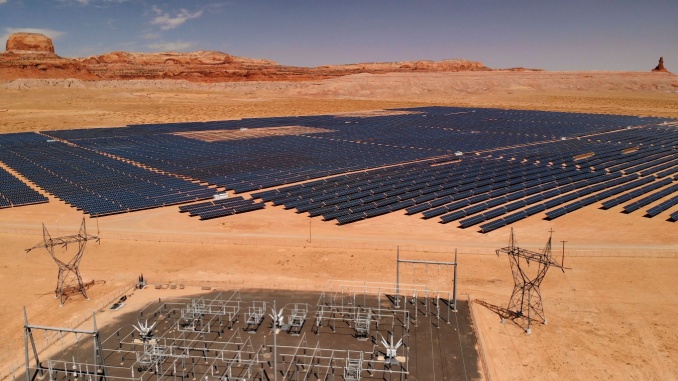
The Arizona State Land Department (ASLD) may be prioritizing the construction of solar panels over new home construction.
The agency maintains a unique map for “best” locations to put solar — but they don’t maintain similar maps for ideal locations for other industries, like housing, mining, and grazing for agriculture.
ASLD’s Land Parcel Viewer has a unique dataset for mapping existing and ideal spots for solar, complete with ratings: 0.0 to 0.9 for the best in green, all the way to 5.0 to 10.0 for the worst in red.
The map shows where parcels are for mineral and oil and gas, and whether those are unleased or permitted; the locations of rights of way and their perpetuity; and where grazing allotments exist. However, it does not offer any compatibility measure for the available land for each industry.
These industries would require knowledge to include resources, depth, size, and proximity to development for mining; animal unit month (the forage amount required for one animal per month), slope, and grass type and quality for grazing; soil conditions, water supply, and slope for agriculture; and path of development and slope for housing.
Spencer Kamps, vice president of the Home Builders Association of Central Arizona, said in a statement that the unique treatment of mapping land by ASLD may give the solar industry an unfair competitive edge in arguing for priority land use.
“In the absence of a similar map for other industries, some might say the solar map is serving functionally as a ‘presumptive highest and best use map,’ which gives solar a ‘rebuttable presumption’ of highest and best use in each parcel indicated in green,” said Kamps.
Last September, Gov. Katie Hobbs issued an executive order directing ASLD to outline proposals to streamline and expedite energy infrastructure projects on state land, as well as accelerate those energy-related projects already underway.
ASLD should have delivered the requested report last October.
The governor’s order also established a task force to come up with a strategic plan to “cut red tape related to the lease, sale, or other use of state lands in a way that advances the streamlined deployment of necessary generation and transmission projects.
That plan is part of three reports due by March 1 of this year. That task force, announced last November, includes ASLD Commissioner Robyn Sahid.
The two other reports include a policy framework for large energy users — data centers — to balance state interests in expansion with ratepayer costs, and an energy strategy plan to capitalize on technologies such as geothermal and advanced nuclear power.
Hobbs also directed her Office of Resiliency to use State Energy Program funding to fund one full-time staffer for ASLD to complete work on energy infrastructure projects.
ASLD doesn’t just have criticisms coming from the industries that sustained the state economy long before solar came on the scene. The state legislature believes the agency is in need of serious reform.
The House and Senate Joint Legislative Committee convened earlier this week to discuss ASLD’s scheduled sunset later this year.
In a significant departure from the standard renewal period of eight years for a state agency, the committee instead opted for a four-year continuation with conditions attached.
Official recommendations from the committee attributed their decision to “deep, longstanding issues” within the agency, describing its operations as an opaque, “unaccountable ‘black box’” per a press release issued on Wednesday.
Several of the committee recommendations outlined in the press release concerned solar leases and sales.
The committee advised the agency open additional investigations into intentionally vacant land, commissioner-initiated sales with only one bidder, solar leases and sales with only one bidder, reclamation of lands after solar leases, vacant land located within municipalities, vacant land location within five miles of urban areas, and vacant land located within 10 miles of urban areas.
Rep. Gail Griffin, committee co-chair, said in that press release the agency’s longstanding issues have worsened under Gov. Hobbs’ administration.
“Licensing timeframes, five-year disposition plans, and written policies and procedures are essential to upholding the best interests of the trust. These were the top issues,” said Griffin. “The Commissioner acknowledged these issues during her confirmation hearing and committed to fixing them, but they haven’t been fixed. The captain isn’t steering the ship.”
AZ Free News is your #1 source for Arizona news and politics. You can send us news tips using this link.
by Matthew Holloway | Nov 21, 2025 | Economy, News
By Matthew Holloway |
A new report from the Common Sense Institute (CSI) Arizona examines the state’s management of its state trust lands, set aside in 1912. It makes the case that the lands represent a “$140 Billion Missed Opportunity.” CSI Arizona argues that the beneficiaries of the trust, primarily K-12 education, could benefit from developing the land, while potentially addressing Arizona’s growing demand for developable space.
Released by the nonpartisan research organization, the full report, “Building What Was Promised: Correcting the Missed Opportunity of Arizona’s Land Grant While Addressing its Growing Need for Space,” details the history, current status, and projected impacts of the Arizona State Land Department’s (ASLD) administration of approximately 9.2 million acres of trust land.
In a release posted to X on Wednesday, the CSI wrote, “Arizona’s State Land Trust was supposed to be a generational funding engine for K–12 schools. But new research shows how much potential has been left on the table. CSI finds Arizona could have distributed up to $140 billion to K–12 students if trust land had been sold and reinvested more efficiently over the last century — compared to just $5.8 billion distributed to date.”
Arizona received about 10.96 million acres under The Arizona-New Mexico Enabling Act of 1910, with roughly 8 million acres dedicated to K-12 education—one of the largest such grants in the nation. As of 2024, the state retains approximately 84% of its original grant, compared to an average of 36% across other land-grant states. More than 80% of the remaining trust land is used for low-intensity purposes such as grazing or rights-of-way, generating an average annual return of $8.40 per acre for K-12 beneficiaries.
The report estimates that historical delays in selling and developing trust lands have cost beneficiaries approximately $134 billion in lost distributions over the past century. Had lands been sold early (1913–1923) and proceeds invested at market rates, the K-12 Permanent Land Endowment Trust Fund (PLETF) could be worth $163 billion today, compared to its current combined value (distributions plus assets) of approximately $19 billion.
The ASLD has grown the trust’s value from $811 million in 1995 to $8.7 billion today, with the PLETF reaching over $9 billion in 2024. However, only 80,000 acres statewide are under commercial lease, and since 1998, the department has sold 101,600 acres while initiating new commercial leases on just 588 acres.
The report identifies up to 3 million acres of trust land within a 10-mile radius of population centers and argues that even if a portion of this land were sold or leased strategically, Arizona could add more than 1 million new housing units over the next 20 years easing pressure on a market where prices have risen more than 40% since the pandemic.
An econometric model using REMI TaxPI+ projects that an orderly sale of remaining trust lands over the next decade could generate $18.5 billion in direct revenue, $55 billion in new economic activity, and an additional $65 billion in distributions to public schools over 50 years, while reducing housing prices by approximately 10% over two decades.
Arizona remains one of the most land-constrained states in the country. Roughly 83% of all land within its borders is publicly owned, in the form of federal, tribal, or state trust land, leaving comparatively little privately held land for growth.
CSI argues that this structural constraint has pushed up development costs and slowed housing construction, even as the state’s population has more than doubled over the past 30 years.
The study concluded that modernizing ASLD’s statutory framework, improving development timelines, and exploring new leasing and disposition tools could unlock long-untapped value for taxpayers, schools, and communities.
Matthew Holloway is a senior reporter for AZ Free News. Follow him on X for his latest stories, or email tips to Matthew@azfreenews.com.
Page 1 of 11