by Staff Reporter | Dec 10, 2024 | Education, News
By Staff Reporter |
None of Arizona’s schools have fully implemented and tested their emergency plans, nor did they fully meet the state’s minimum standards.
The Arizona Auditor General published a new report on Monday finding that no schools throughout the state met Emergency Operations Plan (EOP) Minimum Standards. Those standards were developed jointly by the Arizona Departments of Education (ADE) and Emergency and Military Affairs (DEMA). The auditor general determined that some of the standards were “too vague, may be impractical, or lack a clear purpose,” therefore hindering adequate adherence.
In its report, the auditor general found that most schools had fewer than half of EOP Minimum Standards, and some charter schools didn’t have any EOPs.
“Most schools we visited had not provided emergency procedures training to all staff, including substitute teachers; had not conducted all required safety drills; and had not posted certain safety reference materials, which could affect their preparedness to respond to emergencies,” read the auditor general’s report summary.
The auditor general determined that all schools needed increased outreach, guidance, and training on emergency planning.
Schools don’t have the entire burden of change on them, however. The auditor general also determined that ADE and DEMA had greater responsibilities ahead of them to ensure improved EOP Minimum Standards compliance: ensuring charters know their responsibilities to develop EOPs, analyzing staffing and resources needed to initiate compliance monitoring processes, communicating the monitoring plan and authority resource needs to the governor and legislature, evaluating what additional guidance is needed for school compliance and providing necessary assistance, and completing a comprehensive standards review with stakeholder involvement and working with stakeholders to clarify emergency response agencies’ roles in EOP development.
While ADE agreed to the changes recommended by the auditor general, DEMA did not.
In its response, DEMA said it didn’t have the opportunity to review the entire unredacted auditor general’s report, nor did it have an opportunity to review any of the EOPs the auditor general reviewed to reach its conclusion. The auditor general issued a response clarifying that the confidential draft report provided to DEMA only redacted those references concerning other entities unrelated to DEMA and its responsibilities, and that three other entities were given similarly-redacted reports.
DEMA further asserted that state law didn’t authorize its agency to develop EOPs for every district or charter; rather, DEMA said that the State Board of Education and ADE bore statutory responsibility for supervising and regulating public school conduct.
“Industry practice is to develop generalized planning standards which set a minimum threshold that allow each school district the flexibility to tailor their EOP to their unique circumstances or particular needs,” said DEMA. “As the primary agency responsible for enforcing standards with school districts, DEMA contends that it is ADE’s responsibility to inform districts of statutory requirements to adopt EOPs meeting the minimum standards. DEMA understands that ADE has full-time school safety and preparedness planners that can support this purpose and has an opportunity to communicate any additional resource needs to further effect this recommendation through their Audit response process.”
The auditor general’s response also addressed these refusals from DEMA, noting that it hadn’t required DEMA to develop school EOPs but rather evaluate whether additional outreach, guidance, and training would help schools better plan for safety emergencies.
The Arizona State Board for Charter Schools also refused some of the auditor general’s recommendations. The charter board said that it agreed with the auditor general and the state on the importance of EOPs, but that it lacks the “resources or subject matter expertise” for monitoring and enforcing compliance with minimum EOP standards.
“The Charter Board believes it is appropriate for a state-centralized review process to be established to monitor whether EOPs meet the required minimum standards. This process would ensure that both charter and district schools are held to the same standards of review and oversight,” said the board. “Furthermore, it would assign the responsibility of evaluating whether EOPs substantively meet the Minimum Standards to the appropriate agency—one with the necessary resources and expertise to effectively monitor compliance.”
AZ Free News is your #1 source for Arizona news and politics. You can send us news tips using this link.
by Staff Reporter | Nov 16, 2024 | Education, News
By Staff Reporter |
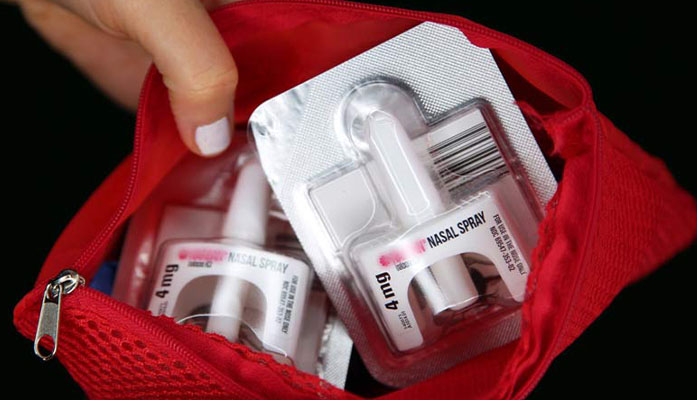
Arizona schools will be receiving a supply of overdose kits to address the increased impact of drugs on students.
The Arizona Department of Emergency & Military Affairs (DEMA) began delivering over 16,000 Narcan anti-overdose kits to schools on Wednesday. The Arizona Department of Education (AZED) oversaw the initial deliveries across all 15 counties.
In a press release, Superintendent Tom Horne said these kits were a lifesaving preventative to the increased presence of illicit substances in the state.
“Lives will be saved because these kits will be in schools throughout Arizona,” said Horne. “The STOP-IT Task Force has done incredible work to address the Fentanyl crisis among school-aged children and this is a major step to protecting the lives of students and raising awareness of this terrible scourge.”
The Narcan kit deliveries are part of AZED’s Overdose Preparedness & Intelligence Taskforce (STOP-IT), a new task force established this year to address the growing opioid epidemic. The idea for placing kits in schools came out of a meeting back in May.
The Arizona Department of Health Services (AZDHS) provided the Narcan kits at no cost to the state, and the Arizona Health Care Cost Containment System (AHCCCS) will provide training.
The kits come with flyers on training resources, information on county health agency partners, an announcement of an upcoming comprehensive STOP-IT Toolkit release, and a QR code taking the user to real-time training on Naloxone Resources from AHCCCS.
STOP-IT co-chairs are Holly Geyer from the Mayo Clinic and Mike Kurtenbach with AZED, leading over 60 representatives across various government agencies, schools, healthcare entities, law enforcement, and other organizations.
Geyer credited the initiative’s success to the collaborative strengths of Arizona agencies in Thursday’s press release.
“The STOP-IT naloxone distribution initiative could not have materialized without the unprecedented collaboration between the Department of Education, the Department of Health, AHCCCS and the National Guard,” said Geyer. “The representatives appointed through these agencies proved themselves strategic problem solvers who prioritized the mission and produced outcomes that far exceeded the taskforce’s original targets. Because of their resolve, we are proud to offer schools more than just naloxone. We can offer confidence in the safety of our school campuses and parental peace of mind.”
DEMA director Kerry Muehlenbeck said that their team’s logistical support for tackling drug overdose incidents ensured a better approach to their ultimate goal of reducing drug demand.
“Through this multi-agency initiative, we build stronger communities and support wellness in our future generations,” said Muehlenbeck.
Schools signed up for Narcan kits through the AZED’s online form, with the permission of their district or charter approval first. Further information about the kit distribution and application was submitted in a memo sent to schools across the state last month.
Per AZED, these overdose kits will be continually replenished to ensure schools’ continued ability to handle opioid emergencies.
Arizona reported over 1,900 opioid-related deaths and over 4,000 overdoses last year. 26 of those opioid-related deaths were among minors (those under the age of 17).
So far this year, AZDHS has recorded over 3,200 non-fatal opioid overdoses and over 1,000 confirmed opioid deaths. The total deaths among minors for this year amount to less than 10.
AZ Free News is your #1 source for Arizona news and politics. You can send us news tips using this link.
by Daniel Stefanski | Mar 12, 2024 | Education, News
By Daniel Stefanski |
Many Arizona state schools may not be teaching students about the Holocaust.
Earlier this month, State Superintendent of Public Instruction Tom Horne revealed that 322 of 750 Arizona districts and charter schools (approximately 43 percent) “have affirmed that they are teaching about the Holocaust and other genocides as required by state law.” Most of the state’s district and charter schools did not respond, according to Horne.
At the start of the year, Horne requested that “all Arizona district and charter schools report their compliance with state law that requires students to be taught about the Holocaust and other genocides.”
In a statement, Horne said, “After the horrific events of October 7, there was a one-sided pro-Hamas presentation at Desert Mountain High School that produced antisemitism among students and made Jewish students uncomfortable and fearful. If Holocaust studies are presented properly, students will be less gullible to antisemitic presentations. I am gratified that 322 districts and charters are following the law, with many of them taking anywhere from two to four weeks to do the instruction. That is commendable, but we need this bill to be sure all districts and charters are in compliance with the intent of the law.”
The law giving the state’s schools chief authority to require the information from Arizona schools was HB 2241, which was passed by the legislature and signed into law by then-Governor Doug Ducey in 2021. The bill was sponsored by Alma Hernandez, a Democrat. It passed both chambers with almost unanimous support. Ducey, in his letter to then-Secretary of State Katie Hobbs, informed her that he was signing the legislation to “ensure that we continue to teach our students the history of past atrocities, which in return will instill greater compassion, critical thinking, societal awareness, and educational growth in our students.”
Horne’s original deadline for Arizona schools to report to the state Department of Education was January 24. However, Horne announced in early February that he would be extending the deadline to February 23 due to the lack of responses from schools.
Not only did Horne extend the deadline for schools to report compliance with the law, but he is hoping state legislators and the governor are able to strengthen the statute for future students. He again noted that two Arizona state lawmakers have embarked on a bipartisan mission to pass a bill that would “require students in grades 7-12 to twice complete a three-day program on the Holocaust and other genocides.”
The Republican Superintendent added, “Current state law requires teaching about the Holocaust and other genocides, but it does not specify how much time is spent. We surveyed districts and charters to find out if they are following the law, but more than half did not respond. This shows the need for HB 2779, a bipartisan bill sponsored by Republican Rep. David Marshall and Democrat Rep, Alma Hernandez to be passed and signed into law.”
Daniel Stefanski is a reporter for AZ Free News. You can send him news tips using this link.
by Corinne Murdock | Feb 25, 2024 | Education, News
By Corinne Murdock |
Arizona’s public schools have over $1 billion in surplus, according to the Arizona Department of Education (ADE).
Tim McCain, chief financial officer for ADE, announced the surplus during last week’s meeting in the House Appropriations Subcommittee on State & Local Resources. According to McCain, the maintenance and operations (M&O) budget carry forward is now over $1 billion.
Additionally, the M&O budget carry forward has a generally positive trajectory, growing from $400 million in 2020 to over $1 billion this year. These budgetary increases carried forward function to raise schools’ budgets.
“Budget balance carry forward goes to the next year for their increase, so their budget will be increased by the amount that they carried forward to the next year,” said McCain. “[Schools] would be able to spend those monies in the future as they go forward.”
McCain also reported that the cash not committed to the M&O budget currently amounts to about $300 million, a decrease this year compared to last but an overall increase since 2020.
The school district fund balance increased from $3.5-$3.6 billion for all districts in 2017, to $6.4 billion for all districts in 2023. The percentage of revenue has remained in the 40-50 percent range since 2018.
McCain clarified that some of the funds within the latest balance consists of bond building funds, around $2 billion.
The school district M&O balance has continuously increased from $355 million in 2017 to $1.38 billion in 2023, with the percentage of revenue likewise increasing steadily from six percent in 2017 to 19 percent last year.
McCain explained that these factors contributing to the budgetary growth could be attributed to increased K-12 funding; districts mitigating risk due to inflation, minimum wage increases, current year funding, and drop in enrollment; the teacher shortage; and the lack of a budget balance carry forward cap. Prior to 2017, there was a four percent cap that incentivized a “use it or lose it” approach to budgeting.
Further, McCain said that the federal COVID-19 relief funds served as another factor contributing to budgetary growth. Arizona received over $4 billion in Elementary and Secondary School Emergency Relief (ESSER) funding. Over $277 million expired in September 2022, and over $1.1 billion expired last September. The remaining $2.5 billion are set to expire this September.
“The districts have been able to utilize ESSER funds where they would have normally utilized M&O funds for certain purposes, and be able to carry those funds over into the future,” said McCain.
Another budgetary growth factor according to McCain was the Classroom Site Fund expansion to include Student Support Services in 2022, and a $300-per-student increase in CSF funds.
Corinne Murdock is a reporter for AZ Free News. Follow her latest on Twitter, or email tips to corinne@azfreenews.com.
by Corinne Murdock | Aug 4, 2023 | Education, News
By Corinne Murdock |
Up to 62 percent of Arizona’s public-school districts and charters have no written plan for maintaining current operations once relief monies run out next September.
Most districts’ lack of preparedness was revealed in an auditor general special report issued last week. 55 percent of those districts and charters revealed the absence of a plan in an auditor general report, with another seven percent failing to respond to the auditor general’s request for a written plan.
The COVID-19 relief funds presented an overall boon to public school districts and charters: from 2020 onward, district fund balances increased by 34 percent ($1.13 billion) and charter fund balances increased by 115 percent ($310 million).
However, the true amount of funding spent or remaining remains a mystery for over one-third of the schools. 213 districts and charters (36 percent) reported relief monies contradicting their reported fund balance.
The auditor general specifically named Gilbert Unified School District (GUSD) and Portable Practice Education Preparation (PPEP) for reporting to have spent all $41.5 million and $4.8 million of their relief funds, respectively. However, the auditor general found that GUSD had used $30.4 million for continuing costs, $24.7 million for salaries and benefits, and a fund balance increase. The auditor general also found that PPEP had only reported $2 million spent for employment retention salaries and benefits with student count declines, and a fund balance increase.
Due to the lack of transparency, the auditor general promised to add additional fund balance/reserve reporting to district and charter fiscal year 2023 annual financial reports and fiscal year 2025 budget forms.
Additionally, 9 districts and 16 charters haven’t corrected their cited noncompliance with statutory reporting requirements. In January, that number was 21 districts and 64 charters. 27 districts and 26 charters didn’t submit required follow-up reporting.
Districts and charters reported spending $2.2 billion of the $4.6 billion in relief funding through last June. The Arizona Department of Education (ADE) only spent 21 percent of its discretionary relief funding as of last June, leaving a remainder of $322 million (79 percent).
The district that received the most relief funding was Mesa Unified School District at $291.6 million, followed by Tucson Unified School District (TUSD) at $289.15 million, Phoenix Union High School District at $182.21 million, Cartwright Elementary School District at $124.76 million, Washington Elementary School District at $119.51 million, and Alhambra Elementary School District at $103.74 million.
Details on school expenditures using COVID relief funds remain murky at best. While the auditor general successfully categorized a number of expenditure types for schools — maintaining operations, mental and medical health, personal protective equipment, technology, school facilities, and food service — there remained the “miscellaneous” or “other” category of expenditures, totaling nearly $121.4 million already spent and over $196.45 million planned for future use.
“Miscellaneous” spending on classroom salaries and benefits totaled $21.66 million, and $23.63 million for other classroom spending. Non-classroom salaries and benefits classified as “miscellaneous” totaled $4.77 million, and $70.8 million for other “miscellaneous” non-classroom expenditures.
As AZ Free News reported last year, districts like Mesa Public Schools (MPS) refused to divulge how millions were issued in expenditures behind labels like “indirect costs,” “other,” and “etc.” MPS claimed it couldn’t produce records that didn’t exist.
Corinne Murdock is a reporter for AZ Free News. Follow her latest on Twitter, or email tips to corinne@azfreenews.com.