by AZ Free Enterprise Club | Apr 1, 2026 | Opinion
By the Arizona Free Enterprise Club |
Leading under divided government is hard, but it does not excuse a governor from actually governing. Republican legislative leadership has held a clear and defensible line when it comes to the state’s budget: spend only the revenues the state actually has, provide full tax relief by implementing full conformity and don’t force Arizonans to file their taxes twice and pay more in the process. When Hobbs couldn’t move them off that position last week, she didn’t really explain why their position was unreasonable or come back with a new proposal. Instead, she walked away from the table.
Recently, a rumor was circulating around the Capitol that the Governor and legislative leadership were discussing a deal to deliver conformity tax cuts and build the contours of the budget around a speculative state land trust ballot referral. Referring a Prop 123 extension would dump hundreds of millions of new dollars into district K-12 schools without any strings attached. By the end of last week, that balloon had popped, along with any credibility that Katie Hobbs knows how to lead.
As governor, it is Katie Hobbs’ job to bring people together and solve difficult problems. Yet before the calendar has even turned to April (very early for budget season at the capitol), Governor Hobbs has already admitted that she is out of ideas.
The Prop 123 Gimmick Was Never Going to Work
Now that the budget breakdown has gone public, details of the Hobbs proposal have been released, and it was far worse than anyone had even thought. Under the Hobbs plan, Arizona’s entire budget would somehow hinge on the passage of a new Proposition 123 referral at the ballot in November…
>>> CONTINUE READING >>>
by Ethan Faverino | Feb 15, 2026 | News
By Ethan Faverino |
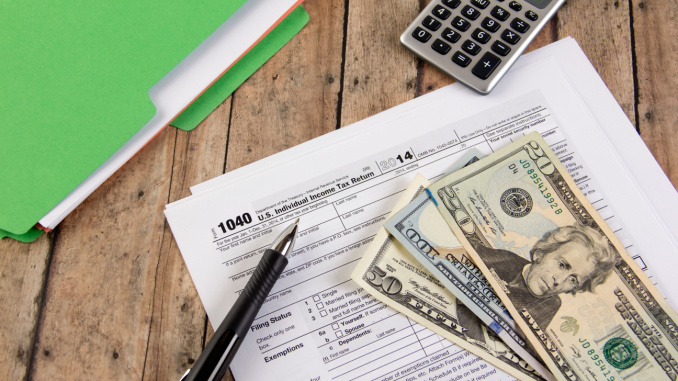
Governor Katie Hobbs has vetoed a Republican bill, HB 2785, which would have brought Arizona’s income tax law into full conformity with the federal Internal Revenue Code as reflected in the tax forms already issued by Hobbs’ Department of Revenue for the 2025 tax year.
The legislation, passed on February 11, 2026, aimed to protect Arizona taxpayers from uncertainty, the need for amended returns, potential penalties, and mid-season rule changes during the ongoing filing season.
By aligning state statute with the guidance taxpayers are currently following, HB 2785 would have prevented widespread disruption and costly refiles for Arizonans.
The action comes after Governor Hobbs vetoed an earlier Republican tax conformity package that included targeted relief measures—such as no tax on tips or overtime, deductions for seniors, and replacements for the federal SALT deduction with expanded child tax credits and childcare expense deductions.
Following the first veto, the Governor’s administration issued tax forms assuming full federal conformity (including provisions like deductions for qualified tips, overtime pay, certain vehicle loan interest, and additional charitable contributions for standard deduction filers), while repeatedly declining to clarify her position or support changes.
Department of Revenue testimony highlighted the risks of reversing course now, potentially forcing up to one-third of filers to submit paper-only amended returns, incur additional filing costs, and face unexpected tax liabilities months later.
In a press release, House Speaker Steve Montenegro stated, “Arizona taxpayers did exactly what the government told them to do, and the Governor left them exposed. Her Department of Revenue issued tax forms, told people not to delay filing, and testified that changing course would cause massive disruption. Then the Governor vetoed the Legislature’s solution and refused to explain what comes next.”
“That is the opposite of leadership,” added Montenegro. “The House and Senate acted because families, seniors, and small businesses should not be forced to pay penalties, refile returns, or owe unexpected taxes because the executive branch could not get its act together.”
Ethan Faverino is a reporter for AZ Free News. You can send him news tips using this link.
by AZ Free Enterprise Club | Feb 9, 2026 | Opinion
By the Arizona Free Enterprise Club |
Governor Katie Hobbs rolled out her budget last month and, unsurprisingly, it doesn’t add up.
Not only because her “solutions” don’t match the problems she claims to be solving, like suggesting we can make goods and services more affordable by piling on new taxes and fees, but because her budget quite literally just doesn’t add up.
While it’s become common for governors to release budgets built on rosier revenue assumptions than the Legislature’s more conservative Joint Legislative Budget Committee (JLBC), Hobbs’ proposal relies on projections so fanciful it resembles a fairy tale more than a fiscal plan.
Counting Chickens Before They Hatch
Hobbs’ budget is a $17.7B spending plan ($100M more than last year) that leaves a meager $37.8M balance at the end of FY27. That means her revenue projections leave very little room for error. Yet one of the more obvious facts about her budget is just how likely error-prone these projections are, a fact that Republicans during a joint appropriations hearing were sure to point out.
One of the most speculative assumptions Hobbs is making in her budget proposal is relying on $760 million of “reimbursements” from the federal government for expenditures the state has made for border security since 2021. That is a good chunk of change, and her budget is unworkable without it.
The problem is it is actually way more likely than not that even if the state receives something in the way of reimbursement, it will not be the full amount, and who knows on what timeline. Regardless, it is irresponsible to commit money out the front door that may never come in.
This is nothing new for Hobbs. Just last year she continued a COVID-era program that neither had legislative authorization to continue nor the ongoing financial allocations to support it. That wound up blowing a $122M fiscal hole in the previous year’s budget mid-session that Republicans had to mop up.
The Governor’s budget also depends on tapping the State Land trust for another $1.5 Billion. Setting aside whether its a good idea to raid the land trust set up for various beneficiaries (K-12, Universities, deaf and blind, etc), changing the formula for trust land distributions requires a constitutional amendment that would need to be approved by voters in November.
Hobbs’ “Affordability” Plan is Really a Chaotic Tax-And-Spend Plan
Hobbs wants to brand her budget as improving affordability, but it does just the opposite. Every idea in her plan is built around $1B in new taxes and fees and the hope that the bureaucracy can “manage” the cost of living while literally contributing to its inflation…
>>> CONTINUE READING >>>
by Staff Reporter | Feb 2, 2026 | News
By Staff Reporter |
The Republican majority at the Arizona House and Senate are advancing legislation to ensure full income tax conformity.
The state remains without conformity since Gov. Katie Hobbs rejected a solution by the Republican-led legislature amounting to $1.1 billion. Republicans are trying to bring another solution to the table with HB 2785. It’s unclear if Hobbs will pull up a seat for it.
Earlier this month, Hobbs vetoed legislation that would have aligned Arizona tax code with many of the congressional changes passed last summer under the One Big Beautiful Bill Act.
The governor accused Republicans of giving tax breaks to special interests and increasing taxes on working senior citizens. Hobbs said she would only agree to the Democratic minority’s Middle Class Tax Cuts Package.
“I urge you to rethink your partisan political theater and send the Middle Class Tax Cuts Package to my desk,” said Hobbs. “We should not hold tax cuts for over 88 percent of Arizonans hostage in order to force through tax breaks for special interests. Other questions of tax conformity must be decided through budget negotiations, following the precedent set by Governor Ducey.”
Unfortunately for the governor, the Arizona Department of Revenue (ADOR) had already advised Arizonans on how to file under federal tax law changes.
Several days before the governor issued her veto, ADOR notified lawmakers of the impossibility of altering their forms during the filing season. This latest bill from Republicans would codify ADOR’s instructions to taxpayers. Senate Finance Committee Chairman J.D. Mesnard (R-LD13) said the bill wasn’t the preferred approach since it wouldn’t provide as much relief to working families.
“The Department of Revenue has already told taxpayers how to file, and we are compelled to make sure the law and that guidance align, especially since the Department has publicly advised taxpayers not to wait to file,” said Mesnard. “Doing nothing would only guarantee more confusion and force families and businesses to fix the government’s mistakes later. We will never support a plan that requires taxpayers to amend their returns because state leaders failed to act when it mattered. It would be completely unjust.”
Without conformity, Arizonans have no way of knowing the accuracy of their filings. It’s likely taxpayers will need to refile, and even possibly pay more than they are prepared to pay.
House Speaker Steve Montenegro (R-LD29) said Hobbs was to blame for the present burden of impossible compliance facing Arizona taxpayers. The speaker said the governor has refused to communicate further with Republican leadership on conformity.
“Arizona taxpayers are being asked to file on forms that do not clearly match state law, while the Governor offers no answers and no alternative plan,” said Montenegro. “We asked for clarification privately. We asked publicly. We sent a detailed letter. We received silence. With tax season underway, waiting is not an option. This legislation exists because executive inaction left taxpayers exposed, and the Legislature has a responsibility to step in and restore clarity.”
Senate President Warren Petersen (R-LD14) said it was Hobbs’ agency that introduced the deductive provisions for wealthier filers to which she objected.
“It’s unfortunate the Governor has chosen not to work with us. The Legislature is stepping in to provide certainty by conforming state law to the tax forms her DOR has already released, including the State and Local Tax Deduction,” said Petersen. “The Governor would call that provision a tax break for the rich. We do not support the SALT deduction, but her agency has already included it on the forms, leaving the Legislature no choice but to address it. Tax reform was meant to make filing simpler and more predictable, not create confusion, anger, and frustration for Arizona taxpayers.”
AZ Free News is your #1 source for Arizona news and politics. You can send us news tips using this link.
by AZ Free Enterprise Club | Jan 21, 2026 | Opinion
By the Arizona Free Enterprise Club |
At a time when Arizonans are still struggling to recover from years of Biden-era inflation, Republican lawmakers acted swiftly to deliver on their Affordable Arizona agenda. On just the fourth day of the legislative session, they passed SB1106, a tax conformity package that delivered the full benefits of the One Big Beautiful Bill (OBBB) to Arizona taxpayers, families, and businesses. The legislation provided $1.1 billion in tax relief and, just as importantly, immediate certainty for millions of Arizonans heading into tax season.
The very next day, Governor Katie Hobbs vetoed it.
That veto leaves taxpayers facing a potential $1.1 billion tax hike and widespread chaos as filing season begins. This isn’t simply the typical tax policy fight between Democrat and Republican ideologies. But a full display of Katie Hobbs’ failure to lead.
From the outset, she has mishandled this critical issue of federal tax conformity with conflicting messages, unauthorized executive actions, and zero coordination with the Legislature or even apparently her own agencies. The result has been a self-inflicted mess, and Arizona taxpayers will be the ones to suffer the price.
>>> CONTINUE READING >>>