by Staff Reporter | Mar 26, 2026 | Economy, News
By Staff Reporter |
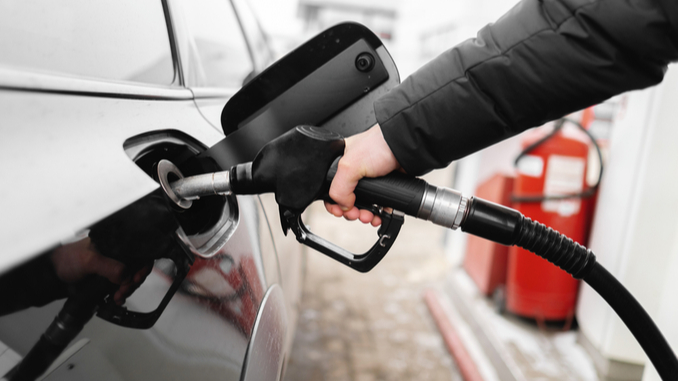
Republicans in the Arizona Senate are moving on legislation they believe will reduce gas prices.
A strike everything amendment to HB 2400 proposes to mitigate price spikes at the pump by filing an emergency waiver to increase Maricopa County’s fuel supply during emergencies.
Arizona policymakers anticipate prices to spike with pending supply constraints due to a forecasted California refinery closure in April. Federal environmental regulations require Valley drivers to use a more expensive and limited specialized fuel blend year-round, a requirement that expands to affect residents elsewhere in the state during the summer months.
Should the bill be enacted, the Department of Environmental Quality and the Arizona Department of Agriculture would submit an emergency fuel waiver to the Environmental Protection Agency (EPA) within 30 days.
State Sen. Shawnna Bolick (R-LD2) introduced the strike everything amendment. Bolick said the state does have recourse, but it’s up to executive leadership to allow for the remedy to occur.
“We see the warning signs. Refineries are shutting down, and if we don’t act now, prices will go up. HB 2400 will make sure Arizona can quickly access additional fuel when shortages hit, instead of waiting and hoping for relief,” said Bolick in a press release.
According to Stanford University’s Woods Institute for the Environment, the California refinery shutdowns were caused by multiple factors: depleting crude oil fields, declining in-state gasoline sales, consolidating oil infrastructure, and increasing availability of imported finished fossil fuel products.
A similar issue occurred in 2023. Gov. Katie Hobbs declined to file an emergency fuel waiver with the Biden administration despite a request from petroleum refiner HF Sinclair.
The company’s senior vice president, Jerry Miller, advised Hobbs in a letter of a critical supply shortage of several counties’ Cleaner Burning Gasoline (CBG), the special gasoline formulations required in certain parts of the state by the EPA under the Clean Air Act (CAA).
These formulation requirements are laid out in Arizona’s State Implementation Plan (SIP). The SIP establishes different CBG requirements depending on the season. CBG is required in Maricopa County and certain parts of Pinal and Yavapai counties year-round (called “Area A”). CBG requirement expands to include more of Pinal County during the summer months of May through September (called “Area C”).
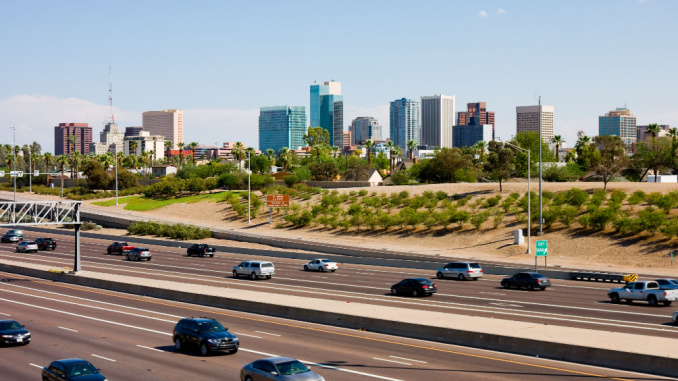
As in 2023, it will mostly be Maricopa County drivers who will feel the brunt of forecasted supply constraints.
Senate lawmakers will also consider HB 2955, which would expand the state’s fuel options by modifying the state’s fuel standards for CBG in order to expand supply options.
Sen. Bolick shared that she and other Republican lawmakers have laid the groundwork with the Trump administration to ensure that the fuel standard updates and emergency fuel waiver would be processed immediately upon filing.
“We are coordinating with the Trump Administration so Arizona is ready to act the moment these bills are signed into law,” said Bolick. “This is about getting ahead of the problem and making sure families aren’t stuck paying the price for decisions made in other states.”
AZ Free News is your #1 source for Arizona news and politics. You can send us news tips using this link.
by Matthew Holloway | Mar 25, 2026 | News
By Matthew Holloway |
Maricopa County officials announced that a recent determination from the Environmental Protection Agency (EPA) will not trigger additional air quality regulations for the region, maintaining its current “moderate” nonattainment classification under federal ozone standards.
According to Maricopa County, it remains designated as a “moderate” nonattainment area under the 2015 8-hour ozone National Ambient Air Quality Standards (NAAQS), meaning ozone levels in parts of the region continue to exceed federal limits. However, the county has avoided a “serious” classification, which would increase regulatory burdens on industry.
The Clean Air Act requires areas that exceed those standards to implement measures to reduce ozone-forming pollutants such as nitrogen oxides (NOₓ) and volatile organic compounds (VOCs).
The EPA had been evaluating whether to reclassify the Phoenix-Mesa area since at least 2024. The agency has now issued its final determination that the region would have met federal standards if not for emissions originating outside the United States and other uncontrollable factors, allowing Maricopa County to avoid additional mandates. As a result, the county will continue operating under its current regulatory framework.
“For years, Maricopa County has taken significant steps to reduce air pollution through outreach programs and practical compliance tools for businesses. But we don’t think we should face further regulations that harm business for the types of pollution we can’t control,” Board of Supervisors Chair Kate Brophy McGee stated. “I’m pleased the EPA agrees with our position. We remain committed to pursuing programs and initiatives that improve air quality in Maricopa County.”
County officials said the decision reflects years of local mitigation efforts, including outreach programs, compliance tools for businesses, and coordination with regional and state air quality agencies.
The announcement follows a series of state and federal actions related to air quality policy that Arizona leaders have closely monitored.
Then-Congresswoman Debbie Lesko and other officials pushed back in late 2024 against a potential EPA reclassification of Maricopa County, warning that stricter standards could have economic and national security implications.
In December 2025, the EPA moved to vacate a contested Biden-era air quality rule as part of a multi-state legal challenge, signaling a shift in federal regulatory posture.
Arizona lawmakers have also raised concerns at the federal level. Earlier this year, State Sen. Frank Carroll (R-LD28) urged Congress to clarify the EPA’s authority over air quality standards, warning that regulatory uncertainty could impact economic growth in the state.
“Americans deserve clean air, land, and water, but they also deserve an economy that can grow without unnecessary federal interference,” Carroll said in a statement at the time. He added, “While the Clean Air Act allows for specific emissions regulations, the EPA must not exceed its authority or violate fundamental principles of separation of powers. By preventing bureaucratic overreach, we can protect both the environment and the economic opportunities Arizona families and businesses rely on.”
The issue has also intersected with Arizona’s economic development efforts, with Congressman Abe Hamadeh (R-AZ08) highlighting the importance of regulatory stability in May 2025 as major employers, including semiconductor manufacturer TSMC (Taiwan Semiconductor Manufacturing Co.), continue to invest billions of dollars in facilities in the Phoenix area.
Air quality regulations tied to ozone nonattainment status can influence permitting requirements, industrial expansion, and transportation planning, making federal classification decisions a key factor in long-term economic planning.
Maricopa County was reclassified from “marginal” to “moderate” nonattainment status in 2022 according to the Arizona Department of Environmental Quality (ADEQ) after failing to meet federal ozone standards, triggering additional planning requirements under the Clean Air Act.
County officials said they will continue pursuing strategies to reduce emissions and improve air quality while working within the existing regulatory framework.
Philip McNeely, Director of the Maricopa County Air Quality Department, said, “By maintaining moderate nonattainment status, Maricopa County can continue to focus on reducing pollution and finding solutions specific to our area. These include outreach, incentive programs for residents, practical compliance tools for business, and the pursuit of innovative emission-reduction credit rules. We are committed to clean air initiatives that make Maricopa County a healthier place to live.”
Matthew Holloway is a senior reporter for AZ Free News. Follow him on X for his latest stories, or email tips to Matthew@azfreenews.com.
by Ethan Faverino | Sep 15, 2025 | News
By Ethan Faverino |
In a decision advancing American energy dominance, the U.S. Environmental Protection Agency (EPA) announced a final rule granting the State of Arizona full primacy to control all classes of underground injection wells under the Safe Drinking Water Act (SDWA).
This approval positions Arizona as the primary regulator for protecting its underground sources of drinking water, while developing economic growth and innovation in clean energy technologies.
The move aligns with the EPA’s Powering the Great American Comeback Initiative, which emphasizes delivering clean and safe water to every American, restoring U.S. energy leadership, and empowering states to manage their own resources with local expertise.
By delegating authority to Arizona, the federal government recognizes the state’s unparalleled understanding of its unique water challenges and business landscape.
“Efficient and effective permitting is essential to bolstering American industry and unleashing energy dominance while protecting our nation’s water resources,“ said EPA Administrator Lee Zeldin. “States know their water resources best and understand the needs of their business community; entrusting them to take on permitting makes common sense. I am excited to see the economic growth that will be spurred by granting Arizona primacy to regulate underground injection under the Safe Drinking Water Act.”
The approval enables the Arizona Department of Environmental Quality (ADEQ) to oversee permitting and enforcement for all underground injection wells, including Class I wells for hazardous waste storage— ensuring these operations occur far below drinking water aquifers—and Class VI wells, critical for carbon capture and storage.
Following technical and legal review, the EPA confirmed that Arizona’s Underground Injection Control (UIC) program fully complies with SDWA standards. ADEQ will now handle authorizations and compliance monitoring with the EPA retaining oversight and permitting authority for wells on Indian Lands, except for Class II wells on Navajo Nation lands, because the Nation already holds primacy.
The move got the support from Arizona’s congressional delegation, emphasizing the significance of federalism and local priorities.
“Our Founding Fathers were clear in their commitment to states’ rights and a small federal government. Individual states must have the power to govern in the best interests of their own people. This ruling affirms that Arizona—not Washington bureaucrats—is best equipped to protect our water, foster economic growth, and ensure the well-being of our citizens. It is a key step in ensuring access to safe drinking water for Arizona communities for years to come. No one understands Arizona’s communities and resources better than Arizonans ourselves,” said Congressman Andy Biggs (AZ-05). “I am grateful to President Trump and EPA Administrator Zeldin for their commitment to slashing needless regulations and restoring authority to the states. This is a victory for federalism, for common sense, and for the people of Arizona.”
“Arizona understands our land, our water, and our energy needs better than anyone in Washington ever could. Granting primacy to our state of the Underground Injection Control program is a recognition that local expertise and innovation should lead the way,” said Congressman Juan Ciscomani (AZ-06). “It means that Arizona will now oversee the permitting for all underground injection wells, including Class VI wells essential for carbon capture and storage—a critical part of a secure and cleaner energy future, and Class I wells, which store hazardous waste far below drinking water resources critical for the health of all Arizonans. This step is a win for clean water, a win for responsible energy development, and a win for our economy.”
“I want to thank Administrator Zeldin and the Trump administration for recognizing that Arizona is best positioned to protect its underground sources of drinking water. This rule will allow us to provide clean and safe water for every Arizonan while bringing more and exciting economic opportunities to our great state,” said Congressman Abe Hamadeh (AZ-08). “This rule will strengthen Arizona’s ability to manage our future for our families.”
Arizona Governor Katie Hobbs also praised the decision as a pivotal achievement for the state saying, “Today’s decision is a major milestone for Arizona. By granting our state primacy over underground injection wells, the EPA is once again recognizing that Arizona is best positioned to protect its water and natural resources. This authority allows us to safeguard the integrity of our groundwater, while also supporting responsible economic growth and clean energy development. With this step, Arizona gains the tools to lead on sustainable environmental management and innovation for years to come.”
Ethan Faverino is a reporter for AZ Free News. You can send him news tips using this link.
by Jonathan Eberle | Jun 22, 2025 | News
By Jonathan Eberle |
A scheduled confirmation hearing for Karen Lee Peters, Governor Katie Hobbs’ nominee to lead the Arizona Department of Environmental Quality (ADEQ), was abruptly postponed on Wednesday by the Senate Director Nominations Committee.
Committee Chair Sen. Jake Hoffman (R-Queen Creek) announced the delay just hours before the hearing was set to begin, citing unresolved questions about certain aspects of Peters’ background that surfaced during the vetting process.
“Based on possible discrepancies with information relating to items we vetted, further clarification is necessary prior to holding Ms. Peters’ confirmation hearing,” Hoffman said in a written statement. He did not specify the nature of the discrepancies, nor whether they pertained to Peters’ previous professional experience or policy positions.
The postponement also came as the Arizona Senate worked to advance the state budget, which Hoffman noted was straining staff capacity.
“Given the Senate attempting to move the state budget today, our staff is stretched thin, and it is best to simply table the nomination for now,” Hoffman said. “I have communicated to Hobbs’ staff that we will reschedule her hearing soon.”
Peters’ confirmation is one of several being closely watched, as the Republican-controlled Senate continues to scrutinize the Democratic governor’s nominees for key state agencies.
Jonathan Eberle is a reporter for AZ Free News. You can send him news tips using this link.
by Jonathan Eberle | Mar 19, 2025 | News
By Jonathan Eberle |
A bill asking President Trump and Congress to prevent the Environmental Protection Agency (EPA) from imposing sanctions on Arizona is currently making its way through the Arizona legislature.
House Concurrent Memorial (HCM) 2010, sponsored by Rep. Michael Carbone (R-LD25) urges the federal government to prevent the EPA from imposing what lawmakers call “coercive and likely unconstitutional” penalties on Arizona regarding ozone pollution standards. The resolution also calls for maintaining the existing 2015 air quality standard rather than implementing stricter regulations.
The federal Clean Air Act requires the EPA to set and periodically review air quality standards to protect public health. In 2015, the EPA lowered the National Ambient Air Quality Standard for ground-level ozone to 70 parts per billion to reduce harmful pollution linked to respiratory illnesses. However, Arizona officials argue that some areas struggle to meet the standard due to factors beyond their control, such as emissions from outside the state or even outside the country.
The Arizona Department of Environmental Quality (ADEQ) is responsible for implementing and enforcing air quality regulations at the state level. Under federal law, state air quality plans must prevent emissions that significantly contribute to pollution in neighboring states or interfere with visibility protections.
The resolution, if passed, would formally request that:
- The President and Congress intervene to stop the EPA from penalizing Arizona for failing to meet ozone standards deemed unattainable with current technology.
- The EPA revise its regulations to allow Arizona’s air quality plan to account for cross-border emissions when determining compliance.
- The EPA maintain the 2015 ozone standard rather than implement stricter limits that the resolution claims lack sufficient scientific backing.
Additionally, the measure directs the Arizona Secretary of State to send copies of the memorial to federal officials, including the President, congressional leaders, and Arizona’s U.S. Senators and Representatives.
The measure passed the Arizona House with a 32-27-1 vote and was approved by the House Natural Resources, Energy & Water Committee in a 6-4 vote.
Supporters of the resolution argue that Arizona should not be penalized for ozone levels influenced by external sources beyond state control. If approved by the Legislature, HCM 2010 will serve as an official request for federal action but will not carry the force of law.
Jonathan Eberle is a reporter for AZ Free News. You can send him news tips using this link.