by Ethan Faverino | Mar 6, 2026 | News
By Ethan Faverino |
In response to recent controversies surrounding state contract awards under Governor Katie Hobbs’ administration, the Arizona Senate has approved legislation to strengthen oversight, prevent potential political favoritism, and protect taxpayer funds.
SB 1186 introduces mandatory disclosure requirements for companies applying for state contracts via Requests for Proposals (RFPs) or seeking certain state grants.
Under the bill, applicants must report any “thing of value” provided within the preceding five years. This includes anything given—directly or indirectly—by the company, its officers, directors, or their family members to the Governor; entities controlled by the Governor (such as campaign committees, joint fundraising committees, or inaugural funds); or organizations advocating for the Governor’s election or opposing their opponents, including political committees or nonprofits that make independent expenditures.
These disclosure obligations extend to companies currently holding state contracts, promoting ongoing transparency during the term of taxpayer-funded agreements. The bill also amends procurement record retention rules by prohibiting the destruction of notes taken during RFP evaluations. If such notes are destroyed in violation of the provision, related contracts awarded after the effective date may be resolicited.
The legislation addresses documented concerns from high-profile cases, including the Sunshine Residential Homes controversy—where the group home operator received a significant rate increase from the Department of Child Safety following substantial political donations tied to Governor Hobbs—and issues with a multibillion-dollar Arizona Health Care Cost Containment System (AHCCCS) Medicaid contract award.
In the latter, an administrative law judge highlighted serious flaws in proposal evaluation, scoring, fairness, and record-keeping, prompting questions about the integrity of the state’s procurement practices.
“What we have seen under the Hobbs administration exposed serious weaknesses in how state contracts are awarded and monitored,” stated bill sponsor President Pro Tempore T.J. Shope (R-LD16). “When billions of taxpayer dollars are involved, transparency cannot come after the fact. The public deserves to know who is seeking state contracts, what relationships exist, and whether decisions are being made fairly before money goes out the door. This legislation closes those gaps by requiring disclosures upfront, preserving critical records, and creating clear accountability standards so Arizonans can have confidence that contracts are awarded based on merit, not political connections.”
Supporters argue that SB 1186 modernizes oversight by focusing on pre-award transparency, in contrast to post-award reporting proposals. The bill amends Title 41 of the A.R.S., adding sections on disclosures for contracts and grants while strengthening record retention in procurement.
The measure now heads to the Arizona House for further consideration.
Ethan Faverino is a reporter for AZ Free News. You can send him news tips using this link.
by Matthew Holloway | Feb 26, 2026 | News
By Matthew Holloway |
Arizona House lawmakers advanced a package of Department of Child Safety (DCS) reform bills following a special oversight hearing led by House Committee on Government Chairman Walt Blackman (R-LD6) and Vice Chair Lisa Fink (R-LD27).
The Feb. 19 hearing focused on legislative oversight and proposed structural reforms to the state’s child welfare system. According to reporting from State Affairs, several of the measures discussed during the hearing have since advanced through committee and moved forward in the legislative process.
Blackman and Fink convened the hearing at 1:00 p.m., with lawmakers reviewing testimony and examining proposals addressing accountability, placement stability, child protection procedures, and oversight mechanisms within DCS.
In a news release, Blackman stated, “Arizona’s child safety system exists for one reason: to protect children. When the state takes custody, there is no room for excuses. This hearing is about accountability and enforceable change. We will put facts on the record, press for answers, and advance reforms that put child safety ahead of bureaucracy.”
Vice Chair Fink said lawmakers would examine how DCS responds to abuse reports, how placements are selected and monitored, and why “preventable failures keep reoccurring.” She added, “We are advancing reforms that strengthen kinship care, raise standards in group settings, and require action when credible abuse is reported.”
Reform Measures Advance
Six reform-related bills were advanced by the House committee amid continued scrutiny of foster care oversight.
- HB 2035 (Fink): Expands eligibility for kinship placement, requires timely identification and notice to relatives and significant connections, and increases transparency when kinship placement is denied.
- HB 2041 (Fink): Clarifies that a parent’s inability to provide basic necessities based solely on lack of financial resources should not be treated as neglect.
- HB 2611 (Blackman): Establishes enhanced safety requirements for group care settings, including employee screening and training standards, and protections focused on youth safety and continuity of care.
- HB 2860 (Blackman): Creates an independent oversight committee to review DCS performance and critical incidents, including reporting requirements and dedicated funding for oversight operations.
- HB 4004 (Keshel): Requires DCS to respond to credible abuse or neglect reports and prohibits screen-outs when an alleged abusive parent has parenting time or legal decision-making authority.
- HB 4049 (Fink): Adds DCS to the list of agencies exempt from restrictions on employing legal counsel outside the Attorney General’s Office.
The Arizona Department of Child Safety has faced sustained legislative scrutiny in recent years related to foster placements, case management workloads, and agency oversight following a series of tragic deaths, which led to a Senate investigation in August of 2025. The agency committed to a series of internal reforms during a September 2025 stakeholder meeting convened by State Senator Carine Werner (R-LD4).
The reform bills now move forward in the legislative process for further consideration.
Matthew Holloway is a senior reporter for AZ Free News. Follow him on X for his latest stories, or email tips to Matthew@azfreenews.com.
by Ethan Faverino | Feb 24, 2026 | News
By Ethan Faverino |
The Arizona Senate has taken significant steps to strengthen child welfare protections, passing two key bipartisan bills aimed at closing dangerous gaps in information sharing and coordination within the state’s child protection system.
In a strong show of support, Senate Bill 1126 (SB 1126) passed the Senate on February 16, with 29 ayes and 1 NV.
Sponsored by Senator Carine Werner (R-LD4), Chair of the Senate Health and Human Services Committee, the legislation addresses critical failures in communication between schools and the Arizona Department of Child Safety (DCS).
It amends ARS Section 15 -141 to require schools—in compliance with the federal Family Educational Rights and Privacy Act (FERPA)—to promptly provide DCS caseworkers with requested educational records and related information during active investigations of abuse or neglect.
The bill further prohibits public or private schools from preventing employees, contractors, or volunteers from speaking directly with DCS investigators handling allegations of child abuse or neglect. These changes aim to eliminate barriers that have historically delayed assessments of risk and timely interventions.
“Too often, tragedies reveal that pieces of information existed in different places, but the system failed to connect them in time,” stated Senator Werner. “This bill removes barriers so investigators can get answers quickly and make informed decisions when a child’s safety is on the line.”
SB 1126 responds directly to findings from legislative oversight reviews and several high-profile child death cases in Arizona, where warning signs were reported—sometimes through schools—but fragmented coordination and delayed access to information prevented earlier action.
Recent tragedies have underscored the urgent need for reforms to ensure warning signs do not slip through the cracks.
Complementing this effort, Senate Bill 1125 (SB 1125)—also sponsored by Werner—passed the Senate unanimously on February 10. The measure adds Section 8-469.03 to ARS Title 8 Chapter 4 Article 1, directing DCS to make annual efforts to enter memorandums of understanding (MOU) with each Indian tribe in Arizona that lacks a current agreement.
These MOUs must include provisions for sharing best practices, policies, training materials, and operational standards related to child welfare functions such as intake, investigations, placement, case management, and service coordination. They also require designating a specific DCS tribal liaison to coordinate communication, provide technical assistance, and foster collaboration.
Additionally, the agreements establish processes allowing tribes access to information on regulatory actions, licensing sanctions, corrective plans, substantial violations, and other enforcement measures against DCS-licensed group homes where tribal children are placed.
Together, SB 1125 and SB 1126 address systemic weaknesses uncovered through sustained legislative oversight, strengthening interagency coordination to better safeguard vulnerable children.
“Every child deserves a system that responds quickly and works together to keep them safe,” Werner added. “These reforms are about making sure information reaches the people responsible for protecting children before it’s too late.”
Both measures now advance to the Arizona House of Representatives for further consideration.
Ethan Faverino is a reporter for AZ Free News. You can send him news tips using this link.
by AZ Free Enterprise Club | Jan 16, 2026 | Opinion
By the Arizona Free Enterprise Club |
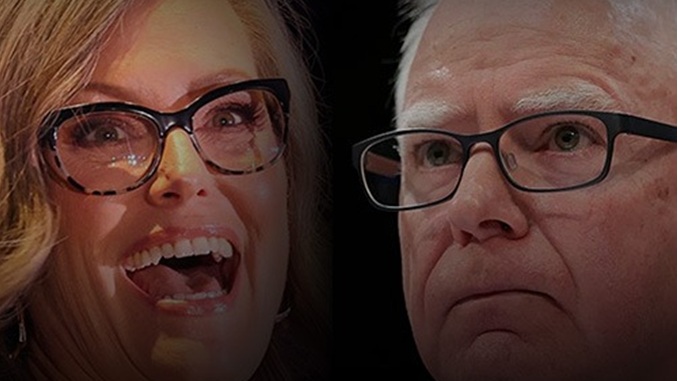
Over the past month, Minnesota has been hard at work to set the gold standard for jaw-dropping fraud scandals under the watch of Democrat Governor Tim Walz. The Somali daycare scandal has turned the state into a national punchline—hundreds of millions in taxpayer dollars stolen in plain sight while Kamala Harris’ favorite “masculine” governor looked the other way.
Now, with Walz stepping aside from this reelection bid, a new contender for “most scandal-plagued governor on the 2026 ballot” has emerged: Arizona Governor Katie Hobbs. While Minnesota’s scandals have dominated headlines, Hobbs has been busy compiling a rap sheet that rivals what happened in the Land of 10,000 Lakes. But unlike Walz, Hobbs and her administration are under active criminal investigation.
A Pay-to-Play Scheme Engulfs the Hobbs Administration
The list of Hobbs’ scandals is a mile long and begins at the start of her tenure as governor. At that time, Hobbs set up a shady slush fund to provide donors with a conduit to buy political favor from her administration. While setting up and managing the fund, Hobbs illegally used public resources—like the state’s website—to solicit money for her inauguration. And she also tried to stop the disclosure of the names of those who donated to her inaugural fund.
After immense political pressure, Hobbs finally released the names of the donors. One of the names of the groups on the list was Sunshine Residential Homes Inc., a for-profit company that contracts with the State of Arizona. Sunshine Residential donated $100,000 to the secret fund, which was suspicious enough. But after some additional digging by local reporters, an even deeper level of corruption was revealed—an alleged pay-to-play scheme between Hobbs and the group home.
According to the report, it turns out Sunshine Residential Homes doled out $400,000 to the Arizona Democratic Party, Hobbs’ gubernatorial campaign committee, and her aforementioned inaugural fund. Hobbs and her campaign finance manager even arranged a dinner with the government contractor to meet with the CEO in private.
After making the large donations, Sunshine was granted a 30 percent increase in their rates at a time when the Arizona Department of Child Safety cut loose 16 providers! On top of that, no other standard group home provider received a rate increase. This arrangement ensured that Sunshine Residential would receive millions in additional revenue at the taxpayers’ expense.
Hobbs’ is currently under three separate criminal investigations for this pay-to-play scheme, but it’s not the only financial scandal we’ve seen during her reign as governor…
>>> CONTINUE READING >>>
by Jonathan Eberle | Nov 18, 2025 | News
By Jonathan Eberle |
Arizona House Speaker Steve Montenegro has formed a new advisory team to investigate allegations that Governor Katie Hobbs’ administration awarded a lucrative contract increase to a politically connected group home provider, raising fresh questions about influence and accountability inside the Department of Child Safety (DCS).
The move follows reporting by The Arizona Republic that Sunshine Residential Homes received a 30% rate increase after contributing more than $400,000 to Hobbs and Democratic political committees. According to documents cited in the reporting, other group home providers seeking similar adjustments were denied. Internal communications reportedly show DCS staff discussing the provider’s political connections to the governor and suggesting the increase be kept quiet from competing organizations.
The revelations come as DCS faces a budget shortfall and has been under pressure to reduce reliance on group home placements, making the agency’s decision to grant a significant rate hike particularly notable. Speaker Montenegro said the advisory team will conduct a legislative investigation to assemble facts, coordinate with law-enforcement agencies, and evaluate possible actions the House may take to prevent preferential treatment in state contracting.
“The facts reported raise serious questions the House cannot ignore,” Montenegro said in a statement. “Arizona’s children, families, and taxpayers deserve a system that is clean, fair, and focused on care, not political access or donations.”
The speaker also directed state agencies and contractors to preserve all relevant records and to cooperate fully with the Legislature. The advisory panel includes several senior lawmakers including Rep. Selina Bliss, Chair of the House Health and Human Services Committee; Rep. David Livingston, Chair of House Appropriations; Rep. Matt Gress, Chair of the Joint Legislative Audit Committee; Rep. Quang Nguyen, Chair of House Judiciary; and Speaker Pro Tempore Neal Carter.
The investigation builds on earlier legislative efforts to probe the relationship between Sunshine Residential Homes and the Hobbs administration. In 2024, Rep. Matt Gress requested investigations by the Maricopa County Attorney and the Auditor General following the first reports linking the provider to political contributions and favorable treatment. Rep. David Livingston separately urged Attorney General Kris Mayes to recuse herself, citing concerns about conflicts of interest involving the governor and the Democratic Party.
The House advisory team is expected to begin its work immediately and will coordinate with any parallel investigations by the Auditor General, the Maricopa County Attorney’s Office, or the Attorney General. Montenegro said lawmakers will “secure the records, ask the hard questions, and, if necessary, change the law to ensure it never happens again.”
Jonathan Eberle is a reporter for AZ Free News. You can send him news tips using this link.