by Matthew Holloway | Jan 24, 2026 | News
By Matthew Holloway |
A proposed constitutional amendment aimed at reshaping Arizona’s election system passed its first major legislative hurdle in a hearing on Wednesday, as the Arizona House Committee on Federalism, Military Affairs & Elections (FMAE) approved Rep. Alexander Kolodin’s (R-LD3) Arizona Secure Elections Act.
The Committee advanced House Concurrent Resolution 2001 with a 4-3 vote. It now heads to the House Rules Committee. If approved by both chambers of the Arizona Legislature, the measure would be referred to voters on the November 2026 general election ballot.
Kolodin announced the committee hearing on social media ahead of the meeting.
According to supporters, HCR 2001 is intended to address concerns about voter confidence following recent election cycles. If approved by voters, the constitutional amendment would establish several requirements for statewide election administration.
Those provisions include limiting voter registration and participation to U.S. citizens, prohibiting foreign contributions to candidates or ballot initiatives, and requiring government-issued identification in order to vote.
Additional requirements would mandate that early voting concludes no later than 7:00 p.m. on the Friday preceding a Tuesday general election, prohibit the acceptance of ballots after polls close on Election Day, preserve in-person voting options at accessible polling locations, and require mail-in voters to verify their address each election cycle.
Committee Debate
During the hearing before the committee, Kolodin described HCR 2001 as an effort to overhaul Arizona’s election system by drawing comparisons to reforms adopted in Florida after the 2000 presidential election.
“This year the Arizona State Legislature will give the voters of Arizona the opportunity to transform our system of elections from a national embarrassment to a national model,” Kolodin told committee members, arguing that Florida’s reforms improved election security, sped up results, and increased voter satisfaction.
Kolodin urged lawmakers to advance the measure, saying the proposal would allow voters to address longstanding concerns about election administration.
Democrats raised concerns about voter access and election logistics. Rep. Aaron Márquez (D-LD5) argued that the proposal would effectively end the active early voting list and push large numbers of voters back into in-person voting without funding for additional polling locations, potentially creating longer lines on Election Day.
Kolodin rejected that characterization, emphasizing that HCR 2001 is a constitutional ballot referral rather than a statutory change.
“You have mistaken assumptions right off the bat,” Kolodin said. “It’s not a piece of legislation. It’s not modifying statutory law. This is a constitutional ballot referral.”
Kolodin explained that constitutional amendments are intended to establish broad governing principles, while election administration details are left to statute.
“In a statute, you want to be prescriptivist,” he said. “With a constitutional amendment, you must refrain from being overly prescriptivist,” noting that constitutional provisions are designed to endure for generations.
Addressing concerns about early voting, Kolodin said the proposal would not eliminate early or mail-in voting but would require voters to confirm their address each election cycle before automatically receiving a ballot.
Kolodin also defended the proposal’s voter identification requirements, arguing that the current signature verification system is imprecise and can result in lawful ballots being rejected.
“Our current system of signature verification, which is incredibly imprecise, leads to a large number of valid votes sometimes be[ing] rejected. It’s a very imperfect system. A more precise system, where a definite match can be obtained, where you don’t have to squint at the loops and the squiggles to try to figure out the signatures match, or if a ballot should be sent to curing, and potentially rejected, but where there’s something where it’s binary: it’s either a yes or no. There’s no matter of opinion there [that] will actually lead to fewer votes cast by lawful voters being rejected in the system,” Kolodin said.
Advocacy Groups Weigh In
The Arizona branch of the American Civil Liberties Union, represented by Katelynn Contreras, opposed the Resolution during the public comment period, stating, “HCR 2001 does not improve election integrity. Instead, it will restrict access for eligible voters to create confusion and rigid, unworkable rules in the Arizona Constitution. This resolution significantly curtails early and non-voting options that most Arizonans rely on.“ The ACLU representative cited what she described as survey data, claiming that 70 percent of Arizona voters say elections are fair and that roughly 80 percent vote by mail or early, and suggested that the ballot measure would “ban a method of voting that is widely used in the state.”
The figures cited by the ACLU couldn’t be independently verified by AZ Free News.
Asked to clarify the claim, Contreras said the measure would create “new discretionary areas that could be used to restrict mail voting for future.” Kolodin responded, “Mr. chair, I just wish to point out that that is untrue. OK, I just want to put that very clearly.”
The Arizona Freedom Caucus has promoted the proposal on its social media channels since the resolution’s prefiling in November, identifying it as a legislative priority and encouraging public engagement ahead of committee consideration. Arizona House Republican accounts have also circulated prior statements from Kolodin outlining the proposal’s intent.
Arizona Freedom Caucus Chairman Jake Hoffman (R-LD15) urged legislative leaders to advance the proposal following committee review.
“The Arizona Freedom Caucus is grateful that AFC Member Representative Alexander Kolodin has once again provided much-needed leadership in the critical mission to secure Arizona’s elections today and into the future,” Hoffman said. “Once it is heard by the FMAE Committee this week, I urge House Leadership to move it quickly to a floor vote and then send it to the Senate.”
Kolodin criticized the objections raised during the hearing, saying opponents had failed to cite provisions supporting claims that the measure would end early voting.
“We have now reached the point where the opposition to this measure has become truly silly,” Kolodin said, arguing that the proposal would expand, not restrict, voting opportunities.
He added, “It is time for the people of Arizona to have the opportunity to get their kids and their grandkids, my kids and your kids, an election system that we can be proud of, an election system that actually works, instead of inconveniencing and disenfranchising voters, and an election system that provides more opportunities for community participation by casting one’s vote at the polls or to return you ballot to the polls as you prefer. And it’s time, in other words, to take this choice out of the hands of politicians and put it in the hands of the people who actually deserve to have it: you, the voters of Arizona, and that’s where we’re sending it, despite the opposition.”
AZ Free News previously reported on Kolodin’s election integrity proposals and related legislative efforts, including the prefiling of HCR 2001 and its Senate mirror measure, SCR 1001, in November 2025. The Senate resolution, introduced by Sen. Shawnna Bolick (R-LD20), passed a hearing with the Senate Judiciary Committee 4-3 on Wednesday and will be heard next by the Senate Rules Committee.
The resolution must be approved by both the Arizona House and Senate before it can be referred to voters for consideration in 2026.
Matthew Holloway is a senior reporter for AZ Free News. Follow him on X for his latest stories, or email tips to Matthew@azfreenews.com.
by Staff Reporter | Jan 22, 2026 | News
By Staff Reporter |
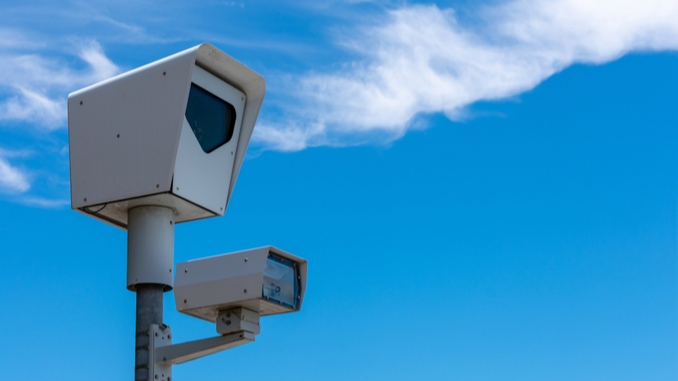
Voters may soon get to decide whether or not photo radar will continue to be used in the state.
A committee in the State Senate approved the bill on Tuesday.
SCR 1004 would ban photo enforcement systems used to identify violators of speed restrictions or traffic control devices from the entire state.
If approved by the state legislature, the measure could appear on the ballot as early as this November. Lawmakers opted for a resolution as a more viable pathway to bypass the requirement for Governor Katie Hobbs’ approval.
The governor didn’t support attempts to ban photo radar in the past.
Last year, the governor vetoed the same legislative language (outlined in a bill rather than a resolution) after its party-line approval in the legislature. No Democrats in either the House or Senate voted for the bill. Hobbs’ veto letter argued that the removal of photo radar would make the roads more dangerous, not safer.
“This bill attempts to remove the ability of local law enforcement to keep our streets safe by eliminating a tool used to enhance roadway safety,” stated Hobbs.
This sentiment was shared by Democratic lawmakers. State Sen. Lauren Kuby argued that certain studies supported the effectiveness of photo enforcement systems to reduce and deter traffic violations.
During voting on the bill last year, some Republicans — Reps. Teresa Martinez, Justin Wilmeth, Alexander Kolodin — did express doubts about the strategy of advancing a bill with SB 1019 rather than a resolution. An identical measure existed in SCR 1002.
Wilmeth said they were “wasting” their time by voting on the bill version of the legislation rather than the resolution.
“I want my Republican caucus members to understand: this bill will pass, and it will get vetoed,” said Wilmeth. “This is what majorities are about, and in this issue we are wasting our opportunity.”
Kolodin said Democrats were defending photo radar under false pretenses of public safety concerns, and that their true intentions had to do with ticket revenues’ ties to clean election campaign funds.
“The photo radar scam is the way that our friends across the aisle fund their war machine. They run candidates in noncompetitive districts and funnel taxpayer money over to competitive districts, all on the backs of hardworking Arizona drivers who are denied due process when they receive their traffic tickets,” said Kolodin. “It’s almost as if we’re more interested in making a show of solving the problem than actually solving the problem.”
State Sen. Wendy Rogers authored both pieces of legislation last year and was the lawmaker to reintroduce it again this year.
Rogers disputed Hobbs’ veto claim in a press release published on Tuesday. The state senator stressed the unreliability of automated enforcement, which is what photo radars operate under. Rogers said it should be law enforcement, not technology, to make the judgment call on violations of traffic law.
“Automated enforcement removes discretion, undermines due process, and turns routine driving into a revenue stream,” said Senator Rogers. “That’s not how law enforcement should work in Arizona. The resolution does not excuse dangerous driving or eliminate traffic enforcement. It ensures that enforcement decisions are made by trained law enforcement officers, not algorithms and contractors.”
AZ Free News is your #1 source for Arizona news and politics. You can send us news tips using this link.
by Jonathan Eberle | Nov 17, 2025 | News
By Jonathan Eberle |
The Arizona Freedom Caucus (AFC) is throwing its support behind a new election-related proposal from Rep. Alexander Kolodin, announcing its endorsement for the Arizona Secure Elections Act, a measure the group says is aimed at restoring trust and stability in the state’s voting system.
The bill outlines a series of election policy changes that AFC members argue are necessary to address ongoing concerns about administration errors, delays, and voter confidence. According to the caucus, repeated issues in recent election cycles have eroded public trust and demand a comprehensive response.
“The integrity of our elections remains a top priority,” the caucus said in its statement, pointing to what it described as persistent failures that have “made it impossible for reasonable people to trust the integrity of the process and therefore outcomes.” The AFC said its legislative agenda will continue to center on tightening election procedures and removing what it views as opportunities for error or abuse.
The Arizona Secure Elections Act would make a series of changes to election laws, including affirming the principle of “one citizen, one vote”; banning campaign or ballot-measure contributions from foreign individuals or corporations; requiring government-issued identification for all voters; ending early voting at 7 p.m. on the Friday before Election Day; prohibiting ballots from being cast or accepted after polls close on Election Day; guaranteeing access to in-person voting at local polling places; and requiring mail-in voters to confirm their mailing address every election year.
If approved by lawmakers, the measure would appear on the next general election ballot for voters to decide, setting up a statewide vote as soon as 2026. AFC Chair Sen. Jake Hoffman praised both the proposal and Kolodin’s involvement, calling the act a pivotal step toward what the caucus views as long-needed structural reforms.
“With our endorsement, we will be working to ensure that Arizonans have the opportunity to vote for this Act on the 2026 ballot,” Hoffman said, crediting Kolodin and other AFC members for advancing what he characterized as essential election security priorities.
The legislation, if passed, would bypass the governor and head directly to voters for final approval. The AFC says it intends to campaign for the measure statewide ahead of the 2026 election. The proposal is likely to draw significant attention as lawmakers continue to debate voting access, election security, and administrative reforms—issues that have dominated Arizona politics across several cycles.
Jonathan Eberle is a reporter for AZ Free News. You can send him news tips using this link.
by Jonathan Eberle | Oct 31, 2025 | News
By Jonathan Eberle |
The Arizona Freedom Caucus announced that Representative Alexander Kolodin will lead a special hearing on “The Implications of Artificial Intelligence for Democratic Governance and How to Preserve Meaningful Elections” on Friday, November 14, 2025, at 9:30 a.m. in House Hearing Room 4 at the Arizona State Capitol.
The hearing, open to the public and livestreamed through the Arizona Legislature’s website, will focus on how the rapid development of artificial intelligence (AI) is reshaping democratic institutions and the electoral process. Lawmakers plan to explore both the opportunities AI presents for improving government efficiency and the potential threats it poses to election security, voter confidence, and public trust.
Representative Kolodin, who chairs the House Ad Hoc Committee on Election Integrity and Florida-style Voting Systems, will be joined by four other Arizona House members, including fellow Freedom Caucus member Representative Rachel Keshel.
“The states cannot be complacent when it comes to the rapid development of AI,” Kolodin said in a statement. “The risk of insufficient oversight of AI is literally what dystopian nightmares are made of. Although it is reasonable to be excited about the prospects of AI to improve human life and society, it is equally critical to be vigilant about the ways it can be abused to erode our freedoms, including threatening democratic governance and our elections.”
The Arizona Freedom Caucus said it views the hearing as a proactive step toward crafting policy that anticipates how AI could be weaponized to undermine democratic processes. The group emphasized that while AI offers enormous benefits, its misuse could have far-reaching consequences for liberty, privacy, and electoral integrity.
“There is perhaps no greater concern than how AI will impact our elections,” the caucus said in its release. “We believe the best way to prevent destructive scenarios is to address AI’s prospective impacts and uses on the frontend.”
The November 14 session is expected to feature expert testimony and legislative discussion on strategies to safeguard Arizona’s electoral systems while responsibly integrating emerging technologies.
Members of the public can view the livestream of the hearing here.
Jonathan Eberle is a reporter for AZ Free News. You can send him news tips using this link.
by Matthew Holloway | Aug 2, 2025 | News
By Matthew Holloway |
Turning Point Action’s (TPA) recently updated scorecard grades the state of Arizona, as well as our members of Congress and State Legislators, on their alignment with or divergence from its policies and political positions. Federal-level scorecards were created for all fifty states, but state-level drilldowns were developed for six swing states: Arizona, Nevada, Wisconsin, Pennsylvania, Michigan, and Georgia.
The scorecard revealed a significant opportunity for improvement in the Arizona legislature, with many of the most prominent Republicans in leadership roles scoring below the 80th percentile. According to TPA, the conservative outreach organization, “has worked across the conservative movement to identify every scorecard and the legislation they encompass and provide an accumulation of scoring from across the Republican spectrum.”
Each state, policy category, and lawmaker (federal and state) is scored 0-100 and is classified from “Tyrant,” and “Becoming Tyrannical,” mainly for Democrats and some Republicans with a score of 49 or less, to “Turncoat” at 50, “Betraying America,” from 50-60, “Erratic,” from 60-70, “Becoming Erratic” from 70-80, “Losing Patriotism,” at 80-95, and for those scoring 95+: “Patriot.”
According to an explanation of lawmaker scoring from TPA, “Turning Point Action looks at each vote individually, identifies the category it belongs in and works amongst the grassroots to identify the conservative position. If the representative votes with Turning Point Action’s position for each bill or nomination, they receive full points. If the representative votes against TPA’s position, they receive nothing. Not voting, present, and abstaining from voting gives the representative only half credit, thereby diminishing their score for neglecting their responsibility.”
States are also scored in overall terms by “first finding the overall House score and overall Senate score by issue. Then the overall House score is added to the overall Senate score and divided by two to achieve the overall category state score.” States are accordingly ranked as being a “Tyrannical State” with a score between 0%-20%, “Becoming Tyrannical,” from 21%-40%, an “Erratic State” from 41%-60%, “Losing Freedom,” from 61%-80%, and a “Free State” scoring 81% or better.
As of this report, Arizona is ranked as “Losing Freedom” on federal matters with a score of 62.50 and as an “Erratic State” on state issues with a score of 41.69.
In the case of Arizona’s state legislature, the only “Patriots” recognized by TPA were Senator Jake Hoffman with a score of 99.40, and Representatives Joseph Chaplik with 98.05 and Alexander Kolodin with 96.10. The scores indicate a significant split between Arizona’s legislative GOP leadership and one of the largest, most impactful political organizations in the state and country.
Several of the most prominent leaders in the GOP were scored relatively low, such as House Speaker Steve Montenegro, who scored 77.27, labeled as “Becoming Erratic,” and Majority Leader Michael Carbone, who scored 71.43. Senate President Warren Petersen is listed as “Losing Patriotism,” with a score of 89.16 alongside Majority Leader John Kavanagh, who scored 83.13.
Matthew Holloway is a senior reporter for AZ Free News. Follow him on X for his latest stories, or email tips to Matthew@azfreenews.com.
Page 2 of 10«12345678910»