by Daniel Stefanski | May 30, 2024 | News
By Daniel Stefanski |
The Arizona Legislature has sent a bill to the governor that would strengthen protections for political candidates.
Last week, the Arizona Senate approved SB 1359, which would “require a person who distributes a deceptive and fraudulent deepfake of a candidate within 90 days before an election to include a clear and conspicuous disclosure that the media includes content generated by artificial intelligence (AI) and subjects a person that fails to disclose a deepfake as outlined to a civil penalty” – according to the purpose statement from the state Senate.
Senator Frank Carroll, the sponsor of the bill, noted in the Arizona Senate Republicans weekly newsletter that his proposal received “near unanimous support.”
In February, Carroll’s legislation had passed out of the Arizona Senate with an overwhelmingly bipartisan result of 24-4 (with two members not voting). After it was transmitted to the Arizona House of Representatives, it was amended and received a 56-0 tally earlier this month (with four members not voting). The Senate then concurred with the changes from the other chamber with a 25-1 vote (with four members not voting).
Senators Bolick, Gowan, Petersen, and Shamp joined as co-sponsors of the legislation.
On the Arizona Legislature’s Request to Speak system, representatives from the Arizona Secretary of State’s Office, Arizona National Organization for Women, and State Conference NAACP signed in to support the bill. A representative from the American Civil Liberties Union of Arizona indicated opposition to the legislation.
Daniel Stefanski is a reporter for AZ Free News. You can send him news tips using this link.
by Corinne Murdock | Aug 12, 2023 | Education, News
By Corinne Murdock |
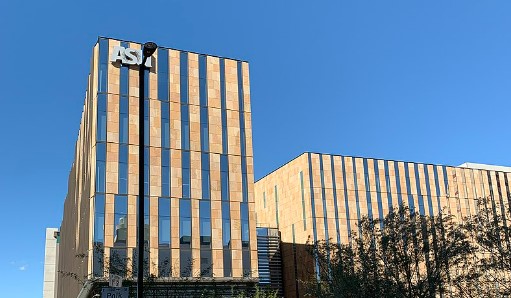
Applicants to Arizona State University’s (ASU) law school may have to take their admissions test on their own, but they won’t have to do their own applications.
ASU Sandra Day O’Connor College of Law will now allow applicants to use generative artificial intelligence (AI) to complete their applications. In a press release at the end of last month, the law school stated that generative AI will be a necessary tool for upcoming lawyers.
“In our mission to educate and prepare the next generation of lawyers and leaders, law schools also need to embrace the use of technology such as AI with a comprehensive approach,” stated the school.
Stacy Leeds, Willard H. Pedrick Dean and Regents Professor of Law, added that generative AI also allowed for more equitable admissions.
“Our law school is driven by an innovative mindset. By embracing emerging technologies, and teaching students the ethical responsibilities associated with technology, we will enhance legal education and break down barriers that may exist for prospective students,” said Leeds. “By incorporating generative AI into our curriculum, we prepare students for their future careers across all disciplines.”
Generative AI consists of large language model (LLM) tools: one of the most popular models is ChatGPT.
Last month, two New York lawyers were sanctioned for relying on a ChatGPT-generated brief that cited fake cases. The judge punished the pair for not conducting a proper review of the AI brief and for insisting that the fake cases cited were real, not for relying on generative AI in the first place.
The pair paid $5,000 for their oversight. The lawyers stated that they didn’t know that ChatGPT could create fake cases. However, the lawyers’ firm issued a statement disagreeing that the use of generative AI constituted bad faith.
“We made a good faith mistake in failing to believe that a piece of technology could be making up cases out of whole cloth,” stated the firm.
The New York lawyers may well become a case study at ASU. ASU’s law school also offers courses through its Center for Law, Science, and Innovation (LSI) on the legal questions of AI use, especially within the legal field.
One of LSI’s AI-centered projects, the Soft Law Governance of Artificial Intelligence, proposes using “soft law” governance for AI rather than existing legal frameworks. Soft law is a blanket term for recommendations or guidelines, rather than law. The project is funded by the Charles Koch Foundation.
ASU’s law school began allowing AI-generated applications this month.
Corinne Murdock is a reporter for AZ Free News. Follow her latest on Twitter, or email tips to corinne@azfreenews.com.