by Matthew Holloway | Mar 27, 2026 | News
By Matthew Holloway |
Legislation to expand Arizona’s advanced air mobility framework advanced this week at the state Legislature, with key measures clearing a House committee and moving toward a full House vote.
The bills, sponsored by State Sen. David Farnsworth (R-LD10), were approved by the Arizona House Technology and Infrastructure Committee.
One of the measures, SB 1826, would appropriate $2 million from the state’s advanced air mobility fund to the Arizona Office of Defense Innovation to expand AAM initiatives. The legislation requires the office to enter into a public-private partnership with a qualified entity to support the state’s defense, aerospace, dual-use, and national security sectors.
A second proposal, SB 1549, would define “ultralight vehicle” in statute and incorporate it into Arizona’s broader definition of advanced air mobility, a change intended to ensure emerging aviation technologies are included in long-term planning and regulatory alignment.
“I am optimistic about the outcome of these bills and pleased to see the strong momentum behind them as they move through the House,” Senator Farnsworth said in a statement.
“This has been a priority of mine, and it’s encouraging to see the level of support these measures have received from stakeholders across the state. We’ve had numerous productive meetings as the policy has taken shape, and that collaboration continues to strengthen these efforts as we push towards the finish line.”
The legislation builds on prior efforts by Arizona lawmakers to position the state as a hub for advanced aviation technologies. Farnsworth hosted a February aviation event at the Arizona Capitol, highlighting the development of electric vertical takeoff and landing aircraft and the state’s role in advancing AAM infrastructure.
That report noted that Arizona has already enacted legislation requiring the Arizona Department of Transportation to incorporate advanced air mobility infrastructure into its statewide aviation plan, including vertiports and charging systems, with a deadline of September 2026.
Advanced air mobility generally refers to next-generation aviation systems that utilize electric or hybrid aircraft, including vertical takeoff and landing vehicles, to transport passengers or cargo in urban and regional environments.
State and local planning efforts have also begun to align with those goals. The City of Phoenix Aviation Department has released a framework outlining how AAM technologies could be integrated into existing airport infrastructure, including operations at Phoenix Sky Harbor, Deer Valley, and Goodyear airports.
Additional legislation considered this session has explored expanding the use of AAM technologies beyond transportation, including potential applications tied to border security operations.
Arizona lawmakers have also appropriated funding in recent years to support AAM planning and development, including directing resources toward statewide aviation planning and infrastructure development tied to emerging aircraft technologies.
Matthew Holloway is a senior reporter for AZ Free News. Follow him on X for his latest stories, or email tips to Matthew@azfreenews.com.
by Matthew Holloway | Mar 2, 2026 | News
By Matthew Holloway |
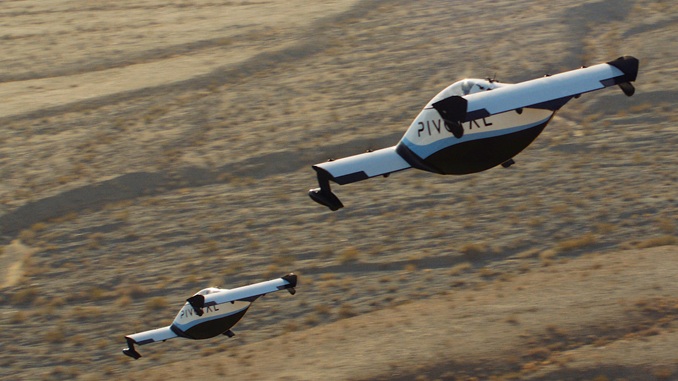
Arizona Senator David Farnsworth (R-LD10), chairman of the Senate Appropriations, Transportation & Technology Committee, hosted executives from Pivotal Aviation during a visit to Arizona aimed at showcasing developments in advanced air mobility technology.
Pivotal, a developer of electric vertical takeoff and landing aircraft, met with Farnsworth and explored potential flight locations and applications for its aircraft in communities including Superior and Globe. The discussions included how eVTOL technology could enhance connectivity, public safety, emergency response, and mobility in rural parts of the state.
Pivotal’s aircraft are part of a broader category of electric vertical takeoff and landing vehicles that are central to the emerging advanced air mobility (AAM) sector. AAM, as defined by the National Business Aviation Association, uses electric aircraft to move people and cargo between locations not easily served by traditional transportation or aviation modes, and the concept is being developed for both urban and regional applications.
The company, currently marketing single-seat eVTOL aircraft such as its Helix, is preparing customer deliveries of next-generation aircraft and continuing operational development.
Farnsworth described Arizona as having an opportunity to lead in next-generation transportation and emphasized the potential for AAM solutions to serve residents across the state.
He said in a statement, “Advanced Air Mobility is not just about technology for the sake of technology; it’s about enhancing how people move, keeping communities connected, and preparing for the future. Witnessing how these aircraft can directly benefit Arizona and discussing their operation across diverse landscapes, including rural towns, reinforces why our state is well-positioned to take the lead. My goal is to ensure that Arizona remains a place where innovation is welcomed, responsibly explored, and ultimately used to improve the quality of life for all Arizonans today and for generations to come.”
Arizona lawmakers have been taking steps to integrate advanced air mobility into the state’s transportation planning framework. Under Senate Bill 1307, signed into law in May 2025, the Arizona Department of Transportation (ADOT) must begin developing or upgrading a statewide aviation plan that incorporates infrastructure for advanced air mobility, including vertiports, “specialized areas for vertical takeoff and landing,” per the FAA, and aircraft charging stations, by September 1, 2026. The legislation also establishes funding mechanisms for constructing vertiports and supporting AAM demonstrations.
The state’s Advanced Air Mobility Fund, created through recent state appropriations, is intended to support infrastructure development and aircraft testing tied to AAM. Bills under consideration in the current legislative session would expand the uses of that fund, including potential applications for border security operations.
Local planning efforts also reflect growing interest in the technology. The City of Phoenix Aviation Department released an advanced air mobility framework study that outlines how AAM technologies, including eVTOL aircraft, could be integrated into the city’s airport system with roles defined for Phoenix Sky Harbor, Deer Valley, and Goodyear airports, according to AVWeb. That framework is intended to support infrastructure readiness, regulatory coordination, and potential future operations.
Advanced air mobility has also attracted federal attention. A pilot program launched by the Federal Aviation Administration in 2025, per Reuters, aims to accelerate air taxi deployment through public-private partnerships, enabling selected aircraft operations ahead of full regulatory certification. The program is part of a broader national effort to safely integrate eVTOL and similar technologies into U.S. airspace.
Matthew Holloway is a senior reporter for AZ Free News. Follow him on X for his latest stories, or email tips to Matthew@azfreenews.com.
by Jonathan Eberle | Oct 11, 2025 | Economy, News
By Jonathan Eberle |
Arizona State Senator David Farnsworth, chairman of the Senate Appropriations and Transportation Committee, is doubling down on his commitment to improving Arizona’s transportation network, emphasizing both immediate roadway repairs and longer-term investments in next-generation infrastructure.
Farnsworth noted that Arizona’s rapid population growth is putting added strain on highways and local roads, making safety and upkeep a pressing priority. His plan, he said, reflects a blend of conservative fiscal principles and forward-looking technology, designed to strengthen connectivity across the state while preparing for future mobility needs.
A central component of that vision is Advanced Air Mobility (AAM) — a developing technology that uses electric aircraft, sometimes called “air taxis,” capable of vertical takeoff and landing for short-distance travel. Advocates say AAM could ease traffic congestion, expand emergency response capabilities, and connect rural communities more effectively. Farnsworth has supported legislative work on AAM since 2024, with an eye toward balancing innovation with public safety and regulatory clarity.
Other states are already moving toward implementation. For example, Archer Aviation is slated to provide official air taxi services for the 2028 Olympic Games in Los Angeles. Farnsworth said Arizona must be proactive in keeping pace with such developments.
The senator also pointed to autonomous vehicle testing in Arizona, particularly self-driving ground taxis, as a model for how advanced technology can be integrated into daily life. Together with AAM, he said, these tools represent the next chapter of transportation policy.
“The work begins by repairing what is broken, followed by building what comes next,” Farnsworth said. “Advanced Air Mobility and autonomous vehicles are no longer concepts of the future—they are active technologies with real-world applications. My job is to ensure Arizona stays ahead of the curve, not behind it.”
Farnsworth stressed that his focus remains on practical investments and collaboration with communities, technology leaders, and policymakers. His goal, he said, is a transportation system that is modernized, fiscally responsible, and designed to serve Arizona residents well into the future.
Jonathan Eberle is a reporter for AZ Free News. You can send him news tips using this link.
Page 1 of 11