by Elizabeth Troutman | Feb 14, 2024 | News
By Elizabeth Troutman |
The Arizona Free Enterprise Club (AFEC) is suing Democrat Secretary of State Adrian Fontes due to certain rules in the latest Elections Procedures Manual (EPM) from December 2023, which the group believes are unlawful. The pro-free market nonprofit filed the legal challenge in the Superior Court of the State of Arizona for the County of Maricopa late last week.
AFEC is asking the court to strike down the provisions challenged by the lawsuit which are believed to contradict or exceed statutory authority.
“Secretary Fontes has produced one of the most radical elections procedures manuals in our state’s history,” said Scot Mussi, president of AFEC. “If the illegal provisions of this manual are allowed to stand, the integrity and transparency of state elections would continue to dissipate at the hands of leftwing ideologues.”
The complaint alleges that the 2023 EPM improperly places protected political speech at risk of criminal prosecution and has an unconstitutional chilling effect on protected political speech.
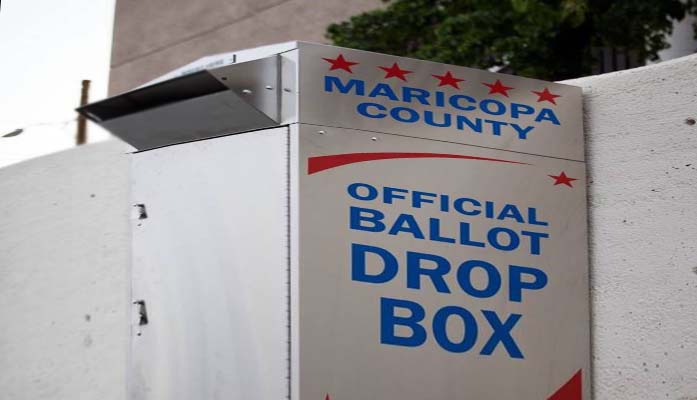
The provisions of the EPM that AFEC contends are unconstitutional include rules that: restrict observation of drop boxes and polling places, ban photography at election sites, and regulate speaking to people at election sites.
“These activities — watching drop boxes, speaking to people at election sites, and photographing activity at election sites — all constitute forms of speech,’’ the lawsuit says.
In addition to these claims, the lawsuit is challenging the 2023 EPM’s rules requiring political parties to open their primaries to federal only voters.
“The 2023 EPM also contradicts statutory requirements and exceeds statutory authority by opening the Presidential Preference Election to federal only voters, in essence, creating a new law out of whole cloth,” AFEC said in a news release.
The Free Enterprise Club details three counts for causes of action regarding the EPM, including speech, free association, and vagueness.
“We hope the court agrees with our arguments and forces the Secretary to adhere to state law,” Mussi said.
This isn’t the first lawsuit that’s been filed over the 2023 EPM. In January, Arizona’s leading legislative Republicans sued Fontes over the EPM. The Arizona Republican Party, Republican National Committee, and Yavapai County GOP filed their own lawsuit late last week.
Elizabeth Troutman is a reporter for AZ Free News. You can send her news tips using this link.
by Corinne Murdock | Feb 13, 2024 | News
By Corinne Murdock |
Arizona Secretary of State Adrian Fontes is facing another lawsuit over his Elections Procedures Manual (EPM), the state’s rulebook for administering federal and state elections updated biennially.
On Friday, the Arizona Republican Party (AZGOP), the Republican National Committee (RNC), and Yavapai County GOP sued Fontes over the 2023 EPM. Newly-elected AZGOP Chairwoman Gina Swoboda stated in a press release that Fontes had far surpassed his limited rulemaking authority through the EPM.
“Fontes and his allies are not legislators — they have no right to insert their preferred far-left policies into the guidance for Arizona elections,” said Swoboda. “This is a blatant attempt to rewrite election law and hollow out basic safeguards that are designed to preserve election integrity in our state’s elections.”
State law limits Fontes’ rulemaking authority to supporting existing laws on early and regular voting, and the handling of ballots and other election materials. The GOP groups stated in their lawsuit that these limitations were necessarily “specific and exhaustive” because the EPM carries the force of law upon approval by the governor and attorney general: a violation of any EPM provision is a class two misdemeanor, which carries a maximum four-month jail sentence.
Nine provisions set forth in Fontes’ EPM conflict with state election law, according to the GOP groups. These provisions concern registered voters who are declared noncitizens or have not provided Documentary Proof Of Citizenship (DPOC), signature verification, challenges to early ballots, out-of-state mailed ballots, and out-of-precinct voters.
One contested EPM provision requires county recorders to not cancel the voter registrations of individuals who declared themselves noncitizens on juror questionnaires if they have previously provided DPOC or have been registered to vote since 2004. The GOP groups contend that A.R.S. § 16-165(A)(10) requires county recorders to cancel those types of voter registrations, should the individual in question not respond to a mailed request for DPOC within 35 days.
A second contested EPM provision allows for those who don’t submit DPOC or whose DPOC can’t be verified to be registered as federal-only voters: individuals who may only cast votes for federal offices. The GOP groups contend that A.R.S. § 16-127(1) prohibits those without DPOC from voting in presidential elections.
A third contested EPM provision allows first-time, federal-only voters to provide only an ID and not DPOC in order to vote by mail. The GOP groups contend that A.R.S. § 16-127(2) prohibits anyone who hasn’t provided DPOC from voting by mail.
Fourth and fifth contested EPM provisions declare that county recorders aren’t required to check federal databases for citizenship review purposes. The GOP groups contend that A.R.S. §§ 16-165 and 161-121.01 require county recorders to compare voter registrations to a specific and inclusive list of state and national databases.
A sixth contested EPM provision precludes public review of voter signatures on mail ballots, limiting review to documents pertaining to a candidate, initiative, referendum, recall, new party, or petition. The GOP groups contend that A.R.S. § 16-168(F) allows public review of voter signatures for all election purposes.
A seventh contested EPM provision allows Active Early Voting List (AEVL) voters to make one-time requests for their ballots to be mailed to an address outside the state for certain elections. The GOP groups contend that A.R.S. § 16-544(B) prohibits AEVL voters from using a mailing address outside the state unless they are Uniformed and Overseas Citizens Absentee Voting Act (UOCAVA) voters.
An eighth contested EPM provision requires the denial of early ballot challenges received prior to the “return” of an early ballot or after the opening of an early ballot affidavit envelope. The GOP groups contend that A.R.S. § 16-552(D) allows for challenges to be placed before early ballots are placed in the ballot box specifically.
A ninth contested EPM provision allows out-of-precinct voters to cast provisional ballots. The GOP groups contend that A.R.S. § 16-122 prohibits out-of-precinct voters from voting at all.
Their lawsuit also accuses Fontes of ignoring statutory requirements for public and stakeholder review of the EPM, namely by withholding disclosure of “critical portions” of the rulebook until its final release last December.
GOP leadership also objected to Fontes only granting 15 days for initial public comment on the draft EPM from last July to mid-August and then allowed for no public comment period prior to the publishing of the final EPM in December. The Administrative Procedure Act (APA) requires agencies — defined as boards, commissions, departments, officers, or other administrative units — to allow for at least 30 days of public comment. The GOP groups argue that the secretary of state’s office falls under APA’s definition of agency.
Both the AZGOP and RNC raised objections to the brevity of public comment for the draft EPM around the time of its release, which Fontes ignored.
At the end of last month, Arizona’s GOP legislative leadership sued Fontes over the EPM. Their lawsuit contested some of the same provisions as this latest lawsuit from the GOP groups, but also contested other provisions, such as an AEVL provision delaying voter roll cleanup until 2027 and a canvassing provision circumventing court-based relief for when boards of supervisors fail to certify an election.
Corinne Murdock is a reporter for AZ Free News. Follow her latest on Twitter, or email tips to corinne@azfreenews.com.
by Corinne Murdock | Feb 7, 2024 | News
By Corinne Murdock |
In a race against Thursday’s deadline to prevent a potential conflict between state law and the federal election calendar deadline, Republican lawmakers have advanced a proposed set of bills while Democrats have balked. It’s unlikely the bills will become law, however, as Gov. Katie Hobbs quickly rejected them as “dead on arrival.”
Republican lawmakers from both the House and Senate announced their proposed solution, two bills, on Monday afternoon; by Tuesday morning, a joint committee had advanced the bills.
In a press release, the lawmakers said that the pair of bills, SB1733 and HB2785, would provide counties with an additional 19 days in the primary election calendar and an extra 17 days in the general election calendar to comply with federal deadlines.
State Sen. Wendy Rogers (R-LD07), chair of the Senate Elections Committee, expressed hope that Hobbs would sign the legislation if passed, claiming that a refusal would cause election turmoil and voter disenfranchisement. However, Hobbs dismissed the proposal almost immediately after its release.
“This commonsense solution promises to strengthen voter confidence, is backed by all Arizona county recorders, and allows our men and women who are serving in our armed forces overseas the opportunity to cast a ballot in our elections,” said Rogers.
HB2785 sponsor State Rep. Alexander Kolodin (R-LD03) remarked that it was “highly unlikely” the feared calendar conflict would come to fruition, and that the solution was “more complicated” than some other, unnamed solutions.
“There were many simpler ways to solve this problem, some of which do not require legislative solutions,” said Kolodin. “Nevertheless, we negotiated in good faith and agreed to accept this more complicated solution in exchange for signature verification and several other commonsense reforms.”
The solution aligns with recent requests by election officials, including that of Maricopa County Supervisor Bill Gates over the weekend.
On Tuesday, both SB1733 and HB2785 passed quickly and narrowly out of a special joint meeting with the Senate Committee on Elections and the House Elections Committee. Democrats uniformly opposed the bills, while all Republicans voted for them.
Arizona House Democrats described the bills as “a Christmas tree of unrelated and controversial policy provisions” that they and, likely, Hobbs would oppose.
Arizona Senate Democrats claimed that the alleged excess provisions in the proposed legislation would disenfranchise voters and hinder ballot access.
In a joint statement issued over the weekend, Hobbs and Secretary of State Adrian Fontes clarified that the governor wouldn’t approve any bill that carried “harmful unrelated legislation.”
The contested provisions include the imposition of the state’s first signature verification standards, as well as the expansion of signature curing hours to the weekend before and after an election for those elections including federal offices.
The proposed legislation would also create a category of verified early ballots exempt from review for voters who show ID when turning in their mailed early ballot in person.
The Arizona Association of Counties gave their support for both bills during Tuesday’s committee hearing.
Corinne Murdock is a reporter for AZ Free News. Follow her latest on Twitter, or email tips to corinne@azfreenews.com.
by Daniel Stefanski | Feb 1, 2024 | News
By Daniel Stefanski |
Arizona’s leading legislative Republicans are taking the state’s Secretary of State to court in advance of the 2024 election cycle.
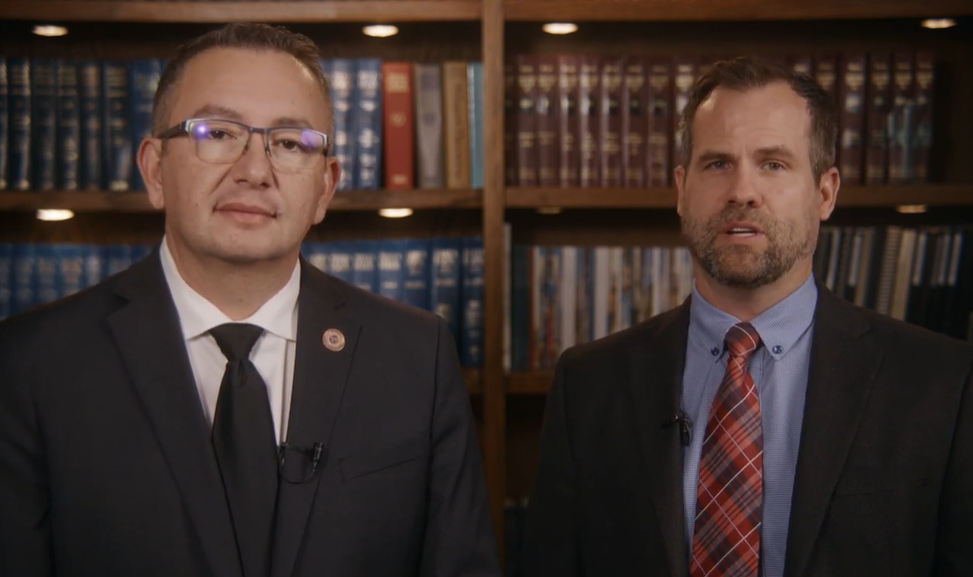
On Wednesday, the State Senate Republican Caucus announced that President Warren Petersen and House Speaker Ben Toma filed a challenge in Maricopa County Superior Court over the recently published Elections Procedures Manual (EPM), “requesting the court throw out a number of provisions in the EPM, which violate or conflict with current Arizona election laws.”
“Both the Secretary and our Governor have a track record of not following the law. As a result, I’m taking action to protect the integrity of our elections,” said President Petersen. “This reckless EPM opens the door to unlawful activity and undermines the voter confidence measures Republican lawmakers have implemented over the years.”
Toma added, “The Arizona Legislature is taking steps necessary to protect the integrity of Arizona’s elections…. Secretary Fontes has exceeded his jurisdiction, using the EPM to exercise lawmaking powers that do not belong to him. Our lawsuit aims to halt this overreach and nullify the unlawful provisions in the manual to ensure a fair and lawful electoral process for all Arizonans.”
The lawsuit, which was filed by attorneys of Statecraft PLLC and Snell & Wilmer L.L.P., asked the Superior Court for a preliminary injunction prohibiting the implementation or enforcement of the 2023 EPM to the extent it purports to:
- Allow county recorders to merely move to inactive status – rather than cancel the registrations of – voters who affirmatively stated on juror questionnaires that they do not reside in the relevant county and have not responded within 35 days to a notice from the county recorder;
- Prohibit county recorders from relying on information provided by third parties in determining whether there is reason to believe a registered voter is not a United States citizen;
- Delay implementation of statutorily required maintenance of the active early voting list until January 2027;
- Excuse mistakes or errors in the statutorily required registrations of paid or out-of-state ballot measure petition circulators;
- Compel county boards of supervisors to reflexively vote to adopt only the returns provided by the election official when conducting a canvass; and
- Authorize the Secretary of State to certify a statewide canvass that consists of returns of fewer than fifteen counties.
The legislative Republicans will have stiff opposition in court from the trio of statewide Democrats who were responsible for producing and approving this EPM: Secretary of State Adrian Fontes, Governor Katie Hobbs, and Attorney General Kris Mayes. When Fontes issued the 2023 EPM at the end of last year, he said, “Free, fair and secure elections have been this group’s commitment to the voter from the very beginning. This is what happens when a committed group of leaders comes together to serve their community. It’s good for our democracy and it’s good for Arizona.”
Governor Katie Hobbs, who preceded Fontes, said, “Partisan politics should have no role in how we run our elections. This EPM builds on the 2019 EPM and 2021 draft EPM from my tenure as Secretary of State and will ensure dedicated public servants from across the state will have the guidelines they need to administer free and fair elections. Together, we can protect our democracy and make sure every Arizonan has the opportunity to have their voice heard.”
As Secretary of State, Hobbs was required to finalize the EPM in 2021, but a divided government shared with Republican Governor Doug Ducey and Attorney General Mark Brnovich stymied the quest to secure a green light for the manual. Hobbs and Brnovich were also mired in an ongoing political feud, which resulted in legal bar charges that the Secretary of State brought against the state’s top prosecutor and several of his attorneys. After receiving Hobbs’ updated manual, Brnovich sued the SOS “to compel her production of a lawful EPM.” Brnovich alleged that “the SOS failed to provide the Governor and Attorney General with a lawful manual by October 1, 2021, as required, and instead included nearly one-hundred pages of provisions not permitted under the EPM statute.” The challenge from the former Attorney General was rendered unsuccessful, and the state was forced to revert to the previous cycle’s EPM (2019) to govern the 2022 races.
Daniel Stefanski is a reporter for AZ Free News. You can send him news tips using this link.
by Corinne Murdock | Jan 24, 2024 | News
By Corinne Murdock |
Secretary of State Adrian Fontes wants the Department of Justice (DOJ) to crack down more aggressively on threats to election officials.
Fontes revealed his dissatisfaction with the Biden administration in an exclusive interview with The Rolling Stone. He said that prosecutors ought to hit harder and treat the threats as domestic terrorism.
“We’ve got people who are threatening violence or committing acts of violence to achieve a political end,” said Fontes. “How are these people not being treated like terrorists?”
Fontes said that DOJ Attorney General Merrick Garland is endangering Americans because has been “far too cautious” when handling threats against election workers and officials.
“I have a lot of respect for the attorney general, but he is not being nearly aggressive enough on this threat, which is imperiling our democracy, and he and the department are not devoting nearly enough resources to it,” said Fontes. “It’s a crying shame when they put the physical health of their agency up against their actual duties to protect people and to protect our democracy.”
The secretary of state further accused the Biden administration of taking election officials for granted, and implied that entities like the DOJ owed election workers for getting them elected.
“They have the capacity to serve with honor because we have changes in administration at the White House, different people doing investigations and oversight in Congress,” said Fontes. “They need to prioritize those folks who administer the democracy that gives them that warm blanket that they serve under.”
According to the DOJ, Fontes and federal agents have engaged at least four times over the past 18 months. DOJ deputy chief John Keller told Rolling Stone that the agency has been aggressive in its response to threats against election workers and officials.
“The Justice Department will continue to aggressively prosecute cases involving threats to election workers to the fullest extent of the law,” said Keller. “Recent convictions and sentences demonstrate that federal courts and the department are taking threats to the election community extremely seriously, and there will be consequences commensurate with the seriousness of the activity.”
The Biden administration launched the Election Threats Task Force in mid-2021. In 2022, the DOJ announced its investigations into over 100 cases out of over 1,000 complaints reviewed.
Since the ETTF’s launch, the DOJ has charged four individuals for making threats to Arizona election officials concerning the 2020 election: James Clark, Walter Lee Hoornstra, Mark Rissi, and Joshua Russell. Several major threats made by critics against GOP election audit efforts, however, were overlooked.
Fontes also said that he and other election workers were risking their lives every day due to lies about the recent past elections and the elections system.
“[S]omeone who’s listening to that lie, believing it, is so upset about it that they literally want to go kill you. It’s a very very strange place to be as a civilized society,” said Fontes.
Corinne Murdock is a reporter for AZ Free News. Follow her latest on Twitter, or email tips to corinne@azfreenews.com.