by AZ Free Enterprise Club | Oct 2, 2025 | Opinion
By the Arizona Free Enterprise Club |
Freedom-loving, car-driving residents of Arizona have long been fighting the constricting “road diets” local government officials, city planners, and corrupt bureaucrats have pushed for years. Proponents of these diets claim that by tearing out perfectly good vehicle lanes, everyone will somehow be safer, healthier, and probably save the planet too.
For those of us who live under the blazing Arizona sun, we recognize this as foolishness. Road diets have not been successful accomplishing any of the goals their proponents claim they will. Instead, the result is that the streets become more congested, you’re spending more time on the road, emergency vehicles have a harder time getting around, and everyone is mad.
Luckily the U.S. Department of Transportation under the leadership of President Trump has promised to stop funding this nonsense. After all, if local city councils are dumb enough to waste money ripping up perfectly good roads, they shouldn’t be able to use everyone else’s tax money to do it.
Of course, unsurprisingly, the residents of those very cities often don’t want their own tax money to go to ripping up the roads they rely upon. One such city is the tiny town of Page, Arizona, where in 2022, the city council approved the “Page Downtown Streetscape Master Plan” which calls for removing vehicle lanes along a 1.4 mile stretch of Lake Powell Boulevard in the heart of the downtown area. In the small northern town, residents stood up against these restrictive, dumb transportation ideas. Page is a community known for its tourism, with visitors bringing boats and heavy gear to explore Lake Powell. For locals, these roads are lifelines for tourism, commerce, and daily living, and Page residents aren’t willing to surrender any more of their precious infrastructure.
>>> CONTINUE READING >>>
by Ethan Faverino | Sep 30, 2025 | News
By Ethan Faverino |
Congressman Andy Biggs (AZ-05) is the clear frontrunner in the Arizona Republican gubernatorial primary, leading businesswoman Karrin Taylor Robson by a 24-point margin, according to an exclusive Pulse Decision Science poll.
The survey conducted September 8-10, 2025, among 502 likely Republican primary voters, shows Biggs commanding 55% of the vote compared to Robson’s 31%, with 14% of voters undecided.
The poll highlights Biggs’ strong position as he and Robson look to challenge incumbent Governor Katie Hobbs in the 2026 general election.
If Rep. David Schweikert (AZ-01) were to enter the race, the survey indicates he would place third with just 11% of the vote, while Biggs maintains a 22-point lead over Robson, in a three-way contest, getting 48% to Robson’s 26% and Schweikert’s 11% with 15% undecided.
In a head-to-head matchup, if Robson dropped out of the race, Biggs would still be on top with 61% to Schweikert’s 23%.
“Congressman Andy Biggs enters August as the clear favorite in the GOP Primary Election and stands well-positioned as the strongest candidate to defeat Katie Hobbs in November 2026,” said Drew Sexton, a spokesperson for Biggs. “He’s the only candidate to be endorsed by President Donald J. Trump and Charlie Kirk, the only candidate with an impeccable conservative voting record, and the only candidate with the governing experience at the state and federal level to provide strong leadership for Arizona from Day One.”
Biggs’ campaign is further booming, with Turning Point USA’s PAC investing around $500,000 in his favor, as announced back in June.
Rep. Eli Crane (AZ-02) noted that Biggs can effectively spread conservative messages without creating enemies.
“I don’t know if you’ve ever spent much time with Biggs. But unlike a lot of America First fire-breathers that fire up the crowd, Biggs is kind of a happy warrior,” said Crane. “He’s got friends everywhere, and it’s not to say that there are some people that you know are in opposition to him, but he doesn’t pick personal fights with people. He keeps everything professional.”
Ethan Faverino is a reporter for AZ Free News. You can send him news tips using this link.
by Matthew Holloway | Jul 26, 2025 | News
By Matthew Holloway |
Congressman Andy Biggs’ gubernatorial campaign reported significant gains in fundraising during the second quarter of 2025 with a haul of $429,000. It marks the single largest fundraising quarter for Biggs in his career thus far.
The campaign reported that Biggs’ fundraising performance improved by almost $200,000 over the first quarter and noted, “This shows momentum and enthusiasm for his campaign with additional room for growth as his digital fundraising operation begins to build out.”
In a statement to AZ Free News, Biggs’ Campaign Senior Advisor Drew Sexton said, “We’re very pleased with our past quarter as Congressman Biggs more than doubled his cash on hand, received endorsements from President Donald J. Trump and Charlie Kirk, and continues his strong performance in every public poll with the set field of GOP candidates. We look forward to building on this in the coming months as the Congressman shares his vision for Arizona with voters from across the state.”
According to Capitol Media Services, Biggs’ primary opponent, Karrin Taylor Robson, narrowly outperformed Biggs in fundraising with $575,000 in individual donations and $2,500 from PACs in the second quarter. However, Robson also reported loaning her campaign over $2.2 million, which has been all but spent on advertising President Donald Trump’s endorsement of Robson.
The Biggs campaign made note of this in an email to AZ Free News stating, “The Biggs for Arizona campaign has an end of Q2 COH of $437K, more than doubling the campaign’s Q1 COH indicating a sustainable level of spending in comparison to the over $2.7M already spent by his primary opponent.”
According to Axios, the state of play as of this report is that:
- Democrat incumbent Governor Katie Hobbs, running effectively unopposed in her primary, has raised the most funds in the second quarter of 2025, netting approximately $1.3 million and held about $4.7 million cash on hand.
- Robson brought in $2.8 million, but as noted, $2.2 million was her own money. She has less than $900,000 remaining and is spending rapidly.
- Biggs however raised $429,000 and closed the quarter with about $437,000 on hand, showing consistent, steady growth.
As reported by AZ Free News in early June, Biggs’ advertising spend has been supplemented what Turning Point PAC declared “the largest launch event in Arizona gubernatorial primary history,” complete with a media campaign costing over $500,000, with the “Biggs for Governor” Rally hosted by Turning Point Action and Turning Point PAC itself counting for “an additional $780,000 in earned media value (EMV),” according to a press release.
Turning Point PAC said in a statement at the time, “Taken as a whole with Turning Point PAC’s $500,000 media buy announcement, the organization’s independent expenditures and organizing to support Biggs’s primary launch already amounts to over $1,400,000.”
Matthew Holloway is a senior reporter for AZ Free News. Follow him on X for his latest stories, or email tips to Matthew@azfreenews.com.
by Jonathan Eberle | Jul 10, 2025 | News
By Jonathan Eberle |
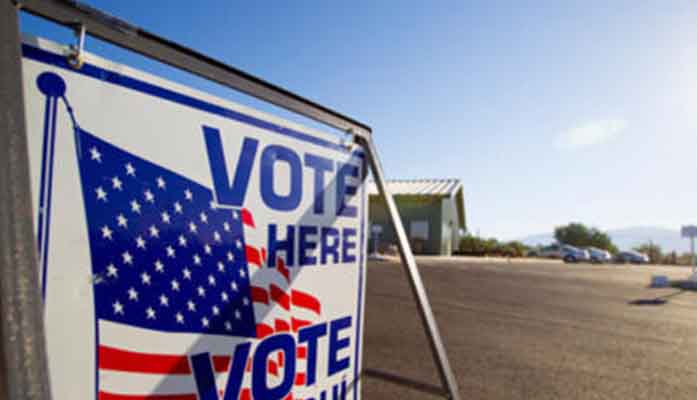
Sixteen months before the 2026 General Election, Arizona voters already know at least three ballot measures they’ll be weighing come November. Referred to the ballot by state lawmakers during the most recent legislative session, the proposals span issues of taxation, public safety, and individual privacy.
If passed, each measure would amend the Arizona Constitution — changes that can only be undone by future statewide votes. And these early additions may just be the beginning of what’s shaping up to be another crowded ballot.
In 2024, the number of voter questions was so high that some Arizona counties resorted to printing two-sheet ballots, prompting widespread voter complaints about ballot length. With dozens of potential referrals still under consideration, the 2026 ballot may once again test voters’ patience and attention spans.
Here’s a closer look at the three measures already set for the 2026 ballot:
1. Local Food Taxes Face New Restrictions
Sponsored by Rep. Leo Biasiucci (R–LD30), House Concurrent Resolution 2021 seeks to limit the ability of local governments to impose taxes on groceries.
If approved, the measure would require cities, towns, or counties to obtain voter approval before creating or increasing a tax on food. Currently, local governments can make that decision without direct input from the electorate.
The measure would also impose a temporary moratorium on any food tax hikes until June 30, 2027.
Proponents argue the change would make groceries more affordable during a time of rising costs. Local officials, however, warn it could impact critical revenue for municipal services.
The proposal passed with bipartisan support.
2. Ban on Mileage-Based Vehicle Taxes
Senate Concurrent Resolution 1004, sponsored by Sen. Jake Hoffman (R–LD15), would preemptively ban any tax or fee based on the number of miles a vehicle travels on Arizona roadways.
While Arizona does not currently impose such a tax, Hoffman and supporters argue the measure is necessary to protect personal freedom and prevent government overreach.
“There is nothing more insidious than the government trying to limit or control their citizens’ freedom,” Hoffman said earlier this year.
Mileage-based taxes have been explored in other states, like Oregon and Utah, as a way to replace declining fuel tax revenues and reduce pollution. Environmental advocates in Arizona, including the Sierra Club, support such measures as a means of curbing emissions and promoting sustainable transportation.
The resolution passed along party lines, with Republicans in favor and most Democrats opposed or absent.
3. Designating Cartels as Terrorist Organizations
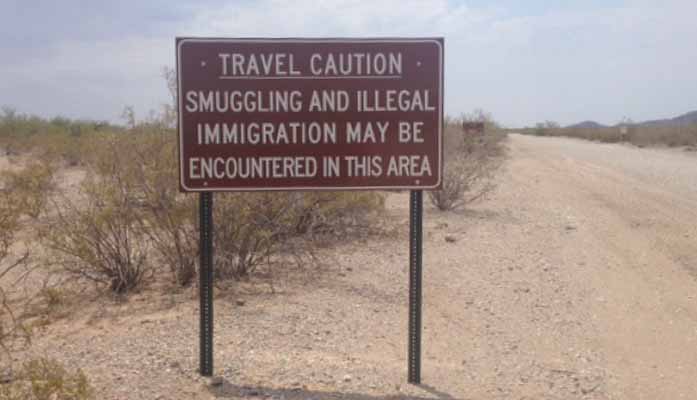
In one of the final acts of the 2025 legislative session, lawmakers approved House Concurrent Resolution 2055, which seeks to classify drug cartels as terrorist organizations under Arizona law.
Introduced by House Speaker Steve Montenegro (R–LD29), the measure would direct the state’s Department of Homeland Security to take all possible actions within its authority to counteract cartel activity.
Supporters say it complements Proposition 314, a 2024 ballot measure that authorized Arizona to enforce its own border security measures — though that law remains on hold pending the outcome of a related Texas lawsuit.
These early measures may just scratch the surface. Dozens of proposed ballot referrals were introduced during this year’s session, and lawmakers still have the 2026 legislative calendar to revive stalled proposals or introduce new ones.
As Arizona continues its tradition of robust direct democracy, election officials may once again find themselves preparing for a complex and lengthy ballot — and voters will need to prepare for an equally complex decision-making process at the polls.
Jonathan Eberle is a reporter for AZ Free News. You can send him news tips using this link.
by Jonathan Eberle | Jul 5, 2025 | News
By Jonathan Eberle |
Arizonans will have the final say on whether drug cartels should be classified as terrorist organizations under state law, following the passage of House Concurrent Resolution 2055 by the Arizona Legislature. The measure, championed by House Speaker Steve Montenegro (R-LD29), will appear on the November 2026 general election ballot.
The resolution calls for the state of Arizona to formally recognize transnational cartels as terrorist organizations and directs the Arizona Department of Homeland Security to use every available tool to combat their operations. If approved by voters, the designation would not carry federal legal weight but would signal Arizona’s position on the issue and potentially influence state-level enforcement priorities.
“These cartels run brutal, organized operations that traffic women and children, flood our streets with fentanyl, and kill without consequence,” said Speaker Montenegro. “Arizona is on the frontlines of a war…By sending it to the ballot, we’re putting the decision where it belongs—with the people.”
Supporters of the measure say it reflects a growing public concern about border-related crime, fentanyl overdoses, and human trafficking. According to statistics cited by the resolution’s backers, U.S. Customs and Border Protection encountered 282 individuals on the terrorist watchlist at the southern border from 2021 to 2023—a sharp increase compared to previous years. Meanwhile, fentanyl seizures and related overdose deaths continue to climb.
The proposed ballot measure is part of the House Republican Majority Plan, which emphasizes border security and law enforcement. GOP lawmakers argue that Arizona must act independently to address what they see as federal inaction on border issues.
“House Republicans are taking action to protect Arizona,” Montenegro said. “We trust voters to make their voices heard and stand with us in this fight.”
Proponents insist that the measure would send a strong message and help marshal additional state resources to combat cross-border crime. Voters will weigh in on the measure during the 2026 election. If passed, Arizona would become one of the first states in the nation to define international cartels as terrorist groups under state law.
Jonathan Eberle is a reporter for AZ Free News. You can send him news tips using this link.