In 2022, the Arizona Free Enterprise Club crafted the blueprint to stop illegals from voting in our elections, authoring landmark legislation that was signed into law, becoming the first state in the nation requiring proof of citizenship to register to vote with HB2492. Now, states around the country are taking notice and adopting our model, and just last week President Trump signed an Executive Order to do it nationally. Arizona was just the tip of the spear, and the dominoes are finally beginning to fall.
As of this week, two states require proof of citizenship to register to vote. Arizona was the first with HB2492. Earlier this year, Wyoming became the second. And now, the Texas Senate is considering a bill that is nearly identical to the Arizona Model, which would make them the third.
Arizona has long been at the forefront of this issue. In 2004, Arizona voters overwhelmingly approved Prop 200 to require proof of citizenship to vote. After nearly a decade of litigation, the U.S. Supreme Court allowed us to only implement the requirement on our own voter registration form but prevented us from requiring it on the federal form. The result over the decade following the decision was the complete proliferation of the “Federal Only Voting” list, amounting to tens of thousands of potential noncitizens registering and voting in our elections…
Many Americans believe the Supreme Court rulings on Engel v. Vitale (1962) and Abington School District v. Schempp (1963)—landmark cases banning prayer and Bible reading from public schools—effectively removed all forms of religious activity during educational hours.
As a result of these decisions, and the incessant drumming of “separation of church and state,” mainstream society now considers it unconstitutional to read Scripture or bow one’s head on government property. Every generation since 1963 has gone along with this diabolical rhetoric that blatantly violates the First Amendment to the U.S. Constitution:
“Congress shall MAKE NO LAW respecting an establishment of religion, or PROHIBITING THE FREE EXERCISE THEREOF; or abridging the freedom of speech…”
Truly, the progressive left succeeded in its efforts to (morally) overthrow the United States.
At issue, in 1962, was a nondenominational prayer recited alongside the Pledge of Allegiance in K-12 schools:
“Almighty God, we acknowledge our dependence upon Thee, and we beg Thy blessings upon us, our parents, our teachers and our Country.”
These 22 words pose no threat to anyone’s sincerely held beliefs. Although prayer was a standard part of every school day before 1962, students and staff members were not mandated to participate in the invocation. Nevertheless, anti-God activists have always deemed public prayer—that is, calling upon a higher power than government—an act that goes against the First Amendment. So, under the guise of nondiscrimination, several state laws were amended to abolish religious activities in public schools and bar educators from sharing their faith.
Don’t misunderstand what’s really at play. The false “church and state” narrative as well as the prohibition of Scripture and prayer are all aimed at one religion: Christianity. The progressive left wasn’t hellbent on expelling every god from mainstream society—they specifically intended to eliminate the God of the Bible (namely Jesus Christ) and silence His followers. Once God and Christianity were declared unlawful on school grounds, an alternative moral/religious code came into effect.
In the 1961 case of Torcaso v. Watson—just one year before God and prayer were banned from public education—the Supreme Court asserted that “secular humanism” (a form of atheism) was a religion fully protected by the First Amendment. If you will, the religion of unbelief is now considered to be legally and morally on par with Christianity. Yet only the former is allowed in public schools.
Of course, parents don’t recognize that their children are absorbing secular humanism because the doctrine is masked by minimal education requirements. Secular humanism is bright red lipstick on a filthy pig. If your child’s K-12 school requires a class or an assignment in the following subject areas, they’ve likely been indoctrinated with secular humanist dogma:
Evolutionary Theory—secular Creation Story
Social Studies—secular civil code (falsely teaches America is a democracy instead of a Constitutional Republic founded on Judeo-Christian principles)
Social Emotional Learning—secular moral code (falsely teaches restorative justice)
God may not be permitted on school grounds, but the religion of secular humanism is alive and well.
In his 2007 book “Separation of Church and State: What the Founders Meant,” David Barton wrote:
“[F]ollowing the 1962-1963 court-ordered removal of religious principles from students, teenage pregnancies immediately soared over 700 percent, with the United States recording the highest teen pregnancy rates in the industrialized world. Similarly, sexual activity among fifteen year olds skyrocketed, and sexually transmitted diseases among students ascended to previously unrecorded levels. In fact, virtually every moral measurement kept by federal cabinet-level agencies reflects the same statistical pattern: the removal of religious principles from the public sphere was accompanied by a corresponding decline in public morality.
Furthermore, consider the fact that suicide is one of the top five leading causes of death among children aged 12 to 19. Homicide among 15 to 29 year olds makes up 40% of the total number of homicides worldwide each year. There’s not enough time to discuss the increase in school mass shooting incidents over the last two decades.
Every case of teen violence and sexual deviance may not be directly linked to secular humanistic education. However, after nearly 18 years of being told you evolved from nothing, you’re a “clump of cells” with no inherent worth or purpose beyond the present moment—what reaction should we realistically expect other than rage and rebellion?
Parents choose public schools for a number of reasons, ranging from convenience to affordability to sports. And while there’s no shame in keeping certain traditions, it’s clear that America’s public education system is on the verge of total moral collapse. The emergence of “trans” activists coupled with the lack of basic social/survival skills among youths is evident. Ignorance is willful at this point.
According to Proverbs 22:6, God holds parents primarily responsible for educating their children. If we don’t want them indoctrinated with a secular humanistic worldview—one that says gender is fluid, America is systemically racist, and God is dead—then it’s time to abandon public education. This is one sure way to conserve family values, strengthen our nation’s moral foundation, and secure the freedom of future generations.
President Trump, by his own declaration, loves tariffs. In fact, tariff is his “favorite word.” Tariffs purportedly produce funds, “billions and billions, more than anybody has ever seen before,” which can be used for essential spending or to reduce taxes and meanwhile will “bring back jobs.”
The president is all in on his enthusiasms. As matters now stand, he is imposing both universal baseline as well as country-specific tariffs, affecting more than $1 trillion of imports. This compares to the mere $380 billion in tariffs passed in 2018 and 2019 by the first Trump administration but will rise to $1.4 trillion when/if the temporary exemptions for Mexico and Canada expire in April.
There is a logic to tariffs which appeals to those with a protectionist bent. If foreign producers are selling in your country and taking profits which could otherwise be earned by domestic enterprises, why not make the cost of doing business higher for them and keep the profits at home?
Yet the history of tariffs is, to put it kindly, dismal. The 1930 Smoot-Harley tariff is America’s best known and most instructive experience with protectionism. In 1929, the League of Nations passed a resolution declaring that tariffs were destructive and should be ended by all. When Smoot-Hawley was introduced, Franklin Roosevelt campaigned against it. After the bill passed, 1,028 economists and even some business leaders like Henry Ford urged a veto.
President Hoover termed the measure “vicious, extortionate and obnoxious.” He signed it anyway at the urging of his advisors. Americans, especially the agricultural sector, were facing a perceived problem with overproduction, mainly due to electrification and other laborsaving innovations. Republicans generally agreed that prices were too low, and it would help pull us out of our economic slump if American producers were shielded from foreign competition.
Big mistake. Trading partners had warned of retaliation and indeed boycotts and reciprocal trading restrictions soon broke out. Canada, our most loyal trading partner, imposed tariffs on 30% of our products and formed closer economic ties to the British empire. France, Britain, and Germany all formed new trading alliances.
Yet initially, the medicine seemed to be working. Factory payrolls, construction contracts, and industrial production all profited from the reduced market competition.
But the loss of the inherent advantages of trading soon became clear. From 1929 to 1933, U.S. imports fell 66% and exports decreased 61%. World trade nearly ground to a halt, falling by two-thirds from 1929 to 1934.
Unemployment was about 8% when Smoot-Harley was enacted, but the promises to lower it further never panned out. The rate jumped to 16% in 1931 and 25% in 1932-33, falling back to pre-depression levels only during World War II.
Tariffs didn’t cause the Great Depression, but they clearly deepened and prolonged it. Without Smoot-Hawley, it might have just been another temporary recession, not much worse than many other economic downturns in our history.
The take-home message is that free trade is a voluntary interaction that reliably promotes prosperity, both in theory and in practice. It is a classic win-win for participants, in contrast to protectionism which is based on the principle that the stronger party wins by defeating the weaker one.
The 2018-19 tariffs imposed by Trump and expanded by the Biden administration proved the point once again, by reducing long-term GDP by 0.2% and resulting in the loss of 142,000 full-time equivalent jobs.
Still, Trump favors strength and domination, based on negotiations where he “holds the cards.” The lack of success last time has not dissuaded him from unleashing a barrage of tariffs with impositions, pauses, increases, suspensions, and escalations that have left producers around the world desperately scrambling to protect their businesses by anticipating his next move.
Trump is playing with fire here. If he does ignite a trade war that results in another downturn, he may find that the American economy is not as resilient as it once was. Decades of uncontrolled deficit spending have left us deeply in debt and without the reserves necessary to withstand much more fiscal abuse.
The lessons of history and the laws of economics are clear. Tariffs don’t work. Proceed with caution.
Dr. Thomas Patterson, former Chairman of the Goldwater Institute, is a retired emergency physician. He served as an Arizona State senator for 10 years in the 1990s, and as Majority Leader from 93-96. He is the author of Arizona’s original charter schools bill.
Arizona Governor Katie Hobbs and the Radical Left have made it clear that they want to dismantle school choice in our state. Despite getting trounced in November’s election where teachers’ unions and other anti-school choice groups made it a referendum on educational freedom, Hobbs has doubled down on her same tired and out-of-touch efforts since the start of this year.
Once again, it hasn’t worked. Arizona’s Empowerment Scholarship Account (ESA) program continues to grow—with enrollment now over 87,000 students. So, Hobbs and her buddies in the teachers’ unions have resorted to employing one of their favorite tricks: relying on activist reporters in the corporate media to give their anti-school choice messaging an extra boost.
In early March, a coordinated attack was launched against Primavera, an online charter school serving thousands of K-12 students across the state. It began with a story from Craig Harris, a Red4ED activist that calls himself a reporter, who claimed that Primavera received a ‘D’ letter grade from the Arizona Department of Education for the past three years. According to the report, the school failed to meet the minimum academic requirements for a traditional charter school. Harris’ column then went on to complain about the owner of Primavera and how much money he has made while operating the school.
After the story was published, the Arizona Charter School Board convened a hearing to review the allegations against Primavera. In a span of just a few hours, the board imposed the most severe punishment at their disposal, revoking the schools’ charter and setting them up for eventual closure. In effect, Primavera was given the charter school death penalty after one meeting.
On the surface, this might make sense. After all, if a school is failing its students, it deserves proper accountability. But as so often happens with today’s corporate media, an important fact was omitted from this manufactured takedown…
Is DEI a good thing? Is being Hispanic an accomplishment? We must challenge these prevailing narratives and advocate for a more empowering discourse.
In today’s America, the conversation around racism has been hijacked, not by those who genuinely seek equality, but by a group that benefits from keeping minorities in a constant state of victimhood. As a proud Hispanic, I’ve seen how this narrative has been weaponized, not to uplift us but to keep us boxed into stereotypes that do more harm than good. These narratives harm us and undermine the progress toward a truly equal society.
We hear it constantly: “Speak up; you are a victim!” But have we ever stopped to ask who is looking down on us? Who is genuinely being racist? It’s not the hardworking Americans who see us as equals.
The Danger of the Victimhood Mentality
For too long, certain groups have pushed the idea that minorities, especially Hispanics, are perpetual victims who need special protection. This is evident in how some media outlets portray us, in the rhetoric of specific political figures, and in the policies that are supposed to help us but often end up reinforcing this narrative. But here’s the truth: this narrative doesn’t empower us; it chains us and, quite frankly, is abusive. When we accept the label of victim, we surrender our power. We allow others to dictate our worth instead of defining it through our achievements.
This is precisely what they want to control. They want minorities to feel oppressed so they can appear as “saviors or heroes” and expand government power under the premise of helping us. But we don’t need them; they perpetuate issues with no solutions. We don’t need pity. We need equal opportunity, which doesn’t divide us but unites us in a more inclusive America.
DEI policies could unintentionally perpetuate the victimhood narrative. These policies appear to be designed under the pretense of helping minorities, but they could end up hurting us the most. Take affirmative action and diversity, equity, and inclusion (DEI) initiatives, for example. These policies don’t level the playing field; they manipulate it. They make it seem like our success is only possible through handouts rather than hard work. They make companies prioritize skin color over competence.
And let’s not forget the devastating impact of government policies that fail to address fundamental issues affecting our community, like crime, border security, and drug trafficking. The very same people who cry about protecting minorities are the ones who have allowed cartels to flood our neighborhoods with drugs, endangering our youth. Policies that weaken law enforcement or ignore the crisis at our border don’t help Hispanics; they harm us.
When the real, actual cases of racism are reported, those are not taken seriously because of this abuse of making everything racist.
A dangerous byproduct of this divisive ideology is the rise of reverse racism. For years, we were told that discrimination is wrong, yet now, some openly advocate for hostility toward white Americans. They justify it by saying it’s “retribution” for past injustices. But racism, no matter who the target is, remains wrong.
How can we ever expect to move forward as a united nation if we keep fueling resentment and division? Instead of blaming one group for the struggles of another, we should recognize that success comes from hard work, responsibility, and perseverance, values that transcend race.
We must have a path forward for Hispanics not to feel like victims. We are entrepreneurs, professionals, veterans, business owners, and leaders. Our value doesn’t come from DEI policies, handouts, or political talking points; it comes from our contributions to this country. It’s time we reject the labels imposed on us and demand recognition for who we are: Americans who have earned our place through merit, not privilege.
Let’s stop allowing politicians and activists to define our identity for us. Let’s stand up against the dangerous rhetoric that keeps minorities trapped in victimhood. And most importantly, let’s ensure that future generations of Hispanics grow up knowing that their potential is limitless, not because of government assistance, but because of their hard work and determination. It’s time to change the narrative.
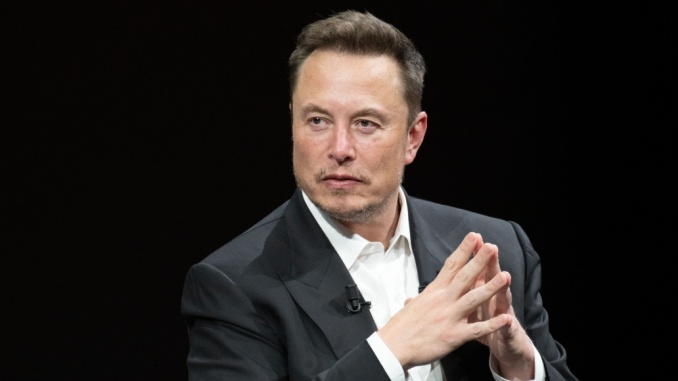
One of, if not the, highlights of President Donald Trump’s first months in office has been the Department of Government Efficiency (DOGE), headed by entrepreneur (and the world’s richest man) Elon Musk. Under Musk’s leadership, DOGE has not just exposed wasteful spending— but worked to reduce spending by eliminating entire agencies and even cabinet departments.
For example, DOGE pulled back the curtain on the United States Agency for International Development (USAID). Before DOGE exposed it, most Americans thought of USAID (if they thought of it at all) as an agency that provided humanitarian aid and development assistance to impoverished people in other countries. DOGE revealed that USAID’s humanitarian work was a cover for their true mission: making political and cultural change overseas. This is why USAID has spent millions on absurd “development” projects like transgender plays in Colombia, DEI schemes in Serbia and electric car subsidies in Vietnam.
Eliminating USAID would not mean the end of overseas development and humanitarian aid. It would mean that the aid would come from private charities. These charities can do a better job of providing aid than a government bureaucracy. As outrageous as USAID’s spending is, it is a drop in the bucket compared to the Pentagon’s over $800 billion (and on track to exceed $2 trillion by 2033) budget.
The “defense” budget is the third largest item in the federal budget, behind Social Security and Medicare. Few politicians will risk the wrath of senior citizens by voting to make any changes to these programs unless the changes are phased in such a way as to not affect those currently on, or close to, relying on the programs. Thus, any serious plan to reduce spending and debt must cut the bloated “defense” budget. Savings from reductions in military spending can be used to help support those dependent on federal programs as Congress unwinds the welfare state. Cutting military spending would be politically popular as most polls show a majority of Americans— including Republicans—support reducing America’s military commitments.
The poster child for wasteful Pentagon spending, which is thankfully already in Elon Musk’s crosshairs, is the F-35 —a $1.7 trillion disaster of delays, breakdowns and runaway costs. The plane, the most expensive military program ever, often sits grounded. The F-35 may be the most obvious example of wasteful Pentagon spending, but it is hardly alone. After all, this is the agency that brought us the $500 toilet seat. Shutting down boondoggles like the F-35 could provide revenue to help pay down the debt and protect those currently dependent on federal programs. It could also help ensure the forthcoming tax bill does not further increase the deficit.
DOGE is not the first effort to identify and eliminate wasteful spending. President Ronald Reagan had the Grace Commission, a sort of DOGE 1.0 that unearthed billions in waste—from the Department of Energy to the IRS. Their findings were buried by entrenched interests and a cowardly Congress. The lesson of the Grace Commission is that reducing even the most obvious wasteful spending requires the courage to stand up to the entrenched interests in both parties that benefit from the current system.
Trump and Musk may have the necessary convictions to make serious changes in the ways Washington works. However, they need to be prepared for the swamp to fight back. Democrats and their allies are already waging war against DOGE. To them, trying to identify and eliminate wasteful spending or even asking federal employees what they actually do is an assault on democracy. Most Democrats will join hawkish Republicans in seeking to protect the Pentagon’s budget. It would not be surprising if Congress’s bipartisan military-industrial complex caucus smeared those advocating cuts in the bloated military budget as “Putin’s puppets.”
The federal debt is growing by approximately $1 trillion every three months. To put that in perspective, consider that the federal debt did not reach the $1 trillion mark until 1981. Unless action is taken soon to reduce spending, pay down the federal debt and roll back the welfare-warfare state—America will face a serious economic crisis. Therefore, it is important that everyone who understands the stakes do what they can to support Trump and Musk’s efforts.