by AZ Free Enterprise Club | Jul 30, 2022 | Opinion
By the Arizona Free Enterprise Club |
Governor Ducey made the right decision vetoing HB2685, the Maricopa County transportation sales tax increase that was forced through the House and Senate during the final days of the legislative session.
But the reality is, it never should have gotten to his desk.
HB 2685 typified everything that is broken at the Capitol these days: a swampy political culture built around cronyism and backroom deals, legislative leadership pushing major policy through despite overwhelming opposition from their own caucus, and a complete breakdown in statesmanship, evident by the fact that most Republican lawmakers that supported the bill never actually read it or the MAG transportation plan that underpinned the legislation…
>>> CONTINUE READING >>>
by Dr. Thomas Patterson | Jul 22, 2022 | Opinion
By Dr. Thomas Patterson |
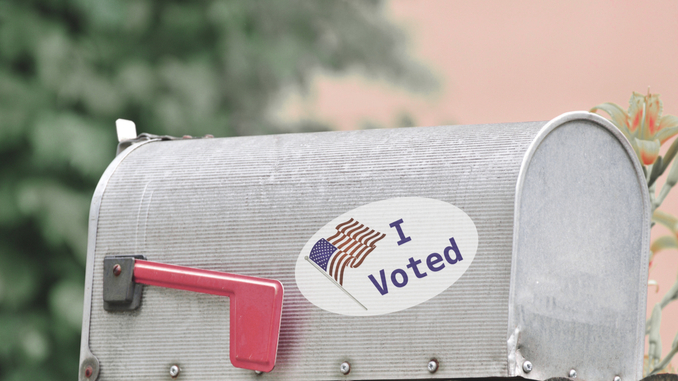
The debate over election fraud versus voter suppression is high-stakes and high-intensity. Trump loyalists insist the election was stolen, mechanically rigged, and rife with fraudulent actors. Democrats continue to insist that fraud never happens, an argument easily swatted away by the existence of thousands of documented incidents.
But Democrats have a point in that the problematic behaviors—bulk mail voting, ballot harvesting, and related practices—were permitted by law in most states. That means, according to the “fact checkers,” all reasonable people must agree that there was no fraud.
Trump fought the wrong war at the wrong time. While he was ranting about corrupt voting machines, rogue election workers, and a cascade of assorted allegations, Democrats in the last two elections were cleverly creating election rules intended to generate a permanent majority.
Trump and his supporters were never able to prevail in a court of law. In the end, they were outsmarted and lost the election to a pathetically weak candidate.
Attorney General Bill Barr was an astute, loyal adviser to Trump during the election. Unfortunately, his advice to stop exploring rabbit holes was not heeded. Yet he would see the traps the Democrats were setting in September 2020.
Bulk mail balloting is not your father’s absentee voting, he explained on CNN. “Instead of requests coming from a specific address, we are now going to mail them to everyone on a voter list, when everyone knows the voter lists are inaccurate.”
“People who should get them don’t get them…and people who get them are not the right people. They are people who have replaced the previous occupant…and sometimes multiple ballots come to the same address with several generations of previous occupants.” That’s no way to run an election, he concluded.
He’s right. For generations, America had voting laws that produced fair, reliable results. The laws required that all voters register beforehand and present a secure ID. All votes were cast confidentially. Absolutely no intimidation or persuasion was allowed in or near a polling station.
Importantly, there was a strict chain of custody to make sure that there could be no tampering and that all legally cast ballots would be counted. Voting was done mostly on site although accommodations were made for those unable to vote in person on election day.
That was the American way of conducting elections. Now all that has changed. Millions of ballots are sent automatically to voters just because they didn’t opt out of receiving one. Nobody knows what happens to them until they are returned.
Helpful party workers can collect them, offer aid with voting, and often leave them anonymously in drop boxes. The notoriously unreliable signature verification often is the only ID required.
Today, this is all perfectly legal. Of course, it’s illegal to vote a ballot not your own, to unduly influence another voter, or to fail to deliver certain ballots. But with bulk mail voting, none of this is detectable.
Once a mail-in ballot is opened and separated from its envelope, any possible proof of fraud is lost, no matter how many audits and investigations are performed. We have a voting system obviously prone to fraud and coercion yet opaque to any misdeeds committed within it.
Arizona voters, thanks to their legislature, will have a chance this year to close one gaping flaw in our system by approving a requirement of voter ID for bulk mail voters. There is no coherent reason to require ID at the polls while bulk mail voters get a pass.
Although the media continue to insist that those who support voter ID are “vote suppressors,” Americans smell a rat. According to a Quinnipiac poll, only 60% of voters overall believed the last election to be legitimate.
In the end, it may not matter how much “provable fraud” can be discovered. So long as we have a slipshod, non-secure system like bulk-mail voting, it will be difficult to convince voters of the integrity of their vote.
In a closely divided country, it is critical that citizens have confidence in elections and the legitimacy of the government. As Bill Barr says, “we are playing with fire.”
Dr. Thomas Patterson, former Chairman of the Goldwater Institute, is a retired emergency physician. He served as an Arizona State senator for 10 years in the 1990s, and as Majority Leader from 93-96. He is the author of Arizona’s original charter schools bill.
by John Huppenthal | Jul 17, 2022 | Opinion
By John Huppenthal |
I recently observed a tent camouflaged behind freeway road bushes in Chandler. Curious, I looked around the corner. I caught a man heating the bowl of a meth pipe in the act taking a deep drag. There were two men there. The second man looked in terrible shape, like a character out of Breaking Bad. It was 2:30 in the afternoon. I called 911.
Catching him in the criminal act was pivotal. Court decisions have given meth addicts a constitutional right to occupy our right of ways, defecate on our streets, and urinate on our sidewalks.
But these court decisions don’t protect criminal behavior.
I volunteered for two years at the school for the homeless. I never found one of the students to be homeless. They were sleeping on couches, in a spare bedroom, on someone’s carpet. Their families found someone, a relative, a friend, willing to be helpful. In my opinion, most people on the street don’t want to be in someone’s house. They are giving in to their drug addiction. Each one of them, willing to abide by the rules, can immediately enter a shelter. Rules are the key: shelters don’t allow drugs. Most of these people we describe as homeless are really meth addicts and should be described as such, not as homeless.
Meth addiction is a horror beyond all description. Read the case studies. One woman, after three days of smoking meth, cut off her boyfriend’s head and took it to his mother in a bucket.
Meth culture is now everywhere. Several months ago, a friend and I drove to hike Peralta Canyon. Leaving the paved roads, we noticed a man running, flapping his arms. Then, further on, we encountered 50-foot-long skid marks on a dirt road leading to a snapped barbed wire fence. Beyond the fence, in the distance, we could see a truck with an attached travel trailer.
Over the next hour, we put together the story. The man flapping his arms had been smoking meth for several days when he suffered a full-blown psychotic break. Somehow, convinced the cartel had arrived to assassinate him, he threw his cards and driver’s license down into the dirt so that the cartel could not use the magnetic strips to track him. He took off in his truck at an incredible rate of speed along with the attached trailer and another trailer behind it with his motorcycle. Driving in tight circles so that he could dodge the cartel’s bullets, his vehicles were bouncing a half foot into the air as he crossed the berms of the dirt road. His rate of speed was such that he was hitting five-inch palo verde trees, snapping them off without slowing. Losing control, he ran full blast into the barbed wire fence, snapping all three strands. He continued out into the desert hitting so many cholla that the cactus limbs piled up on the hood of his truck more than half-way to the top of the windshield. Finally, the sand of a desert wash trapped him but not before he had destroyed the economic value of all the assets he could claim in this world. As the fire fighters checked him out and the police took him away, he proclaimed to the world “I’m having a bad day.”
That’s the abyss addicts slide toward as they take communities with them.
Meth culture spreads. I encountered a gentleman taking pictures of the water retention basin a little further north. His mother, whose home and fence backs up to the water retention basin, had become fearful upon hearing noises that they were setting up camp in that retention basin. I told him to have her call police. The retention basin is completely fenced but there is plentiful evidence of addicts in discarded clothing and bedding.
All totaled, there were seven of these meth camps along Price Road, both on the Chandler side and the Tempe side.
I interviewed one of their residents. Waking him up at 10 in the morning, I offered him $30 for a 15-minute interview. He couldn’t find his glasses. Mentally fatigued from a stroke (a side-effect of meth addiction), he couldn’t last beyond a few questions. However, he did mention that both his father and his sister had died from drug addiction. His mother lives in Mesa. His age appeared to be late 40s. He couldn’t remember when he was born. This man was living in a makeshift tent in the 2 feet between the freeway sound wall and the bushes on the side of Price Road.
One of the camps was behind an SRP power transformer at the edge of Price Road. I got a garbage bag and just started cleaning it up. I took out 40 pounds of garbage. I didn’t have it in my heart to take out their foam mattress bed, their new running shoes, or their clothes.
I also posted my observations on a neighborhood social media platform. It attracted considerable attention and alarm as people realized how close they were to children.
All seven of these meth camps are now gone.
Unfortunately, according to an article in the Arizona Republic and their sources, there are over 3,500 of these encampments in Phoenix, destroying neighborhoods.
Be disciplined in your thinking. These are meth addicts. You can be sympathetic, empathetic and because of your sympathy and empathy, demand that they not be allowed to slide into a meth culture. They must get off the street. At least they must get off our streets. They are learning to beg and where to steal. They are engaging more people in meth culture. Somewhere, they have a friend, a father, a sister, a relative who will help them get clean. Keep them moving toward a better future.
by AZ Free Enterprise Club | Jul 16, 2022 | Opinion
By the Arizona Free Enterprise Club |
Last week, the Biden Administration officially filed a lawsuit against Arizona over HB2492, which bolsters safeguards to our voter registration process to require proof of citizenship ensuring only U.S. citizens are voting in our elections.
To many, it sounds absurd. Not HB2492, but the revelation that in Arizona, and in every state in the country, people are registering to vote and voting without ever providing proof of citizenship.
How many people are we talking about? In 2020, there were roughly 11,600 individuals in Arizona who voted in federal elections without ever having provide proof of citizenship. That’s up from under 2,000 just two years prior in the 2018 midterms. These numbers are alarming, but the exponential growth from just one election to the next is even more shocking.
>>> CONTINUE READING >>>
by AZ Free Enterprise Club | Jul 10, 2022 | Opinion
By the Arizona Free Enterprise Club |
Every American should be free to peacefully support causes they believe in without being harassed or intimidated.
Someone should tell that to Terry Goddard. For years, the former Attorney General of Arizona has been leading a campaign to “Stop Dark Money” in our state. Although the name sounds nefarious, it’s nothing more than clever messaging aimed to scare the average person.
But now Goddard’s new donor harassment initiative is set to file signatures in the coming days. And if it makes it onto the ballot and becomes law, it would be a devastating blow to donor privacy and free speech.
>>> CONTINUE READING >>>
by Dr. Thomas Patterson | Jul 8, 2022 | Opinion
By Dr. Thomas Patterson |
If America has learned anything from foreign entanglements over the past century, surely it is this: enemy conflicts must be engaged only if our vital interests are at stake. A war worth fighting must have clear objectives and a path to victory.
Clearly in WWII, all options save winning were unthinkable. We did win, and the modern classical liberal order was created.
We had no such resolve in Vietnam. Worried about riling China, and with growing domestic programs to fund, we fought not to win but for containment. And so we lost to a determined foe. America was humiliated, forfeiting immense blood and treasure as well as our national self-confidence.
Meanwhile, the Cold War spanned 45 fretful years during which the world became more dangerous. Neither side could afford to fall behind in the nuclear arms race when Mutually Assured Destruction was our defense against annihilation.
Ronald Reagan’s idea of actually defeating the Evil Empire turned the tide. Massive arms superiority and strategic defense weaponry convinced the Soviets that future efforts were futile.
The Middle East wars were fought without particular strategic goals and no endgame. We seem to believe we could mitigate Islamist terrorism through nation building and intervention in centuries old inter-tribal conflicts. We finally beat a disgraceful retreat with little to show for our losses.
Yet these lessons of history seem lost on our current administration‘s response in Ukraine. We don’t want our proxy, Ukraine, to lose but we’re not committed to winning either.
The heroic Ukrainians have fought to a virtual standoff. Yet, as a result of our indecisiveness, the outcome remains in doubt.
The seminal question was: why get involved at all? Is the Russian aggression basically a regional dustup, like our Middle East debacle? Or does a hegemonically ambitious autocrat represent an existential threat, analogous to the prelude to WWII?
Most Americans seem to realize this conflict has implications far beyond the ancient Russian/Ukrainian grudges. If Russia successfully breaches Ukrainian sovereignty, it will be the end of the international rules-based order that has sustained general peace and prosperity since WWII. Moreover, if nuclear weapons or their threat are decisive, it will embolden rogue states everywhere, including China and Iran.
President Zelensky has pleaded many times for faster delivery of air defenses and anti-missile systems. Yet our aid to Ukraine has been halting and inadequate. Not until late April did the Biden administration announce it would ship 90 desperately needed howitzers.
When the US finally decided to provide Ukraine with MLR (multiple launch rocket) systems to defend against Russia’s unremitting air attacks, only MLRs with a 70 km range, not the 300 km range necessary to reach Russian targets, were provided.
Too little, too late. Ukraine’s foreign minister lamented that if Ukraine had received more weapons earlier the situation today would be “much different… much better.”
Meanwhile, the unimaginable human toll, the death and destruction of Ukraine, continues to mount. Last month, the U.N. development agency announced that if the war continues, an astounding 90% of Ukrainians would be at or below poverty levels.
According to the U.N. refugee agency, 13 million people have been displaced, which has serious political and military consequences. When Ukrainians are scattered, it makes unity more difficult and Russian control easier. A hollowed-out Ukraine also enables Russia to take more Ukrainian territory at war’s end.
U.S. hesitation to provide more robust help to Ukraine is based on the fear of escalation and possible nuclear war with Russia. Some have urged Ukraine into an armistice that involves territorial concessions.
But that wouldn’t stop the bear. Instead, it would incentivize further military incursions. Over-caution could actually increase the possibility of escalation.
Biden and NATO have repeatedly ruled out direct military involvement and nuclear deployment without getting any concessions in return. Our weakness sends a message to Russia and other aggressors that threatening nuclear weapons works to soften western resistance.
The free world must decide what it stands for and how to meet this moment. If we don’t thwart Russian ambitions now, it will likely get more dangerous in the future. Ukraine, for their survival and ours, deserves protection now.
Dr. Thomas Patterson, former Chairman of the Goldwater Institute, is a retired emergency physician. He served as an Arizona State senator for 10 years in the 1990s, and as Majority Leader from 93-96. He is the author of Arizona’s original charter schools bill.