by Corinne Murdock | Oct 6, 2021 | News
By Corinne Murdock |
Arizona Senate candidate Blake Masters offered a taste of San Francisco, California street life in his latest campaign video, claiming that the rampant homelessness, drug addiction, poverty, and crime there were Senator Mark Kelly’s (D-AZ) goals for Arizona.
“This is San Francisco; it’s disgusting. This is what Mark Kelly wants Arizona to look like: high taxes, crime, drugs through the roof – it’s insane,” said Masters. “[W]e’ve got to make sure that California stops at the Arizona border.”
None of Masters’ campaign videos have cost anything; Masters explained to critics that his friends filmed the videos “for free.”
Masters told AZ Free News that San Francisco governance has essentially legalized crime and drugs in the city. He recalled noticing car after car with shattered windows, the result of criminals who “smash and grab” to loot the vehicles parked in the streets. Masters said that some of these issues were present when he’d lived in the area, but not to that degree.
Masters opined that policy was to blame – not a lack of income or opportunity. He pointed out one of the finer, wealthier neighborhoods in the city, Pacific Heights, and said that more of San Francisco used to uphold that standard of living long ago.
“It’s the failed government [that caused the squalor]. And I think most of the city is quickly becoming what you saw in my video and less like Pacific Heights,” said Masters. “They [the homeless] are victims of the city [….] I don’t think anybody on the political left is doing them any favors.”
House Speaker Nancy Pelosi didn’t respond to our inquiries as to when she last visited San Francisco. The speaker’s last publicized visit there was last February in Chinatown. Pelosi had visited Chinatown to encourage tourism in the earliest stages of the COVID-19 outbreak. After that, Pelosi made various stops for her personal needs – such as her clandestine, maskless trip to a hair salon in September.
Masters said his team also filmed an interview with one one of the locals living on the streets. He’d spoken with an aspiring rapper, “T-Bone,” who gave a firsthand account of living under progressive policies. Masters said that his team may publish that interview.
“He’s trying to get back to doing gigs and my sense is, with the high cost to succeed, it’s really hard to break out of [that environment] once you’re in it. I think it’s really telling when there’s no one there who thinks it’s working well,” explained Masters.
Masters’ campaign video wasn’t his first recent tour to areas afflicted by Democratic policy. Earlier this week, Masters visited the border in Cochise County. His Twitter thread about the tour stirred up controversy with Democrats, who accused Masters of exaggerating when he referenced Border Patrol lingo to call the area a “kill zone.”
A little border patrol dark humor – these corridors are known as “kill zones” because when they stretch for miles, it exposes their vehicles to potential ambush. This is federal land […] in the Huachuca mountains. The federal park rangers, under Biden admin instruction, don’t enforce immigration law. Cartels have more or less free reign to move people and drugs through. Border Patrol is spread too thin. They try but with limited resources and zero political support, it’s hard. Often they’re literally not allowed to do their jobs. Sheriff’s deputies can detain illegals carrying drugs or weapons, but basically have to let everyone else go. In the Tucson Sector alone, there have been 183,000 arrests of illegal aliens in 2021. (85% of them single adults, from more than 100 different countries, and most were released back into the U.S.) Plus 115,000 confirmed getaways. And obviously many more got through undetected.
The Pima County Democratic Party responded to Masters’ account with claims that the border region was actually peaceful, and claimed that no border crisis existed.
“Hey @bgmasters – this is actually what our border region looks like,” stated the organization. “It is not some imaginary, cosplay, video game, that you like to refer to as a “Kill Zone” – it is a diverse, beautiful, and thriving community. #BorderTown #TheBigBorderLie #ThereIsNoBorderCrisis #Qnuts[.]”
AZ Free News spoke with Border Patrol to inquire about the “kill zone” terminology. Border Sergeant Tim Williams expanded further on what Masters stated. Technically, law enforcement refer to areas like where Masters toured as a “kill zone” or “fatal funnel” because they can only move forward and backward. If officers are ambushed, their movements are limited.
“We call it a ‘fatal funnel’ or ‘kill zone,’ when you get stuck in a hallway and you can’t move side to side and can only move forward or backward. That’s what I was explaining to the candidate: when you’re here, you’re driving down the road with a border wall on the south side and access fencing on the north side,” explained Williams. “They’ve created an officer safety issue [there].”
Corinne Murdock is a reporter for AZ Free News. Follow her latest on Twitter, or email tips to corinne@azfreenews.com.
by Corinne Murdock | Oct 6, 2021 | Education, News
By Corinne Murdock |
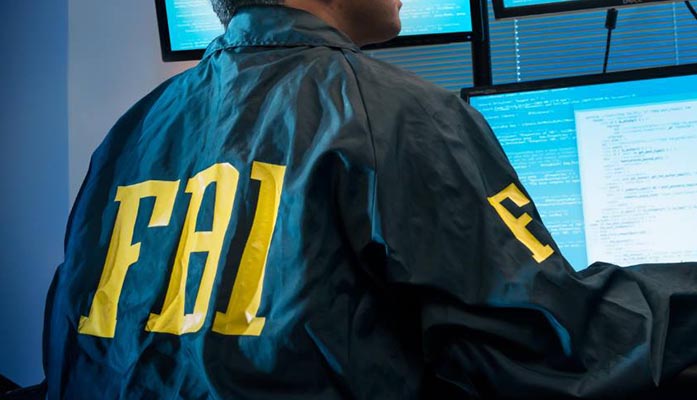
Arizona parents promptly pushed back against the Department of Justice’s (DOJ) announcement Monday that the Federal Bureau of Investigation (FBI) and U.S. Attorney’s Offices would investigate the trend of protests against school boards and other staff. The DOJ indicated that it would create a task force to accomplish this goal.
In a memorandum, Garland cited a “disturbing spike in harassment, intimidation, and threats of violence” against public school staff nationwide. Garland explained that the FBI and law enforcement leaders would brainstorm reporting mechanisms and strategies to address violence, threats of violence, harassment, intimidation against public school staff. Nowhere in either the announcement or letter did the DOJ or Garland call those responsible for the purported spike in harassment, intimidation, and threats, “domestic terrorists.”
“Threats against public servants are not only illegal, they run counter to our nation’s core values. Those who dedicate their time and energy to ensuring that our children receive a proper education in a safe environment deserve to be able to work without fear for their safety,” wrote Garland. “The Department takes these incidents seriously and is committed to using its authority and resources to discourage these threats, identify them when they occur, and prosecute them when appropriate.”
A coalition of moms, West Valley Parents Uniting, said it was hypocritical for Attorney General Merrick Garland and the Biden Administration to highlight parents as a national threat while largely ignoring the rising rates of violent crime, human trafficking, and migrant encounters. Founders Heather Rooks and Devon Updegraff-Day submitted a joint statement to AZ Free News in response to the DOJ announcement.
“Administrators, school board members, and teachers are not the victims. The children are the victims! They have always been the victims; our children have been used as pawns for twisted political games for decades and parents have finally had enough […] The Biden Administration can issue warnings to parents and threaten legal recourse all they want; parents will never be made silent! Parents have the right and will always have the right to speak out against ANYTHING they deem inappropriate or detrimental to their child’s well-being; that is what being a parent is all about. The Biden Administration needs to get their tail out from between their legs and fight against real threats in America and stop trying to create distractions. Criminal conduct behavior is widespread, but one of the few places where it is not occurring is at school board meetings!”
While some issued formal statements, others opted to issue a prompt response on Twitter.
Pam Kirby, Republican Party of Arizona and Latinos for Trump Advisory Board Member, promised to continue rallying at school board meetings.
https://twitter.com/PamKirby/status/1445230750702321666
Another user accused the DOJ of pandering to teachers’ unions.
“Wow, all it took was one poorly drafted complaint letter from a teachers union, and DOJ responds. Without evidence. Just repeats what it has been told. We [see] who you work for.”
https://twitter.com/ALegalProcess/status/1445162013798191113
Yet another user claimed it was hypocritical of Democrats to crack down on parents at school board meetings but condone the behavior of illegal immigrants and activists who chased and filmed Senator Kyrsten Sinema into a bathroom.
“While leftists in office applaud those that chased, harassed [and] recorded a female elected official in a bathroom, they call parents using the normal channels of public meetings ‘radical extremists’ and accuse them of ‘infiltrating’ open meetings.”
https://twitter.com/ThatParentP4P/status/1445098787194621963
The Biden Administration’s DOJ hasn’t issued any similar statements to other, more organized movements like the local Antifa-aligned groups, whose members have exhibited repeat patterns of actively threatening and engaging in violence.
Opposition to the DOJ’s announcement even came from some school officials. One vocal advocate for affording full transparency to parents, Litchfield Elementary School District (LESD) Board Member Jeremy Hoenack, told AZ Free News that he was disappointed with the DOJ’s response.
“It’s highly disturbing that the President’s Administration seems to think that parents don’t count,” said Hoenack.
Deputy Attorney General Lisa Monaco defended the DOJ’s initiative before the Senate Judiciary Committee on Tuesday. The committee hearing itself wasn’t focused on the DOJ announcement, but Senator Josh Hawley (R-MO) insisted that Monaco answer for it.
Corinne Murdock is a reporter for AZ Free News. Follow her latest on Twitter, or email tips to corinne@azfreenews.com.
by Corinne Murdock | Oct 5, 2021 | News
By Corinne Murdock |
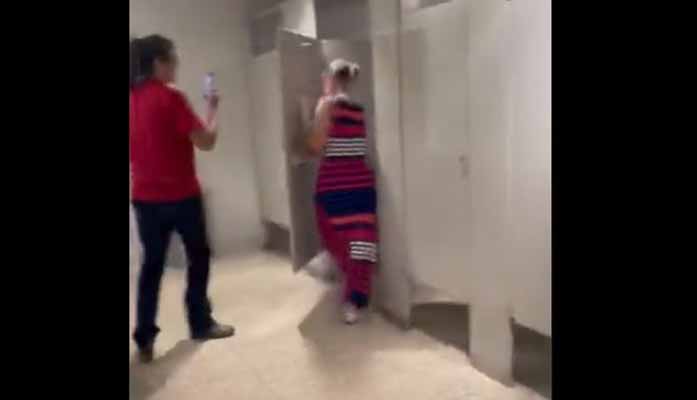
Arizona State University (ASU) Police Department confirmed with AZ Free News that they are investigating the activists who followed and filmed Senator Kyrsten Sinema (D-AZ) inside a bathroom. The senator had stepped out of a class that she teaches at ASU to use the bathroom when activists with Living United for Change in Arizona (LUCHA), an nonprofit activist organization, accosted her and followed her into the bathroom. While filming Sinema, they also filmed other students using the bathroom. The activists demanded that Sinema vote “yes” on the reconciliation bill.
“The ASU Police Department is working with Senator Sinema and conducting a full investigation of the incident that occurred Sunday at the University Center on the Downtown Phoenix campus. Due to the active status of the investigation, we are unable to provide more information at this time,” stated ASU.
One of the LUCHA activists, Karina Ruiz de Diaz, is an illegal immigrant as admitted in a report by CNN. She also accosted Sinema on Monday during a flight, repeatedly asking Sinema to ensure that she and others would be given a pathway to citizenship.
One of LUCHA’s paid activists, Blanca Collazo, told Sinema that she was a product of the Deferred Action for Childhood Arrivals (DACA) policy. Collazo complained that she wasn’t able to visit her deported grandfather before his death because she doesn’t have her citizenship yet. DACA recipients may not leave the country without the government’s prior permission, or “advance parole.” Collazo held her face mask below her nose and mouth as she spoke at Sinema.
“My name is Blanca. I was brought into the United States when I was three years old. And in 2010 my grandparents both got deported because of SB1070. And I’m here because I definitely believe that we need a pathway to citizenship. My grandfather passed away two weeks ago, and I was not able to go to Mexico and visit him because there is no pathway to citizenship,” said Collazo. “We need to hold you accountable to what you told us – what you promised us that you were going to pass when we knocked on doors for you. It’s not right.”
Collazo intended to attend Grand Canyon University (GCU), where she’d been given a scholarship, but told Cronkite News that she opted to work full-time instead due to the pandemic.
Another activist, Sophia Marjanovic, told Sinema that she endured human trafficking because of the lack of worker protection laws. Shortly after, Marjanovic posted on Facebook that she’d caught Sinema “during her pee break” and encouraged others to accost the senator, sharing the location of her class.
“Always have a Lakota Auntie on board! I descend from people who neutralized Custer; I can neutralize anyone. #F***AroundAndFindOut,” wrote Marjanovic. “I told you I wasn’t going to allow this woman to pee in peace in public and mission accomplished!”
As their videos went viral, Marjanovic posted again to chastise her critics. She said that nobody could condemn her actions because she’s a human trafficking survivor, the critics are on “stolen” land anyway, and that white people shouldn’t be allowed to speak on this incident.
“For now, connect with the fact that you are on stolen Indigenous land and Indigenous women and children go missing and murdered because we don’t have access to stable jobs, stable housing, clean water, clean food, or stable decent healthcare [sic] despite the fact that Indigenous people have upheld our end of the treaty in assimilating and getting educated,” wrote Marjanovic. “Give my Indigenous relatives to the South of the US-Mexican border citizenship now! White Communications Departments of organizations, media and campaigns uphold White supremacy. Step out of the way!”
According to Arizona law, it is illegal to film someone in the bathroom and publish it without their consent.
“A. It is unlawful for any person to knowingly photograph, videotape, film, digitally record or by any other means secretly view, with or without a device, another person without that person’s consent under either of the following circumstances: 1. In a restroom, bathroom, locker room, bedroom or other location where the person has a reasonable expectation of privacy and the person is urinating, defecating, dressing, undressing, nude or involved in sexual intercourse or sexual contact. […] It is unlawful to disclose, display, distribute or publish a photograph, videotape, film or digital recording made in violation of subsection A of this section without the consent or knowledge of the person depicted.”
On Monday, Sinema addressed the incident in a statement. She denounced the approach and intentions of the LUCHA activists.
“After deceptively entering a locked, secure building, these individuals filmed and publicly posted videos of my students without their permission — including footage taken of both my students and I using a restroom. In Arizona, we love the First Amendment. We know it is vital to our democracy that constituents can freely petition, protest, or criticize my policy positions and decisions. The activist group that engaged in yesterday’s behavior is one that both my team and I have met with several times since I was elected to the Senate, and I will continue engaging with Arizonans with diverse viewpoints to help inform my work for Arizona. Yesterday’s behavior was not a legitimate protest. It is unacceptable for activist organizations to instruct their members to jeopardize themselves by engaging in unlawful activities such as gaining entry to closed university buildings, disrupting learning environments, and filming students in a restroom.”
It is unclear how the activists gained entry into the locked building.
Sinema won’t support the $3.5 trillion price tag on the reconciliation bill, or the “Build Back Better Act.” Though LUCHA activists mentioned a “pathway to citizenship,” the nearly 2,500 pages of legislation doesn’t expressly include that provision yet. Democrats have been advocating for the inclusion of permanent legal status for illegal immigrants in the bill. However, Senate Parliamentarian Elizabeth MacDonough has twice rejected versions of that proposal.
That doesn’t mean that a pathway to citizenship won’t be included in the final bill. Congressman Adriano Espaillat (D-NY-13) told The New York Post last week that they intend to push three more versions of the proposal to secure a pathway to citizenship.
Currently, the reconciliation bill would offer two years of free community college; child care assistance and universal pre-K; Medicare expansion to cover dental, vision, and hearing, as well as allowing the program to negotiate drug prices to reduce them; a near-four year extension of child tax credits; 12 weeks of comprehensive paid family and medical leave; financial incentives for companies that increase renewable energy supplies, and penalties for those who don’t; an entrepreneurial program for formerly-incarcerated individuals; grants to local governments or groups for community violence prevention.
Funding for this bill would come from raising taxes on corporations, top income earners, and capital gains, as well as strengthening IRS oversight. One proposal to afford further funding would grant the IRS access to total transactions for bank accounts with over $600.
In a press conference addressing the bill on Monday, President Joe Biden was dismissive of what Sinema endured. He insinuated that Sinema would’ve been fine had she had a security detail, prompting the phrase “Based Biden” to trend on Twitter.
“I don’t think they’re appropriate tactics but it happens to everybody,” laughed Biden. “The only people it doesn’t happen to is people who have Secret Service standing around them. So, it’s a part of the process.”
Democrats on the local level weren’t sympathetic to Sinema’s plight, either. State Senator and treasurer candidate Martin Quezada (D-Phoenix) said Sinema was to blame for how her constituents approached her.
“Pro tip for politicians. A good way to not get harassed in restrooms by your constituents is to be available to meet and hear them out on the issues they are passionate about using normal channels,” tweeted Quezada.
Quezada made clear to AZ Free News that he never approved of how Sinema was treated. He informed us that Sinema hasn’t been keeping the lines of communication open for her constituents.
“[I] do believe that the focus of any story should be more on how Senator Sinema is an elected official. Part of her job is to listen to her constituents, not hide from them. She does not take calls or meetings and her office hangs up on constituents who try to use official channels to communicate with her. When elected officials become completely unaccountable to the people who elected them, you have to understand how they may feel as if they have no other choice but to contact her in unofficial channels,” said Quezada. “Like Senator Sinema, there are certain spaces that I would never want to be approached in. In order to avoid that happening, I fulfill my responsibility of having an open door and communicating with my bosses, the people I serve, through official channels, be they email, phone, in person meetings, Zoom meetings, social media, etc., etc., etc.”
AZ Free News inquired with Sinema’s communications team about these allegations of closing down communications with constituents. They didn’t respond by press time.
Quezada hasn’t been keen on Sinema as of late. The state senator is backing a crowdfunded campaign threatening to fund a primary challenger against Sinema if she doesn’t vote to end the filibuster. The CrowdPAC has already achieved over half of its goal contribution amount.
State Representative and attorney general candidate Diego Rodriguez (D-Phoenix) didn’t condemn the activists’ behavior.
“Clearly, the people of Arizona are not going [to] simply sit back and allow their wants and needs to be ignored by the same ELECTED officials they helped put into office,” wrote Rodriguez.
Rodriguez doesn’t take issue with public exposure of things traditionally considered private. The self-described “sex positive” representative has defended his habit of liking and commenting on both risque and pornographic posts via his personal Twitter account.
Certain Republican elected officials and candidates had a different take on the situation.
Congressman Andy Biggs (R-AZ-05) stated in an interview with The Conservative Circus that the LUCHA activists were examples of how society functions in a totalitarian regime.
“I think what she’s doing is principled. I think it’s what she believes in, and she’s getting the crud kicked out of her by her own party, and they’re spending millions to try to embarrass her,” said Biggs. “You’ve got these yo-yos on ASU’s campus that are chasing her into the bathroom while she’s in a stall to harass and harangue her while she’s there. I mean, that’s the kind of thing that goes on in totalitarian regimes. I mean, that’s really what it is: they’re trying to ostracize her and browbeat her. But I’ll tell you what, I know few people who are tougher than Kyrsten Sinema. I’m hopeful that she’s going to hold out on her principles.”
The bathroom incident wasn’t the first time that LUCHA activists confronted Sinema over these last few days. They disrupted a private fundraising event in Royal Palms Resort and Spa in Scottsdale on Saturday. As stated earlier in this report, the illegal immigrant Ruiz de Diaz confronted Sinema on a plane.
Corinne Murdock is a reporter for AZ Free News. Follow her latest on Twitter, or email tips to corinne@azfreenews.com.
by Corinne Murdock | Oct 5, 2021 | News
By Corinne Murdock |
Most school districts have decided to saddle their local communities with a near-$100 million property tax increase, which will hit this month. In 2020, the Transpo Delta tax totaled just over $79 million; this year, it will be $178 million.
The law allows districts to raise local property taxes, called a “Transpo Delta” tax, to make up the difference between their current transportation funding determined by the Transportation Support Level (TSL) formula and the highest amount of transportation funding they’ve received historically, or the Transportation Revenue Control Limit (TRCL). Transportation funding is based on the amount of route-miles driven. Essentially, the Transpo Delta tax is TRCL minus TSL.
As Arizona Tax Research Association (ATRA) researcher Sean McCarthy explained, this latest Transpo Delta tax won’t hit communities equally.
“Some districts have almost no Transpo Delta tax because their route-mile driven formula in TSL is close to their TRCL,” assessed McCarthy. “Some have massive amounts, meaning they essentially get more funding than others in relative terms. Districts with lower property value incur abusive tax rates to pay for the Transpo Delta in some cases.”
School districts didn’t have to impose this burden on taxpayers. Districts had the option of tapping into $3.7 billion in federal COVID-19 relief funds.
“The one-time decrease in formula monies for transportation is a perfect example of what federal dollars should backfill. It’s not as though this $3.7 billion can be used for permanent pay raises for employees – it’s one-time money,” stated McCarthy. “For most districts, their one-time decrease in formula transportation funding represents a tiny fraction of the federal monies they received.”
According to ATRA, Tucson Unified School District increased taxes by $10.4 million, yet received just under $270 million in federal relief; Alhambra Elementary School District increased taxes by over $1 million, yet received over $93 million in federal relief; and Paradise Valley Unified School District increased taxes by over $4 million and received $64.5 million in federal relief.
Those districts who chose not to increase taxes are Santa Cruz Valley Unified School District, Alpine Elementary School District, Palominas Elementary School District, and San Fernando Elementary School District.
Corinne Murdock is a reporter for AZ Free News. Follow her latest on Twitter, or email tips to corinne@azfreenews.com.
by AZ Free News | Oct 4, 2021 | News
By AZ Free News |
Credit unions in Arizona have joined the Arizona Treasurer’s Office in opposition to a proposal requiring financial institutions to give the Internal Revenue Service (IRS) citizens’ personal account information if the account exceeds $600 of deposits or withdrawals. In a letter, they urged Senator Kyrsten Sinema and Senator Mark Kelly to oppose this measure being considered in Congress as part of the $3.5 trillion budget reconciliation bill. This proposal would threaten the financial security of more than 100 million Americans from all demographics.
“Being forced to hand over your personal household or small business financial records to the government as a law-abiding citizen is as intrusive as it gets. There are no guardrails in the bill for how the government can leverage this highly private information,” said Arizona Treasurer Kimberly Yee. “As Arizona’s Chief Banking and Investment Officer, I cannot stay silent while Arizonan’s sensitive financial data is at risk of unprecedented government surveillance.”
“There is simply no scenario in which this is a good idea for credit union members, or customers at any financial institution for that matter,” said Scott Earl, President and CEO of Mountain West Credit Union Association. “Between the exposure risk of data privacy, and the
significant resources and associated costs that would need be required to comply with this measure, it is a bad idea all around.”
The letter states, “As State Treasurer and credit unions in Arizona, we join with the many voices and groups from across the nation who strongly oppose this intrusive proposal.
Congress should not approve the IRS to have access to law-abiding Arizonan’s personal financial transactions in a blatant attempt to tax them unnecessarily.”
by Terri Jo Neff | Oct 2, 2021 | News
By Terri Jo Neff |
While COVID-19 damaged much of the state’s tourism for most of 2020, the Arizona State Parks and Trails still managed to pump $272 million into the state and local economies during Fiscal Year 2020, according to a report released last week by Gov. Doug Ducey’s office.
“Arizona’s state parks are second to none! In addition to their unbeatable views, recreational activities and family-friendly opportunities, they have a significant impact on our state economy,” Ducey tweeted on Sept. 30.
The 82-page report about the economic contributions and impacts of the state’s 21 parks, 10 historic parks, and 3 natural areas covers Oct. 1, 2019 through Sept. 30, 2020. The data comes from the Arizona State Parks and Trails in collaboration with the Regional Economic Analysis Program at the University of Arizona and the Hospitality Research & Resource Center at Northern Arizona University.
The economic contribution of spending by nearly 3,000,000 visitors in and around Arizona’s 34 state park properties was $449 million, including multiplier effects. Of that, $272 million was counted toward Arizona’s gross state product, supporting 4,173 jobs statewide.
Included in the report are details about how Arizona State Parks impacts the 13 counties home to at least one state park. Yavapai County has seven state parks -the most in Arizona- while Pinal and Santa Cruz each have four. Greenlee and Maricopa are the only counties with none.
According to the report, most state parks stayed open during the pandemic, but temporary closures were implemented at Kartchner Caverns and the 10 historic state parks as a safety precaution. The closures caused visits at those locations to plummet 50 percent from FY2019, but combined visitors to the other state parks resulted in a net one percent increase compared to 2019.
Lake Havasu State Park in Mohave County counted the most visits at 533,757 in FY2020. In fact, the report found the top five most visited parks accounted for 53 percent of the total statewide total.
Visitor counts at Kartchner Caverns State Park and the Tombstone Courthouse State Historic Park, the two state parks in Cochise County, took especially harsh hits during FY2020 due to mandated temporary closures. The parks saw a combined 161,010 visitors, down significantly from the nearly 220,000 visitors the year before.
When averaged out, the visitor count across the system declined 7.6 percent. The majority of the visits occurred in the first six months of the fiscal year before COVID-19 shutdowns occurred across the United States.
As part of the state’s post-pandemic recovery efforts, Ducey has focused on promoting the benefits of Arizona’s park system for its relatively safe and inexpensive outdoor options.
The report released by the governor’s office also highlighted the growth in popularity of Arizona State Parks from FY2014 when 2,310,349 visitors were counted, to 2,971,844 visitors in FY2020. And the spending by non-local visitors during that same period increased by 20 percent.
Several changes were made to park operations over those years. For instance, Lyman Lakes State Park in Apache County went from seasonally hours to being opened year-round, and Oracle State Park in Pinal County went from weekends-only hours to being opened seven days a week.
In July, Ducey announced $20 million in American Rescue Plan federal funding was being earmarked for capital improvements at various parks. Another $5 million will be spent with the State Parks Heritage Fund for new open space development, restoration or renovation projects, historic preservation, and outdoor education program.