by AZ Free News | Apr 29, 2021 | Economy, News
Arizona Congressman Paul Gosar joined his fellow Republican members of the Natural Resources Committee in urging President Biden to support American mining jobs. Gosar, Committee Ranking Member Bruce Westerman and other members of the Committee sent a letter to Biden calling on his administration to “stop selling out those mining jobs to Canada.
According to the Committee members, the Biden Administration has started an effort to meet with representatives from Canadian mining companies to arrange for Canadian mining to displace new American mines in the supply chain for critical minerals and new renewable technology manufacturing. The reports on the meetings highlighted “more-than 30 attendees at Thursday’s meeting who discussed ways Washington can help U.S. companies expand in Canada and overcome logistical challenges, according to the documents.” Additionally, an attendee at the meeting noted that the Commerce Department had not indicated whether they would provide monetary incentives to Canadian players in the mining sector, or to other companies in the supply chain.
Earlier this month, Rep. Gosar wrote an op-ed that highlighted this issue and the importance of critical minerals.
“It is unacceptable that this Administration is bartering the jobs of American miners, steelworkers, and laborers to Canada to make up for a decision it made killing thousands of American pipefitting and welding jobs. American miners and American mineral security should not be used as a trading tool to make up for Mr. Biden’s disastrous foreign policy decisions. The Biden Administration, beholden to radical environmentalists, is shutting down domestic mining while holding secret meetings with Canadian mining companies about opening new mines in Canada,” said Gosar.
“Meanwhile, House Natural Resource Committee Democrats are attempting to undo a bipartisan, bicameral agreement to develop one of the largest copper and tellurium mines in the United States. Our nation has been blessed with tremendous resources, the strongest environmental protections and the best workforce. The Biden Administration and House Democrats should support these good jobs, not pass along those benefits to foreign nations,” argued Gosar.
That this Administration, through the Department of Commerce, is working to trade the jobs of American miners, steelworkers, and laborers to Canada to make up for a decision you made that killed thousands of American pipefitting and welding jobs and tens of thousands of Canadian oil and gas jobs is unacceptable. American miners and American mineral security should not be used as tools to be traded away to make up for your disastrous foreign policy decisions. American mining and smelting jobs are some of the highest paying jobs in our nation and your Administration should be fighting to create more of these jobs domestically, not using taxpayer resources to encourage Canada to steal our jobs and the opportunity they present to America. It makes no sense to actively kill mining jobs in Minnesota, Arizona, and Alaska while turning to Canada and asking them to open mines to fill the gaps. READ THE FULL LETTER HERE
“America leads the world in clean, safe mining. We should keep it that way. While our Democrat colleagues attempt to ban, prohibit and regulate the mining and energy industries into oblivion, we want to incentivize new innovation and more jobs right here at home. There’s no reason to outsource our mining needs overseas, where we have no control over environmental standards. American workers deserve better,” said Westerman.
“President Biden supports Canadians mining just miles from my district and in our very same watershed. Why are Canadians allowed to have high-wage, high-quality jobs, but Democrats oppose jobs within our borders? We have America’s domestic mineral needs in Minnesota, Arizona, and throughout the country. Let’s do it here with our workers earning high wages for their families and providing funding to our schools and communities,” said Rep. Pete Stauber.
Rep. Lauren Boebert stated, “I’m disappointed but not surprised at the Biden administration’s efforts to destroy America’s mining industry. Biden’s America last policies take jobs away from American workers, hurt rural communities, and decimate our economy while strengthening China’s. The Green New Deal and Biden’s environmental schemes would require a large amount of mining and minerals. Democrats have repeatedly made clear they would rather have children mining with their bare hands in the Congo and other countries than good and safe jobs in America.”
“The Administration policy to increase demand for minerals and then export the mining jobs needed to produce those minerals is another example of President Biden snubbing America’s working families, trashing the global environment and decreasing energy security. In order to power America’s clean energy future, we must fully utilize our own domestic supply of critical minerals and put Americans to work to do so. Our national security and economic prosperity depend on us advancing smart policies that promote American labor and American resources, not increasing U.S. reliance on foreign adversaries with abysmal environmental records – like China – for such vital resources,” said Rep. Garret Graves.
by Terri Jo Neff | Apr 28, 2021 | Education, News
By Terri Jo Neff |
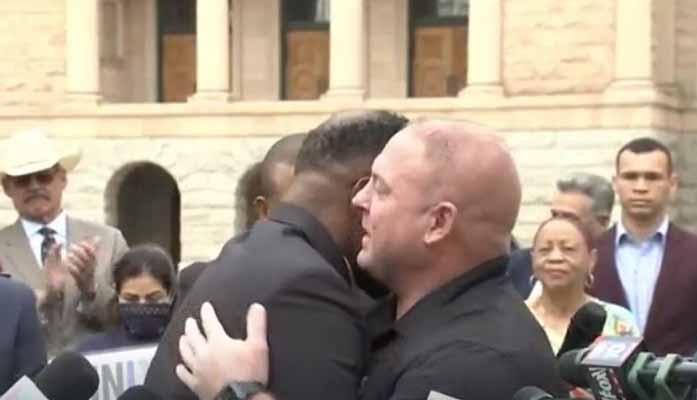
Many attendees at Monday’s “Unification Rally” outside the Arizona State Capitol held signs which read “Unity – Protect and Educate Our Children” while speakers talked about bringing together law enforcement officials and religious leaders to build better relationships between peace officers and minorities.
The event also served as a show of support for Sen. Paul Boyer’s pending Empowerment Scholarship Accounts (ESA) legislation which supporters say will bring an end to the school to prison pipeline by expanding Arizona’s student funding program to an additional 470,000 children between preschool and grade 12.
An ESA allows an eligible child to receive credit for a large amount of the government education funding that would have been paid to the student’s public or charter school. Those funds can then be used toward private school expenses, including tuition, counseling, tuition, and other necessary costs.
SB1452 cleared the state Senate back in mid-February on a 16 to 14 party line vote, but has been stalled in the House after being amended in March by the Ways & Means Committee. Monday’s rally about the importance of educational options for parents who want additional educational options for their children highlighted Boyer’s ESA legislation.
Less than 10,000 students currently utilize ESAs, but speakers at the rally believe expanding eligibility criteria will allow nearly 726,000 children to have the option to receive an ESA. Among SB1452’s supporters are the Barry Goldwater Institute for Public Policy Research, AZ Families for Home Education, and the American Federations of Children.
Currently there are 256,000 students eligible for the ESA program based on one of eight criteria, such as children with disabilities, children with a parent on active duty in the Armed Forces or whose parent was killed in the line of duty, children who are wards of the court with a permanent guardian, and children attending schools or school districts with a “D” or “F” rating.
According to the Joint Legislative Budget Committee (JLBC), Boyer’s bill as amended by the House would expand eligibility to children who qualify for a free or reduced-priced lunch program, as well as about 63,000 students who are the children of veterans. That would make approx. 726,000 preschool to grade 12 students eligible for ESAs under at least one of the criteria.
The JLBC estimates the participation rate of the newly eligible students at around four percent, which would boost ESA enrollment by 1,926 students in Fiscal Year 2022, 3,877 in FY 2023, and 5,982 in FY 2024. Based on that increased participation, the Arizona Department of Education expenses would increase by $1.7 million, $3.6 million, and $6.4 million in those years, respectively.
However, JLBC noted the overall effect on the General Fund would be annual savings of $7.1 million to $9.4 million during the same three-year period. Those savings do not include estimated increases in annual administrative expenses of $2.2 million to $4 million.
Boyer’s bill has not been placed on a House agenda for a Third Reading as of press time.
by AZ Free News | Apr 28, 2021 | News
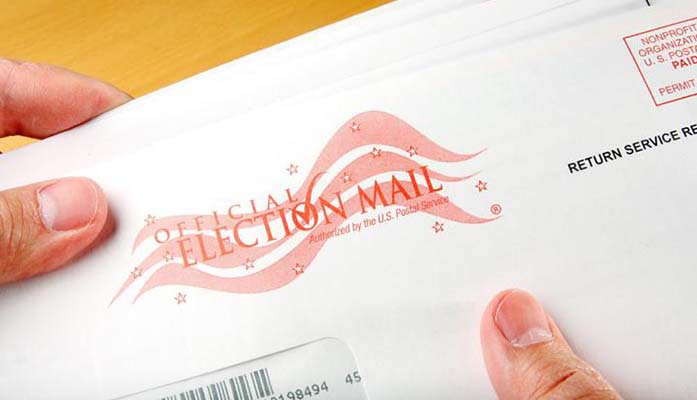
A bill introduced by Rep. Jake Hoffman, HB 2792, which will prevent county recorders from going rogue and sending out ballots to registered voters who did not request them, is one step closer to becoming law.
HB 2792, specifically prohibits a county recorder, city or town clerk or other election officer from delivering or mailing an early ballot to a person who has not requested an early ballot for that election, with certain exceptions. The bill classifies an election officer knowingly providing an early ballot to a person that did not request an early ballot for the election, with exceptions, as a class 5 felony.
“Arizona is one step closer to sending a clear message to activist county recorders that the people of this state don’t want you illegally interfering in our elections by unlawfully mailing early ballots to voters who don’t request one,” said Rep. Hoffman. “The security of our elections, for all voters regardless of Party, is too important to allow one or two rogue recorders to jeopardize it for everyone.”
HB2792 passed the Committee of the Whole in the Senate on Monday. It now only needs one more vote in the Senate to reach the governor’s desk.
In March 2020, a Maricopa County Superior Court judge granted the Arizona Attorney General’s Office’s request for a restraining order to stop Maricopa County Recorder Adrian Fontes from illegally mailing out ballots for the Democratic Presidential Preference Election to voters who had not requested them. Fontes claimed that he was sending out last-minute ballots due to concerns about coronavirus.
RELATED ARTICLE: Court Grants Brnovich Restraining Order To Stop Fontes From Illegally Mailing Ballots
Secretary of State Katie Hobbs, a Democrat, agreed with the Attorney General’s Office that there’s nothing in the law that allows Fontes, a Democrat, to do what he planned to do. Hoffman’s bill makes it clear that a Fontes-style mass mailing would be a violation of Arizona law.
by AZ Free News | Apr 28, 2021 | News
Last week, the Small Business Legal Center for the nation’s largest and leading small business association filed an amicus brief supporting the Arizona Attorney General’s lawsuit against the federal government over a provision in the American Rescue Plan Act of 2021 that would prevent states from lowering their own taxes.
The American Rescue Plan Act of 2021 made funds available to states if and only if states agree to not pass any laws or take any administrative actions that decrease their net revenue, whether that decrease comes through tax credits, rebates, reductions in tax credits, or new or expanded deductions.
“Congress passed the American Rescue Plan to relieve some of the financial pressure caused by the pandemic, but a provision that blocks Arizona and other states from cutting taxes is eroding state sovereignty and hurts local businesses,” said Karen Harned, executive director of the NFIB Small Business Legal Center, which filed the brief today in the U.S. District Court of Arizona.
In a March 25 news release announcing the filing of his lawsuit, the Arizona Attorney General said, “It’s unacceptable for the federal government to commandeer states’ tax policies and micromanage their budgets. We will always fight on behalf of hardworking taxpayers and push back against federal overreach.”
“Every state should be insulted by the last-minute amendment the US Senate adopted into the American Rescue Plan,” said Chad Heinrich, Arizona state director for NFIB. “If a state can no longer be a master of its own destiny on tax and spending matters, then we may as well resort to a central planning model run out of DC. What needs to be made clear and repeated often is that the State of Arizona’s financial health is a product of prudent fiscal management with sound policies that attract businesses and residents to live, work and enjoy life in Arizona.”
by Terri Jo Neff | Apr 27, 2021 | News
By Terri Jo Neff |
The 2020 U.S. Census state population results were announced Monday, and while Arizona added nearly 760,000 residents over the last 10 years, the growth was not as high as some state officials estimated. As a consequence, Arizona will not earn a 10th congressional district as many had expected.
The official increase in Arizona’s population is listed at 746,223 from April 1, 2010 to April 1, 2020. That puts the number of residents at almost 7.16 million. What won’t be available for a few more months is the population breakdown by counties and communities.
Gov. Doug Ducey and his census taskforce pushed hard during the 2020 Census process, committing nearly $2 million to the effort which was hit hard by COVID-19. State officials previously said 99.9 percent of all households were counted.
“In 2020, countless volunteers embarked on a statewide campaign to reach underrepresented communities, resulting in AZ’s highest self-response rate in decades,” the state’s census team tweeted Monday. “The state’s 64.1% self-response rate exceeded that from 2010 (61.3%) and 2000 (63%). 19 of the 20 land-based tribal communities in AZ had final enumeration rates of 100%.”
Many estimates by government agencies had pegged Arizona’s overall population at nearly 7.4 million going into 2020. It is unclear whether those estimates were based on overly optimistic formulas or if well-publicized concerns with how answers to census questions would be used kept some residents from being forthright.
The most immediate impact of the Census state population announcement is that those interested in representing Arizona in the U.S. House of Representatives now know the state’s allotment of congressional districts will remain at nine, each serving roughly 795,500 residents.
Each state is initially assigned one of the 435 seats in the U.S. House of Representative. The rest are then allotted based on data from the U.S. Census Bureau. Arizona came in about 80,000 residents short for being considered for another congressional seat, while Colorado, Florida, Montana, North Carolina, and Oregon added a seat. Texas added two congressional seats to its current 36.
How the boundaries of Arizona’s nine districts will look won’t be known for more than one year, as the Arizona Independent Restricting Commission must wait for the more detailed, localized census data to finalize their maps.
Long term, the biggest impact of the lesser than expected population numbers could be on Arizona’s budget, of which about 40 percent comes from federal funds. If Arizona was truly undercounted during the census process, there are some estimates it could cost the state roughly $62 million annually for every one percent undercount.
by AZ Free News | Apr 27, 2021 | News
Fans of the western rodeo will have a new way to express their interest now that Gov. Doug Ducey has signed a bill which creates a license plate supporting the popular sport.
But the governor’s approval of the legislation does more than add another designer license plate to ADOT’s stock. It also provides funding to help support a rodeo museum which highlights Arizona’s rich history in the sport.
And that, according to supporters, will provide Arizonans as well as domestic and international tourists another source of entertainment.
The oldest organized professional rodeo in Arizona pre-dates statehood, with the July 1888 event in Prescott. And every February, southern Arizonans turn their attention to the Tucson Rodeo Parade.
The special rodeo plates can be issued for $25 plus the normal vehicle registration fees. Of that amount, $17 is considered an annual donation to the Rodeo Special Plate Fund administered by ADOT.
But before ADOT can formally begin issuing the special rodeo plates, someone has to pony up $32,000 to ADOT before Dec. 31 of this year to implement the program. And that person is responsible for designing the plate, subject to ADOT rules and approval.
ADOT can annually hold back 10 percent of the Rodeo Plate Fund as an administration fee, but the rest must be allocated each year to an Arizona-based 501(c)(3) charitable organization which awards collegiate scholarships and supports a museum in Arizona that has rodeo artifacts.
The new statute specifically requires that the museum’s artifacts must date back to at least 1953. And the museum must include saddles ridden by “famous rodeo champions” among its artifacts.
A review of museums across Arizona reveals that the Scottsdale Rodeo Museum website boasts “rodeo artifacts going back to at least 1953, including saddles ridden by famous rodeo champions such as Jake Barns.” It is unclear whether the more well-known Tucson Rodeo Parade Museum would meet the specific funding criteria.
The bill cleared the House in February on a 39 to 20 vote, then passed out of the Senate on April 13 on a 27 to 3 vote. Ducey signed the bill sponsored by Rep. Joseph Chaplik (R-LD23) last week.
- Co-sponsors of HB2129 were Representatives Frank Carroll, Tim Dunn, Gail Griffin, Joel John, Steve Kaiser, Joanne Osborne, Justin Wilmeth, and Majority Whip Leo Biasiucci.
- Public records show the legislation for the special rodeo plate and funding for an Arizona rodeo museum was opposed by the Arizona Sheriffs Association and the Association of Counties.