by AZ Free News | May 11, 2021 | News
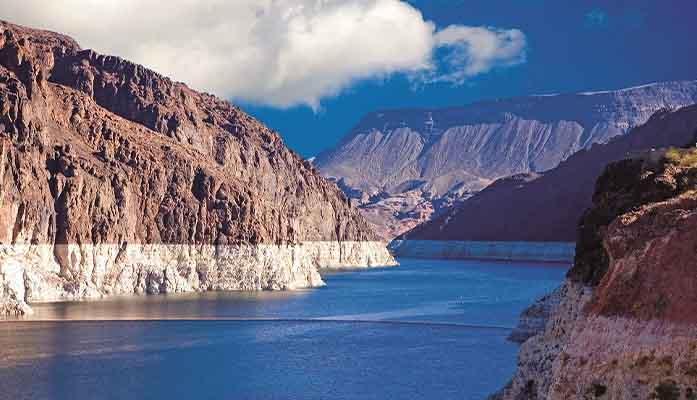
On Tuesday, the Arizona Legislature called on the U.S. Congress to fund a feasibility study for the development of a dam and pipeline to harvest floodwater from the Mississippi River to replenish the Colorado River.
The request took the form of House Concurrent Memorial (HCM) 2004, sponsored by Rep. Tim Dunn. The proposal outlined in the Memorial authorizes the official legislative communication – commonly referred to as a “postcard to Congress,” was passed on Tuesday with a vote of the Arizona Senate.
Dunn’s bill outlines that if it’s shown to be feasible, the U.S. Congress is urged to implement the diversion dam and pipeline as a partial solution to the water supply shortage in Lake Powell and Lake Mead and the flood damage that occurs along the Mississippi River.
HCM 2004 directs the Arizona Secretary of State to transmit copies of the Memorial to the President of the U.S. Senate, the Speaker of the U.S. House of Representatives, the Governors of the Mississippi River states of Arkansas, Illinois, Iowa, Kentucky, Louisiana, Minnesota, Mississippi, Missouri, Tennessee and Wisconsin, and to each member of Congress from the State of Arizona.
In Arizona, water from the Colorado River enters the Central Arizona Project canal to reach the cities of Phoenix and Tucson. Under the 2019 Drought Contingency Plan, Arizona is already taking cuts to its CAP supply.
The state’s junior rights mean its Colorado River supply is more vulnerable than other states.
The question as to how much water can the Colorado River reliably produce into the future is at the core of all of plans.
“Arizona has long been at the forefront among western states in supporting the development and implementation of pioneering, well-reasoned water management policies,” Dunn said in a press release. “Arizona and the other six Colorado Basin states are in the twentieth year of severe drought and experiencing a severe water shortage. Water levels are critical levels, jeopardizing the water delivery and power generation. A new water source could help augment Colorado River supplies. One promising possibility involves piping water that is harvested from Mississippi River flood waters. Diverting this water, which is otherwise lost into the Gulf of Mexico, would also help prevent the loss of human life and billions in economic damages when such flooding occurs. This concept is already being proven in Denver, where floodwater is being successfully harvested from the Missouri River to help alleviate its water shortage.”
by B. Hamilton | May 11, 2021 | News
By B. Hamilton |
As the border crisis rages, Arizona Governor Doug Ducey and 19 fellow governors are calling on President Joe Biden and Vice President Kamala Harris to take action to end the humanitarian debacle.
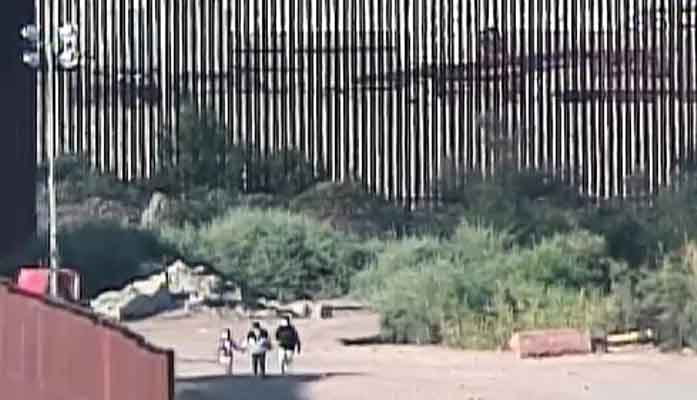
Just this week, Chief Patrol Agent Chris T. Clem tweeted: #YumaSector agents encountered a nine-year-old girl and a 12- and 17-year-old boy on the west side of Yuma Sunday morning after they illegally crossed the border into the U.S. by themselves. In the last week, agents have apprehended 24 unaccompanied children under the age of 13.
The governors are asking the Biden administration to end what they say are “destructive policies that have created the crisis at the southern border.”
They remind the administration that their letter “follows months of deteriorating conditions at the border in Arizona and other states.”
According to the governors, in March, U.S. Customs and Border Protection reported 172,000 encounters, the highest number in nearly 20 years, as well as 18,890 unaccompanied children, the largest monthly number in history.
Also on Tuesday, the Arizona Attorney General tweeted: April stats from DHS show another record-number of encounters w/ migrants– more than 178,000 last month, including 17,000+ minors (not including “got-aways”). The longer the President maintains his reckless immigration policies, the worse this crisis at our border will get.
“As a border state, Arizona is on the front lines of the border crisis. We feel the impacts of human trafficking, drug smuggling, and this humanitarian crisis first,” said Ducey. “Now, the Biden-Harris border crisis is affecting other states too. And it’s clear the crisis is the direct result of this administration’s broken policies and botched messaging.”
“Arizona has deployed all available resources, including the National Guard, but we need federal cooperation to secure the border,” Governor Ducey said. “Today, I am joining 19 fellow governors to call for immediate action from President Biden and Vice President Harris to stop this crisis before it gets even worse.”
Arizona has been calling for action on the border crisis from the federal government for months. Last month, Governor Ducey declared a state of emergency at the southern border and deployed the Arizona National Guard to support law enforcement agencies in border regions. The Governor visited a wide-open section of the border in Yuma and called on President Biden to issue a national state of emergency on the border. Governor Ducey and Texas Governor Greg Abbott also wrote a joint op-ed in the Washington Post.
Signers of the letter include Governors Bill Lee, of Tennessee, Kay Ivey, of Alabama, Asa Hutchinson, of Arkansas, Brian Kemp, of Georgia, Brad Little, of Idaho, Eric Holcomb, of Indiana, Kim Reynolds, of Iowa, Tate Reeves, of Mississippi, Governor Mike Parson, of Missouri, Governor Greg Gianforte, of Montana, Governor Pete Ricketts, of Nebraska, Governor Chris Sununu, of New Hampshire, Governor Doug Burgum, of North Dakota, Governor Kevin Stitt, of Oklahoma, Governor Henry McMaster, of South Carolina, Governor Kristi Noem, of South Dakota, Governor Greg Abbott, of Texas, Governor Spencer Cox, of Utah, and Governor Mark Gordon, of Wyoming.
by Terri Jo Neff | May 11, 2021 | News
By Terri Jo Neff |
What promised to be Republicans’ most impactful state election integrity bill of the legislative session did not get voted on Monday, despite being on the calendar for a final reading in the State Senate.
Sen. Michelle Ugenti-Rita’s SB1485 has the potential to drop more than 207,000 inactive voter names from the Permanent Early Voter List (PEVL). Removal would not happen if a voter responds to a written notice about the impending change, which in no way alters or impacts a voter’s registration status.
Arizona’s 15 county recorders would collectively save tens of thousands of dollars each election through reduced printing and postage costs. But the biggest selling point for SB1485 is its election integrity benefit of ensuring 207,000 early ballots are not put into the U.S. mail system if voters do not intend to use them.
Getting Ugenti-Rita’s bill to Gov. Doug Ducey had been considered a sure thing due to Senate Republicans holding a 16 to 14 majority. That certainty ended last month when Sen. Kelly Townsend announced she will not vote for any election-related legislation until the Senate’s audit of Maricopa County’s 2020 General Election is complete.
Townsend has expressed displeasure with Ugenti-Rita’s lack of support for getting many of Townsend’s 18 election bills out of committee this session. As a result, Ugenti-Rita was forced into the embarrassing position of voting against her own bill to preserve any chance of revoting on SB1485 during a future Senate floor session.
That revote was set for Monday, but Senate President Karen Fann held the bill without further comment. The Senate is tentatively scheduled for daily floor sessions through Thursday but as of press time the PEVL legislation has not been added to any of those calendars.
by AZ Free News | May 11, 2021 | Education, News
On Monday, the Arizona House passed Senate Concurrent Resolution 1044. The resolution allows voters to decide if students who are in the country illegally but have attended for two years and graduated from an Arizona high school can be eligible for in-state college tuition.
SCR 1044 also exempts post-secondary education from the definition of a state or public benefit. Currently, Arizona residents who do not have legal immigration status do not qualify to receive those benefits.
Last week, Republican State Reps. Michelle Udall and Joel John forced a vote on the resolution by joining all House Democrats. Republicans Rep. David Cook and Rep. Joanne Osborne joined the group later and voted in favor of the matter. The move shifted power away from the Republican Caucus momentarily, but left a deep division.
Speaker Rusty Bowers expressed his disappointment in the tactic employed by Udall and John before casting his vote against the measure:
The measure will now go before the Arizona voters on a ballot in 2022.
The ballot initiative would repeal a 15-year-old ban on in-state tuition for undocumented high school graduates, including about 2,000 Dreamers per year. Voters created that ban in 2006 when they approved Proposition 300, which denies public benefits to those not in the country legally, including reduced cost tuition.
by AZ Free News | May 11, 2021 | News
On Monday, Governor Doug Ducey signed House Bill 2596, legislation aimed at expanding broadband access in Arizona. The bill allows private broadband providers to install, operate and maintain telecommunications equipment within the Arizona Department of Transportation’s (ADOT) rights-of-way.
“Arizona is growing and people are moving here at a record pace — and we need to ensure all parts of our booming state are connected,” said Governor Ducey. “In my January State of the State address, I called to continue expanding access to broadband. House Bill 2596 does that, and it will help Arizonans living in rural and tribal areas gain access to fast, affordable and reliable internet. My thanks goes to Representative Regina Cobb for sponsoring legislation that benefits people in every corner of our growing state.”
House Bill 2596 also allows ADOT to grant access to its own broadband conduit to private telecommunications companies in a non-exclusive and non-discriminatory manner — reducing the cost of installing rural broadband infrastructure
Additionally, the legislation creates the “Smart Highway Trust Fund” to deposit leasing revenues generated from the use of ADOT rights-of-way, which are to be used for operation and maintenance of telecommunications facilities within ADOT’s rights-of-way.
by Terri Jo Neff | May 10, 2021 | News
By Terri Jo Neff |
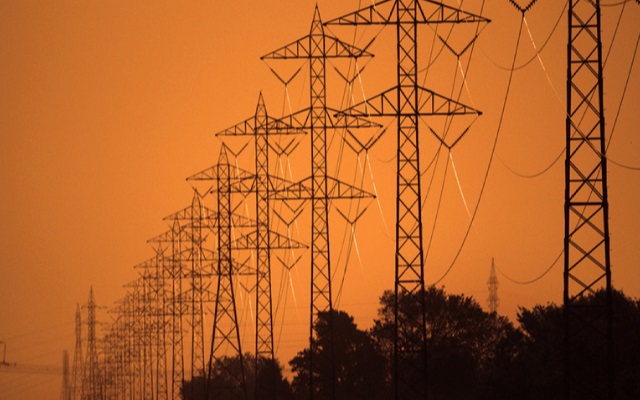
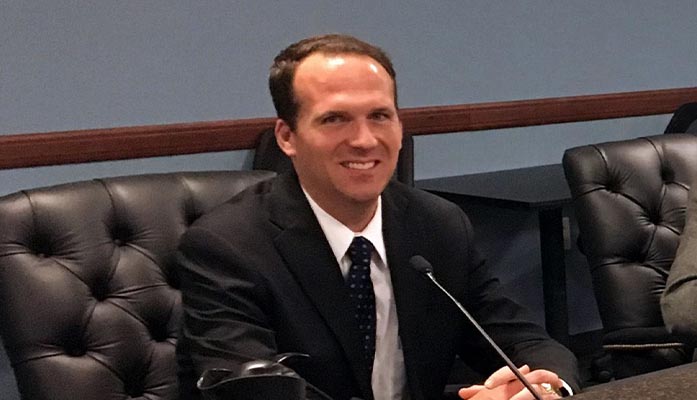
Justin Olson says news reports that he is against getting Arizona’s electric utilities to a carbon-free or net-zero carbon level are incorrect. He whole-heartedly supports that goal, Olson insists, but believes it is more important to ensure Arizonans who pay for that electricity do not end up paying higher rates to reach the goal.
Olson is one of five members of the Arizona Corporation Commission, and one of three Republicans. He was joined last Wednesday by the ACC’s two Democrats in voting down a rules package which urged all electric utilities to a net-zero carbon level by 2050, but not mandate the goal.
The vote came nearly six months after the ACC -with a slightly different contingent of commissioners- voted 4 to 1 on a draft set of rules that included the net-zero by 2050 mandate. It had taken ACC staff and industry representatives about three years to get those rules worked out.
Olson cast the lone nay in that November vote. And he then voted nay last week even after he introduced an amendment to make the whole thing more palatable by switching the mandates to guidelines.
In the end, Olson says he could not get language into the rules to prevent utilities from using the mandates -or guidelines- as a justification for a rate increase to pay for something the company intended to do anyway. And that left customers at risk of paying more.
Olson insists that complaints directed toward any commissioners for “wasting” the time of ACC and industry staff are misplaced.
“The utilities would have undertaken all of that review and study anyway,” as part of determining their own future business plans, Olson told AZ Free News.
In fact, Arizona Public Service (APS) released an Integrated Resource Plan update for shareholders in February which listed its clean energy commitment for 100 percent “clean, carbon-free electricity” by 2050. Olson noted that the company’s plan was made without any regulatory mandate in place.
Olson also pointed out the “overwhelming” voter rejection of Proposition 127 in 2018 which sought to amend the Arizona Constitution to require nongovernmental electric utilities to increase the portion of their retail energy sales from certain types of renewable energy resources to 50 percent by 2030.
Refusing to support any type of renewable energy mandate without protecting ratepayers was simply “respecting the will of the voters,” says Olson. And that, he believes, means the ACC should be working to ensure ratepayers are charged lower rates in the future if utility companies benefit from lower costs by their own business decisions to use more renewable sources.
Some opponents of Olson’s position worry the Biden Administration will push Congress to pass legislation which may set net-zero mandates that do not serve the interest of Arizona’s utilities or its electricity users.
Olson says he understand that concern, but to preemptively enact “a bad policy” would be irresponsible given “there is no harm or penalty to Arizona the utilities, or the ratepayers at this time.”