by Corinne Murdock | Jun 24, 2021 | News
By Corinne Murdock |
Phoenix Children’s Hospital appears to have let go one of their pediatric radiologists, Dr. Fidaa Wishah, after she posted a promise that Israel’s end would come soon.
“We will not be #censored anymore ! Bomb our media buildings and we have the phones[.] Bribe the mainstream media and we have our small #socialmedia platforms[.] From our windows.. from our streets .. next the rubble we will expose you to the world[.] We will expose the #massacre and #genocide you #zionists are proud of[.] We will uncover your thirst to kill our Palestinian children[.] Through our small platforms we undress your ugly souls and watch your barbaric desperate comments[.] We sense your fear .. The fear of your collapse[.] A state based on atrocity, inhumanity, racism and cannibalism never lasts long ! Hey #israel … your end is coming sooner than you think[.]” (emphasis added)
As of Tuesday, Wishah’s profile on the Phoenix Children’s Hospital website was still up. By Wednesday, it was gone. Her LinkedIn profile still identified her current occupation as a radiologist with the hospital, as of Wednesday night.
In the picture accompanying her post, Wishah is wearing pink scrubs with her name on them.
AZ Free News inquired with Phoenix Children’s Hospital whether they agreed with Wishah’s statements. Phoenix Children’s Hospital didn’t respond by press time.
In other reports, the hospital stated that it was investigating the matter.
This wasn’t the first time Wishah posted a political statement in scrubs. Last year, Wishah posted a picture about COVID-19 that went viral after it was reposted by a meme page.
“STAY HOME UNLESS YOU WANT TO BE INTUBATED BY A RADIOLOGIST,” read the piece of paper.
It is unclear whether Wishah posted the picture from inside a workplace – and whether she printed the statement using work supplies.
Wishah also appeared to be the Creighton University Phoenix campus associate professor. Her profile is no longer available on Creighton University’s website. Wishah was appointed as an associate professor with that university last January.
According to Wishah’s doctor profile on Phoenix Children’s Hospital Care Team page, Wishah received her medical degree from the Jordan University of Science and Technology in Irbid, Jordan. After that, she came to Dearborn, Michigan to finish her residency and fellowship at Wayne State University. Dearborn is predominately Muslim – like Irbid.
Wishah first joined Phoenix Children’s Hospital in 2019. Prior to her apparent release, Wishah specialized in fetal ultrasound and MRI imaging, vascular malformation, and musculoskeletal radiology.
Corinne Murdock is a contributing reporter for AZ Free News. In her free time, she works on her books and podcasts. Follow her on Twitter, @CorinneMurdock or email tips to corinnejournalist@gmail.com.
by Terri Jo Neff | Jun 24, 2021 | News
By Terri Jo Neff |
In what could be a major rebalancing of powers between the executive and legislative branches, the State Senate passed legislation earlier this week to rein in a governor’s state of emergency powers.
Lawmakers have tried since January to pass legislation to ensure a governor confers with the legislature in certain instances once a public health emergency has been declared. The intent was to ensure a governor cannot issue unending emergency executive orders which impact business offerings, public health decisions, school functions, and whether families can see loved ones in nursing homes.
Many Arizonans do not realize the state remains under a declared emergency even though Gov. Doug Ducey has lifted many of his COVID-19 executive orders. Sen. Michelle Ugenti-Rita introduced a bill, SB1084, in an attempt to reassert the legislature’s power. Her bill was heard in the House and Senate but stalled in April due to concerns by some within the Republican caucus which holds a majority in both chambers.
Fast forward to the Senate’s marathon consideration of the 11-bill budget package on Tuesday and Wednesday. Ugenti-Rita proposed the text of her bill as a floor amendment to a budget reconciliation bill, SB1819. Her amendment passed on a 16 to 14 party line vote, as did SB1819 itself.
It is now up to House Speaker Rusty Bowers to secure 31 votes in his chamber to get the legislation to Ducey’s desk.
Current state law allows lawmakers to void a public health state of emergency based on a general majority vote in both chambers. However, if the legislature is not in session then two-thirds of lawmakers would have to authorize a special session, or the governor would have to call a special session.
According to the amendment language, a governor’s initial state of emergency
proclamation with respect to a public health emergency will be capped at 30 days beginning Jan. 2, 2023. It allows a governor to extend the public health state of emergency up to 120 days, but any single extension could not be for more than 30 days.
Once the 120 day period is up, the state of emergency will terminate unless extended in whole or in part by a concurrent resolution of the legislature. Lawmakers could vote to extend the state of emergency as many times as necessary in periods of not more than 30 days at a time.
Another key provision of the legislation prohibits a governor from proclaiming a new state of emergency upon termination of a state of emergency based on the same conditions unless there is passage of a concurrent resolution of the legislature consenting to the new state of emergency.
Another amendment which passed with SB1819 makes it clear what emergency powers cities, towns, and counties will have -and won’t have- in the future. It includes a ban on curfews, business closures, and other public health declarations such as mask mandates which run counter to a governor’s orders.
by AZ Free News | Jun 24, 2021 | News
On Wednesday, the Arizona Department of Health Services announced that some Arizona marijuana establishments and dispensaries are initiating a voluntary recall of specific marijuana products due to possible contamination with Salmonella or Aspergillus.
| Brand Name |
Product Name |
Batch Number |
Product Type |
Implicated Contaminant |
| Harvest Platinum |
14g Pre Pack Indica Flower (Glazed Apricot Gelato) |
CVGH210406HB |
Plant, Trim |
Salmonella |
| Harvest Platinum |
14g Pre Pack Sativa Flower (Tiger Haze) |
CVGH210406HM (L) |
Plant, Trim |
Aspergillus |
| Modern Flower |
3.5g Pre Pack Indica Flower (Orange Acai) |
CVGH2104210HI |
Plant, Flower – Cured, Greenhouse |
Aspergillus sp. |
| Sol Flower Dispensaries and Establishments |
Tahiti Lime |
0121TILM.33.WT |
Plant, Flower – Cured |
Aspergillus sp. |
| EHF (Elephant Head Farms) |
HAT Trick #17 Flower |
030821F1H12 |
Plant, Flower – Cured |
Salmonella |
| Mohave Cannabis |
Preroll |
LAB #454 PR |
Plant, Preroll, Indoor |
Salmonella |
| Tru Infusion Flower |
Caked Up Cherries |
0326R12CUC |
Plant, Flower – Cured indoor |
Aspergillus sp. |
| The Pharm |
Chemistry #1 (HD 3/24/21) |
Chemistry #1 1 B15B.R1-10 |
Plant, Flower – Cured, Greenhouse |
Aspergillus sp. |
The Arizona Department of Health Services (ADHS) is advising purchasers to dispose of the products described in the table above, which were found in laboratory tests to be positive for Salmonella or Aspergillus.
To date, no illnesses have been reported. This announcement is being made out of an abundance of caution. Patients who have purchased potentially contaminated products should not ingest, inhale, or otherwise consume them and should dispose of them. If you have already consumed any of the products and have any of the symptoms described below, please contact your healthcare provider or seek emergency care in the event of an emergency.
The ADHS laboratory auditors determined during routine inspection of an independent third-party laboratory that marijuana samples that tested positive for Salmonella were reported to dispensaries and marijuana establishments as free of contaminants. In addition, marijuana samples that tested positive for Aspergillus were reported to dispensaries and marijuana establishments as free of contaminants.
Once ADHS discovered the positive test results, the establishments involved were notified and took immediate action to work with all distribution and retail partners to remove any potentially impacted products.
Salmonella: Symptoms from ingesting salmonella usually start within 6 hours–6 days after infection and last 4–7 days. Ingestion can happen inadvertently after handling Salmonella-contaminated products. Symptoms include:
- Diarrhea (that can be bloody)
- Fever
- Stomach cramps
- Some people may also have nausea, vomiting, or a headache.
https://www.cdc.gov/salmonella/general/salmonella-symptoms.html
Aspergillus: Aspergillus can cause allergic reactions or infection, usually in people already sick with something else. Symptoms range from asthma or cold like symptoms to fever and chest pain among many others. A full list of symptoms can be found on the Center for Disease Control and Prevention’s (CDC) website: https://www.cdc.gov/fungal/diseases/aspergillosis/symptoms.html
by Terri Jo Neff | Jun 24, 2021 | Education, News
By Terri Jo Neff |
The State Senate worked into the early hours Wednesday to pass an 11-bill budget packet, and now all eyes turn to the 60 members of the House which is slated to take up the bills Thursday.
But questions remain as to whether House Speaker Rusty Bowers can ensure 31 votes on the budget bill involving K-12 Education funding.
The Senate pushed its bills through a marathon of 16 to 14 party line votes which started Tuesday and did not end until 2:30 a.m. Wednesday. Many of those bills included amendments, including SB1826, the Senate’s K-12 budget bill, which as passed includes a major expansion of eligibility for Arizona’s Empowerment Scholarship Accounts (ESAs).
An ESA allows an eligible child to receive credit for most of the government education funding that would have been paid to the student’s public or charter school. Those funds can then be used toward private school expenses, including tuition, counseling, tuition, and other necessary costs.
The Senate’s K-12 bill jumps the number of students eligible for an ESA from 256,000 to nearly 726,000. However, the House K-12 budget bill, HB2898, does not currently expand ESA eligibility. And two Republicans whose votes are needed to pass any budget bill have been staunchly opposed an ESA expansion.
Those Republicans are Rep. Joel John (R-LD4) and Rep. Michelle Udall (R-LD25). Both have worked as educators, and it was their opposition earlier in the session that killed an ESA expansion bill introduced by Sen. Paul Boyer.
How strong the opposition of John and Udall is to expanding ESA criteria will be tested Thursday due to the fact Senate President Karen Fann included one of Udall’s own education-related bills in the same Senate’s K-12 budget amendment. There are also items in the amendment that John is known to support.
Less than 10,000 of the students in K-12 who are currently eligible for an ESA utilize the program. Assuming the same percent of eligible students enroll under the new criteria as under the current criteria, then nearly 2,000 new students would benefit in Fiscal Year 2022. That number of new students could grow to nearly 6,000 in Fiscal year 2024, according to the Joint Legislative Budget Committee.
Boyer, an educator for a charter school, introduced his bill back in February and was able to get it through the Senate on a 16 to 14 party line vote. It then stalled in the House when it became clear Bowers did not have the necessary 31 votes for passage due to John and Udall’s opposition.
For the last few weeks Boyer had withheld support for the Senate’s 11-bill budget package, which he believed needed to provide more funding for education and paying down Arizona’s debt. With ESA and other expenditures added as amendments his vote turned to a yes. Whether Bowers can find a way to bring John and Udall on board for Thursday’s vote remains to be seen.
Those who support the ESA expansion include the Center for Arizona Policy, the Barry Goldwater Institute for Public Policy Research, and the Republican Liberty Caucus- Arizona.
by azfreenews1 | Jun 23, 2021 | News
By Terri Jo Neff |
UPDATE: At approximately 8:30 p.m., the Senate passed the primary budget bill and worked until 2:30 a.m. to pass all of the 11 budget bills including the tax cut.
Arizona lawmakers are nearly halfway toward approving what Sen. JD Mesnard calls a “once in a lifetime overhaul” of the state’s tax system, but whether the other half get approves this week is still in question.
As of 10:30 p.m. Tuesday, the Senate had passed 8 of the 11 budget bills on a 16 to 14 margin in a marathon day of amendments, commentary, and votes which was continuing as of press time. Among those eight were appropriation bills for higher education, criminal justice, health, environment, capital outlays, and transportation.
It also included the tax omnibus and revenue bills which are two of the three priorities of the legislature’s majority Republican caucus. And among the legislation were several amendments offered by senators which matched a variety of bills that failed to pass earlier in the session.
One amendment offered to the health budget bill, SB1824, came from Senate President Karen Fann to codify Gov. Doug Ducey’s recent executive order prohibiting COVID-19 vaccinations for community college and university students. It appears, however, that the prohibition is only valid while those vaccinations are offered under “emergency” approval.
That is one of the amended bills the State House is expected to consider on Thursday. None of the budget bills were discussed by the House on Tuesday because 28 of the 29 Democrats in the chamber failed to show up.
The maneuver by the minority party caused a lack of quorum due to the fact four of the 31 Republicans were participating remotely. House rules allow members to vote remotely but for purposes of determining a legal quorum there must be at least 31 representatives present on the floor or in their official House office.
In explaining his support of the budget bills, Mesnard cited several features, including an appropriation toward paying down state pension liabilities. He also noted income taxes will be cut “at a significant amount” which in turn will put Arizona in a positive competitive position.
Throughout Tuesday’s floor session, most of the 14 Democrats in the Senate proposed numerous amendments for how to spend Arizona’s $2.3 billion surplus. Many of the options involved additional funding for lower income residents but were voted down on a 16 to 14 margin.
And some supporters of the Democrats’ amendments suggested the tax cuts contained in the budget bills were disproportionately beneficial to higher income residents.
Sen. Sonny Borrelli said he took many of the Democrats’ comments “as contempt for the rich.”
Earlier in the day the House Committee on Government & Elections gave due pass recommendations to two bills, including SCR1010 which would promote a three-day States’ Convention in September. All seven Republicans on the committee voted for the Sen. Kelly Townsend sponsored bill but indicated they would likely vote against it on the floor.
However, the bill never made it to the full House due to the lack of quorum. The same problem affected Sen. Michelle Ugenti-Rita’s attempt via SB1431 to bring changes to the citizen advisory committees utilized by flood control districts.
Ugenti-Rita explained there is currently no restrictions on who sits on those committees, which has allowed city officials to hold seats on what is supposed to be a citizen committee. The bill would also mandate all counties with a population of 1.5 million or more must have a citizens committee; the only county which would be impacted by that provision is Maricopa County, even though Pima, Pinal, and Yuma also utilize citizen committees for their flood districts.
by AZ Free News | Jun 23, 2021 | News
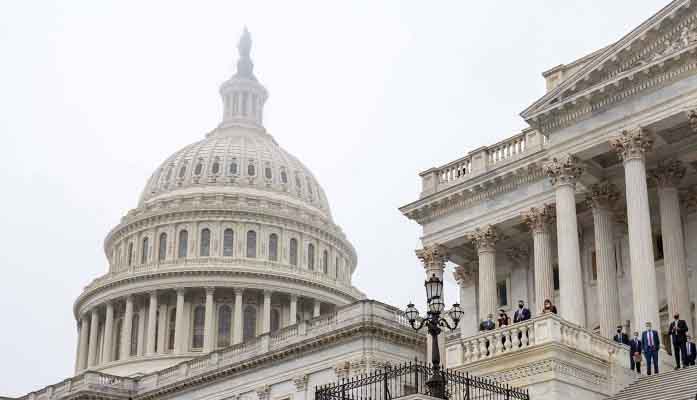
On Tuesday, Arizona Senators Kyrsten Sinema, and Mark Kelly voted in favor of a piece of legislation, S.1, which would have grabbed power over elections away from the states. S.1 would have banned requiring photo I.D. to vote, expanded ballot harvesting, and require taxpayers to fund political campaigns.
The duo joined the other Democrats in support of the bill. However, all Republicans voted to filibuster the bill, effectively killing it.
It was Sinema and fellow Democrat, Sen. Joe Manchin that preserved the filibuster for just such an occasion.
The Republican National Committee (RNC) also slammed S1 as an “unprecedented partisan power grab.”
“The Democrats’ S. 1 is an unprecedented partisan power grab that seeks to undermine the sanctity of the ballot by codifying a federal takeover of local elections. The Democrat politicians act seeks to eviscerate widely supported voter ID requirements and use taxpayer dollars to bankroll political campaigns,” GOP Chairwoman Ronna McDaniel said in a release. “Americans understand states should run their own elections — not unelected bureaucrats in Washington, DC. As Democrats continue their assault on election integrity, the Republican Party remains committed to making it easier to vote and harder to cheat.”