Anyone who bought Halloween candy likely noticed the higher prices and fewer sales. Yet it appears to be just a prelude of things to come heading into Thanksgiving.
President Biden and House Democrats’ reckless spending is haunting American families this Halloween.
🍬Halloween candy prices are up 13%. 🎃Pumpkin prices are up 7%.@HouseGOP is committed to ending this cost-of-living crisis by reining in Democrats’ failed agenda.
Avian flu outbreaks across the country have led to the slaughter of more than 7 million turkeys, resulting in a shortage that has prompted souring supply and demand pricing (up 70 percent per pound from last year) that has been further worsened by inflation.
Turkeys are not the only Thanksgiving staple subject to significantly higher prices this year.
Baking pumpkins are also much more expensive, up 24 percent from last year’s holiday season. And anyone who buys butter or margarine—a must-have for those potatoes and rolls—knows the shortage of sunflower oil (due to the war in Ukraine) and canola oil (due to droughts in Canada) have seen prices creep up all summer along with milk costs.
Add all of that to the recent inflation report which shows most other foods have gone up 15 to 20 percent, and it equals a traditional American Thanksgiving dinner that is going to be costly this year.
Meanwhile, grocery stores and restaurants which typically sell take-home Thanksgiving dinner packages are advising customers to order early, as quantities are limited.
And those trying to escape the higher grocery prices—and cooking time—by dining out won’t see much relief, according to the National Restaurant Association. Restaurants are seeing the same price squeezes, which when added to higher labor costs will translate to higher prices on the menu.
The higher prices for Thanksgiving staples is also expected to squeeze nonprofits across Arizona who count on food donations to provide thousands of free meals to the homeless and low-income families.
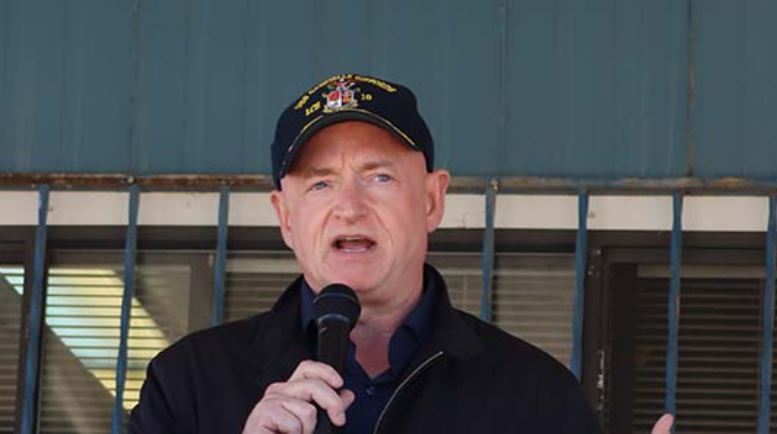
In 2016, Pima County used more than $15 million in county assets as collateral to lure an aspiring space tourism company connected to now-Sen. Mark Kelly to Tucson despite myriad questions about whether the deal was constitutional.
The Arizona Court of Appeals answered one of those questions on Oct. 26, ruling that a major provision of the county’s deal with World View Enterprises violated the Gift Clause of the Arizona Constitution. That deal allows World View to purchase its Pima County-financed office and manufacturing complex on prime commercial land for only $10 in 2036.
Pima County has 30 days to file a petition for review with the Arizona Supreme Court. If no petition is filed, the case goes back to the Pima County Superior Court for further proceedings in compliance with the appellate decision.
Jan Lesher, the current Pima County Administrator, notified the county supervisors that the Pima County Attorney’s Office will discuss the appellate decision during an executive session on Nov. 1.
Former Pima County Administrator Chuck Huckelberry, with support from Kelly, attracted World View’s corporate and manufacturing operations by promising to construct a Space Port (launch pad) on county-owned land near the Tucson International Airport. In addition, the county designed and constructed a 142,000 square-foot complex on 12 acres of adjacent county-owned land.
The $19 million cost of the project, which includes interest Pima County pays for financing the construction, was justified, supporters like Kelly and Huckelberry claimed, because of the 400 high-paying jobs and $3.5 billion of economic impact World View would bring to the area.
For its part, World View is to reimburse the county’s outlay via rent payments as part of a 20-year Lease-Purchase Agreement. Then when the lease is up, World View can purchase the office / manufacturing complex (sans the Space Port property) for $10.
The problem with that provision, according to the Court of Appeals, is that the building will still have a 30-year lifespan in 2036 and a fair market value of $14 million.
“The ‘give’ then, by Pima County, is $14 million and its ‘get’ is $10,” wrote Chief Judge Karl Eppich in the Oct. 26 appellate decision. He added that the provision was “lopsided” from the perspective of the county because the purchase price represents only .0000007 percent of the property’s value.
Eppich wrote that the expenditure of public funds to benefit a private company is legal under the Arizona Constitution only when a public purpose is served and only if the benefit or consideration between the public and the private entity is not “grossly disproportionate.”
“We agree with Taxpayers that the $10 purchase option amounts to an unconstitutional subsidy because the consideration received by Pima County is grossly disproportionate to the value of the World View facility,” he wrote.
Kelly became an advisor for World View in 2013 after getting to know the company’s founders. He has continued his relationship with the company even though those founders are no longer affiliated with World View and have started a competing new space tourism company in Florida.
World View, which still claims people will travel to the edge of the stratosphere someday via its proprietary balloons, has significantly missed most of its annual staffing and payroll targets. County officials have also had to revise the agreement at least once to address several months of late rental payments.
Timothy Sandefur is vice president for Legal Affairs at the Goldwater Institute and is one of the attorneys who represent three Pima County taxpayers who sued the county shortly after the World View agreement was announced in 2016.
“County governments exist to protect the rights of citizens and allow them to pursue their own business in their own way—not to pick winners and losers in the marketplace, or gamble with taxpayer money,” Sandefur said after the appellate decision was announced. “When they do, the consequence is often that taxpayer money simply floats away.”
Sandefur also addressed the possibility that Pima County will ask the state’s highest court to consider the case.
“Although they could appeal the decision to the Arizona Supreme Court, it seems well past time for Pima County officials to admit that this entire deal was both illegal and foolhardy,” he said.
Outreach coordinators will relay the report to the Tucson Police Department (TPD), who will place the report in one of three tiers of urgency: an unoccupied, low-risk site requiring clean up; an occupied, low-risk site requiring clean up and assistance for the homeless; and an occupied site with safety or health risks requiring clean-up and homeless relocation within 72 hours.
It appears that unless an encampment is classified as tier three, outreach teams may not respond for months. Locals complain on social media that their reports for homeless encampment cleanup go unheard.
Other than reporting the homeless encampments and hoping the city will take action, there’s not much else citizens can do. Earlier this month, a management company was fined for cutting down trees outside properties where the homeless gathered.
The city also prohibits feeding the homeless in public parks, with law enforcement saying that it incentivizes the homeless to not advance beyond their situation.
Please read this announcement. As a unit we are trying our best to educate the public for a better partnership. Please email TPDParkSafety@tucsonaz.gov for any concerns. Thank you in advance. pic.twitter.com/IIKbrDDe61
Mari Vasquez, the city’s community risk reduction manager handling homeless protocol, told reporters that the city didn’t have an evaluation system before. Vasquez relayed that the city is open to nonprofit assistance to expand homeless response services.
Prior to this reporting tool, concerned citizens had to email the city about encampments — even then, those reports were limited to those who posed a health or safety risk. During the pandemic, the city followed CDC recommendations to not disband encampments on public property.
ICYMI: Great article highlighting the amazing work by @Tucson_Police's Homeless Outreach Team in coordination w/ community partners to connect mental health, housing, and other support services to Tucsonans experiencing homelessness @ciaraencinastv@kgun9https://t.co/z7In8UvwaF
Tucson’s homelessness issue declined from 2017 to 2019. Then from 2019 to 2020, the city experienced a 60 percent increase in homelessness.
The city’s Housing & Community Development Department oversees a coalition of 50 government, not-for-profit, and faith-based groups called the Tucson Pima Collaboration to End Homelessness (TPCH). Despite the coalition receiving over $10 million in federal funding to mitigate homelessness, as well as various other city funding efforts, the crisis continues.
Donations made to Tucson’s homeless, via repurposed parking meters as part of the Tucson Change Movement, were presented to Old Pueblo Community Services for the Tucson Homeless Work Program, which offers help finding jobs, health services, and housing. pic.twitter.com/jTKJVMYpNE
The disconnect between the city’s millions to solve the homeless crisis and the worsening state of the problem is evidenced by a popular YouTube channel, “Goodness in People.” The man behind the account feeds, clothes, and visits with the many homeless of the city. Between his video evidence and government data on the homeless population, it’s unclear if the city’s approach is having any positive impact on the crisis.
Pima County announced earlier this month that they’re looking into building more shelters for the homeless.
Corinne Murdock is a reporter for AZ Free News. Follow her latest on Twitter, or email tips to corinne@azfreenews.com.
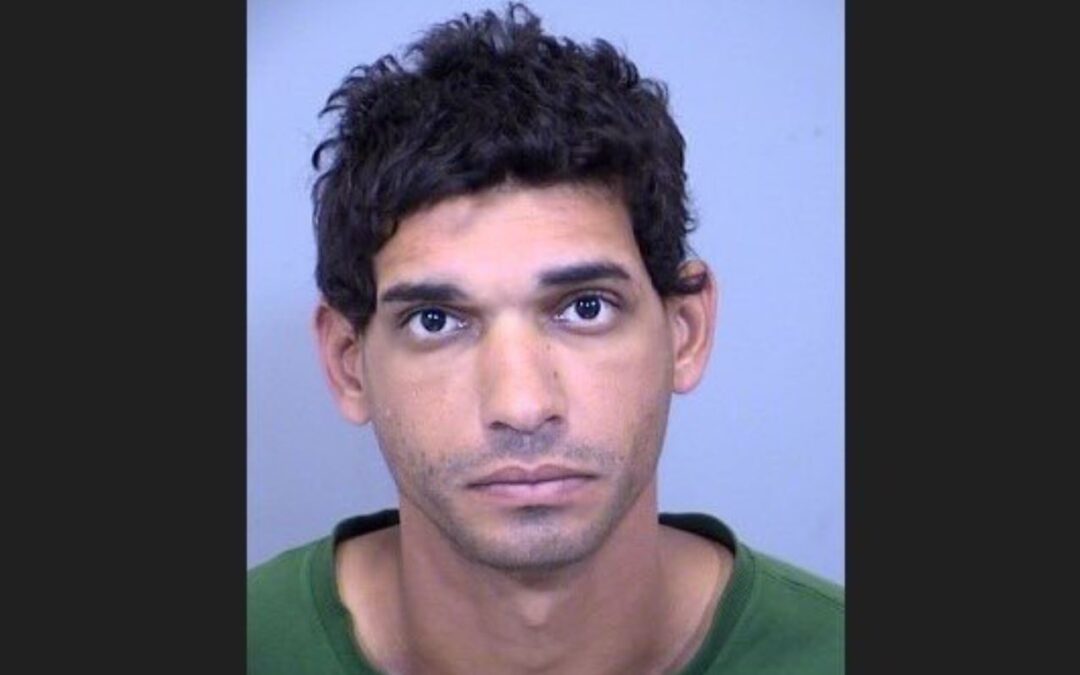
On Thursday, Phoenix Police Department (PPD) arrested a homeless man charged with burglarizing Democratic gubernatorial candidate Katie Hobbs’ office. Hobbs accused her opponent, Kari Lake, of inciting the break-in.
It’s unlikely that the burglar, 36-year-old Daniel Mota Dos Reis, was motivated by the gubernatorial race or politics. One PPD officer told reporters that he recognized Dos Reis in Hobbs’ surveillance footage because they’d arrested him earlier that same day for a separate, unrelated burglary.
According to his LinkedIn profile, Dos Reis had recently earned his MBA and was an accountant for several different companies until this March. It’s unclear how Dos Reis went from accounting work to homelessness, but his social media activity indicates that the state of the economy was a factor. AZ Free News couldn’t find any connections between Dos Reis and Lake by press time, nor could we find support or opposition for either candidate by Dos Reis.
Furthermore, it’s unclear what Dos Reis’ political beliefs are. He shared President Joe Biden’s speech on the American Rescue Plan as well as a Bloomberg article lamenting the overturning of Roe v. Wade. However, he expressed disagreement with the Biden administration’s policies and lamented his decision to immigrate to America. Dos Reis hailed from Luanda, Angola, a South African country plagued with unrest for years.
Although Dos Reis’ burglary likely wasn’t motivated by politics, Hobbs doubled down on her blame of Lake. She rejected Lake’s claim that the burglary was staged and accused her opponent of refusing to condemn threats against her.
“Let me be clear, Kari Lake’s preposterous allegation that this break-in was staged is unfounded and her refusal to condemn the threats that have become common in our politics continues to stoke chaos,” stated Hobbs. “Our campaign to stop Kari Lake’s dangerous chaos from becoming our new reality and to build a safer, more prosperous state will not miss a beat in fighting for Arizonans.”
Hobbs refused reporter questions about the break-in during a Thursday event with Planned Parenthood of Arizona (PPAZ). She said she wanted to focus on questions about safe and legal abortions. Later that day, PPAZ announced that it was resuming abortions statewide temporarily.
Katie Hobbs when asked about the campaign office burglary & what items were taken/if there’s reason to believe it was politically motivated:
Voters are split on a proposed new sales tax on the ballot benefitting fire districts, according to the latest polling.
A Data Orbital poll surveying 550 voters indicated that just over 12 percent of voters are undecided on Proposition 310. Nearly 44 percent are in favor of the proposition, while just over 42 percent are against it.
Of those in favor of Prop 310, nearly 30 percent were completely for it while just over 14 percent were somewhat for it. Of those against Prop 310, nearly 33 percent were strongly opposed to it while nearly 10 percent were somewhat opposed to it.
Pollsters read voters Prop 310’s official ballot summary, then asked how they would vote if the election were held on that day.
41 percent of respondents were registered Republicans, 32 percent were Democrats, and 24 percent were independents or unaffiliated. The greatest majority of them had some college education but no degree, 46 percent, while 24 percent had a bachelor’s degree, 16 percent had a graduate or postgraduate degree, and 11 percent had a high school degree.
Respondents’ demographics revealed that most voters answering were aged 65 or older: 36 percent. The remaining age categories were evenly split, all under 20 percent. 75 percent of respondents were white, 17 percent were Hispanic, four percent were African American, and 2 percent were Asian/Pacific Islander.
The Arizona Free Enterprise Club (AFEC), an opponent of Prop 310, commissioned the poll.
Proponents of Prop 310 argue that it would help underfunded, rural fire districts, and claim that increased funding would cut response times. Opponents argue that Prop 310’s fund awarding would favor districts with larger property valuations, even with the three percent cap on distributions, and insist that funding solutions should be tailored to the districts rather than imposed on all taxpayers.
Prop 310 would generate hundreds of millions of dollars annually for the next 20 years without requiring fire departments to disclose how those funds were spent. The Common Sense Institute Arizona (CSI), a nonpartisan research nonprofit, projected that Prop 310 would have a negative effect on the state’s economy.
CSI claimed that the cumulative $5.5 billion in additional fire tax revenue would come at a cost of fewer jobs, lower personal income, and higher local prices.
CSI projected that Prop 310 would reduce statewide employment by 2,500 jobs in 2023 and then 3,800 jobs by 2042; reduce state GDP by $7.4 billion; reduce resident personal income by a cumulative $8.55 billion ($690 million in 2042); and increase the local price level by .04 percent.
As part of their data modeling, CSI included background on fire districts’ historical funding and expenditures: from $114 million in 2003 to nearly $500 million annually in 2020, accrued from revenues such as property taxes. CSI shared that a significant portion of those funds went toward unfunded public pension liabilities. CSI noted that no available source regularly tracks fire district funding.
Corinne Murdock is a reporter for AZ Free News. Follow her latest on Twitter, or email tips to corinne@azfreenews.com.
Parents attempting to call the Arizona Department of Education (ADE) helpline for the school choice program are met with an automated voice that rejects their call due to “excessive call volume” and promptly hangs up.
No indication of wait times, and no promise of a call back.
We need a new ESA administration! It has been poorly managed for years. The issues everyone is having now are the same old problems, but just multiplied since we have tens of thousands of new students in the program.
It’s just another day of Empowerment Scholarship Account (ESA) Program administration under ADE Superintendent Kathy Hoffman, who hasn’t exactly been shy about her disdain for school choice programs. Hoffman proclaims loudly and often that the ESA Program lacks accountability and remains dysfunctional, even well over three years into her administration.
AZ Free News asked ADE about the ESA Program helpline. They didn’t respond by press time.
What happened in Snowflake is one example of the lack of accountability with the ESA program. Stories like this will become more common with universal expansion. We only have 3 days left to stop this law from going into effect. Find out where to sign at: https://t.co/0j0mJo7IIhpic.twitter.com/mIxyaw1v2D
Christine Accurso, one of the ESA parents on the frontlines advocating for universal school choice, criticized the ADE for taking in an additional $2.2 million to hire 26 new workers this summer, yet still can’t manage the universal school choice program.
For many months the ESA office has only had their phones open from 10-2. They have an additional $2.2 million dollars & 26 new positions with this expansion & that money was retroactive back to 7/1. There should have been plans to have a larger team ready on DAY ONE. ⬇️
Last month on her reelection campaign trail, Hoffman insisted that universal school choice doesn’t help children with unique learning needs. She declared that it was a “taxpayer-funded coupon for the wealthy.” She then advocated for voters to sign an initiative to refer universal school choice to the 2024 ballot.
The ESA program was intended to provide more options for children with special needs or unique circumstances, like military families. With the current status of applicants, it is not achieving those goals. Instead, it is just a taxpayer funded coupon for the wealthy. https://t.co/hOqWm4iGfQ
Hoffman has fought consistently to eradicate the ESA Program.
The ESA program has an extensive history of financial mismanagement & lack of oversight. It's inappropriate to expand this program when it's grappling with many critical issues. Vote #NoProp305 to stop the expansion & keep public money in public schools 👉 https://t.co/CZs5zOUm7cpic.twitter.com/d0ZvH7oyj7