On Tuesday, Yavapai County Sheriff’s Office lost an officer to gunfire: Sergeant Richard Lopez, 51. Lopez’s death marked the second officer killed in the line of duty this year. White Mountain Apache Tribal Police Department Officer Adrian Lopez, Sr., was killed by gunfire on June 2.
BREAKING NEWS: YCSO DEPUTY SHOT IN LINE OF DUTY. SUSPECT BARRICADED CORDES LAKES – (June 28, 2022) – YCSO is working a scene where a deputy has been shot in Cordes Lakes. The suspect has barricaded himself and SWAT has been called out. No further update.
— Yavapai Co Sheriff's Office (@YavapaiSheriff) June 28, 2022
According to the latest National Fraternal Order of Police (FOP) counts released earlier this month, there have been 14 officers shot in the line of duty so far this year in Arizona. Since that report, at least one unidentified Phoenix police officer was shot. That’s more than double the total number of officers shot last year (six). Only one law enforcement official, Drug Enforcement Administration (DEA) Group Supervisor Michael Garbo, was killed by gunfire last year.
National attention fixated on the increased violence against officers last December when Phoenix Police Officer Tyler Moldovan sustained near-fatal injuries from eight gunshot wounds. At the time, Moldovan hadn’t yet received his official police badge. He finally received it on Sunday.
"I'm really proud of you" ⁰ Officer Tyler Moldovan was shot in the line of duty before he could get his official Phoenix Police Department badge.
According to the FOP, ambush-style attacks on law enforcement nationwide increased by 115 percent last year.
Lopez was in pursuit of a theft suspect, later found barricaded in his home and placed in custody on first-degree murder charges. In a press conference on Tuesday, Yavapai County Sheriff’s Office said they wouldn’t divulge more on the arrest because they lacked the details. The Arizona Department of Public Safety has taken over the investigation.
— Yavapai Co Sheriff's Office (@YavapaiSheriff) June 29, 2022
Governor Doug Ducey was one of many who condemned the lawlessness that led to Lopez’s death.
This is truly terrible. Arizona stands together against this kind of lawlessness. Our thoughts are with Sgt. Richard Lopez’s family, friends and Yavapai County Sheriff’s Office colleagues during this tragic time. https://t.co/mhReDmz84E
Sheriff David Rhodes shared that Lopez was known affectionately as “R-Lo,” and a regular participant of the community outreach event for underprivileged or struggling families, “Shop With a Cop.” Lopez leaves behind a wife and two daughters.
“I can’t think of anything low enough to speak of this shooter, this person that decided to take this life. We’re hurt,” said Rhodes. “I’ll tell you this — the violence against law enforcement, it’s escalating everywhere. And it has got to stop.”
Corinne Murdock is a reporter for AZ Free News. Follow her latest on Twitter, or email tips to corinne@azfreenews.com.
On Wednesday, Unilever sold its Ben & Jerry’s business in Israel to its current licensee, American Quality Products (AQP), effectively reversing the ice cream brand’s boycott of Israeli-occupied territory they believed belonged to Palestinians, or “Occupied Palestinian Territory” (OPT). The move came about six months before Ben & Jerry’s license agreement there was set to expire. Ben & Jerry pledged to continue selling in Israel through a different arrangement after that — just not within OPT.
The British consumer goods conglomerate asserted in a press release that they weren’t supportive of Ben & Jerry’s boycott, which they implied was antisemitic. The company explained that it was slow to take action on the boycott, which began last July, because they wanted to conduct an extensive review with parties involved, including the Israeli government.
“Unilever rejects completely and repudiates unequivocally any form of discrimination or intolerance. Antisemitism has no place in any society. We have never expressed any support for the Boycott Divestment Sanctions (BDS) movement and have no intention of changing that position,” wrote Unilever.
The conglomerate expressed hope that the Israeli and Palestinian governments could reach a peaceful resolution in their conflict.
Ben & Jerry’s insisted that their boycott wasn’t rooted in antisemitism.
Ben & Jerry’s boycotted the Israel-occupied area last July in response to controversy over Israeli forces along the West Bank, which the company asserted was an illegal incursion. In response, State Treasurer Kimberly Yee divested Unilever of state funds in September. The state originally had around $143 million invested in the conglomerate.
At the time, Yee pointed to Arizona law prohibiting state funds from going to entities that boycott Israel.
“I gave Unilever PLC, the parent company of Ben & Jerry’s, an ultimatum: reverse the action of Ben & Jerry’s or divest itself of Ben & Jerry’s to come into compliance with Arizona law or face the consequences. They chose the latter,” said Yee. “It does not matter how much investment Unilever PLC has in Israel, with Ben & Jerry’s decision to no longer sell its product in the West Bank, the companies are in violation of the law in Arizona. Arizona will not do business with companies that are attempting to undermine Israel’s economy and blatantly disregarding Arizona’s law.”
On Thursday, Yee issued a formal statement commending Unilever for reversing Ben & Jerry’s boycott. However, the treasurer didn’t pledge to restore the divested funds immediately. Yee shared that her office would review Unilever before deciding to reinvest.
“[I] continue to be concerned about the woke decisions of Ben & Jerry’s Board of Directors,” remarked Yee in closing.
I am pleased that Unilever overturned the decision made by Ben & Jerry's and changed their course of action to boycott Israel as I had requested in September of 2021. I continue to be concerned about the woke decisions of Ben & Jerry's Board of Directors. See full statement: pic.twitter.com/GSoJWdR6uF
In a statement, Ben & Jerry’s expressed that they didn’t support Unilever’s decision.
“We continue to believe it is inconsistent with Ben & Jerry’s values for our ice cream to be sold in the Occupied Palestinian Territory,” stated the company.
We are aware of the Unilever announcement. While our parent company has taken this decision, we do not agree with it.
AZ Free News sampled 46 legislators’ latest campaign finance reports of the state legislature and found that 22 of 47 legislators sampled received 50 percent or more of their campaign contributions from either lobbyists or PACs.
PACs and lobbyists have significant footing in the legislature. That would explain why the first week of January is known as “hell week” within the legislature — not because they’re in preparation for the new session kicking off, but because lobbyists are scrambling to fundraise for legislators. Arizona law prohibits legislators from receiving lobbyist campaign contributions while in regular session.
The following are state legislators that receive 50 percent or more of their campaign funds from PACs and lobbyists combined:
In the House, Richard Andrade (D-Glendale), about 51 percent; Ben Toma (R-Peoria), about 56 percent; Lorenzo Sierra (D-Avondale), about 62 percent; Steve Kaiser (R-Phoenix), about 64 percent; John Kavanagh (R-Fountain Hills), about 64 percent; Rusty Bowers (R-Mesa), about 64 percent; Diego Espinoza (D-Tolleson), about 66 percent; Joanne Osborne (R-Goodyear), about 74 percent; David Cook (R-Globe), about 75 percent; Justin Wilmeth (R-Phoenix), about 79 percent; John Fillmore (R-Apache Junction), about 83 percent; Tim Dunn (R-Yuma), about 87 percent; and Kelli Butler (D-Paradise Valley), about 96 percent.
In the Senate, Vince Leach (R-Tucson), about 53 percent; T.J. Shope (R-Coolidge), about 56 percent; David Gowan (R-Sierra Vista), about 71 percent; Rosanna Gabaldon (D-Sahuarita), about 73 percent; Lupe Contreras (D-Avondale), about 75 percent; Sonny Borrelli (R-Lake Havasu City), about 79 percent; Tyler Pace (R-Mesa), about 82 percent; Sine Kerr (R-Buckeye), about 90 percent; and David Livingston (R-Peoria), about 91 percent.
Of note, all of Gowan’s 32 contributions came from outside of his district — 28 came from Maricopa County. Additionally, $5,000 of Gowan’s $8,950 non-lobbyist contributions came from Phoenix Coyotes owner Alex Merulo.
Butler received over $10,000 from the Tucson branch of one of the largest labor unions in the country: the United Food and Commercial Workers (UCFW). Her PAC contributions totaled $13,000, and $150 of her individual contributions were from lobbyists. There were several inactive lobbyist donors among the individual contributions totaling $250. In all, Butler’s total contributions were over $13,700.
Wilmeth’s ten non-lobbyist donors included three inactive lobbyists and one wife of an inactive lobbyist.
Five legislators sampled reportedly received less than 10 percent of funds from PACs and lobbyists: Morgan Abraham, about 4 percent; Quang Nguyen, about 7 percent; Judy Burges, about 7 percent; Amish Shah, about 7 percent; and Joseph Chaplik, about 8 percent.
There were several legislators sampled that we couldn’t review because their reports haven’t been filed yet — even though they were due well over two months ago.
State Representative Alma Hernandez (D-Tucson) still hasn’t filed her campaign finance report due April 15. Hernandez has been late consistently since her first year in office (2018), accruing $3,500 in fines altogether. Her latest campaign finance report, which she has yet to file, is 76 days late and she owed $1,675 currently — her highest single fine to date. It took Hernandez 69 extra days to file her 2021 cumulative finance report: it was due January 15, but she filed it March 25.
Just over half of Hernandez’s individual donors from her last report, the cumulative one for 2021, were from out of state and made up the majority of those contributions: $5,980 versus the $3,920 from Arizona. Among them were several prominent figures in the Jewish community including acclaimed author and Holocaust survivor Elie Wiesel’s son, Elisha Wiesel, as well as Broadway star Jonah Platt.
State Senator Stephanie Stahl Hamilton (D-Tucson) did file her report on time — but like Hernandez, over half of the individual contributors on her latest campaign finance report were from out of state.
It appears that the Hernandez siblings are alike when it comes to campaign finance reports. Since the year his sister took office, Hernandez grew increasingly tardy with filing the reports. For two separate 2020 reports, he accrued over $5,100 in fines. His 2021 cumulative report was filed late by 67 days, and he was fined $1,450 for that. Both the Hernandez siblings are 76 days late on their first quarter report.
Another perennially tardy filer is State Representative César Chávez (D-Maryvale). Like Hernandez, he is 76 dates late and owes $1,675, but for his senate campaign’s first quarter report. Chávez was also late by 58 days to file his senate campaign’s 2021 cumulative report, owing $1,225.
Similarly to Hernandez, Chávez has a history of late filings, the highest of which were 121 days late to file his 2020 pre-general election filing, 163 days late to file his 2016 pre-general election report, and 953 days late to file his 2016 first report for the fourth quarter and post-general election report.
One interesting campaign finance report came from State Senator Wendy Rogers (R-Flagstaff). The report totaled nearly 600 pages, with 586 dedicated to individual contributions alone that totaled nearly $360,000. No lobbyists could be discerned among the over 7,000 contributors, and over 1,600 of them were Arizonans. A vast majority were retired, nearly 4,500 of them, bolstered by the self-employed and small business owners.
Only one PAC donated to Rogers: the Save America PAC gave one contribution of $5,000 in January.
Corinne Murdock is a reporter for AZ Free News. Follow her latest on Twitter, or email tips to corinne@azfreenews.com.
The Tucson Unified School District (TUSD) approved an increase in school safety staff a week before experiencing an active shooter threat last Tuesday.
TUSD Governing Board member Sadie Shaw pointed to that threat as justification for supporting the increase, which some community members opposed. TUSD will hire five more school safety supervisors, two dispatchers, and one field lieutenant, adding to the 34 existing school safety department members. Only board members Leila Counts and Ravi Shah opposed the increase.
The TUSD community and South Tucson Police Department (STPD) presented different accounts of last Tuesday’s threat, the nature of the 911 calls, and the department’s response times.
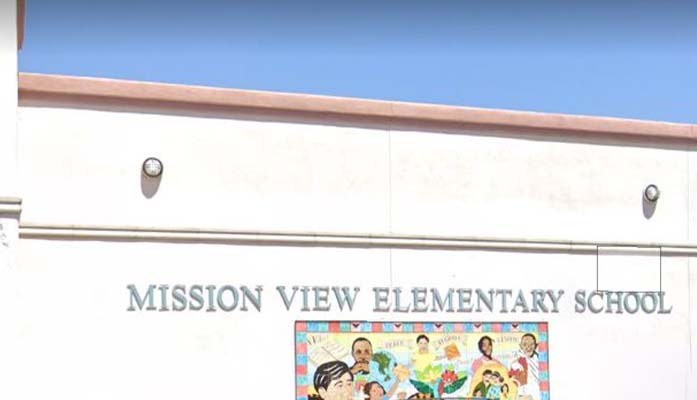
In their version of the events to KGUN 9, STPD claimed that they received one call about the potential gunman at 7:05 am last Tuesday. They said that several men were reportedly arguing over a possible stolen car across from Mission View Elementary School, part of TUSD. Half an hour later, STPD claimed that a school monitor reported in a second call that one of the men may have been armed.
STPD didn’t respond until 9:05 am, a response time of about two hours in a city of just over one square mile. STPD reported that they didn’t find a gun.
However, Shaw and others offered a different account of events last Wednesday. Shaw stated that STPD didn’t respond for over three hours, that the alleged gunman was directly threatening the school, and that the school principal placed the calls to police. The board member thanked the TUSD safety team for protecting the students when police failed to arrive.
Shaw said that the experience was significant enough for her to vote to hire more school safety officers.
“I wasn’t on the governing board when they voted to arm school safety but in general I support this decision because these employees are sometimes tasked to respond to dangerous situations that happen at any TUSD site — 24/7,” wrote Shaw. “[Y]ou know what? I have a child that goes to school in this district and so do many of you. I don’t think we can afford to make idealistic decisions that ignore reality. This is America.”
In a subsequent petition to end school gun violence, which Shaw shared, the group “Protect Our South Tucson School” claimed that STPD didn’t respond for three and a half hours, and that the two calls were about, first, a “gun yielding [sic] angry gunman” standing outside the school and, second, an electronic threat sent to the school. Additionally, the group echoed Shaw’s claim that the second call came from the elementary school principal — not a school resource officer.
The entirety of the group’s account of event is reproduced below:
On Tuesday, June 21st at 7:15 am, 15 minutes before a summer school day started a gun yielding angry gunman stood outside of Mission View Elementary in South Tucson, a one square mile enclave of the much larger city of Tucson.
About an hour after the first call to 911 the school received a threat electronically.
The principal called 911 and pleaded again for law enforcement officers to come to protect the school while students participated in their summer school classes. Nobody showed up. Instead, the school district’s school safety team showed up in a heroic fashion and was able to secure the school.
It wasn’t until 3 and a half hours after the incident did South Tucson Police showed [sic] up to the mass shooting threat.
Every day in the United States a mass shooting occurs, just a few weeks ago in Uvalde Texas, a mass shooter ended the lives of many children and teachers. The lack of urgency in South Tucson PD’s response is unacceptable. We understand that South Tucson PD is understaffed, but when it comes to the potential threat of a mass shooting occurring it should be their number one priority. In the one square mile city, families and schools can only receive services first from South Tucson police. Tucson Police Department should be responding jointly to potential threats of gun violence to our schools regardless if the threat is in South Tucson.
We are calling on South Tucson, Tucson Unified School District and the City of Tucson to address this issue immediately and develop policies that improve lines of communication, and improve collaboration when it comes to protecting our students from gun violence.
AZ Free News reached out to STPD just before noon on Tuesday. We were referred to STPD Chief Danny Denogean; he didn’t respond by press time.
STPD admitted that their response time was too slow, which they asserted was around two hours. Denogean apologized on Monday in a statement to KGUN 9.
“We own this. We should have had a better response to that call. There’s no debating that. We needed to get there quicker.”
The neighboring Tucson Police Department (TPD) has also had slower response times, due to staffing shortages. Assistant Chief Kevin Hall toldKOLD in January that the issue has been plaguing them for about two years. Chief Chris Magnus reported that their fastest response time for foremost emergencies averages 4 minutes and 47 seconds, whereas lowest-level calls average about one hour and 37 minutes.
Corinne Murdock is a reporter for AZ Free News. Follow her latest on Twitter, or email tips to corinne@azfreenews.com.
A contract dispute between two companies involved in co-developing a low-income housing project to support Tucson’s Rio Nuevo redevelopment effort will be argued before the Arizona Court of Appeals next month.
The appeal stems from a 2021 ruling by a Pima County judge who dismissed two breach of contract related claims against Gorman & Company Inc. after the company announced it was not paying any of a nearly $1.9 million development fee to The Gadsden Company LLC, even though Gadsden performed the services required in the companies’ contract.
Gadsden argued that the contract called for Gadsden to receive “up to 40 percent” of a guaranteed $1,879,252 development fee paid by the Investor Fund which financed the project. However, a Pima County judge dismissed the lawsuit in 2021, ruling Gadsden did not have a proper claim to any of the fee money.
Oral arguments will be heard by a three judge appellate panel on July 13.
Court records show the Investor Fund managed by the non-profit Enterprise Community Investment pledged more than $16 million for a 99.99 percent stake in the Tucson project built on land owned by Mission District Partners LLC, a Gadsden affiliate. The developers kept a 0.01 percent interest.
Gorman & Company regularly develops affordable housing properties through the
federal Low Income Housing Tax Credit program. It was contracted by West End Station LLC for architectural and construction services for the planned project.
The legal dispute centers on a provision of a June 2017 contract between Gorman and Gadsden which states Gorman is entitled to the “first” 60 percent of the development fee. Of that, $1,281,218 was to be earned at four milestones related to the progress of the project.
The contract also includes language furthering defining the split between the two companies. It also allows Gorman to defer some of the development fees and have it applied instead to cost overruns which Gorman was responsible for in its contract with the Investor Fund.
Various milestones were achieved in June 2017, March 2019, and February 2020. Some of the fees was deferred by Gorman, which reported about 43 percent was deferred and only 57 percent taken in cash. None of it went to Gadsden.
“Gorman was free to receive those dollars in cash, defer them, or both,” Gadsden’s attorneys argue. “But once Gorman receives or defers sixty percent its entitlement is satisfied.”
Gorman’s attorneys disagree, arguing in a brief filed with the Arizona Court of Appeals that financial issues with the housing project prevented Gorman from hitting the 60 percent threshold and keeping Gadsden from receiving any share.
“The agreement clearly and unambiguously places two conditions on Gadsden’s receipt of any share of the development fee,” Gorman argued. “When cost overruns prevented those conditions’ fulfillment by requiring cash payments of the fee to be deferred to keep the project solvent, there was simply no cash paid, non-deferred portion of the fee left for Gadsden to receive.”
The Pima County judge dismissed the breach of contract claim as well as Gadsden’s claim of breach of the covenant of good faith and fair dealing. To prove such a claim, Gadsden argued all it must show is the existence of a contract and that Gorman manipulated the cash and deferred fee split to “impair the right of the other to receive the benefits which flow from their agreement or contractual relationship.”
Mission District was paid $1.75 million for the property. Gadsden was also paid $470,000 at closing for development costs expended before the deal.
On Tuesday, Republican gubernatorial candidate Matt Salmon ended his campaign, citing low polling numbers. Salmon received an average of 12 to 14 percent of the vote in recent polls against his top two contenders, Karrin Taylor Robson and Kari Lake.
“Unfortunately, numbers are numbers, and it has become clear to me that the path to a first-place victory is no longer a realistic possibility,” stated Salmon. “Republican primary voters deserve more than having their votes split on August 2nd, and so I am leaving this race for the same reason that I entered it: because it is what’s best for the people of Arizona.”
I've been blessed with the best supporters in the world – but numbers are numbers, and primary voters deserve more than having their votes split.
So, today, I am ending my #AZGov campaign for the same reason I entered it: Because it is what's best for the people of Arizona → pic.twitter.com/V2MaR10n9r
Salmon is the latest to drop out in the crowded Republican primary. Steve Gaynor withdrew at the end of April, also citing low polling numbers against top contenders Salmon, Lake, and Robson.
“This week I received survey results that showed I would have a high probability of winning against each of the other candidates in a head-to-head matchup,” wrote Gaynor. “In a three-way race, I would have a reasonable probability of winning. However, in a four-way race, my chance of winning is low enough to be unrealistic.”
— Steve Gaynor for Arizona Governor (@gaynorforgov) April 29, 2022
State Treasurer Kimberly Yee withdrew at the beginning of this year, deciding to run for re-election to her current office instead.
I am withdrawing from the Governor's race to stand for re-election as Treasurer. There is additional work to be done as the Treasurer of Arizona. As I transition my campaign, I want to thank my supporters and invite them to join me in my re-election efforts for Arizona Treasurer. pic.twitter.com/WiArCuBisQ
That leaves Robson, Lake, Scott Neely, and Paola Tulliani-Zen, along with several write-ins: Patrick Finerd, Carlos Roldan, and Alex Schatz. Robson and Lake are the top two contenders in the field at present.
The most recent poll from Trafalgar showed Lake with a 12-point lead over Robson.
However, Data Orbital polling from earlier this month revealed Lake with a four-point lead over Robson. The pollsters have an A/B rating from FiveThirtyEight.
Another poll from OH Predictive Insights this month showed Lake with an even smaller margin of two points.
Real Clear Politics averaged Lake at a seven-point lead ahead of Robson.
The Democratic primary is far smaller: Secretary of State Katie Hobbs is up against businessman and career politician Marco Lopez. Former state legislator Aaron Lieberman withdrew last month.
OH Predictive Insights has consistently shown Hobbs with a comfortable lead over Lopez. In May, the pollsters found that 43 percent of those surveyed would vote for Hobbs, while only 9 percent would vote for Lopez. However, 40 percent reported that they were undecided.
Predictive polling on who would win the governor’s race consistently showed Hobbs with a lead.
According to a May poll from GQR Research which Hobbs sponsored, the secretary of state led Robson by one point and Lake by five points. GQR has a B rating from FiveThirtyEight.
Data Orbital polling from February, which has an A/B rating, reported slightly different leads: Hobbs would lead Robson by five points and Salmon by one point, but Lake would lead Hobbs by one point.
Corinne Murdock is a reporter for AZ Free News. Follow her latest on Twitter, or email tips to corinne@azfreenews.com.