by Corinne Murdock | Dec 5, 2022 | News
By Corinne Murdock |
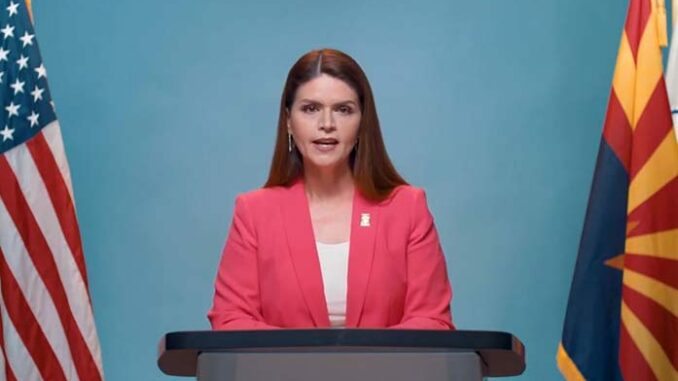
On Sunday, Tucson Mayor Regina Romero announced that she contracted COVID-19 — despite being vaccinated and up to date on booster shots.
Romero clarified that her symptoms were mild.
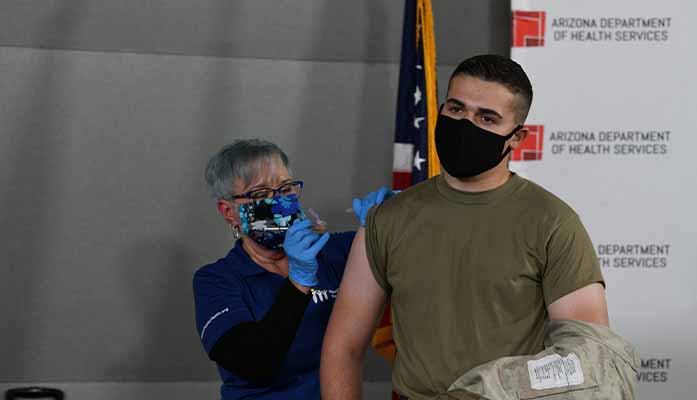
Under Romero’s leadership, the city of Tucson instituted a vaccine mandate for employees last August. Romero has characterized the vaccine mandate as a “policy” and “requirement,” though previously she acknowledged the county’s requirement of masks as a mandate.
In response to the mandate, Attorney General Mark Brnovich filed a civil rights lawsuit in August (CV2022-011416). Brnovich accused the city of disparate treatment between unvaccinated and vaccinated employees. Brnovich claimed the city punished unvaccinated employees awaiting approval of their exemption or accommodation requests with unpaid suspension, denied additional sick leave to recover from COVID-19 or to quarantine if a family member contracted COVID-19, and required to undergo regular COVID-19 testing at their own expense.
However, vaccinated employees were given additional sick leave.
About 377 employees requested a medical exemption for the mandate, and 352 employees requested a religious exemption.
Brnovich’s lawsuit against the city is ongoing in the Arizona Superior Court.
Tucson’s vaccine mandate also prompted state intervention last year. Prior to the Arizona Supreme Court overturning a newly-enacted law banning state or local government from mandating the COVID-19 vaccine, Brnovich threatened to withhold over $175 million in state revenues.
The city also required election workers to be vaccinated ahead of the special election in May. The Pima County Board of Supervisors voted in July to rescind that mandate for the primary elections. That decision followed requests from their elections officials concerned that they wouldn’t have adequate staffing with the mandate in place.
The county and city of Tucson implemented similar vaccine mandates. However, in September the Pima County Board of Supervisors rescinded its COVID-19 vaccine mandate for employees and $45 monthly penalty for unvaccinated employees. It also implemented a reward for those vaccinated employees who stay up to date on booster shots: 16 hours of paid time off every year.
A newly-enacted state law (HB2498) prohibits state and local governments from mandating the COVID-19 vaccine.
Romero has affirmed consistently that the COVID-19 vaccine is safe and effective.
“The decision to not get vaccinated does not just affect personal health, it unjustly exposes others to the risk of illness; including coworkers, members of the public, and children,” stated Romero.
Corinne Murdock is a reporter for AZ Free News. Follow her latest on Twitter, or email tips to corinne@azfreenews.com.
by Corinne Murdock | Dec 4, 2022 | News
By Corinne Murdock |
Two years and nine months after “15 days to slow the spread,” the Arizona Department of Health (AZDH) is again asking Arizonans to mask up.
On Tuesday, AZDHS issued a blog post advising indoor masking due to the high levels of COVID-19 infections in eight counties: Apache, Cochise, Gila, Greenlee, La Paz, Navajo, Pima, and Yuma counties.
AZDHS noted that the remaining seven counties have medium community levels.
The renewed guidance follows several years of scrutiny over the efficacy and safety of prolonged mask wearing.
Last April, State Senator Kelly Townsend (R-Mesa) highlighted studies expressing concern over the safety of the graphene coating present on masks. Some, but not all, masks contain graphene. The presence of the carbon atoms isn’t distinguished by any color or design on a mask, and manufacturer labels don’t always disclose its presence.
This past legislative session, lawmakers passed several bills to prohibit mask mandates. HB2616 requires schools to defer to parents when it comes to children wearing masks in schools. HB2453 prohibits government properties from requiring mask wearing on the premises.
Current COVID-19 case breakdowns are as follows: Maricopa County, over 168,000 cases; Pima County, over 41,800 cases; Pinal County, over 16,300 cases; Yavapai County, over 8,100 cases; Apache County, over 7,700 cases; Navajo County, over 7,300 cases; Mohave County, over 7,100 cases; Coconino County, over 6,300 cases; Yuma County, over 5,800 cases; Cochise County, over 5,300 cases; Gila County, 3,000 cases; Santa Cruz County, over 2,100 cases; La Paz County, over 500 cases; and Greenlee County, over 300 cases.
These case totals are less than the spikes that occurred in June and July. Weekly case totals are about 54 percent of what they were this time last year, and about 41 percent of what they were this time in 2020.
The highest number of cases week-over-week occurred throughout January earlier this year.
There have been over 31,700 deaths attributed to COVID-19 since the start of the pandemic. That’s about 962 deaths per month. The most deaths occurred between mid-December 2020 and the end of January 2021.
72 percent of all COVID-19 deaths occurred in those over the age of 65. 15 percent of deaths occurred in those between the ages of 55 and 65. Eight percent of deaths occurred in those between the ages of 45 and 54. Five percent of deaths occurred in those between the ages of 20 and 44. Approximately zero percent of deaths, a total of 73 persons, occurred in those under the age of 20.
Compared with pre-pandemic years, Arizonan deaths in 2020 and 2021 increased by an average of 10,600 both years. From 2012 to 2019, Arizona deaths increased every year by an average of over 1,600.
There were 60,100 deaths in 2019, 75,700 deaths in 2020, and over 81,400 deaths in 2021. It appears that this upward trend won’t continue this year. So far, there have been over 60,700 deaths (present data goes through October): a decline of over 5,000 compared with this same time last year. If death counts for November and December amount to the yearlong average of 6,000 deaths every month, then this year’s total deaths would amount to 72,900.
Nationally, the total number of mortalities increased by 17.6 percent in 2020 nationwide. In 2019, there were over 2.8 million deaths; in 2020, there were over 3.3 million deaths.
Deaths attributed to COVID-19 weren’t the sole cause of the spike. Of the near-504,000 difference, COVID-19 deaths accounted for over 345,000. Heart disease deaths increased by over 31,800; unintentional injury deaths increased by over 19,100; stroke deaths increased by about 9,000.
Deaths attributed to chronic lower respiratory diseases, cancer, and suicide decreased by nearly 8,700 altogether. Deaths from chronic lower respiratory diseases accounted for the greatest decline: over 5,300.
Prior to 2020, year-over-year death increases averaged over 35,500 from 2015 to 2019, or about 1.2 percent every year.
Corinne Murdock is a reporter for AZ Free News. Follow her latest on Twitter, or email tips to corinne@azfreenews.com.
by Corinne Murdock | Dec 4, 2022 | News
By Corinne Murdock |
The operative whose political action committee (PAC) received $27 million from fallen crypto giant FTX also received over $1 million from committees for Senator Mark Kelly and governor-elect Katie Hobbs.
The operative, Dacey Montoya, also served as the treasurer for these committees. Montoya has been behind numerous other political committees and PACs in Arizona and across at least 16 other states. Usually, those committees also pay her consulting firm, The Money Wheel (TMW).
Montoya serves as the treasurer for the Mark Kelly Victory Fund and Mark Kelly For Senate. TMW received over $832,000 from the two committees over the past two years.
Katie Hobbs’ secretary of state and gubernatorial committees paid TMW about $188,500 over the past four years, with the greatest payouts occurring over the last year. Although Montoya wasn’t listed as the treasurer for either of Hobbs’ campaigns, her firm’s email was listed in the contact information.
That combined $1 million doesn’t include payouts from other political action committees (PACs) and political candidates. (Note: AZ Free News discovered that Montoya’s PACs didn’t always file timely reports, so funds like expenditures, income, and TMW funding may be underreported).
Arizona-based PACs or campaign committees that paid TMW: Outlaw Dirty Money, $61,900; Arizona Pipe Trades 469, $54,000; Invest in Phx, $10,700; Rural Arizonans For Accountability, $10,500; Arizonans For a Just Democracy, $5,500; No On Proposition 126 Committee, $1,200; Solutions for Arizona, $500.
Arizona-based PACs that Montoya ran, and how much they paid TMW: Invest in Education, $504,400; Protect Our Future PAC, $134,500; Way to Lead PAC, $67,800; Moms Fed Up, $52,000; Way to Lead State Power Committee, $49,600; Invest in Education Committee, $40,700; Arizonans For Fair Elections, $40,000; Arizona Families First, $38,900; Change for Arizona 2024 PAC, $31,000; Arizonans For Fair Lending, $27,000; Arizona Future Fund, $25,000; Invest in Arizona, $25,000; Guarding Against Pandemics PAC, $16,000; Families United For Freedom, $15,000; Opportunity For Tomorrow, $11,000; Lead the Way 2022, $9,800; Not Our Faith, $9,200; Liftoff PAC, $3,500; E Pluribus PAC, $9,100; Win the West 2020, $3,100; Win Blue 2020, $2,600; Restore Hope, $2,500; Arizona Washington Victory Fund, $1,800; Arizona Maine Victory Fund, $1,800; Arizona New Jersey Victory Fund, $1,800; Kelly, Cisneros, Rouda, Smith Victory Fund, $1,700; Yes For Phx, $1,400; Saguaro Victory Fund, $1,100; and Arizona New Mexico Victory Fund, $800.
Political candidates for whom Montoya served as treasurer, and how much they paid TMW: Mayor Kate Gallego, $76,300; Reginald Bolding, $51,800; and Jevin Hodge, $42,000.
Political candidates whose campaigns paid TMW: Kirsten Engel, $46,900; Judy Stahl, $11,500; Ann Kirkpatrick, $118,500; and Heather Ross, $36,000.
At minimum, Montoya’s firm has made over $2.7 million over the past few years through Arizona political candidates, committees, and PACs.
Montoya also founded and ran an influential PAC that didn’t pay TMW: Will of the People Arizona, a PAC dedicated to defeating Propositions 128, 129, and 132. In their tweets, the PAC tags multiple progressive organizations in their effort, including Pro-Choice Arizona, LUCHA Arizona, Mass Liberation Arizona, Black Lives Matter Phoenix Metro, Poder in Action, CASE, AZ Coalition 4 Change, Healthcare Rising Arizona, All Voting is Local – AZ, ACLU of Arizona, and Planned Parenthood Advocates of Arizona.
The PAC identified The Arizona Republic as an endorser of their efforts.
Prop 128, allowing the state legislature to amend, divert funds from, or supersede an initiative or referendum found to contain illegal or unconstitutional language, failed; Prop 129, limiting ballot initiatives to a single subject, succeeded; and Prop 132, requiring initiatives and referendums seeking a tax change to receive at least 60 percent of votes, succeeded.
As AZ Free News reported in October, outside funding accounted for 99 percent of the PACs funds. However, the PAC claims on its website that outside funds only amount to 20 percent, and their mailers claimed that number was 43 percent.
The PAC received over $2.1 million from the Service Employees International Union United Healthcare Workers (SEIU-UHW): the California union that largely financed the dark money-fueled Predatory Debt Collection Act, Proposition 209, which voters just approved. Prop 209 essentially makes all debt collection futile. That PAC also received $250,000 from the National Education Association (NEA); nearly $258,600 from the Fairness Project, established by SEIU-UHW; $60,000 from Every Single Vote; and over $51,000 from the Ballot Initiative Strategy Center (BISC). Nearly all of these funds derive from organizations dedicated to influencing the outcome of state-level ballot referendums in favor of progressive policy.
Will of the People Arizona spent over $1.6 million on communications like ads and mailers, and over $66,500 on polling and consulting.
Montoya also runs one of the most powerful leftist dark money organizations: Opportunity Arizona, which receives much of its funding from the Arabella Advisors’ Hopewell Fund.
As of this report, AZ Free News uncovered Montoya’s influence as campaign committee or PAC treasurer, or TMW payee, in at least 16 other states: California, Colorado, Florida, Illinois, Iowa, Louisiana, Maryland, Massachusetts, Nevada, New Jersey, New York, Ohio, Texas, Virginia, Washington, and Wisconsin.
Corinne Murdock is a reporter for AZ Free News. Follow her latest on Twitter, or email tips to corinne@azfreenews.com.
by Corinne Murdock | Dec 3, 2022 | News
By Corinne Murdock |
On Thursday, Arizona House Speaker-elect Ben Toma (R-LD27) announced the committee and chair appointments for the upcoming session.
The House GOP clarified that committee membership is forthcoming.
The appointments are as follows:
Appropriations Committee — Chair: Rep. David Livingston (R-LD28), Vice Chair: Rep. Joseph Chaplik (R-LD3)
Appropriations Subcommittee on Education — Chair: Rep. Matt Gress (R-LD04)
Appropriations Subcommittee on Health & Welfare — Chair: Rep. Selina Bliss (R-LD01)
Commerce Committee — Chair: Rep. Justin Wilmeth (R-LD02), Vice Chair: Rep. Michael Carbone (R-LD25)
Education Committee — Chair: Rep. Beverly Pingerelli (R-LD28), Vice Chair: Rep. David Marshall (R-LD07)
Ethics Committee — Chair: Rep. Joseph Chaplik (R-LD03), Vice Chair: Rep. Travis Grantham (R-LD14)
Government Committee — Chair: Rep. Tim Dunn (R-LD25), Vice Chair: Rep. John Gillette (R-LD30)
Health & Human Services Committee — Chair: Rep. Steve Montenegro (R-LD29), Vice Chair: Rep. Barbara Parker (R-LD10)
Judiciary Committee — Chair: Rep. Quang Nguyen (R-LD01), Vice Chair: Rep. Selina Bliss (R-LD01)
Land, Agriculture & Rural Affairs Committee — Chair: Rep. Lupe Diaz (R-LD19), Vice Chair: Rep. Michele Pena (R-LD23)
Municipal Oversight & Elections Committee — Chair: Rep. Jacqueline Parker (R-LD15), Vice Chair: Rep. Alexander Kolodin (R-LD03)
Natural Resources, Energy & Water Committee — Chair: Rep. Gail Griffin (R-LD19), Vice Chair: Rep. Austin Smith (R-LD29)
Military Affairs & Public Safety Committee — Chair: Rep. Kevin Payne (R-LD27), Vice Chair: Rep. Rachel Jones (R-LD17)
Regulatory Affairs Committee — Chair: Rep. Laurin Hendrix (R-LD14), Vice Chair: Rep. Cory McGarr (R-LD17)
Rules Committee — Chair: Rep. Travis Grantham (R-LD14), Vice Chair: Rep. Gail Griffin (R-LD19)
Transportation & Infrastructure Committee — Chair: Rep. David Cook (R-LD07), Vice Chair: Rep. Liz Harris (R-LD13)
Ways & Means Committee — Chair: Rep. Neal Carter (R-LD15), Vice Chair: Rep. Justin Heap (R-LD10)
The Senate announced its committee chairmanships and leadership last month.
The session opens Jan. 9.
Corinne Murdock is a reporter for AZ Free News. Follow her latest on Twitter, or email tips to corinne@azfreenews.com.
by Corinne Murdock | Dec 3, 2022 | News
By Corinne Murdock |
Republican Reps. Paul Gosar (AZ-04) and Andy Biggs (AZ-05) joined an amicus brief with 15 other lawmakers to prevent future airplane mask mandates.
Specifically, the lawmakers challenged the CDC’s legal authority to issue a mask mandate for airplane travel in Health Freedom Defense Fund v. Biden. They contested that Congress hadn’t and couldn’t grant the CDC the authority for such a mandate.
Rep. Thomas Massie (R-KY-04) led the amicus brief, joined by Biggs and Republican Reps. Barry Moore (AL-02), Lauren Boebert (CO-03), Bill Posey (FL-08), Brian Mast (FL-18), Andrew Clyde (GA-09), Marjorie Taylor Greene (GA-14), Matt Rosendale (MT), Dan Bishop (NC-09), Warren Davidson (OH-08), Ralph Norman (SC-05), Chip Roy (TX-21), Bob Good (VA-05), and Alex Mooney (WV-02).
Sen. Rand Paul (KY) also joined the amicus brief. These Congress members represent 13 different states.
READ THE AMICUS BRIEF HERE
The case is before the Eleventh Circuit Court of Appeals currently.
The Florida Middle District Court ruled against the Biden administration in April, finding that the CDC exceeded its statutory authority and failed to follow notice and comment rulemaking. Following the loss, the Department of Justice (DOJ) issued a joint statement with the CDC pledging an appeal of the ruling.
“The Department continues to believe that the order requiring masking in the transportation corridor is a valid exercise of the authority Congress has given CDC to protect the public health,” stated the DOJ.
CASE DOCUMENTS: HEALTH FREEDOM DEFENSE FUND V. BIDEN
The lawsuit follows legislative attempts to end the mandate and prevent future ones, and years of aggressive crackdowns on resistance to mask-wearing on flights.
Last July, Biggs and Paul introduced legislation to prohibit mask mandates for public transportation. Neither version of the legislation made it to a committee in the Democratic-controlled Congress.
For two years, airlines put passengers who refused to mask up on their “no-fly list.” In February, Delta Airlines asked other airlines to share their no-fly lists to expand its own.
Negative public response to the move caused the company to backtrack. By April, Delta began removing people who refused to adhere to masking requirements from its no-fly list.
Last December, the CEO of Southwest Airlines testified to the Senate his doubts about masks’ ability to prevent COVID-19 transmission in airplanes. The fully vaccinated, double-boosted CEO caught COVID-19 a day after that testimony.
Corinne Murdock is a reporter for AZ Free News. Follow her latest on Twitter, or email tips to corinne@azfreenews.com.
by Corinne Murdock | Dec 2, 2022 | News
By Corinne Murdock |
Governor Doug Ducey shared on Thursday that he and 20 other governors petitioned Congress to end the Biden administration’s military vaccine mandate.
The 21-member coalition, led by Tennessee Governor Bill Lee through the Republican Governors Association (RGA), urged congressional leadership in a letter to end the vaccine mandate implemented by Defense Secretary Lloyd Austin last August. The coalition noted that more service members were leaving than were being recruited.
“The Biden vaccine mandate on our military creates a national security risk that severely impacts our defense capabilities abroad and our state readiness here at home,” stated the coalition.
In October, the National Guard and Army disclosed that they missed their recruiting target by 10 and 25 percent, respectively. Last month, the Armed Forces revealed that they’ve discharged 8,000 members since implementing the vaccine mandate.
The governors warned that the falling National Guard forces would hinder natural disaster and emergency operations in their states. The coalition reminded the congressional leaders that President Joe Biden told 60 Minutes that “the pandemic is over” in September. However, multiple, anonymous White House officials attempted to walk back Biden’s statement through interviews with mainstream outlets favored by the administration like Politico and Washington Post.
READ THE RGA LETTER HERE
In addition to Ducey and Lee, Governors Kay Ivey (Alabama), Asa Hutchinson (Arkansas), Ron DeSantis (Florida), Brad Little (Idaho), Eric Holcomb (Indiana), Kim Reynolds (Iowa), Tate Reeves (Mississippi), Mike Parson (Missouri), Greg Gianforte (Montana), Pete Ricketts (Nebraska), Chris Sununu (New Hampshire), Doug Burgum (North Dakota), Kevin Stitt (Oklahoma), Henry McMaster (South Carolina), Kristi Noem (South Dakota), Greg Abbott (Texas), Spencer Cox (Utah), Glenn Youngkin (Virginia), and Mark Gordon (Wyoming) signed the letter.
Seven RGA members that didn’t sign onto the letter were Governors Brian Kemp (Georgia), Larry Hogan (Maryland), Charlie Baker (Massachusetts), Ralph Torres (Commonwealth of the Northern Mariana Islands), Mike Dewine (Ohio), Phil Scott (Vermont), and Jim Justice (West Virginia).
Though Ducey issued support on this issue to end the military vaccine mandate, it’s unlikely it will be a priority for his successor. Governor-elect Katie Hobbs praised the Biden administration’s vaccine mandate last September in a statement to the Arizona Mirror.
“Vaccines are our best path to defeat this pandemic and keep our economy open. This is the right move to protect Arizonans and our economic recovery,” stated Hobbs.
In mid-October, Hobbs indicated in a campaign press release that she was supportive of sweeping vaccine mandates. Hobbs’ campaign did so by highlighting excerpts from a CNN opinion piece denouncing her Republican opponent, Kari Lake, for opposing vaccine mandates.
However, just days later, Hobbs signaled neutrality on the subject of requiring the COVID-19 vaccine for K-12 attendance. Hobbs told C-SPAN that she hadn’t considered whether or not children should be required to receive the COVID-19 vaccine in order to attend school.
In April, Ducey signed HB2498 into law, prohibiting state and local governments from mandating the COVID-19 vaccine.
Corinne Murdock is a reporter for AZ Free News. Follow her latest on Twitter, or email tips to corinne@azfreenews.com.