by Daniel Stefanski | Jul 4, 2023 | Economy, News
By Daniel Stefanski |
Americans celebrating the Fourth of July are paying more than they were two years ago.
According to the 2023 American Farm Bureau Federation (AFBF) marketbasket survey, American families might expect to pay $67.73 for a cookout on July Fourth. This amount is three percent lower than a year ago, but around fourteen percent higher than 2021 numbers.
AFBF Chief Economist Roger Cryan weighed in on the news, saying, “The slight downward direction in the cost of a cookout doesn’t counter the dramatic increases we’ve seen over the past few years. Families are still feeling the pinch of high inflation along with other factors keeping prices high. Don’t assume farmers come out as winners from higher prices at the grocery store either. They’re price takers, not price makers, whose share of the retail food dollar is just 14%. Farmers have to pay for fuel, fertilizer and other expenses, which have all gone up in cost.”
Zippy Duvall, the President of AFBF, also issued a statement, writing, “While the increased costs are difficult and have made it more challenging for some families to put food on the table, it’s important to remember that America still has one of the most affordable food supplies in the world, which is due in part to strong farm bill programs. As we all celebrate the holiday, we encourage members of Congress to consider the contributions of the farm bill to our security and independence by ensuring a safe and abundant food supply.”
AFBF shared multiple factors that might explain the increased prices for food: “Drought conditions have increased the cost of feed and reduced the number of available cattle for the summer grilling season, driving up beef prices; higher potato prices can be attributed to poor weather leading to a drop in production, and general inflation is driving up the price of processed foods like bread.”
According to the AFBF, data for the survey was collected “from 240 stores in every state and Puerto Rico.”
Daniel Stefanski is a reporter for AZ Free News. You can send him news tips using this link.
by Daniel Stefanski | Jul 4, 2023 | News
By Daniel Stefanski |
A Republican Senator is working to hold the Governor’s Office accountable to its constitutional constraints in the wake of three controversial Executive Orders.
Senator Jake Hoffman, the Chairman of the Committee on Director Nominations, recently announced, with the support of fellow Republicans on his panel, that outstanding nominations from Democrat Governor Hobbs would be held from consideration, pending a meeting with the Governor’s Office. The Senator sat down with AZ Free News for an exclusive interview to discuss his thoughts and hopes for the path forward.
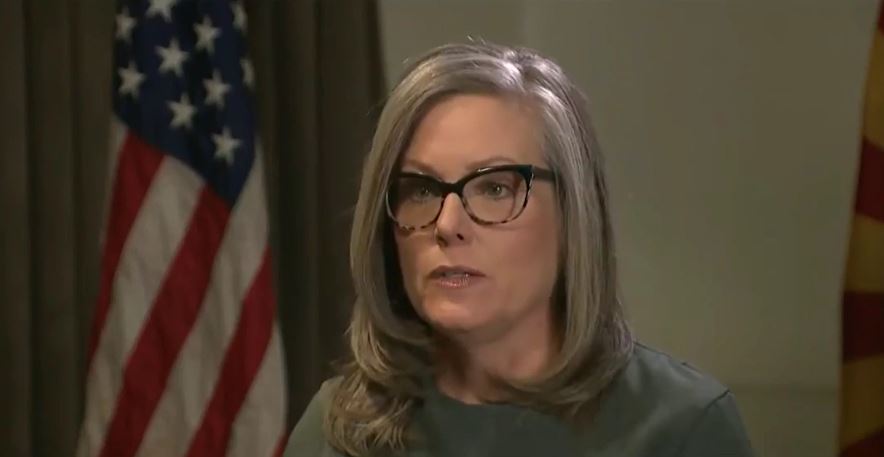
Hoffman first touched on the importance of all elected officials adhering to the rule of law and separation of powers, saying, “The people of Arizona are best served when our three branches of government follow the law, honor our Constitution, and refrain from partisan game playing. Instead of joining legislative Republicans in solving the real issues that impact the lives of struggling Arizona families like food prices, rent and housing affordability, and protecting the innocence of children, Katie Hobbs has chosen to abandon her oath of office with these politically-charged PR stunts in an attempt to pander to her far-Left base.”
He then moved to the necessity of Arizona Republicans acting to quell the constitutional overreach of the Democrat governor – especially with the three Executive Orders over the past week – stating: “The legislative branch has a constitutional obligation to act as a check and balance on the executive branch, especially when that executive branch grossly oversteps their authority. Hobbs’ reliance on unconstitutional executive dictates is reminiscent of the unconstitutional abuses of power by DC Democrats; however, unlike our establishment counterparts in DC, Arizona Republicans are resolved to exercise the full authority afforded to us by the Constitution in order to hold Hobbs accountable.”
When asked by AZ Free News to predict the future of this political battle, Hoffman responded, “Sadly, given the chaos and instability of Hobbs’ administration it seems unlikely that she’ll take the reasonable approach that we’ve requested. I can only expect that she’ll instead choose to continue her radical virtue signaling regardless of the significant harm it inflicts on the people of this state. No matter what route Katie Hobbs chooses, the majority in the Senate will continue to act as a check and balance to maintain sanity and stability in our state government.”
The east valley lawmaker’s leadership will be pivotal to determining how this unpredictable legislative session will proceed for the Grand Canyon State. After the governor’s Executive Order that centralized “all abortion-related prosecutions under the Attorney General to ensure differences in applications of the law by county attorneys do not restrict access to legal abortions,” Hoffman and his committee took the first real action in pushing back. Hobbs has seemingly been unfazed by the Senator’s response, signing several more Executive Orders, including two that arguably generated more controversy than the abortion document.
Daniel Stefanski is a reporter for AZ Free News. You can send him news tips using this link.
by Daniel Stefanski | Jul 3, 2023 | Education, News
By Daniel Stefanski |
Arizona’s Superintendent of Public Instruction shared a helpful announcement about a new feature for high school students seeking information about careers in the U.S. military.
In a release sent last week, the Arizona Department of Education revealed that it had “unveiled a one-stop service to help students interested in a military career get information about the U.S. armed forces.” The website – azed.gov/military – was established so that “students can get essential information about the various branches of the service.”
Horne, a Republican, issued a statement in conjunction with the announcement, saying, “With a historic shortfall of U.S. military recruiting goals, Arizona high schools need to do as much as possible to help students get the information they need to learn if a career in the armed services is an appropriate choice for them. Serving our country is an honorable endeavor and our nation will depend on the next generation of those who enlist or become officer candidates so that our military can continue to defend our freedoms.”
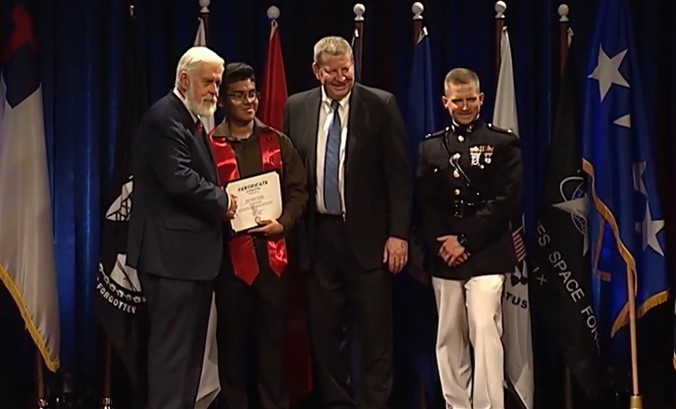
The release highlighted that “the need for this effort was presented to state schools chief Tom Horne earlier this year by Raif Byers, a now-graduated Phoenix-area high school senior who was unable to find helpful and detailed information about a military career on the websites for his high school or the district he attends. He found that many other students his age have the same problem.”
Byers added, “I was trying to learn more about a career in the Navy when I was in high school, but it was nearly impossible for me to find any information on my school district website. It’s relatively easy to learn about other types of careers, so I believe it’s just as vital for schools to make armed services information readily available to students. Unfortunately, I learned that in many districts, that’s just not the case. I’m very grateful to Superintendent Horne for creating this webpage where anyone in the state can easily learn about a career serving our country.”
According to the Arizona Department of Education, “the webpage includes links to the Army, Navy, Marine Corps, Air Force, Space Force, Coast Guard, Army National Guard and Air National Guard. It also has details about the various military benefits and information for those interested in becoming officers or enlisted personnel.”
Horne’s efforts join several other similar endeavors from public officials around the state, who are very active in promoting opportunities in the U.S. Military or honoring those who serve. Recently, Glendale Mayor Jerry Weiers “partnered with local sponsors to host the Mayor’s Military Induction Ceremony” at a Phoenix-area church – with over 350 recruits!
In May, two in Arizona’s congressional delegation, Andy Biggs and Eli Crane, co-hosted a Military Service Academy Conference to give high school students more information about opportunities to learn more information about future military service and career opportunities.
Daniel Stefanski is a reporter for AZ Free News. You can send him news tips using this link.
by Daniel Stefanski | Jul 3, 2023 | Education, News
By Daniel Stefanski |
Arizona elected officials found no shortage of material to react to from the U.S. Supreme Court’s latest term.
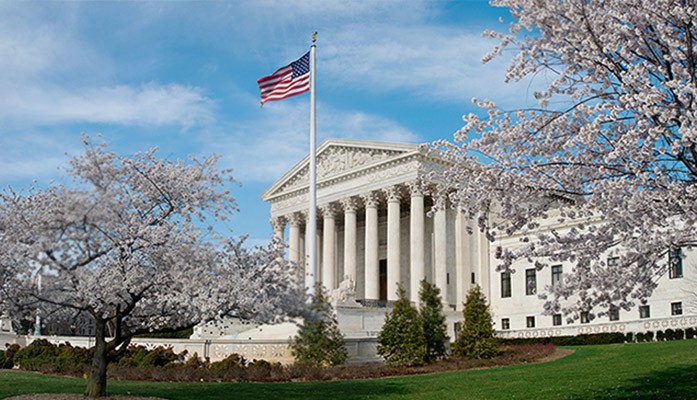
On Friday, the nation’s highest court released its opinion in Biden v. Nebraska, striking down the president’s student loan cancellation program. Chief Justice John Roberts authored the opinion, and he was joined by Justices Clarence Thomas, Samuel Alito, Neil Gorsuch, Brett Kavanaugh, and Amy Coney Barrett.
The majority opinion stated that “the ‘economic and political significance’ of the Secretary’s action is staggering by any measure. Practically every student borrower benefits, regardless of circumstances. A budget model issued by the Wharton School of the University of Pennsylvania estimates that the program will cost taxpayers ‘between $469 billion and $569 billion,’ depending on the total number of borrowers ultimately covered.”
State legislators were quick to respond to the momentous decision from the Supreme Court. Freshman Republican Representative Austin Smith tweeted, “Canceling student loan debt is and always will be an irresponsible and brainless ‘policy’ proposal. It deserved this fiery death at SCOTUS. Do not take out astronomically large loans for a career with a salary you will never be able to pay off.”
Smith also parried an attack from the House Democrats Caucus, which took to Twitter to pin the decision on Republicans. This tactic didn’t sit too well with Smith, who said, “The Constitution did this. Cope and seethe.”
On the other side of the aisle, Senate Democratic Assistant Leader Juan Mendez released a statement shortly after news broke about the opinion, writing, “Today’s decision on Student Loan Relief is all the evidence we need to rule this court as corrupt. For generations this court as been playing favorites, taking sides and receiving undisclosed donations, all while Congress has been bailing out corrupt corporations, reckless Wall Street traders and forgiving PPP loans for the wealthy.”
Senator Mendez also called on President Biden to take further action, saying, “The Court’s biased decisions can not go unanswered. The President must do everything within his power to set student loan interest rates to 0%, set minimum monthly payments to $25, and revamp current repayment plans to accept volunteerism as payment.”
Earlier this year, Democrat Attorney General Kris Mayes announced that she had withdrawn the State from a lawsuit over the president’s actions on student loans, which was initiated by her predecessor, Mark Brnovich. Mayes told KTAR News that “we’re not going to be engaging in political lawsuits at the Attorney General’s Office anymore,” and that “suing the federal government over everything is not the answer and it’s not what the people of Arizona want.” The KTAR recap of the interview noted that the first-year attorney general “said the student debt lawsuit was inappropriate and unlikely to succeed.” Instead, Mayes joined a coalition of attorneys general from around the country to support a “federal proposal to create a more affordable repayment plan for student loan borrowers.”
Daniel Stefanski is a reporter for AZ Free News. You can send him news tips using this link.
by Daniel Stefanski | Jul 3, 2023 | News
By Daniel Stefanski |
On its last day of the term, the U.S. Supreme Court gave a major victory for the First Amendment, leading to mixed reactions from Arizona elected officials and advocates.
In a 6-3 opinion authored by Justice Neil Gorsuch, the U.S. Supreme Court ruled for 303 Creative LLC in the case 303 Creative LLC v. Elenis. The case centered on a Colorado businesswoman, Ms. Lorie Smith, who “filed a lawsuit seeking an injunction to prevent the State from forcing her to create websites celebrating marriages that defy her belief that marriage should be reserved to unions between one man and one woman.” The majority coalition in the Court held that “the First Amendment prohibits Colorado from forcing a website designer to create expressive designs speaking messages with which the designer disagrees.”
As part of his prevailing opinion, Justice Gorsuch wrote, “But, as this Court has long held, the opportunity to think for ourselves and to express those thoughts freely is among our most cherished liberties and part of what keeps our Republic strong. Of course, abiding the Constitution’s commitment to the freedom of speech means all of us will encounter ideas we consider ‘unattractive,’ post, at 38 (opinion of SOTOMAYOR, J.), ‘misguided, or even hurtful,’ Hurley, 515 U. S., at 574. But tolerance, not coercion, is our Nation’s answer. The First Amendment envisions the United States as a rich and complex place where all persons are free to think and speak as they wish, not as the government demands. Because Colorado seeks to deny that promise, the judgment is reversed.”
The opinion sparked applause and outrage across the country – especially in Arizona. Center for Arizona Policy, one of the state’s influential pro-life and pro-family organizations, released a statement to cheer on the decision from the six justices in the majority, writing, “The ruling is a huge victory for those who do not want government telling them what to say or what messages they must create. That goes for the liberal publisher who does not want to publish a book with conservative views, as well as for the religious website designer who does not want to promote weddings that violate her religious beliefs. Today’s ruling in 303 Creative LLC v. Elenis acknowledges the difference between disagreement and discrimination by distinguishing between serving all people and promoting all messages. Lorie Smith happily designs websites for all customers but cannot create messages that run counter to her deeply held beliefs. Her decision is based on the message, not the person. Today, the Court affirms that difference.”
Democrat Attorney General Kris Mayes took the opposite view, saying, “Today, a woefully misguided majority of the United States Supreme Court has decided that businesses open to the public may, in certain circumstances, discriminate against LGBTQ+ Americans. While my office is still reviewing the decision to determine its effects, I agree with Justice Sotomayor – the idea that the Constitution gives businesses the right to discriminate is ‘profoundly wrong.’”
Mayes added that “Despite today’s ruling, Arizona law prohibits discrimination in places of public accommodation, including discrimination because of sexual orientation and gender identity. If any Arizonan believes that they have been the victim of discrimination on the basis of race, color, religion, sex (including sexual orientation and gender identity), national origin, or ancestry in a place of public accommodation, they should file a complaint with my office. I will continue to enforce Arizona’s public accommodation law to its fullest extent.”
The Arizona House Democrats Caucus also weighed in on the decision, tweeting, “This is not about weddings. This is about creating a religious right to discriminate against protected classes across a broad front of services, taking our country back to Jim Crow. And using a fake case to do it. Shameful.”
Republican Representative Travis Grantham, the Arizona House Speaker Pro Tempore, responded to the Democrats’ attack: “And the award for dumbest take ever goes to……”
The Arizona Attorney General’s position on the case’s outcome is a complete reversal of her predecessor’s, who, in 2022, co-led a coalition of states in filing an amicus brief, which urged the nation’s high court “to defend the First Amendment rights of business owners.” At that time, Mark Brnovich said, “Owners of small companies do not give up their constitutional rights as a cost of doing business. Freedoms of speech, belief, and expression are at the core of who we are as Americans, and our government is out of line to infringe on them.”
Daniel Stefanski is a reporter for AZ Free News. You can send him news tips using this link.
by Corinne Murdock | Jul 2, 2023 | News
By Corinne Murdock |
The city of Phoenix sought advice on handling homelessness from another city plagued by the same problem: Portland, Oregon.
City officials attended a “homelessness summit” in May. Officials included Gina Montes, deputy city manager; Rachel Milne, director of the Office of Homeless Solutions (OHS); Scott Hall, deputy director of OHS; Titus Mathew, director of the city’s housing department; Sean Connolly, assistant chief of operations for Phoenix Police Department (PPD); Brian Fruendentahl, commander of PPD; Luke Christian, assistant city attorney.
“Given our issues and the continued increase in unsheltered homelessness, the crime and other complex problems, we have been in touch with other communities to see what we can learn (both from their successes and mistakes),” wrote Montes in an invitation email for the event.
Officials from the cities of Mesa and Glendale were invited on the trip, but it appears from records obtained by AZ Free News that a visit to Portland either didn’t sound appealing or beneficial. In a March email exchange, the city of Mesa’s deputy city manager, Natalie Lewis, asked why Montes and the city of Phoenix felt the need to go to Portland as well as Seattle, Washington — another proposed location for a homelessness summit.
Glendale’s director of community services, Jean Moreno, concurred with Lewis’ remarks.
“Our feedback was the same as Mesa’s — happy to participate but not sure Portland is the right field trip,” wrote Moreno.
Montes responded that Phoenix could learn much from Portland’s mistakes. She revealed that many of the issues facing Phoenix currently were the same as those Portland faced in the past. Meaning: Portland could be Phoenix’s future, if changes aren’t made.
“The reason we are interested in Portland is honestly because a lot of the same issues are happening here that happened there years ago. They made a lot of mistakes that they are paying for now. I’m concerned that our community trajectory is pointing in a similar direction,” wrote Montes. “I understand if Portland is not of interest to others and promise not to be offended!”
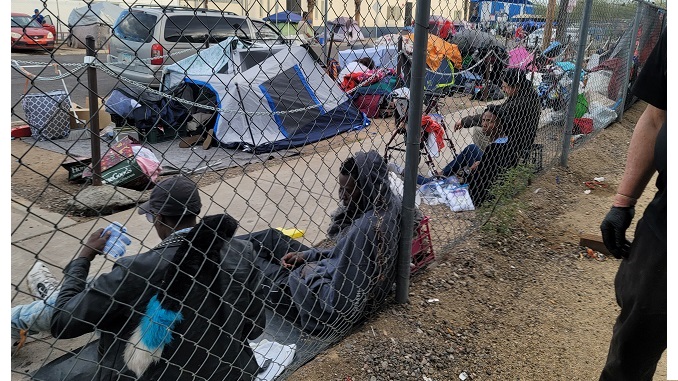
The homeless in Portland have taken over residential neighborhoods and public streets, with residents telling reporters that the crime-riddled mass encampments decimated quality of life.
Lewis turned down the invitation, sharing that she may attend a potential future trip to either San Antonio or Houston, Texas, potentially around the same time as this fall’s ICMA Conference in Austin, Texas. Lewis added that the breakup of the mass homeless encampment known as The Zone would likely impact her city.
“Also, I foresee the work to dismantle/relocate will impact Mesa. I am open to having a regional discussion on this (when Phx is ready) so that we are all working to minimize impact of the shift,” wrote Lewis.
Montes issued the proposal to visit either Portland or Seattle on March 29: two days after the Maricopa County Superior Court ordered the city to clean up The Zone.
Estimates of the homeless population in the Portland area hovers around 5,000, based on Multnomah County data. Phoenix’s homeless population sits around 3,000.
AZ Free News asked Montes whether city officials would attend similar summits in other cities who’ve mitigated homelessness in recent years such as Austin, Texas. Montes didn’t respond by press time.
City of Phoenix officials were also joined by officials from the Maricopa Association of Governments (MAG), Maricopa County, and the city of Avondale. MAG representatives were Continuum of Care officials Amy St. Peter, deputy executive director, and Katy Gentry, regional homelessness program manager. Maricopa County officials were Jacqueline Edwards, human services director, and T.J. Reed, homelessness programs manager. City of Avondale representatives were Cherlene Penilla, assistant city manager; Dale Nannenga, chief of the Office of Public Safety; Memo Espinoza, chief of Avondale Police; Manuel Rios, sergeant of Avondale Police; and Brian Planty, homeless services manager.
The cost for the trip, for all 16 officials in attendance, likely totaled around $10,000. (Based on averages of flight, hotel, and per diem costs compiled from MAG travel request forms).
Corinne Murdock is a reporter for AZ Free News. Follow her latest on Twitter, or email tips to corinne@azfreenews.com.