On Tuesday, the Arizona Corporation Commission (ACC) announced that it “joined a multi-state settlement with Robinhood Financial LLC, which will pay up to $10.2 million in penalties for operational failures that harmed main street investors.”
According to the ACC, “the investigation was sparked by Robinhood platform outages in March 2020, a time when hundreds of thousands of investors were relying on the Robinhood app to make trades. In addition, prior to March 2021, there were deficiencies at Robinhood in its review and approval process for options and margin accounts, weaknesses in the firm’s monitoring and reporting tools, and insufficient customer service and escalation protocols that in some cases left Robinhood users unable to process trades even as the value of certain stocks was dropping.”
The investigation was led by “state securities regulators in Alabama, Colorado, California, Delaware, New Jersey, South Dakota, and Texas coordinated through the North American Securities Administrators Association (NASAA) regarding Robinhood’s operational failures with respect to the retail market.”
NASAA President Andrew Hartnett issued the following statement in conjunction with the announcement: “Today’s multistate agreement represents states at their best – working together for the benefit of Main Street investors. Robinhood repeatedly failed to serve its clients, but this settlement makes clear that Robinhood must take its customer care obligations seriously and correct these deficiencies.”
ACC Chairman Jim O’Connor also added, “This agreement is part of an ongoing effort by state securities regulators to protect investors and to make sure they are treated fairly by their financial services companies.”
The ACC’s news release made clear that “the Commission found no evidence of willful or fraudulent conduct by Robinhood, and that Robinhood fully cooperated with the investigation.” Also, “Robinhood neither admitted nor denied the findings as set out in the states’ orders.”
One of the findings of fact in the order before the ACC was that “Robinhood acquired approximately 89,136 new Arizona customers from October 1, 2019, to March 31, 2020, for a total customer count of approximately 290,356 as of March 31, 2020. From October 1, 2019, to March 31, 2020, Robinhood approved approximately 13,713 Arizona customers for option trading and approximately 1,934 Arizona customers for margin trading.”
The ACC’s release highlighted these violations as included in the order:
Negligent dissemination of inaccurate information to customers, including regarding margin and risk associated with multi-leg option spreads.
Failure to have a reasonably designed customer identification program.
Failure to supervise technology critical to providing customers with core broker-dealer services.
Failure to have a reasonably designed system for dealing with customer inquiries.
Failure to exercise due diligence before approving certain option accounts.
Failure to report all customer complaints to FINRA and state securities regulators, as may be required.
Daniel Stefanski is a reporter for AZ Free News. You can send him news tips using this link.
Tucson has received nearly $71.5 million to cover progressive housing and emissions initiatives.
Around $50 million will go into housing, and $21.5 million will go into emissions reduction and elimination.
July brought the monsoons and a cool $71M! What a month! 🌦️🌦️ ☑️$50M- Choice Neighborhood Grant ☑️$21M- Low and no emissions grant#BringDollarsHomepic.twitter.com/PQ4OBW1Mcj
The city received $50 million out of a total $370 million awarded to eight communities by the Department of Housing and Urban Development (HUD) Choice Neighborhoods Implementation (CNI) initiative.
Tucson received the higher reward of $50 million alongside Birmingham, Alabama; Pittsburgh, Pennsylvania; Philadelphia, Pennsylvania; and Wilmington, Delaware. The remaining three recipients — Atlanta, Georgia; Lake Charles, Louisiana; Miami-Dade County, Florida — received $40 million.
Tucson’s $50 million will only partially cover the 550 new or rehabilitated housing units planned by the city— the city disclosed that it required $334 million more from public, private, and nonprofit benefactors to complete its plan.
408 of the 550 units concern the city’s 17-story public housing facility, Tucson House. The remainder will be established across three new developments.
The 550 units are part of the Transformation Plan of the Thrive in the ‘05 initiative: a 2.3 square mile area marked by Oracle Road and Miracle Mile. Tucson Mayor Regina Romero and the Tucson City Council adopted the plan last year.
HUD CNI is a progression of former President Barack Obama’s original Choice Neighborhoods program. The Obama administration sought to disrupt the consolidation of crime and poverty prevalent in purely public and HUD-assisted housing by engineering mixed-income neighborhoods: a mixture of either market-rate and welfare-discounted housing, or entirely welfare-discounted housing. The program also focuses on establishing other amenities, such as schools and businesses, to improve those areas.
In addition to the CNI, Tucson’s initiative includes the Community Based Crime Reduction (CBCR), an effort to increase reliance on community-based policing led by Nadia Roubicek with the Arizona State University (ASU) Office of Community Health Engagement and Resiliency (OCHER). CBCR was established through the Department of Justice (DOJ) Bureau of Justice Assistance (BJA) Innovation Suite (also called the Smart Suite).
There’s also the Workforce & Economic Development, a partnership with the City of Tucson Economic Initiatives and Pima Community College, which provides employment and business resources and opportunities.
The fourth focus of Thrive in ‘05 — Tucson Community Access, Referral, Education, and Service (CARES) — offers residents medical and behavioral health care liaisons.
In addition to the $50 million for government housing, the city also received nearly $21.5 million from the Department of Transportation’s Federal Transit Administration to decarbonize its Sun Tran transit system. The funding will cover the replacement of the city’s remaining diesel bus fleet with 39 compressed natural gas buses. Their cut comes from a total of nearly $1.7 billion in funding for similar transit emissions reduction or elimination initiatives spanning 46 states.
In addition to the $21.5 million, Tucson contributed nearly $5.4 million to the grant.
Corinne Murdock is a reporter for AZ Free News. Follow her latest on Twitter, or email tips to corinne@azfreenews.com.
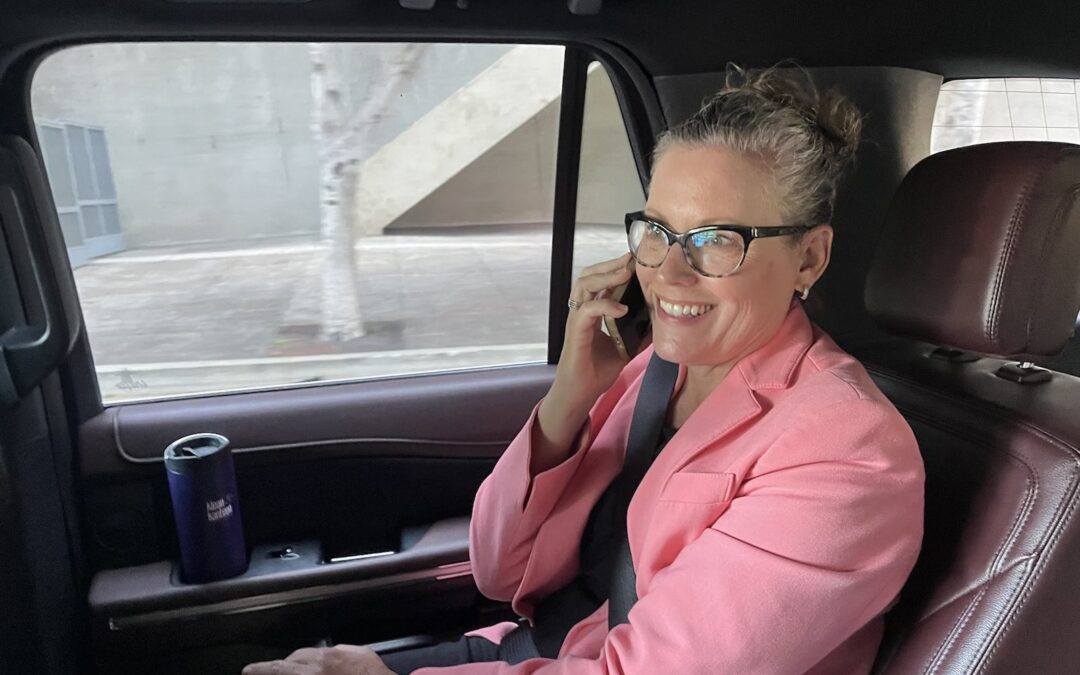
Arizona’s Democrat Governor is moving ahead with her plans to talk to the state’s utility companies to address the heatwave. This week, Governor Katie Hobbs announced that she had “scheduled a roundtable meeting with utility company leadership for August 18.”
Hobbs plans to use the event to “highlight her administration’s efforts to protect Arizonans during the historic heat wave and discuss actions utilities can take to address future challenges.”
Extreme heat can be devastating when not properly addressed. That’s why I’m taking action to provide relief through additional cooling center resources and collaborating with utilities, local organizations, cities, and county officials. Together, we will keep Arizonans safe…
In a statement, Hobbs said, “Extreme heat can be devastating when not properly addressed. That’s why I’m taking action to provide relief through additional resources and collaborating with utilities, local organizations, cities, and county officials. Together, we will keep Arizonans safe through this historic heat wave and ensure our state is prepared for future emergencies.”The governor also revealed that her Office would “provide $50,000 to Valley Interfaith Network for staffing, water, and expanded cooling center service throughout Arizona.”
Hobbs’ announcement followed a controversial letter sent to Arizona utility companies at the end of last month, in which she asked for “written plans outlining how they will protect Arizonans during this devastating heat wave.”
The governor directed the utility companies to focus their plans on the areas of Disconnects, Grid Security, Emergency Response, Customers in Arrears, and Community Service.
Today, I sent a letter to Arizona's utility companies asking for written plans outlining how they will protect Arizonans during this devastating heat wave, and inviting them to discuss how we can work together to better prepare for the future.
You can read my letter HERE:…
— Governor Katie Hobbs (@GovernorHobbs) July 21, 2023
Republicans and Democrats largely broke to partisan corners with their responses to the governor’s efforts on this front. Phoenix Councilwoman Laura Pastor tweeted, “Phoenix has been experiencing a historically hot summer – if a statewide or even citywide power outage were to happen, lives would be lost. We need to know what to do during that situation and how we can help our residents. Governor Hobbs is asking the right questions.”
Phoenix has been experiencing a historically hot summer — if a statewide or even citywide power outage were to happen, lives would be lost.
We need to know what to do during that situation and how we can help our residents.
— Councilwoman Laura Pastor (@PHXDistrict4) July 22, 2023
The Arizona Democratic Party also weighed in, posting, “As Arizona faces a historically hot summer, Democrats are delivering real relief! Thank you Governor Hobbs.”
— Arizona Democratic Party (@azdemparty) July 21, 2023
Republican Representative Matthew Gress took an opposing view to the governor’s announcement, writing, “Governor, you *do* know the utilities already submitted those plans and briefed the Commission…back in April…right? And you do realize the excessive heat warning has been in effect for nearly a month? We’ve hit new records for several weeks now? Every time, our utilities performed flawlessly. But really glad you weighed in weeks after the heat wave started! You’re really on top of things.”
Governor, you *do* know the utilities already submitted those plans and briefed the Commission…back in April…right? (SEE: https://t.co/6YTrQGZrO2)
And you do realize the excessive heat warning has been in effect for nearly a month? We’ve hit new records for several weeks now?… https://t.co/RXvtGQ9ilZ
Representative Joseph Chaplik added, “Another example of an unqualified Hobbs Governor/CEO of AZ. As Gov, you should have already known all this from communicating with APS and SRP over the last 9 months with preparation for the summer. We all know we get hot in the desert during July. No need to publicize your late demands. You should be thanking them for being prepared.”
Another example of an unqualified Hobbs Governor/CEO of AZ. As Gov, you should have already known all this from communicating with APS and SRP over the last 9 months with preparation for the summer. We all know we get hot in the desert during July. No need to publicize your… https://t.co/zbYQTW1eWi
— Rep. Joseph Chaplik 🇺🇸 (@JosephChaplik) July 22, 2023
Long-time Arizona journalist Howie Fischer pointed out that the governor’s request to state utility companies was “not within her constitutional duties (but was) the role of the Arizona Corporation Commission.”
It's not within her constitutional duties. That's the role of the @CorpCommAZ. But that isn't stopping @GovernorHobbs from demanding that utilities give her information about their hot weather plans. https://t.co/bYNeVohBpg
— Capitol Media Services 📢 Telling it like it is (@azcapmedia) July 22, 2023
Senate President Pro Tempore T.J. Shope agreed with Fischer, tweeting, “Correct, it’s not within Governor Hobbs constitutional duties. Perhaps her interns oughta watch one of the Senate Committee on Natural Resources, Energy and Water Committee hearings that Senator Sine Kerr chairs so she can learn about energy plans and how the utilities plan for summer.”
Correct, it’s not within @GovernorHobbs constitutional duties. Perhaps her interns oughta watch one of the Senate Committee on Natural Resources, Energy and Water Committee hearings that Sen. @SineKerr chairs so she can learn about energy plans and how the utilities plan for… https://t.co/aftlZe0kk6
The secretary of state may face a lawsuit come November if he fails to clean up alleged dirty voter rolls in 14 counties.
In a letter submitted Tuesday, Arizona Free Enterprise Club President and Executive Director Scott Mussi — in his capacity as a voter — accused Secretary of State Adrian Fontes of not following Section 8 of the National Voter Registration Act (NVRA).
The pre-litigation letter alleged that four Arizona counties reported having more voters than voting-age adult citizens, per public voter registration records compared with Census Bureau data. These were identified as Apache County with 117.4 percent voter registration rate, La Paz County with 100.5 percent voter registration rate, Navajo County with 100.1 percent voter registration rate, and Santa Cruz County with 112.6 percent voter registration rate.
The letter also alleged that nine counties have voter registration rates exceeding 90 percent of adult citizens over 18 years old, and one county with its voter registration rate exceeding 80 percent, which outpace national voter registration rates in recent years. These counties were identified as Cochise (93.4 percent), Coconino (93.6 percent), Gila (90.6 percent), Maricopa (97.8 percent), Mohave (95.2 percent), Pima (92 percent), Pinal (91.8 percent), Yavapai (99 percent), Yuma (94.3 percent), and Graham Counties (81.1 percent).
The national voter registration rate sits at around 69.1 percent, per the Census Bureau. In Arizona, those rates were 76.4 percent in 2020 and 68.6 percent in 2018.
As of last month, there were nearly 4.2 million registered voters. Independent voters lead with 1.45 million registrants (34.5 percent), followed by Republicans with 1.44 million (34.4 percent), Democrats with 1.26 million (30 percent), Libertarians with 33,700 (0.8 percent), and No Labels members with 8,500 (0.2 percent).
“Discrepancies on this scale almost certainly cannot be attributed to above-average voter participation, but instead point to deficient list maintenance,” stated the letter.
Attention AZ Voters! August marks ONE YEAR until the 2024 primary elections. Practicing your civic duty and responsibility to vote starts with making a plan! Mark your calendars for August 6, 2024. pic.twitter.com/NxgBxsMOAu
— Arizona Secretary of State (@AZSecretary) August 6, 2023
The letter requested that Fontes modify the current list maintenance procedures to identify and remove individuals who are ineligible to vote due to a change in residence, incarceration, death, or those ineligible for other reasons.
Arizona voters weren’t alone in this endeavor. Also on Tuesday, Virginia voters filed a similar pre-litigation letter accusing the Virginia Commissioner of Elections Susan Beals of similar NVRA negligence across 101 counties. The Honest Elections Project (HEP) assisted both Arizona and Virginia voters in their pre-litigation notices. The voters gave their respective election leaders 90 days to comply with the NVRA, and 45 days to respond to the letter.
The requested response would include details of the NVRA compliance efforts, policies, and programs Fontes has taken or plans to take prior to the 2024 general election, along with complete timelines and results for any ongoing plans.
In a press release, Mussi said that it wasn’t only Fontes but the former secretary of state Katie Hobbs, now governor, which were to blame for the dirty voter rolls.
“It is apparent that Secretary of State Adrian Fontes and his predecessor have failed to perform the necessary voter list maintenance required by state and federal law,” said Mussi. “Clean and accurate voter rolls are a cornerstone to safe and secure elections, and we expect that our election officials will address these issues as quickly as possible.”
Corinne Murdock is a reporter for AZ Free News. Follow her latest on Twitter, or email tips to corinne@azfreenews.com.
Maricopa Association of Governments (MAG) may oversee up to $4.6 billion in federal funding to implement emissions reduction plans.
The billions cover the second of two phases required by the Environmental Protection Agency (EPA) under the Climate Pollution Reduction Grant (CPRG) Program. That phase concerns implementation grants for greenhouse gas emissions reduction policies, programs, and projects. The preceding phase covers planning grants for the development of regional climate plans.
For phase one, the EPA gave Maricopa Association of Governments (MAG) a $1 million CPRG Program grant to serve as the lead planning organization for the Phoenix-Mesa-Chandler metropolitan statistical area. This grant requires MAG to develop a priority climate action plan due next March, comprehensive climate action plan due in 2025, and a status report due in 2027 after the four-year grant period expires.
MAG accepted the $1 million during a meeting on Wednesday, amending their 2024-2025 Biennial Planning Work Program and Budget to do so.
The priority climate action plan is a prerequisite for the $4.6 billion implementation grant. As part of this plan, MAG must issue a benefits analysis for how their plan produces the most significant benefits to low-income and disadvantaged communities, which the Biden administration refers to collectively as “LIDAC.”
The EPA emphasized arranging all three CPRG plans around LIDACs. Tribes and territories won’t be required to include special LIDAC provisions in their plans.
The EPA guidance on LIDACs explained that the equity lens for the CPRG funding constitutes a greater pledge by the Biden administration per the Justice40 Initiative to issue 40 percent of federal investments to those marginalized, underserved, or overburdened by pollution.
LIDACs are determined by federally defined burdens concerning climate change, energy, health, housing, legacy pollution, transportation, water and wastewater, workforce development, low median income, and poverty. The agency recommended the use of the Biden administration’s Climate and Economic Justice Screening Tool (CEJST).
The billions for energy and climate initiatives may address something advocated for greatly by Democratic leaders like Phoenix Mayor Kate Gallego and Rep. Ruben Gallego (D-AZ-03): extreme heat and urban heat island effects. The EPA cited both on page 8 of their LIDAC guidance.
Public comment during Wednesday’s meeting largely represented opposition to the federal funding to implement net zero goals. Members of the public warned that such climate agendas would result in energy poverty tantamount to shortages and scarcity experienced in third-world countries.
Last year, China permitted coal burning plants at the rate of two new plants every week. High costs with lower supply, as seen in Germany, which resulted in an energy crisis last winter that plummeted the population into the freezing winter temps.
Members of the public also expressed concerns over the financial impact on taxpayers, citing woes faced by the taxpayers of neighboring California. Despite all public comments expressing opposition during the meeting, MAG approved the EPA funding as one part of its consent agenda.
The EPA received $5 billion for the CPRG Program through the Inflation Reduction Act (IRA): $250 million for noncompetitive planning grants, and $4.6 billion for competitive implementation grants.
The White House issued a comprehensive, searchable guidebook on the IRA funding for “clean” energy and climate change initiatives. IRA funding to reorient the economy for “clean” energy totals around $369 billion.
Of the planning grants, states received $156 million, local governments received $67 million, tribes received $25 million, and territories received $2 million.
Corinne Murdock is a reporter for AZ Free News. Follow her latest on Twitter, or email tips to corinne@azfreenews.com.
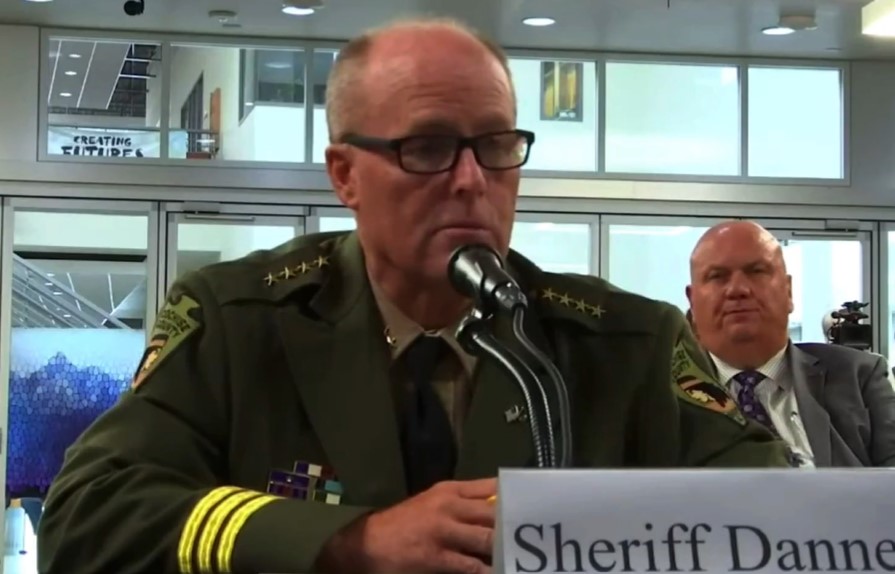
Cochise County Sheriff Mark Dannels says that no border patrol officials can attest that the border is secure.
Dannels testified this during a joint congressional hearing in Sierra Vista, Arizona by the House Oversight and Judiciary committees on Tuesday. Dannels further accused the Biden administration of playing word games about the state of the border to foster a false sense of security among the American people.
“It’s a shell game, it’s a word game to make the American people feel safe when we know here at the community level — especially here in Cochise County — that that’s a false narrative,” said Dannels.
It’s clear from the @GOPoversight and @JudiciaryGOP joint field hearing about the border that @POTUS won’t meet with sheriffs in America or secure our borders, but is willing to create a false narrative about the safety of our communities and nation. #nc11#ncpolhttps://t.co/1dgRAfyH09
— Congressman Chuck Edwards (@RepEdwards) August 9, 2023
Dannels said he attempted to deliver a 16-point plan to secure the border, compiled by sheriffs nationwide, to Department of Homeland Security (DHS) Secretary Alejandro Mayorkas.
According to Dannels, Mayorkas later claimed to never have seen the plan. Present at the hearing were Arizona Reps. Juan Ciscomani (R-AZ-06) and Andy Biggs (R-AZ-05), as well as Reps. William Timmons (R-SC-04), Chuck Edwards (R-NC-11), and Glenn Grothman (R-WI-06).
Biggs remarked that Democrats refused to attend the hearing, which he lamented as prioritization of party politics over solving the border crisis.
Democrats’ uniform absence from Tuesday’s congressional hearing, as well as the Biden administration’s insistence that the border situation has improved, appears to be a lockstep party effort to reform public perception of the border crisis.
Last week, two of Arizona’s Democratic state lawmakers insisted that the current public perspective and reporting on the state of the border as a crisis is sensationalized. Mayorkas testified several weeks ago that he doesn’t believe the border situation constitutes a crisis, a view he has espoused consistently throughout this year. During Tuesday’s hearing, Biggs called Mayorkas’ disregard for existing law an impeachable offense.
Furthermore, DHS is changing the categorization of an illegal immigrant terrorist to “national security risk,” a potentially euphemistic shift that Biggs questioned.
“Why are you changing the language? Because it’s easier to hide the reality of the gravity of the situation,” said Biggs.
Biggs reported that cartels are actively recruiting minors via social media to smuggle illegal immigrants, citing reports out of Yuma, Cochise, and Pinal counties. These cartels promise to pay minors several thousand dollars to traffic illegal immigrants into Phoenix or Tucson.
A House-passed resolution to address the border crisis, HR2, has effectively been left to die in the Senate. Biggs remarked that Biden’s executive branch could improve the border by enforcing existing immigration laws.
Illegal immigrants have court dates as far out as a decade. While they await their day in court, these migrants are free to roam the country. The Biden administration’s practice has effectively revived the controversial catch-and-release practice of the Obama administration.
The border crisis has spawned other crises: crime and drugs. Fentanyl, the primary drug behind this latest addiction epidemic, has progressively killed more Americans: there were over 72,700 overdose deaths last year.
Legal migrants were naturalized at a historic rate last year: nearly one million, the highest since 2008.
Under Biden, there have been a historic total of 5.7 million illegal immigrant encounters at the southwest border (as of this report, July’s total hasn’t been released). This total doesn’t reflect the countless number of “gotaways” — those not encountered and remain in the country undetected.
Watch the full congressional hearing here:
Corinne Murdock is a reporter for AZ Free News. Follow her latest on Twitter, or email tips to corinne@azfreenews.com.