by Staff Reporter | May 23, 2024 | News
By Staff Reporter |
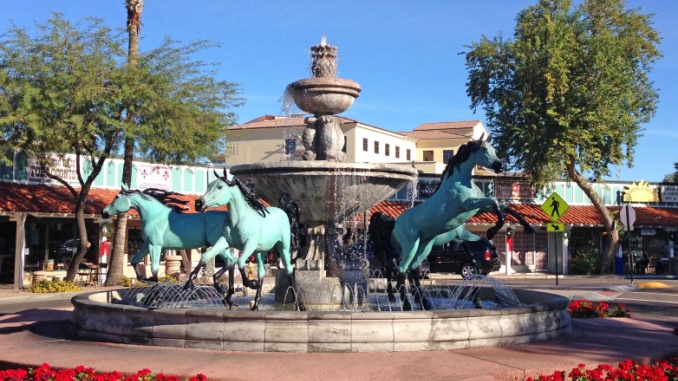
The city of Scottsdale unanimously held off on approval of a sustainability plan during Tuesday’s regular council meeting after mass backlash from citizens.
The plan, in the works since 2021, is part of an implementation of the voter-approved General Plan 2035, and the city’s 2022 and 2024 Organization Strategic Plans. Arizona State University (ASU) Walton Sustainability Solutions Service (WSSS) and the Scottsdale Environmental Advisory Commission (SEAC) played roles in getting the sustainability plan together.
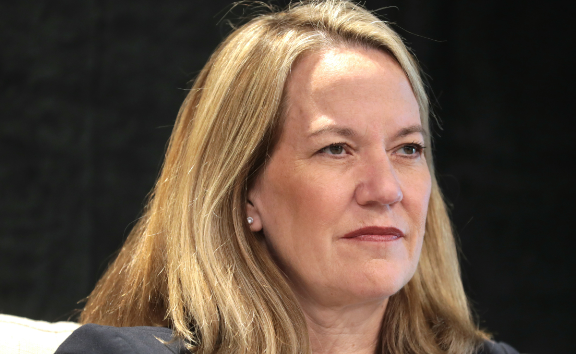
Lisa McNeilly, the city’s sustainability director since 2022, gave the presentation on the proposed plan during Tuesday’s meeting. McNeilly was formerly the sustainability director for the city of Baltimore, Maryland from 2017 to 2022, and UC Berkeley from 2008 to 2017. Prior to those roles, McNeilly served as director of international programs for the Pew Center on Global Climate Change (now the Center for Climate and Energy Solutions), and special assistant for President Bill Clinton’s White House Climate Change Task Force.
McNeilly said that Scottsdale’s sustainability plan — focused on energy, water, waste, air quality, and extreme heat — would not only benefit the environment but afford cost savings, health and safety improvements, and economic vitality.
The five-point framework of the plan focuses on energy, water, waste, air quality, and extreme heat.
Energy targets included reducing citywide and municipal electricity use, citywide and municipal greenhouse gas emissions, and the average energy burden for all households; increasing distributed solar capacity both citywide and municipally, and the percentage of “green” buildings.
Strategies to meet these energy targets focused on reducing energy use and greenhouse gas emissions, improving municipal energy performance, and reducing energy impacts of the built environment through sustainable building practices and policies.
Water targets included reducing residential, municipal, HOA irrigation, and commercial water use; increasing return flow percentage; maximizing annual water banking; and maintaining treated groundwater deliveries to Safe Yield levels.
Strategies to meet these water targets focused on ensuring water system resiliency and reducing municipal water usage.
Waste targets included reducing single-family household, citywide, and municipal landfill refuse; achieving diversion rates ranging from 35 to 90 percent across homes, the city, and municipalities; increasing the percentage of recycling; achieving the diversion rate of brush and bulk waste stream; diverting 30,000 tons annually of citywide organic waste from the landfill; and achieving a recycling contamination rate below five percent.
Strategies to meet these waste targets included increasing diversion rates, strengthening local markets for recycled content, expanding opportunities for diverting organic waste from the landfill, and reducing waste generation.
Air quality targets included reducing unhealthy air days, illnesses for pollution-related health events, and municipal fleet fuel use; and increasing the number of publicly available electric charging ports.
Strategies to meet these air quality targets included “cleaning” the city’s air and supporting adoption of electric and other alternative fuel vehicles.
Extreme heat targets included reducing average July daytime and nighttime temperatures, average surface temperatures, and illnesses for heat-related health events; and increasing tree and shrub canopy.
Strategies to meet these extreme heat targets included expanding heat relief communication and education, protecting people from the health effects of extreme heat, identifying urban design improvements including structured shade and built environment, and planting more trees along with the implementation of other nature-based solutions.
McNeilly emphasized that the plan wouldn’t be enforced through any current or future mandates. It’s unclear to what degree this clarification measures up to a promise: in 2022, the city mandated a “Green Construction Code” for commercial and multifamily buildings that, just a decade earlier, had come into play as a voluntary incentivized option.
The city’s plan didn’t estimate exact costs for the actions and strategies, instead assigning three potential cost ranges to each: up to $50,000, from $50,000 to $250,000, and over $250,000.
During public comment on the proposed plan, Scottsdale residents expressed disdain for the plan.
Austin Fairbanks, a senior research analyst in the State House, said that the plan would have minimal impact on the climate compared to the fiscal and quality of life costs imposed on residents.
Fairbanks said that even if 100 percent of all new Scottsdale buildings went “green” in their construction going forward, the city would only achieve “green” for 8.8 percent of all buildings at the current pace, below the goal of 10 percent — which Fairbanks estimated would come at a cost of $90 million.
“Those are just two examples where logic and fiscal prudence were thrown out the door to accommodate this Green New Deal-style agenda,” said Fairbanks. “We’re told this is an aspirational document, but if you were to adopt this plan, it would be a policy standard for the council and staff that you want to meet these goals. And the easiest ways to achieve those goals is by increasing fees and imposing costs and mandates.”
Fairbanks said that Scottsdale contributed 0.00067 percent of all global greenhouse gas emissions: even if the city reached its goal of a 90 percent reduction threshold, it would impact less than seven-millionths of total greenhouse gas emissions. Fairbanks estimated that the cost to nearly eliminate greenhouse gas emissions, though not given by the city in its proposed plan, would amount to $280 million for taxpayers.
“Trying to socially engineer residents to reduce greenhouse gas emissions at a total of seven-millionths of the total is the wrong approach,” concluded Fairbanks.
Jim Davis with the Coalition of Greater Scottsdale (COGS) expressed concern that fiscal stability wasn’t prioritized enough by the city in its approach to implementing a sustainability plan. Davis urged the council to focus on boosting tourism, and to back off on high-density residential units due to their low revenue and negative impact on city attractiveness.
“The city is underinvesting in its assets. COGS believes the city is not sustainable,” said Davis.
However, COGS board of directors member Sonnie Kirtley said through a submitted written statement their organization supported the sustainability plan.
Councilman Tom Durham said that the plan was “critical” to Scottsdale’s future. Durham characterized public discontent with the plan as a reticence to pay for the sustainability goals. The councilman said it was “misinformation” that the city would introduce mandates to support its sustainability goals.
“People say we can’t do anything, but we have to: it’s part of our commandment,” said Durham. “Some people thrive on disinformation and finding the government boogeyman behind every door, and we all recognize that’s for political purposes, much of it.”
Councilwoman Betty Janik said that sustainability was nothing to do, and that this new plan was just a continuation of the same direction they’d been heading down. Janik compared the city’s sustainability plan to major invention breakthroughs in history that weren’t preceded by proof of concept: Alexander Fleming’s discovery of penicillin, American astronauts walking on the moon for the first time, and AIDS treatments.
“We cannot force [the sustainability plan] on you, it’s something you have to accept and believe in,” said Janik.
Councilman Barry Graham said he didn’t appreciate his fellow council members “casting aspersions” on the residents, such as calling them “keyboard warriors.” Graham said the plan went too far and was both contradictory and vague in its proposals: significant water reduction for residents while planting more trees, and a lack of specificity regarding costs of all goals.
“We’ve gotten hundreds of emails from residents who are confused or find elements of the plan extreme,” said Graham.
Councilwoman Kathy Littlefield expressed concerns about the “unintended consequences” of the actions proposed, namely the greater cost for citizens for less access to utilities and city services, such as water, waste, and power.
“Since when have we as citizens given the city the kind of power or right to monitor our homes and businesses and our lives to this kind of extent?” said Littlefield.
Littlefield noted that she has never seen such a unanimous, overwhelming rejection by the citizens of an issue as the sustainability plan. Out of hundreds of emails, Littlefield said she only received two in support of the plan.
Councilwoman Tammy Caputi said that citizens were missing the “point of the plan.” Caputi insisted that no mandates would come from the plan. She expressed confusion at the community resistance to the plan, saying she felt she hadn’t heard of this mass resistance before in the past two years of the plan’s development.
Mayor David Ortega stressed that the sustainability plan would be important to implement for Scottsdale’s future wellbeing. Ortega said that the city was running out of its resources and bearing a greater cost for them: landfills for waste, water, energy, and clean air.
The city’s presented sustainability timeline, stretching back to 1967, included the major policy changes and actions undertaken in recent years, such as the banning of natural grass in new single-family homes and addition of solar infrastructure last year; the mandate of a Green Construction Code in 2022; and the approval of the 2035 General Plan in 2021; the installation of LED streetlights in 2020.
AZ Free News is your #1 source for Arizona news and politics. You can send us news tips using this link.
by Daniel Stefanski | May 22, 2024 | News
By Daniel Stefanski |
Arizona legislative Republicans are again standing for election integrity.
Last week, Senate President Warren Petersen, House Speaker Ben Toma, and the Republican National Committee (RNC) filed a motion “for a partial stay of the injunction against the enforcement of those provisions of HB 2492 that:
1. Prohibit registered voters who have not provided documentary proof of citizenship (DPOC) from voting for President of the United States;
2. Prohibit registered voters who have not provided DPOC from voting by mail; or
3. Are inconsistent with the consent degree entered in League of United Latin American Citizens of Arizona v. Reagan.”
The case that the Arizona Legislature and the RNC weighed in on was Mi Familia Vota v. Fontes.
The Arizona State Senate Republican Caucus wrote, “Biden’s open border policies are causing chaos and eroding confidence in Arizona’s elections. Seems like common sense, but only American citizens should have the right to cast a ballot in our elections. Senate President Warren Petersen is fighting to block individuals who do not provide proof of citizenship from this privilege. Election integrity is being compromised, and we will not sit idly by while our state and country are run into the ground by flawed election practices. Today, we filed a motion asking a U.S. District Court to allow Arizona to enforce its laws that limit voting for president and voting by mail to only those who provide proof of citizenship.”
Speaker Toma added, “Arizona voting laws that require proof of citizenship are common-sense regulations & critical to ensuring confidence in Arizona elections. I intervened in the Mi Familia case last year to fully defend these laws in federal court. Today I asked the court to stay its injunction and allow Arizona to enforce its citizenship requirements in the 2024 election.”
“It’s common sense,” said President Petersen in an exclusive comment to AZ Free News. “If you are not a legal citizen, you should not have the right to vote in the US. Other countries prohibit non-citizens, and we should too. It is unfathomable that the Democrats and the judicial branch are fighting us on this issue.”
In a press release, the Republican National Committee noted the joint court filing, stating that it had “filed a motion to stay the court’s order, pending our appeal, that ruled Arizona cannot require proof of citizenship in mail voting and presidential elections. If successful, this means Arizona would require documentary proof of citizenship ahead of this year’s election as we fight the issue on appeal. This is a consequential legal step to stopping non-citizen voting in Arizona.”
In their brief, the intervenor-defendants argued that “the Ninth Circuit is likely to find that neither the NVRA nor the LULAC Consent Decree preempts HB 2492, [that] the partial nullification of HB 2492 irreparably injures the legislative intervenors as representatives of the state and of the legislative institution and inflicts a competitive injury on the RNC, [and that] the balance of equities and public policy support a partial stay.”
Daniel Stefanski is a reporter for AZ Free News. You can send him news tips using this link.
by Elizabeth Troutman | May 22, 2024 | Economy, News
By Elizabeth Troutman |
Fast food prices have skyrocketed during the Biden administration, according to a graph shared on X by the account End Wokeness.
Prices as measured by the seasonally adjusted Consumer Price Index are now up by almost 20% in the years since President Joe Biden took office.
The prices of five of McDonald’s most popular items — french fries, a cheeseburger, 10 McNuggets, the Big Mac, and the McChicken — on average have increased by more than 140% from the end of 2019, when Donald Trump was president, to this year.
An order of medium french fries cost $1.79 when Trump was president but now costs $4.19. The McChicken increased from $1.29 to $3.89. The cheeseburger went from costing $1.00 to $3.15, a 215% increase.
Taco Bell’s popular items have on average increased by 57.4%, with the beefy five layer burrito increasing in price from $1.69 in 2019 to $3.69 in mid-2024, a 118% increase.
At Chick-fil-A, the average price across the Deluxe Chicken Sandwich, eight nuggets, four chicken strips, medium waffle fries, and a large milkshake increased by 80.1%.
The eight-piece chicken nugget, which once cost customers only $3.05, now costs just short of six dollars. The medium waffle fries increased from $1.65 to $2.99.
Biden has acknowledged the increases consumers have faced in prices during his presidency.
“Inflation has fallen more than 60% from its peak, and core inflation fell to its lowest level in three years,” he said, acknowledging that “prices are still too high” and reiterating that fighting inflation is his “top economic priority.”
The typical U.S. household needed to pay $227 more a month in March to purchase the same goods and services it did one year ago because of inflation. Americans are paying on average $784 more each month compared with the same time two years ago and $1,069 more compared with three years ago.
Elizabeth Troutman is a reporter for AZ Free News. You can send her news tips using this link.
by Staff Reporter | May 22, 2024 | News
By Staff Reporter |
Even with an ever-widening political divide yielding highly disparate views of Attorney General Kris Mayes, most may agree that she has kept to her campaign promises, especially with the indictment of those Republicans who challenged the 2020 and 2022 election results.
Securing back-to-back indictments for two highly contentious elections in what amounts to just over her first year in office didn’t come cleanly. Mayes had to break some eggs in the process.
Late last year, the State Bar began an ongoing investigation into Cochise County Attorney Brian McIntyre over allegations that he colluded with Mayes and Secretary of State Adrian Fontes against his own county supervisors, a blatant violation of attorney-client privilege.
McIntyre’s alleged collusion was outlined in a letter that surfaced recently amid that investigation, as reported by The Arizona Daily Independent.
In that letter, McIntyre had requested Mayes to retract the opinion set by her predecessor, Mark Brnovich, on expanded hand counts, a request made while his clients were actively appealing for their ability to conduct those hand counts. Mayes did just that.
The same month that the State Bar began to investigate McIntyre, Mayes secured indictments against Cochise County Supervisors Peggy Judd and Tom Crosby for delaying certification of the 2022 election results. The pair were hit with felony-level election interference and conspiracy charges.
Maricopa County Superior Court Judge Geoffrey Fish heard oral arguments in their case last month. Counsel for Crosby argued in court that Mayes was a “rogue prosecutor” leading a “rogue prosecution” attempting to read motives into Judd and Crosby’s actions amid the 2022 election.
Assistant Attorney General Todd Lawson told the judge that Judd and Crosby were in on “an overall conspiracy, a larger plan” aimed at chaos with the ultimate goal to “obstruct the election.” Lawson disputed that Judd and Crosby, much less any other county supervisor, had the right to do any more to review election results than simply pass along the vote tallies to the secretary of state.
That sentiment drove, in part, the indictments against President Donald Trump’s 2020 electors and their conspirators. 18 were hit with felony charges of conspiracy, fraud, and forgery last month: Kelli and Michael Ward, Tyler Bowyer, Nancy Cottle, State Senators Jake Hoffman and Anthony Kern, Jim Lamon, Robert Montgomery, Samuel Moorhead, Lorraine Pellegrino, Gregory Safsten, Christina Bobb, John Eastman, Jenna Ellis, Boris Epshteyn, Rudy Giuliani, Mark Meadows, and Mike Roman.
According to a new report from Politico featuring anonymous tipsters, these indictments were unprecedented and even rang of the “rogue” characterization.
Some of those indicted were promised repeatedly by prosecutors that they were not the subject of investigation, least of all charges: Bobb and Ellis among them. And yet, the grand jury indicted both.
A grand jury will only indict those who are presented by prosecutors as potential defendants. Nonetheless, Mayes’ office told Politico that responsibility lay with the jury for the indictments.
“The State Grand Jury was given leeway to conduct an independent investigation, as it is entitled to do by law,” said Mayes’ spokesperson, Richie Taylor. “I cannot confirm or deny the specifics of grand jury proceedings, and I will note that the investigation remains open and ongoing. I will have to decline to comment further.”
Multiple high-level prosecutors concurred to Politico that the indictments were “unusual” and “bad form.” They questioned the claims by prosecutors that they were unaware of plans to bring up Bobb and Ellis to the grand jury.
The merit of the prosecutors’ claims earned further scrutiny after they ordered witnesses pleading the Fifth to appear before the grand jury at the jurors’ request. The prosecutors could’ve excused those witnesses, as is customary and even recommended by the Justice Department; instead, they forced them to face questioning and risk the possibility of appearing guilty by remaining silent.
AZ Free News is your #1 source for Arizona news and politics. You can send us news tips using this link.
by Daniel Stefanski | May 21, 2024 | News
By Daniel Stefanski |
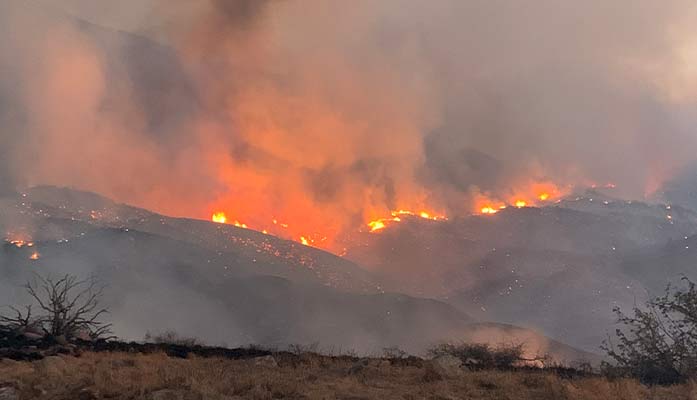
A bill to help enhance Arizona’s resources to fight fires has been signed into law by the state’s governor.
Last week, Governor Katie Hobbs signed HB 2751, which will “adopt the Great Plains Wildland Fire Protection Compact, entering into a mutual aid agreement with other member states for the purposes of forest firefighting” – according to the purpose from the Arizona State Senate.
State Representative David Cook, a Republican who sponsored this bill, issued the following statement after Hobbs’ action: “As we head into fire season, it’s critical that Arizona is prepared to respond effectively to wildfire threats. With several large fires currently burning in Northern Arizona, this legislation comes at a crucial time. The enactment of H.B. 2751 will ensure our communities are better protected and our firefighting resources are optimally utilized. I’m grateful for the broad bipartisan support that we had in both chambers to pass this important legislation and for the Governor’s support in quickly signing it into law.”
According to the press release from Cook and Arizona House Republicans, this legislation would “allow the Arizona Department of Forestry and Fire Management to collaborate with state foresters in other states, including Colorado, Kansas, Nebraska, New Mexico, North Dakota, Saskatchewan, South Dakota, and Wyoming, to ensure that Arizona can both provide and receive assistance swiftly during wildfire emergencies, improving overall response times and resource availability.
Joining Cook in support of the bill during the legislative process were Representatives Marshall, Payne, and Sandoval as co-sponsors.
On the Arizona Legislature’s Request to Speak system, representatives from the Arizona Fire District Association, Arizona Wildlife Federation, and Arizona State Forester signed in to support the bill.
The legislation first passed the Arizona House of Representatives in February with an overwhelming 53-3 result (three members did not vote and one seat was vacant). The state Senate then gave its green light to the bill with a 27-2 vote (with one member not voting) before sending it to the Governor’s Office.
Cook’s press release also explained that HB 2751 “provides a framework for administering mutual aid, allowing state forest fire control agencies to quickly request and render firefighting personnel and resources to each other in times of need and to receive reimbursement for their assistance afterwards, [and] stipulates the responsibilities of and protections for employees that are involved in out-of-state firefighting efforts, including provisions for workers’ compensation and liability coverage.”
Because the proposal was an emergency measure, it is now effective under Arizona statute.
Daniel Stefanski is a reporter for AZ Free News. You can send him news tips using this link.
by Staff Reporter | May 21, 2024 | News
By Staff Reporter |
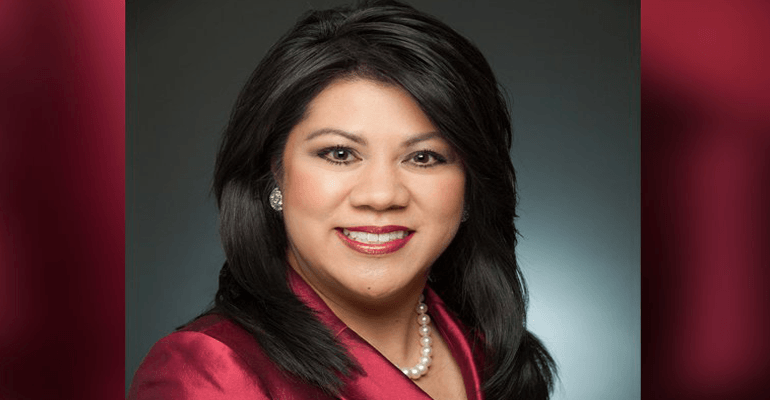
Arizona Treasurer Kimberly Yee was honored before Congress on Monday for her work and legacy inspiring girls and young women.
Congresswoman Debbie Lesko presented the recognition for Yee. Lesko noted that Yee was the first Chinese-American woman in Arizona to take on a high state-level position, as well as a Republican.
“It is the first Asian-American elected to a statewide office in Arizona history,” said Lesko.
Yee formerly served in the Arizona legislature, in both the House and the Senate, and rose to become the state’s second female majority leader, after the late Sandra Day O’Connor.
Prior to joining the state legislature and coming to Arizona, Yee worked for California’s Republican governors Pete Wilson and Arnold Shwarzenegger. After Yee moved to California, Yee became communications director for the place she now leads: the state treasurer’s office.
Yee’s transition into the legislature began after Governor Jan Brewer successfully recommended Yee to replace another lawmaker, former Republican representative Doug Quellan.
It was in the legislature that Yee passed a bill requiring doctors to provide women with the option of an ultrasound before obtaining an abortion.
Some of Yee’s high marks in office include her improvements that led to record highs of the Permanent Land Endowment Trust Fund, totaling over $8.6 billion at one point (as of March’s end, $6.75 billion); punishing companies’ boycotts of Israel; and getting into state law a requirement of financial education for high schoolers prior to graduation.
“Treasurer Yee’s service to Arizona has raised financial literacy rates, improved Arizona’s economy, and helped show young women and girls across the state that anything is possible,” said Lesko.
Yee has acted and spoken out consistently on her views of unsound policy, usually Democratic.
Back in February, Yee joined state Republican lawmakers’ lawsuit against the Biden administration over its confiscation of nearly one million acres of land in northern Arizona in an attempt to declare the land a monument.
The treasurer has also pushed back on Governor Katie Hobbs. She asserted publicly that the governor’s proposed education funding plan was “dangerous and unsustainable.”
Yee also refused to admit government employees under two agencies during a Board of Investment meeting after the Governor refused to nominate agency directors.
After the Hamas terrorist attack that initiated the ongoing conflict between Israel and Gaza, Yee ramped up support for Israel. The state increased its bond holdings to support Israel.
Yee ensured Arizona was the first state in the country to enforce anti-Boycott, Divestment, and Sanctions laws. The state divested $143 million from Unilever, the parent company of Ben & Jerry’s, in response to the latter company’s ceasing distribution in Israel.
Yee also improved Education Savings Plans (ESPs) under her leadership. The ESPs were up 38 percent: a three-year difference worth $2.25 billion.
Last year, Yee resisted Hobbs’ alleged desire to cancel ESA-related grants enabling children to attend all-day kindergarten.
Assets under Yee’s management grew from $15.4 billion when she took office to $30.4 billion.
AZ Free News is your #1 source for Arizona news and politics. You can send us news tips using this link.