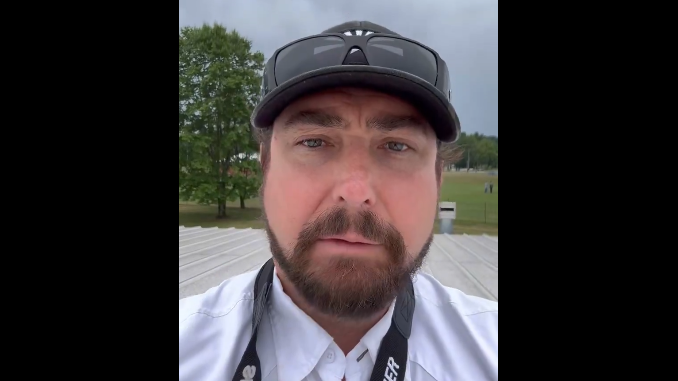
Congressman and former Navy SEAL Sniper Eli Crane (R-AZ) visited the rooftop perch of attempted presidential assassin Thomas Matthew Crooks with his team on Monday and shared footage of his professional assessment. Crane’s perspective carries particular weight given his five combat deployments during his 13-year military career.
Crane wrote, “I’m on the roof of the building in Butler, PA, where shots were fired in an attempt to assassinate President Trump. As a former Navy SEAL sniper, it was clear to me that many security measures were dropped making Pres. Trump extremely vulnerable. Many questions still remain.”
According to Crane’s congressional website, the congressman was a post-9/11 enlistee in the U.S. Navy from Arizona, who worked his way up to the Naval Special Warfare Command, joining SEAL Team 3 based out of Naval Amphibious Base Coronado in California. Three of his wartime deployments were to Iraq. He was a SEAL for nine of his thirteen years in uniform.
I’m on the roof of the building in Butler, PA where shots were fired in an attempt to assassinate President Trump.
As a former Navy SEAL sniper, it was clear to me that many security measures were dropped making Pres. Trump extremely vulnerable.
The first video at just over a minute long presents Crane’s damning assessment of the tactical realities at the site of the attempted assassination, that directly conflicts with the narrative being presented by Director Kimberly Cheatle of the United States Secret Service.
He explained, “All right guys, I’m up here on the building where the supposed sniper took his shot. It’s not that steep at all. We just had a 70-year-old man back here climb up on the roof easily.”
Cheatle drew wide criticism when she justified the lack of Secret Service presence on the rooftop to ABC News saying, “That building in particular has a sloped roof at its highest point. And so, you know, there’s a safety factor that would be considered there that we wouldn’t want to put somebody up on a sloped roof.” She added, “And so, you know, the decision was made to secure the building, from inside.”
Crane noted that, if snipers were posted on a nearby water tower overlooking the building and the entire venue, “This guy wouldn’t have made it 5 feet up this roof. He would’ve been taken out.”
The Congressman also noted second floor windows in an adjacent building where Secret Service were “supposedly in the second floor of this building behind.” He added that it, “makes you wonder why they weren’t able to quickly dispatch the individual.”
In a subsequent post to X, Crane presented the vantage point from the second-floor windows that the Secret Service had access to. He wrote, “This video was taken from one of the windows the Secret Service had access to, overlooking the entire roof. As you can see, they had complete coverage. Makes you wonder how on earth they allowed the shooter to access the roof, let alone crawl up it & fire several shots.”
This video was taken from one of the windows the Secret Service had access to, overlooking the entire roof.
As you can see, they had complete coverage.
Makes you wonder how on earth they allowed the shooter to access the roof, let alone crawl up it & fire several shots. pic.twitter.com/C1GTUAuPEa
Crane’s assessment seemed to concur with that of Gene Petrino, a former SWAT commander for Florida’s Plantation Police Department, who questioned in an interview with Fox News why snipers were not stationed at the water tower that “would have had a vantage point of all the roofs,” and called out “the audacity for her to say that there was an issue with the sloped roof when her men were already on a sloped roof.”
Secret Service Director Kimberly Cheatle is testifying in front of the House Oversight Committee Monday. During these proceedings Congresswoman Anna Paulina Luna (R-FL) has accused Cheatle of perjuring herself and stonewalling members of the Committee, according to Fox News. Crane has a seat on the House Homeland Security Committee and the Subcommittee on Oversight, Investigations, and Accountability.
“I will say this. It is very frustrating. And I’ve talked to my colleagues, and we’ve said it to your face that you have been up here basically stonewalling our ability to get the answers to the American people. And what I will also say is that every single member of Congress does not feel safe with you in charge. You have heard that. And I think that we are all sitting ducks with you and directing the Secret Service currently,” Luna said.
She then issued a formal request for Cheatle’s resignation: “But more importantly, it sends a message to our adversaries that we are not protected, and we are one of the strongest countries in the world. So, you have essentially made us a less safe country because of it. As a result of that, I’m asking you to formally step down.”
Not all kinds of heat are equal: apparently, Arizona’s first “Chief Heat Officer” has been avoiding any heat from the media.
It was discovered by ABC15 reporter Nicole Grigg that inaugural Chief Heat Officer Eugene Livar, appointed in April, has repeatedly avoided interviews with the media and instead opted to answer the questions on his own time, without direct media scrutiny or feedback, through his vlog, “What’s Hot with Heat.”
Per Arizona Department of Health Services’ (ADHS) media relations, they will direct reporters to sift through Livar’s vlogs to receive answers to their questions, should he have addressed them.
Media Relations Director Niala Charles told Grigg in an email this week that Livar’s vlog satisfactorily accomplishes the duty of keeping the public informed, citing the vlog’s “77,000 subscribers” and “high click rate,” which Charles described as “impressive.”
Arizona’s population sits at over 7.1 million souls.
Arizona hired its first 'Chief Heat Officer' and is now doing bi-weekly video blogs about the heat.
I have requested interviews with him, but he's not available. Instead, I can submit my questions, and they may put a response in his 'Whats Hot with Heat!' series. pic.twitter.com/PLGJHseuYB
Prior to becoming the state’s first chief heat officer, Livar had worked in various roles for ADHS for over a decade. In his last role as ADHS assistant director, Livar had a salary of over $148,000.
This latest job title was concocted through Governor Katie Hobbs’ Extreme Heat Preparedness Plan, which he helped develop. Livar’s job also includes executing those aspects of the plan. Hobbs’ plan heavily focuses on addressing homelessness, namely heat respite resources and housing for them, and establishing more clean energy.
A big push for Hobbs’ plan, and a goal of her administration, is to convince the federal government to declare heat as an emergency in order to unlock more federal funding.
Livar’s team has issued two vlogs, the first appearing last month. Both vlogs repeated similar advice on watching out for heat-related illnesses and staying hydrated, and avoiding heat-induced car breakdowns by performing regular maintenance.
The third vlog is scheduled for release next Wednesday.
The first vlog, eight minutes, focused on an overview of his office’s duties and the resources the state and local government offer for heat relief.
“Be sure you stay cool, stay hydrated, stay informed, and be sun-wise,” said Livar in one vlog. “We know if we lean on each other, we can make it through each heat season and come out better every year.”
The second vlog issued earlier this month, four minutes, had Livar recommending municipalities adopt more public advisories on the heat, and expanding offerings of cooling and hydrating stations.
The ADHS heat-focused vlogs are promised to be posted on a bimonthly basis. Rather than relying on closed captioning, ADHS opted to bring in a sign language interpreter for the vlogs.
In addition to vlogging, Livar has been blogging about heat-related topics. Most recently, Livar wrote up general advice on proper hydration, signs of dehydration, and resources for sourcing local cooling and hydration centers.
Other blogs by Livar address various other, non-heat-related health topics, like HIV testing and regulation of marijuana kitchens.
AZ Free News is your #1 source for Arizona news and politics. You can send us news tips using this link.
The Hispanic Vote Coalition is seeking to drive voter registration in Arizona, Nevada, and Colorado with a series of upcoming pastor events and a Bless the Ballot campaign according to a press release obtained by AZ Free News.
The coalition explained that the Bless the Ballot Campaign was launched this past week with Hispanic, Christian pastors in several battleground states where the group has assessed that the Hispanic vote will decide the outcome of the 2024 election.
The press release explained, “The coalition, launched in April by Hispanic-led organizations — Job Creators Network, the National Hispanic Christian Leadership Conference, and Bienvenido — is engaging, informing, and encouraging Hispanic voters to harness their immense power by registering them and getting them out to vote for the values they believe in — faith, family, and freedom.”
Hispanic Vote Coalition Launches Bless the Ballot Campaign and Hosts Pastor Events in Arizona, Nevada, and Colorado
This week, the Hispanic Vote Coalition launched its Bless the Ballot Campaign in conjunction with leading Christian and Hispanic pastors in battleground states…
— Job Creators Network (@JobCreatorsUSA) July 16, 2024
Mary Thomas, Executive Director of the Hispanic Vote Coalition, said in a statement, “Hispanics and Christians can no longer sit on the sidelines, while our values are being attacked. We are engaged in a spiritual battle, and the faith and Hispanic community must not be intimidated. We must rise up and exercise our duty as Christians and Americans to vote for biblical values. By working with our network of 42,000 Christian pastors, the Hispanic Vote Coalition is helping as many Christians and Hispanics as possible fulfill their moral responsibility to vote their values and help determine the outcome of the election.”
According to a Pew Research study, approximately 31% of Latinos in Arizona are either registered or lean Republican. Gallup in 2022 showed that Democrat support among Latinos had hemorrhaged four-points on a national level from 32% to 28% since 2020. In April 2024 an APP/OnMessage poll reported by Newsweek indicated that a “seismic realignment is happening with Hispanic voters across the country,” and added, “If Hispanic voters split in either Arizona or Nevada, Trump will win the state. That’s a near statistical certainty.”
The Hispanic Vote Coalition had an amazing day at the @nhclc’s pastors’ meeting. We discussed how to empower Hispanic Christians to make a difference in their communities & the importance of engaging Hispanic voters through a Biblical lens. Thank you, @nhclc! pic.twitter.com/KwAKuNKcXw
— Hispanic Vote Coalition (@HispanicVoteCo) July 16, 2024
“The Hispanic and Latino evangelical community is staying silent no more,” Pastor Robert Albino, Jr., National Chapter Director of the National Hispanic Christian Leadership Conference said. “Across the country, there is a civic awakening that is a result of dangerous, anti-Christian policies that are being pushed on our schools and businesses and posing a grave threat to economic opportunities that make our communities and families strong. The Hispanic Vote Coalition is dedicated to equipping, educating and engaging our community with one resounding message that is clear and direct: Hispanic evangelicals are not committed to the agenda of the donkey or the elephant, we will vote our Christian values and advance candidates that represent and defend the agenda of the Lamb.”
The coalition’s move is happening in the context of an increased outreach from the Arizona GOP to Latino voters which saw the AZGOP launch a Spanish-Language ad that aired during the 2024 Copa América Tournament which concluded July 15th in Miami.
The ad featured West Valley Republican State Rep. Steve Montenegro with AZGOP Chairwoman Gina Swoboda and runs at 30 seconds featuring the Arizona legislator explaining in Spanish:
“In Arizona, we face several challenges. High prices for food, gasoline, and even for a family home. High crime in our neighborhoods. Protecting family rights in deciding what is the best education for their children. We can do things better. The Arizona Republican Party is committed to protecting the American Dream. Together we can do it. We will achieve a better economy for our families here in Arizona.”
🚨 NEW AD: @AZGOP is hitting the airwaves during the 2024 @CopaAmerica_ENG with a Spanish-language ad! 📺🇺🇸
We’re committed to lowering the cost of living, empowering parents with education freedom, and making homeownership affordable for all Arizonans. pic.twitter.com/A6HXifHdR4
— Republican Party of Arizona (@AZGOP) June 22, 2024
The AZGOP shared the ad in a post to X with the comment, “We’re committed to lowering the cost of living, empowering parents with education freedom, and making homeownership affordable for all Arizonans.”
As of this report, the Hispanic Vote Coalition has not announced details for the upcoming events. As they are announced, information will be available on their website.
Arizona elected officials responded to Sunday’s historic announcement from President Joseph R. Biden that he would not be seeking reelection in the November General Election.
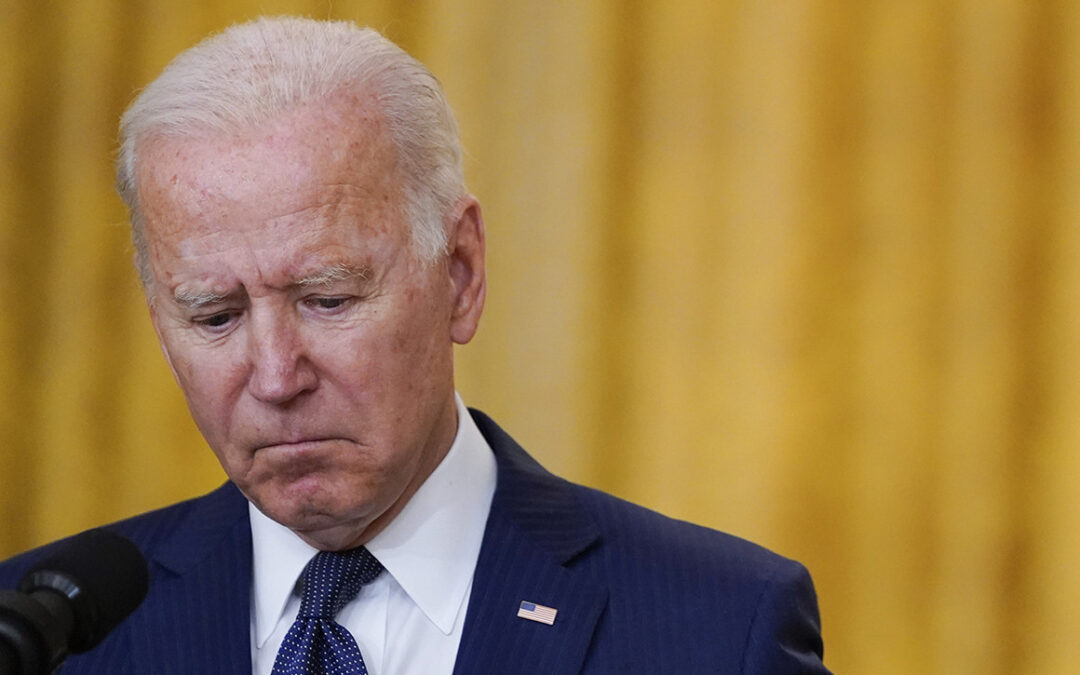
On Sunday, President Biden capped weeks of rampant criticism and speculation about the future of his candidacy for the highest office in the United States of America, announcing he would not be continuing his campaign just months before voters head to the polls to select their next Commander in Chief.
In a letter released on “X,” Biden wrote, “It has been the greatest honor of my life to serve as your President. And while it has been my intention to seek reelection, I believe it is in the best interest of my party and the country for me to stand down and to focus solely on fulfilling my duties as President for the remainder of my term.”
Less than an hour later, Biden endorsed his Vice President to carry the mantle for his party’s nomination in its upcoming convention, saying, “Today I want to offer my full support and endorsement for Kamala to be the nominee of our party this year. Democrats – it’s time to come together and beat Trump. Let’s do this.”
My fellow Democrats, I have decided not to accept the nomination and to focus all my energies on my duties as President for the remainder of my term. My very first decision as the party nominee in 2020 was to pick Kamala Harris as my Vice President. And it’s been the best… pic.twitter.com/x8DnvuImJV
Governor Katie Hobbs said, “President Biden is the embodiment of a public servant. Throughout his career, he has led with integrity, selflessness, and unparalleled empathy. His decision today is a clear reflection of these qualities and his commitment to putting the American people first.”
President Biden is the embodiment of a public servant. Throughout his career, he has led with integrity, selflessness, and unparalleled empathy. His decision today is a clear reflection of these qualities and his commitment to putting the American people first.
Attorney General Kris Mayes added, “I want to think President Joe Biden for his dedicated service to our nation. From guiding us out of the pandemic, to revitalizing our economy and supporting freedom and democracy at home and abroad. I stand ready to help move America forward and am honored to support Vice President Kamala Harris as our Presidential nominee.”
I want to thank President @JoeBiden for his dedicated service to our nation. From guiding us out of the pandemic, to revitalizing our economy and for supporting freedom and democracy at home and abroad. 1/3
Arizona Speaker of the House Ben Toma posted, “An historic moment in several ways. The Democrat machine and their allies in the media push out their standard bearer. Biden in turn endorses a much more radical progressive at a time when Americans are rejecting such policies. All against the backdrop of President Trump and a united Republican/conservative coalition whose aims include a secure border, less government interference, and a stronger natural defense.”
An historic moment in several ways. The Democrat machine and their allies in the media push out their standard bearer. Biden in turn endorses a much more radical progressive at a time when Americans are rejecting such policies. All against the backdrop of President Trump and a…
Former Arizona Attorney General Mark Brnovich told AZ Free News that, “It’s no surprise that the democrats worried about Joe Biden’s re-election chances. The surprising part is that his announcement didn’t come sooner. Regardless of who they nominate now, how do they explain the border crisis and high prices the Democrats created? But as far as predictions, it wouldn’t surprise me to see Mark Kelly as part of the ticket.”
Brnovich and Harris served together as state attorneys general before the California prosecutor was elevated to her federal office on the Biden presidential ticket in 2020. In April 2021, Brnovich sent a letter to Harris, inviting her to the southern border. He told Harris that this tour would “provide firsthand insight into what Arizonans, law enforcement officials, and migrants are experiencing.”
A little more than a month after this initial communication, Brnovich wrote to President Biden about Harris ignoring his invitation, requesting “that she be replaced as [his] ‘border czar.’” He said, “We are now nearly 50 days into her appointment, and Vice President Harris has shown little interest in observing what is happening along the border and has failed to articulate any plan to deal with the devastating effects of this crisis. Instead, she has traveled to other states for unrelated and less-pressing matters. Mr. President, this is a slap in the face to Arizonans who helped elect you both to the highest offices in the land.”
Daniel Stefanski is a reporter for AZ Free News. You can send him news tips using this link.
Another one of Arizona’s middle-of-the-road legislative districts may be represented by a liberal after November’s General Election if enough Democrats and left-leaning independents have their say.
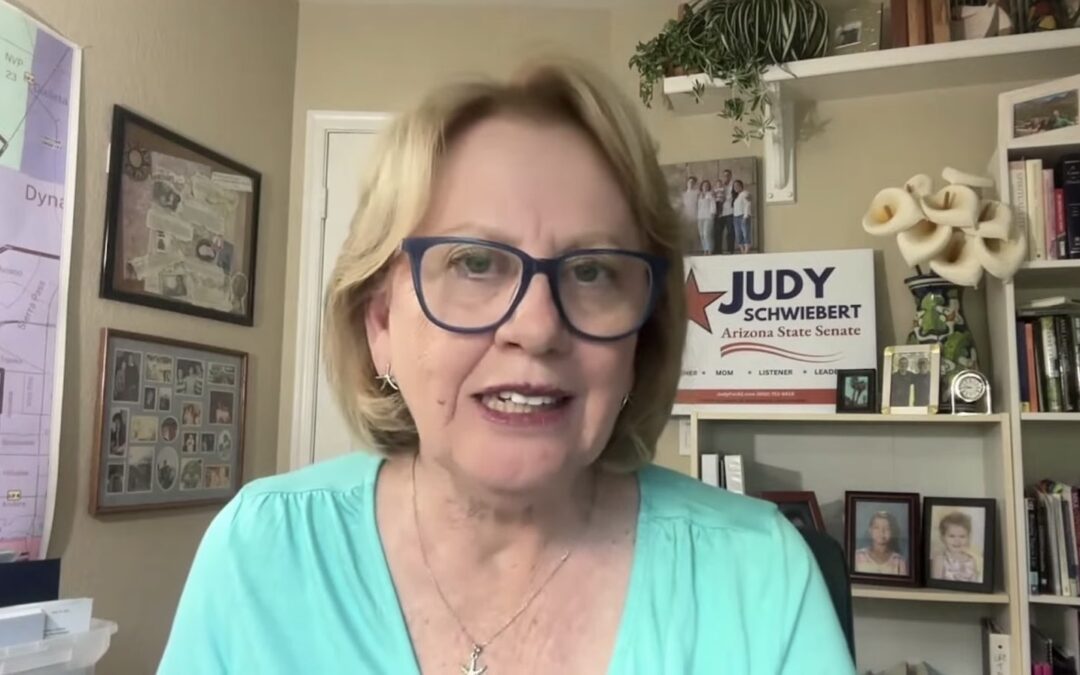
Judy Schwiebert, a Democrat, is running for the Arizona State Senate in Legislative District 2. Schwiebert currently serves as a State Representative for the district. She announced for the seat in June 2023, saying that “we need people who will work together to focus on the toughest challenges facing Arizonans including our teacher, affordable housing, and water shortage crises.”
Today, I am announcing my candidacy for the AZ State Senate in Legislative District 2. Now is the time to make real progress for Arizona families, so everyone gets their chance to thrive. Join our team and chip in now —> https://t.co/eqlsLuWVeRpic.twitter.com/TKI1imW0I7
— Representative Judy Schwiebert, LD2 (@JudyForAZ) June 16, 2023
Schwiebert posted more than 1,600 signatures at the Arizona Secretary of State’s Office earlier this spring to qualify for the ballot.
Thanks to so many amazing and dedicated volunteers, our campaign turned in over 1600 signatures this morning to qualify for the ballot! That’s three times more than the minimum required! I’m deeply honored to have the support of our community. pic.twitter.com/29djq2Tbou
— Representative Judy Schwiebert, LD2 (@JudyForAZ) March 27, 2024
The Democrat legislator has been endorsed by several left-leaning organizations, including National Organization for Women Arizona PAC, Arizona Education Association, Moms Demand Action, Save Our Schools Arizona, Arizona List, Jane Fonda Climate PAC, the Grand Canyon Chapter of the Sierra Club, Emily’s List, Moms Fed Up, and Human Rights Campaign PAC.
If voters were to select Schwiebert over the Republican favorite in the district’s primary, Shawnna Bolick, they would be sacrificing one of the state’s strongest school choice proponents for one of the top opponents of educational opportunities and freedom for students and families. In a recent interview with a local outlet, Schwiebert set her sights on the Empowerment Scholarship Account (ESA) program, which has given tens of thousands of Arizona families the opportunity to choose the education that best suits their children, saying, “What we cannot afford is to create an entirely separate private school system – funded by taxpayer money – that siphons almost a billion dollars a year out of the state budget. That’s what the universal ESA voucher program is doing. It is creating huge deficits. It is preventing us from investing in all kinds of things that Arizonans urgently need.”
In June 2022, Representative Schwiebert voted against the bill that expanded the ESA program in the state (HB 2853), which was the first of its kind in the country.
Schwiebert’s endorsements from Arizona Education Association and Save Our Schools Arizona also speak volumes about what she would continue to do in the state senate to undermine school choice opportunities for her constituents. In its 2023 Legislative Policy Priorities, Save Our Schools Arizona wrote that “Diverting public funds away from public schools toward private schools through ESAs and STOs only exacerbates the crisis – especially with universal ESA vouchers directing state tax dollars overwhelmingly to families who never sent their children to public schools in the first place. This negatively affects Arizona students and families, leaving the next generation unprepared for success and risking our state’s future.”
On her “X” account, Schwiebert has posted her participation with Save Our Schools Arizona at different events.
It was great to join Save Our Schools Arizona for today’s education town hall! pic.twitter.com/fqi10pwOBB
— Representative Judy Schwiebert, LD2 (@JudyForAZ) April 13, 2024
The Arizona Education Association is also an ardent opponent of the state’s many educational freedom opportunities. After Democrat Governor Katie Hobbs signed the state’s budget in 2023, which she negotiated with Republican legislative leadership, the Association wrote, “It’s extremely frustrating that this budget does not address the growth of the state’s out-of-control voucher program. The extremist majority in our state legislature has ignored the will of Arizona voters and pushed through policies that bankroll private schools for the wealthy at the cost of the public schools attended by 90% of Arizona kids…This unchecked spending is completely irresponsible and is on track to bankrupt our state. The fight to repeal vouchers during next year’s legislative session starts today.”
Earlier this year, Schwiebert bemoaned the resistance of Arizona Republican legislators in the House majority “to even consider sensible legislation to raise educator pay…”
4 years later, the only change has been universal vouchers. The majority refuses to even consider sensible legislation to raise educator pay and improve retention.
— Representative Judy Schwiebert, LD2 (@JudyForAZ) April 15, 2024
However, during the 2023 Arizona Legislative Session, Schwiebert voted against HB 2800 in committee, which would have “mandate[d] each school district and charter school increase the base salary of all eligible teachers” – according to the overview provided by the state House of Representatives. That bill, which was sponsored by Republican State Representative Matt Gress, received a green light from the House Appropriations Committee, but failed to make it out of the full chamber for the Senate’s consideration.
Schwiebert explained her vote at the time, saying, “The bottom line for me is well, this bill is really, I think, well-intentioned, and it’s good that, I’m glad to hear that Mr. Gress is acknowledging that teachers deserve higher pay, they absolutely do. But unfortunately, there are some serious flaws in this bill that I’m concerned could leave public schools in a worse financial position than they are in now.”
Representatives from both the Arizona Education Association and Save Our Schools Arizona registered opposition to the legislation on the Arizona Legislature’s Request to Speak system.
Arizona Legislative District 2 is one of the most competitive in the state, with a 3.8% vote spread in the past nine statewide elections. It is very winnable for Republicans, however, as the party has emerged victorious in six out of those nine elections. The district covers a large portion of northcentral Phoenix.
Schwiebert is running unopposed in the July primary election for Democrats. She will face off against the winner of the district’s Republican primary contest for state senator, which features incumbent, Shawnna Bolick, and Josh Barnett.
Bolick told AZ Free News that her “general election opponent was voted in shortly after she helped collect signatures for a ballot initiative that would have levied a billion dollar tax on small businesses not only hurting these business owners, but our state’s economy.” She added, “[Schwiebert] cares more about protecting special interests than voting for common sense education policies that gives every kid a chance to thrive in the school of their choice.”
AZ Free News is your #1 source for Arizona news and politics. You can send us news tips using this link.
A politically middle-of-the-road legislative district may be home to one of the state’s most liberal elected officials if voters turn to Democrat representation in the November General Election.
Karen Gresham, a Democrat, is campaigning for the Arizona House of Representatives in Legislative District 4, which covers an area of northcentral Phoenix. She currently serves as a Governing Board President for the Madison Elementary School District. In addition to her run for state house, Gresham is running for re-election to this Governing Board, where she hopes to sit for another four-year term.
On March 29, Gresham announced that she and her Legislative District 4 running mates had filed their signatures to qualify for the ballot.
Gresham appears to be an unashamed liberal Democrat, who has a lengthy record of supporting Democrat organizations, causes, and candidates. On OpenSecrets.org, a Karen Gresham from Phoenix is reported to have contributed to the Democratic Party of Arizona, Save Our Schools, Planned Parenthood of Arizona, Arizona List, Hillary Clinton, Katie Hobbs, David Garcia, Fred Duval, Ruben Gallego, Adrian Fontes, Kris Mayes, Ann Kirkpatrick, Greg Stanton, LD4 Democrats, and several other Democrat interest groups, and legislative candidates and incumbents.
The Democrat candidate is endorsed by a plethora of liberal special interest and advocacy groups, including Arizona List, Moms Demand Action, Human Rights Campaign of Arizona PAC, Sierra Club, Save Our Schools Arizona, Emily’s List, and National Organization for Women Arizona PAC.
Gresham would undoubtedly give Democrats another ardent pro-abortion vote in the legislature. On June 24, she posted to her “X” account that “in the two years since the Supreme Court’s Dobbs decision, Arizonans reproductive freedom has been in a state of uncertainty. We MUST pass the Arizonans for Abortion Access initiative and flip the legislature to protect reproductive freedoms.”
In the two years since the Supreme Court’s Dobbs decision, Arizonans reproductive freedom has been in a state of uncertainty. We MUST pass the Arizonans for Abortion Access initiative and flip the legislature to protect reproductive freedoms.
When Gresham was endorsed by Emily’s List in May, she boasted that she has “been a champion for reproductive freedom for years and will continue to advocate for policies that ensure our rights.”
I’m so proud to have the endorsement of EMILYs List! I have been a champion for reproductive freedom for years and will continue to advocate for policies that ensure our rights. pic.twitter.com/bUWYPfH7WV
On her campaign website, Gresham portrays herself as a reasonable education advocate with her experience on the Madison Elementary School District board, writing, “I know what Arizona schools, teachers, and students need,” and that “I am deeply passionate about education and improving our schools.”
However, the truth appears to be far different. At a campaign event this summer, Gresham, when speaking about her views on education, said, “We’re funding three systems right now: charter schools, public schools and the ESA system. So, we need to consolidate those and bring the funding back under the public school umbrella because it all falls into place after that.”
In 2020, Gresham expressed her displeasure over “public charter schools receiving small business PPP,” adding that “this is not ok!”
Gresham is also supported by the Progressive Change Campaign Committee (PCCC), which is raising political funds for her race to “help Dems pick up the ONE SEAT they need to flip the Arizona State Legislature from red to blue.” PCCC advocates for liberal policies such as the Green New Deal, Medicare for All, and Debt-Free College. The organization also touts its partnership with Senator Elizabeth Warren on federal legislation, and its appreciation of net neutrality, which PCCC highlights was “celebrated by the Obama administration.”
She is also endorsed by Sister District Project South Bay, which posted its support of “candidates in key state legislative races where we can build momentum at the bottom of the ticket to benefit the strategic higher-ticket Democratic opportunities in states like Pennsylvania, Arizona, North Carolina, and Nevada.” The organization states that “by helping progressive candidates win elections, we aim to …enact climate actions and environmental justice now, racial and gender equity, protect reproductive rights, and so much more.”
Legislative District 4 is one of the most competitive in the state with a 3.4% vote spread between Republicans and Democrats in the past nine statewide elections, according to the Arizona Independent Redistricting Commission. Republicans have won five of those contests, compared to four for Democrats.
Gresham is running alongside former State Representative Kelli Butler in the Democrat Primary. The two will face off in November’s General Election against incumbent State Representative Matt Gress and Pamela Carter, who will both emerge from the Republican Primary.
Currently, there is only one legislator representing Legislative 4 (Gress) due to a Democrat’s resignation last month. Earlier this month, Gresham was one of three Democrats nominated to the seat (with Kelli Butler and Eric Meyer) to be considered by the Maricopa County Board of Supervisors. One of those individuals will be selected by the Board to serve for the duration of the term (until early January 2025).
AZ Free News is your #1 source for Arizona news and politics. You can send us news tips using this link.