A middle-of-the-road legislative district in the Phoenix-metro area will be key to deciding the future political makeup of the Arizona State Legislature.
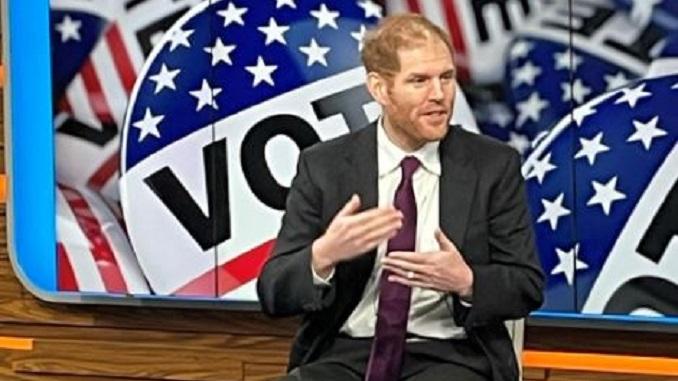
State Representative Seth Blattman, a Democrat, is running for reelection in Arizona Legislative District 9.
The Democrat lawmaker has been endorsed by liberal groups in his reelection bid, including National Organization for Women Arizona, AEA Fund for Public Education, the Progressive Turnout Project, the Progressive Change Campaign Committee, Jane Fonda Climate PAC, Save Our Schools Arizona, and Stonewall Democrats of Arizona.
Blattman’s support from the Fonda PAC may be one of the most concerning for voters researching his record and determining which direction they want to see for their district. On August 7, Blattman boasted of this endorsement, saying, “I am incredibly honored to announce the endorsement by the Jane Fonda Climate PAC! Their tireless efforts in combating climate change and advocating for sustainable policies are crucial for our planet’s future. Together, let’s create a healthier and sustainable Arizona for generations to come.”
I am incredibly honored to announce the endorsement by the Jane Fonda Climate PAC! Their tireless efforts in combating climate change and advocating for sustainable policies are crucial for our planet's future. Together, let's create a healthier and sustainable Arizona for… pic.twitter.com/qXZVxxZDJs
The mission of the PAC, however, is not as agreeable to a wide swath of constituents. On her website, Fonda writes, “Our planet is on fire and our leaders are failing us, so if we can’t change the minds of the people in power, we need to change the people in power. It is for that reason that I started Jane Fonda Climate PAC, which is laser-focused on one goal: Do what it takes to defeat fossil fuel supporters and elect climate champions at all levels of government.”
This PAC asserts that “major solutions are stopped cold: the Green New Deal, Build Back Better, clean energy investments, ending billions in tax subsidies to the fossil fuel industry – all because of politicians backed by Big Oil.”
The Green New Deal pushed by the Jane Fonda Climate PAC is the same championed by U.S. Senator Bernie Sanders, who is one of the most progressive lawmakers in the U.S. Congress. On Sanders’ presidential campaign website, he wrote about the deal, that “the climate crisis is not only the single greatest challenge facing our country; it is also our single greatest opportunity to build a more just and equitable future, but we must act immediately.”
Sanders added that as president he would “launch the decade of the Green New Deal, a ten-year, nationwide mobilization centered around justice and equity during which climate change will be factored into virtually every area of policy, from immigration to trade to foreign policy and beyond. Part of the details of the Green New Deal, according to Sanders, includes, “declaring climate change a national emergency, commit[ing] to reducing emissions throughout the world, [and] expanding the climate justice movement.”
Though Arizona has so far resisted an extreme move to the globalist agenda of the climate change lobby – thanks, in large part, to its previous Republican governors (Brewer and Ducey) and a Republican-led legislature – Blattman’s recent votes indicate that he might help usher in more of the Green New Deal policies should Democrats retake the legislature alongside Governor Katie Hobbs. He voted against HCR 2050, which would have “constitutionally prohibit[ed] Arizona or any political subdivision or public body of Arizona from restricting the manufacture, use or sale or a device based on the energy sources used to power the device.”
Additionally, Blattman voted against HCR 2018, which would have “prohibit[ed] this state and any city, town, county, municipal corporation or other political subdivision of this state from imposing a fee or tax based on vehicle miles traveled by a person in a motor vehicle or enacting any rule or law to monitor or limit the vehicle miles traveled by a person in a motor vehicle.”
Another of Blattman’s endorsements, the Progressive Change Campaign Committee, also highlights its efforts to fight for the Green New Deal. The organization promotes itself as “a proud supporter of Elizabeth Warren since her first run for Senate and was the first national political organization to endorse her for president in the 2020 election.”
Warren, also one of the most liberal and progressive members of the U.S. Congress, presents herself as a top supporter of the Green New Deal. On her campaign website, Warren writes, “This is a crisis. We need bold, aggressive action. We need a Green New Deal – and we need it now. Elizabeth is proud to be an original cosponsor of Senator Ed Markey and Rep. Alexandria Ocasio-Cortez’s Green New Deal resolution, which commits the United States to a ten-year mobilization to achieve domestic net-zero emissions by 2030. It provides the framework for an ambitious effort to transform our economy and save our planet.”
According to the Arizona Independent Redistricting Commission, Legislative District 9 is one of the most competitive in the entire state, with a 2.6% vote spread between Democrats and Republicans in the past nine statewide elections. In those contests, Democrats have emerged victorious five times, compared to four for Republicans.
Blattman will attempt to return to the Arizona House of Representatives alongside his seatmate, Lorena Austin. The two Democrats are facing off against Republicans Mary Ann Mendoza and Kylie Barber for the right to represent the district in its two slots.
AZ Free News is your #1 source for Arizona news and politics. You can send us news tips using this link.
Citing a report from the Arizona Legislative Budget Committee, the Goldwater Institute debunked the narrative that Arizona’s universal education savings account (ESA) program has harmed students and blown up the states’ budget.
In a lengthy and detailed report from Director of Education Policy at the Goldwater Institute Matt Beienburg, it is made plain that the universal ESA program has been a net-positive development for Arizona’s students, families, and taxpayers.
In a post to X, Beienburg summarized the report writing, “Since universal expansion, AZ enjoyed a $2B budget surplus one year, & an overall K-12 formula savings compared to its enacted budget the second, all as 75,000 ESA students are now being served at lower taxpayer cost $ than their peers in the state’s public school system.”
NEW: Arizona ESAs Defy National Media Propaganda Campaign.
Since universal expansion, AZ enjoyed a $2B budget surplus one year, & an overall K-12 formula savings compared to its enacted budget the second, all as 75,000 ESA students are now being served at lower taxpayer cost $… pic.twitter.com/D1Kc2m3bQ3
In a subsequent comment, he added, “Arizonans deserve better than willful or sloppy misrepresentations by @propublica, @joedanareports, @laurieroberts & @arizona_sos attacking the ESA program while ignoring record public school costs (including recently uncovered misspending on wine tastings & political candidate bootcamps)[.]”
The depth of Beienburg’s breakdown of the committee’s analysis can be summarized into a few key points.
He writes, “While union-aligned journalists and advocacy organizations have painted Arizona’s ESA program as excessively costly to taxpayers and responsible for triggering a budgetary shortfall, the two years of the universal ESA program’s history—and a new report from Arizona’s nonpartisan state budget analysts—suggest otherwise.”
The committee analysts explained, “With the above forecast adjustments, we estimate the total combined district/charter/ESA enrollment will generate savings of $(352,200) in FY 2024 relative to the enacted budget.”
Beienburg points out that the budget deficit of 23’-24’ only arose after Democrat Governor Katie Hobbs vetoed the original budget passed by Republican majorities in the House and Senate. That budget would have left the state with over a billion dollars in reserve funds even after fully funding the ESA program.
“Hobbs instead signed a budget that increased state spending by an additional $2 billion to the highest level of all time and exhausted the state’s surplus financial cushion, leaving it unable to absorb lower than projected revenue collections.”
Beienburg also mentions that the bevy of claims from critics of the ESA program “have relied on ideologically motivated, often factually dishonest misrepresentations of the program and its finances,” and “are simply false and represent either basic numerical illiteracy or willful misrepresentation of fact.”
Finally, the report from Goldwater assesses the fifth claim that critics of the ESA make which is that the program “siphons too much money to ‘wealthy’ or ‘high-income’ families,” by supporting families who are either pursuing home schooling or private education. And it is in this last segment of the report, the ultimate, purely ideological and class-warfare driven motivation for all of the “misrepresentations of the program and its finances” emerges.
The glaring inconsistency in the view of ESA critics that the “Empowerment Scholarship Accounts” benefit the wealthy is utterly undone by even a cursory examination of the families utilizing the program. As the Goldwater Institute, the nonpartisan Common Sense Institute, and multiple conservative outlets have repeatedly verified, families of ESA children cover the full breadth of the socio-economic strata from crushingly impoverished to blindingly wealthy, from the broken down trailer parks of South Phoenix to the most lavish homes of Paradise Valley.
Beienburg notes, “By simply proclaiming a national ‘consensus’ in support of their own views—and ignoring an entire half of the nation seeking something better—advocacy organizations like Brookings suggest the education status quo should be preserved because…that’s how it’s always been.”
He concludes, “Yet this same status quo failed families during COVID-19, locked children out of classrooms, has doubled inflation-adjusted K-12 costs over recent decades, and has failed to meaningfully improve student outcomes for generations. The proliferation of education savings accounts—like other school choice innovations such as charter schools—on the other hand, offers families and lawmakers the opportunity to expand the range of educational choices available to students and ensure that each child can pursue an education of excellence, not simply political convenience.”
Arizona has approximately $29 million in unused federal funds for schools, which Arizona Department of Education (ADE) Superintendent Tom Horne seeks to recover.
The U.S. Department of Education (ED) notified Horne of the unused millions last week. The $29 million in Title I funds were underutilized during the administration of Horne’s predecessor, Kathy Hoffman. This was reportedly the first notification of its kind submitted by ED to the state under Horne’s administration.
In a press release on Monday, Horne blamed the underutilization on incompetence.
“The under-utilization of about $29 million in federal funds began in Federal Fiscal Year 2020, but continued under the previous superintendent and the employee who incompetently handed these allocations no longer works at this department,” said Horne.
Horne rejected allegations by Governor Katie Hobbs that he was at fault for the mismanagement of these millions, which fell under his predecessor’s control.
“These dollars should have been sent to districts and charters years ago during the Hoffman administration, but they were allowed by previous staff to accumulate and potentially revert,” said Horne. “In reality she is asking to investigate Kathy Hoffman’s administration, but the problem is being corrected by my administration.”
Horne had clarified in a press release last week, responding to reporting by The Arizona Republic, that it was specifically one employee within Hoffman’s administration that was to blame. Horne claimed that the individual gave incorrect allocation totals to schools. Horne didn’t name that employee.
“The mishandling and failure to notify districts of correct allocations with time for them to properly plan and spend the money resulted from an error by an employee of my predecessor before I took office,” said Horne. “This person told the schools they had smaller allocations than they had. We were constantly on the phone urging districts to spend as much of the money properly as they could.”
The superintendent noted that the Arizona Republic was aware that oversight of the funds fell under Hoffman, but that they had “dishonestly withheld” that information from their reporting. Horne also demanded a retraction of their “false” reporting.
“The story is false, and the reporter responsible for writing it dishonestly and, apparently with intent, withheld information given to him in advance of the story that clearly shows the story is false,” said Horne. “This is unacceptable and cannot stand.”
KJZZ identified the former staffer as a current employee of the Pima County School Superintendent’s Office.
One member of that office, Peter Laing, their CFO, served as Hoffman’s policy advisor and oversaw the various federal funding programs during the pandemic.
Hoffman, in turn, told the Arizona Republic that Horne was to blame for not recognizing the missteps of her administration upon taking over.
“It was their choice to bring in their own leadership, so those people needed to figure out all the grant funding. It’s as simple as that,” said Hoffman.
On Monday, in response to the contested Arizona Republic reporting, Hobbs and six Democratic state representatives demanded the convening of a Joint Legislative Audit Committee to audit Horne and ADE over the Title I funds.
In a press release, Hobbs said Horne was to blame for the disappearance of the majority of those millions, around $24 million, which the governor deemed as lost.
“It is unconscionable that Superintendent Horne has let tens of millions of dollars disappear from our schools—critical federal funding that helps students succeed,” said Hobbs. “Our kids deserve better.”
An accompanying letter from the six Democratic lawmakers — Nancy Gutierrez, Lupe Contreras, Oscar De Los Santos, Melody Hernandez, Jennifer Pawlik, and Judy Schwiebert — argued against ADE’s refusal, per department policy, to release its data and formulas determining reduced Title I allocations.
The lawmakers alleged that it was current ADE practices that withheld federal funding from schools.
“School finance officers across the state have tried and failed to recreate the reductions generated by the Department, leading to confusion and doubt regarding the accuracy of those calculations,” stated the lawmakers.
In order to recoup the $29 million, ADE must apply for a Tydings waiver allowing excess funds accrued due to underallocations beginning with the 2020 fiscal year. Approval of the waiver will increase funding to districts and charters, per ADE.
AZ Free News is your #1 source for Arizona news and politics. You can send us news tips using this link.
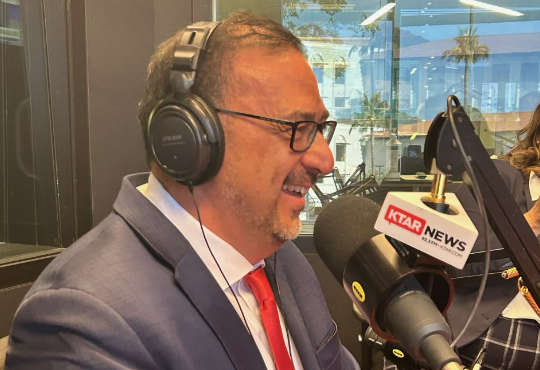
Speaking with KTAR’s Jim Sharpe and Jayme West last week, Arizona Secretary of State Adrian Fontes openly attacked the Arizona Free Enterprise Club after the group successfully fought to strip away rules from the 2023 Elections Procedures Manual (EPM). The very next day, AFEC President Scott Mussi responded.
As previously reported by AZ Free News, Maricopa County Superior Court Judge Jennifer Ryan-Touhill ruled that Fontes’ 2023 EPM contained speech restrictions that violated the Arizona Constitution, as well as misstatements and modifications of statutes, and failures to identify distinctions between guidance and legal mandates.
ICYMI: A Maricopa County Superior Court Judge has ruled that certain portions of Secretary Fontes’ radical Elections Procedures Manual violated Arizonans’ First Amendment rights. https://t.co/HwhZi45sXk
Fontes began by immediately mischaracterizing the lawsuit from the Arizona Free Enterprise Club saying, “First and foremost, I’m going to break a rule and talk about pending litigation. Usually I don’t, but this is important and this manual, the Elections Procedures Manual is promulgated by the Secretary of State every two years. And the rules that are in question right now are guidelines basically for elections workers, for election administrators across the state. And they do in this section particularly help to protect them and voters from harassment and intimidation, specifically using language like blocking the entrance to a voting location. Also, following voters or poll workers coming or leaving voting locations, including to or from their vehicles.
This is some of the language that we put in there, which was also in the 2019 manual, by the way, that the Free Enterprise Club wanted to block and they have now blocked. It is as if the Free Enterprise Club wants voters to get followed to and from their vehicles to polling locations. It is as if the Free Enterprise Club is okay with this.
Check this, they had this blocked by the judge too, intentionally disseminating false or misleading information at voting locations. So is the Free Enterprise Club want people to be lied to?”
We applaud the court’s protection of Arizonans’ First Amendment rights during the exercise of their sacred privilege to vote in free and fair elections. Secretary Fontes and his team of leftwing ideologues must conform the entire manual to state law as is their statutory duty.
Jayme West asked, “But that’s free speech, right? Yeah.”
Fontes answered with a rebuke to the First Amendment, “Is it when you are inside of the 75-foot zone? Look, not all speech is protected. Every American knows this. You can’t yell fire…” he began to quote a classic legal fallacy.
As Reason’s Emma Camp cited, Foundation for Individual Rights and Expression President Greg Lukianoff, wrote, “Anyone who says ‘you can’t shout fire! in a crowded theatre’ is showing that they don’t know much about the principles of free speech, or free speech law—or history. This old canard, a favorite reference of censorship apologists, needs to be retired. It’s repeatedly and inappropriately used to justify speech limitations.”
Host Jim Sharpe put the conversation back on track though, “You’re not allowed the electioneer within those 75 feet.”
“That’s exactly right.” Fontes said. “But what the Free Enterprise Club is doing is chipping away at a long established statutes. They’re chipping away at our ability to help the folks out there in our 15 counties regulate the behavior during election seasons. They basically want someone to be able to come up and scream and yell at voters as they’re standing in line to vote.”
West pushed back on the Secretary though, “But not necessarily about the election or electioneering. I mean you could just be yelling at somebody, right? It doesn’t have to be about the specific election itself right?” Fontes began to argue with her, “Is that how we want our voters to be treated? “ “No, I’m just saying not…” she began when Fontes cut her off. “That’s why I have…” But West continued, “not considered electioneering.”
Fontes continued saying, “…why I’m going to fight like heck to make sure that we have peaceful processes so that our voters are treated with dignity during this incredibly important point in time. Because here’s the deal, you have to stand in line in some circumstances and because the regulation is that you have to be in line, the government is forcing you to be in that line. You should be protected while you’re in that line to vote.
He then directly attacked the Arizona Free Enterprise Club claiming, “So the Free Club is basically saying, we want chaos, we want lies. We want people to be able to block entrances to voting locations. That’s what the Free Enterprise Club is saying. By asking for this order, I’m going to fight tooth and nail against this nonsense. So the next steps, as you asked, we have the capacity to appeal. Our lawyers are working on it right now. I’m going to protect every voter. I don’t care if you’re in Sun City, east Mesa or in Holbrook. I’m going to do everything I can to make this process peaceful and reasonable.”
The very next morning, Sharpe and West invited Arizona Free Enterprise Club President Scott Mussi to answer Fontes’ bold-faced politically-driven attack.
“Jim, Jamie, thanks for having me on this morning. These claims being made by Secretary of State Fontes are just outrageous, and it’s ridiculous that he’s attacking and maligning our organization, our 15,000 supporters and activists throughout here in the state of Arizona. Our donors, who he made veiled attacks saying that people should stop supporting our organization because of this ruling. We filed this lawsuit because simply put, Adrian Fontes included language in his Election Procedures Manual that exceeded its statute and was unconstitutionally overbroad. It constrained speech rights.
He’s citing things that simply, there’s already statutes and we didn’t challenge any specific statute. We challenged the language in the procedures manual itself and the language in the manual cannot rewrite state law, cannot create new laws, and there’s laws against the things that he’s describing. The things that we sued over are things dealing with speech constraints where he included vague language that’s undefined that could be used against people that are trying to simply engage in their First Amendment rights at poll locations.”
Sharpe asked Mussi, “So would you be okay with some of the provisions in the Election Procedures Manual that you’ve asked to have removed if they were worded in a more precise manner?”
Mussi replied, “The section of the Election Procedures Manual that we sued over included, again, as I mentioned before, vague language if it’s drafted in a way that’s consistent with what state law is or what statute is. And again, for example, he’s talking about blocking people. That’s against state law. You can’t do that. And that goes beyond even what’s really to an election. For example, nobody could show up at your guys’ radio station and block your ability to go to your vehicle. There’s already statutes against harassing other people. You can’t do those things. But that’s not what is Election Procedures Manual in the section that we were challenging does. Again, it includes language that says that if you raise your voice or say things that are offensive and these things are undefined, and if these things are enforced, you can be not only kicked out of the polling location, but you can be prosecuted.
The irony of all of this is that in the public ranting that Adrian Fontes is engaging in, where he is raising his voice, something could say or engaging a language that many people could find offensive, especially when he’s maligning our organization. Ironically, it could be used against him to kick him out of a polling location. It is bizarre. I think that the judge was correct. I would encourage everybody to read the ruling that the judge issued yesterday or earlier this week outlining this because it’s very clear these terms that he included in the Election Procedures Manual are overly broad. They infringe on people’s constitutional rights to engage in the election process.”
West sought some clarification from Mussi asking, “I asked him, I said, is it just an issue of it being the language being too broad? But he said that specifically your organization, the Arizona Free Enterprise Club, wants to make it okay to harass voters waiting to cast ballots at polling places.”
He answered, “And again, those comments and claims are outrageous and only vindicates that we were correct in filing this lawsuit.”
“We’re not just talking about just some individual. He is the top election officer here in the state of Arizona who’s now again, maligning and attacking our organization, our 15,000 activists and supporters throughout the state of Arizona. And we’re supposed to believe that he’s not now going to use this vague language that he included in the Election Procedures Manual to impinge on people’s First Amendment rights to engage in the political process.
And again, just based on his own behavior, he violated his own guidelines within his Election Procedures Manual. Or it could be interpreted that way. And that’s the problem because somebody does have a First Amendment right. If Adrian Fontes wants to show up at a polling location and complain that he lost a lawsuit to the Free Enterprise Club and say the same mistruths and lies that he said on your radio program, he does have a First Amendment right to do that.”
When reminded of the 75-foot barrier for electioneering under the law by Sharpe, Mussi added, “That’s correct. That’s another thing too that he said was factually wrong. He was talking about people. It’s against state law to go within the 75-foot parameters and election area. The Election Procedures Manual can’t change any of those statutes. And we weren’t challenging statutes. We were challenging this vague and overbroad and unconstitutional language that he included in the Election Procedures Manual.”
According to KTAR, Fontes said that his office plans to appeal the ruling and is hoping to expedite the request citing the general election being just three months away. In her scathing ruling, Judge Touhill called the EPM provisions “overbroad” and “unenforceable.”
Merissa Hamilton, the Executive Director of Kari Lake’s organization Save Arizona Fund and Co-founder and CEO of Strong Communities Action, notched a victory against Maricopa County Recorder Stephen Richer in his ongoing defamation lawsuit against Lake.
The lawsuit overall is continuing to move forward with Richer stating through his complaint that he has faced “violent vitriol and other dire consequences,” due to what he calls lies spread by Lake, according to the Associated Press. In an op-ed he wrote for the Arizona Republic, Richer said, “Rather than accept political defeat, rather than get a new job, she has sought to undermine confidence in our elections and has mobilized millions of her followers against me.”
In the course of this case, Richer’s attorneys subpoenaed Hamilton, who is not a party to the lawsuit, and compelled her compliance to provide documents for the case. According to court documentation, “Hamilton informed Plaintiff’s counsel she had copied over 100,000 documents. As was her right under A.R.S. § 12-351, Hamilton insisted on payment of reasonable costs at the time of production.” Hamilton assessed her costs to be $32,345.50.
Per A.R.S. § 12-351, ‘All reasonable costs incurred in a civil action by a witness who is not a party to the action with respect to the production of documents pursuant to a subpoena for the production of documentary evidence shall be charged against the party requesting the subpoena if the witness submits an itemized statement to the requesting party stating the reproduction and clerical costs incurred by the witness.” It also allows a witness to “demand payment of the reasonable costs simultaneously with actual delivery of the subpoenaed documents.”
Rachel Alexander of the Arizona Sun Times reported via X, “MaRICOpa(sic) County Recorder Stephen Richer just got smacked down by a left wing judge; ordered to pay Merissa Hamilton $25,345.50! And it appears she was representing herself without an attorney and still won. This was regarding him trying to drag her into his defamation lawsuit against Kari Lake.”
👁️👁️👁️👁️MaRICOpa County Recorder Stephen Richer just got smacked down by a left wing judge; ordered to pay Merissa Hamilton $25,345.50! And it appears she was representing herself without an attorney and still won. 🇺🇸🇺🇸🇺🇸🇺🇸 This was regarding him trying to drag her into his…
Hamilton corrected her noting that the judge had been changed over the summer and that the presiding judge is now “the Honorable Randall Warner[.] He’s known as being a traditional Constitutionalist judge.”
Judge Warner ruled in Hamilton’s favor that Richer must pay Hamilton $25,345.50 upon picking up the documents even if he elects not to take them, ruling that “Hamilton is not entitled to $7,000 for clerical costs both because those costs are not itemized as required by A.R.S. § 12-351(A), and because 280 hours—the equivalent of seven people working full-time for a week—is an unreasonable amount of time to spend on producing documents.”
Richer’s legal team argued that “Hamilton’s costs are unreasonable because they result from her unilateral decision to produce paper documents. Plaintiff points out that the subpoena and Rule 45 direct documents to be produced in native form and as they are kept in the usual course of business.” However, Hamilton noted that the cover letter she received with the subpoena stated, “Plaintiff was seeking ‘copies of all documents requested,’ that she could comply with it by ‘mailing or delivering the requested documents,’ and that she would be reimbursed for ‘reasonable copying expenses.’” She also pointed out that the letter failed to mention electronic production as an option and that her decision to produce the documents on paper was reasonable.
Judge Warner did concede that “Hamilton misread Plaintiff’s instructions, which any lawyer familiar with the discovery rules would understand as a request for documents in native form. This means digital documents must be produced in their original digital form. Documents stored as PDF’s must be produced as PDF’s. Word documents must be produced as Word documents. Excel files must be produced as Excel files.” However, he added “But it is easy to see how a non-lawyer endeavoring to comply with Plaintiff’s subpoena could be confused.”
In law, many attorneys believe you should never ask a question you don’t know the answer to. It seems clear that Richer didn’t know Hamilton would answer on paper.
Arizonans are using a lot of energy throughout this hot summer in the Valley of the Sun.
Last week, the Arizona Corporation Commission issued a press release to alert readers that Arizona electric utilities had “set new records for peak energy demand.”
According to the communication from the state government agency, the record for peak energy was reached on Sunday, August 4, between 5-6pm, when the high temperature for that day was 116 degrees Fahrenheit.
Republican Corporation Commissioner Kevin Thompson told AZ Free News, “Our utilities have done an exceptional job of keeping the lights on and air flowing through new record setting peak demand this summer. There’s no coincidence to the fact that despite our extreme heat and load growth, Arizona hasn’t suffered the same crippling energy pitfalls of California. Arizona regulators have focused on an ‘all of the above’ generation approach bolstered with dispatchable baseload to keep our grid reliable and affordable. This Commission has worked relentlessly to do away with energy mandates that cost ratepayers more money and get in the way of what utilities should be primarily focused on: generating electricity.”
“Our utilities continue to deliver reliable power in the face of excessive temperatures and ever-increasing electricity demand. Arizona continues to be ranked in the top ten of states with the most reliable power—a critical statistic for which each of us is thankful during these record-breaking temperatures,” said Chairman Jim O’Connor.
Arizona Public Service (APS) used 8,212 MW on August 4 (compared to 8,162 MW on that date in 2023). Salt River Project used 8,219 MW in 2024 (compared to 8,163 MW in 2023). And TEP / UNS just barely missed out on the record, finishing with 2,917 MW on July 8 (compared to 2,969 MW in 2023). On August 4, TEP’s peak demand reached 2,661 MW.
“Our utilities are facing unprecedented challenges in balancing the needs of our energy demands during this hot summer while ensuring energy reliability at the most affordable rates,” said Commissioner Lea MárquezPeterson. “Their summer preparedness planning for peak demand is vitally important to keeping our families safe and cool in the summer.”
The Commission shared that these utilities have made assurances “that they are prepared to produce a combined total of more than 23,000 megawatts of electricity to meet customers’ daily summer demands.” APS has 1.3 million customers; SRP, 1.1 million customers; and TEP / UNS, 719,000 customers.
At the end of its release, the Commission “encourages Arizonans to be mindful and help reduce electric demand during peak hours. Actions, such as lowering energy use during peak hours and signing up for demand response programs can contribute to reducing overall customer demand and reducing monthly electric bills.”
Daniel Stefanski is a reporter for AZ Free News. You can send him news tips using this link.