by Matthew Holloway | Dec 3, 2024 | News
By Matthew Holloway |
Democrat President Joe Biden’s decision to pardon his son Hunter, despite a very public vow not to, was met with condemnation from Arizona leaders in both parties. Two Arizona Republican congressmen and one congressman-elect were joined by a Democratic Representative in offering a stern rebuke of Biden’s blatant reversal and the clear preferential treatment given to his son.
In a statement released late on Sunday, Biden forwarded the claim that his son’s prosecution for violating federal gun laws and violations of the tax code were selective and that his son was “unfairly prosecuted” and “treated differently.”
He wrote:
“Today, I signed a pardon for my son Hunter. From the day I took office, I said I would not interfere with the Justice Department’s decision-making, and I kept my word even as I have watched my son being selectively, and unfairly, prosecuted. Without aggravating factors like use in a crime, multiple purchases, or buying a weapon as a straw purchaser, people are almost never brought to trial on felony charges solely for how they filled out a gun form. Those who were late paying their taxes because of serious addictions, but paid them back subsequently with interest and penalties, are typically given non-criminal resolutions. It is clear that Hunter was treated differently.
The charges in his cases came about only after several of my political opponents in Congress instigated them to attack me and oppose my election. Then, a carefully negotiated plea deal, agreed to by the Department of Justice, unraveled in the court room – with a number of my political opponents in Congress taking credit for bringing political pressure on the process. Had the plea deal held, it would have been a fair, reasonable resolution of Hunter’s cases.
No reasonable person who looks at the facts of Hunter’s cases can reach any other conclusion than Hunter was singled out only because he is my son – and that is wrong. There has been an effort to break Hunter – who has been five and a half years sober, even in the face of unrelenting attacks and selective prosecution. In trying to break Hunter, they’ve tried to break me – and there’s no reason to believe it will stop here. Enough is enough.
For my entire career I have followed a simple principle: just tell the American people the truth. They’ll be fair-minded. Here’s the truth: I believe in the justice system, but as I have wrestled with this, I also believe raw politics has infected this process and it led to a miscarriage of justice – and once I made this decision this weekend, there was no sense in delaying it further. I hope Americans will understand why a father and a President would come to this decision.”
Most controversially, the “Full and Unconditional Pardon” issued for the younger Biden is broad and sweeping. It covers “offenses against the United States which he has committed or may have committed or taken part in during the period from January 1, 2014 through December 1, 2024.” Notably, this period covers time when President Biden was still Vice President under the Obama administration, as well as Hunter’s appointment and tenure on the board of Ukrainian energy company Burisma according to Reuters. This would handily cover events and serious allegations of corruption probed by the Republican-led U.S. House of Representatives in the past two years. It would also cover business dealings in China that have been heavily scrutinized as influence peddling and featured the cryptic mention in exposed emails of Hunter securing “10 held by H for the big guy,” as reported by the New York Post.
Appearing to refer to the implication of President Biden in the scandals, Republican Congressman Paul Gosar (R-AZ-09) wrote in a post to X, “Proxy Pardon,” seeming to suggest Biden is de facto pardoning himself or his brother James Biden.
Congressman-elect Abraham Hamadeh (R-AZ-08) wrote, “Joe Biden is leaving his presidency even more disgraced. A two-tiered justice system has no place in America. No more lies. No more special treatment. It’s time to restore law and order.”
Replying to a post from journalist John Harwood, Rep. Eli Crane (R-AZ-02) wrote, “’…Acting on principle and keeping his word’,” quoting Biden.
Replying to a previous post to X from the President which stated, “No one is above the law,” Crane wrote, “Unless your last name is Biden.”
Democratic Congressman Greg Stanton (D-AZ-04) reposted the Associated Press coverage of the pardon and wrote, “I respect President Biden, but I think he got this one wrong. This wasn’t a politically-motivated prosecution. Hunter committed felonies, and was convicted by a jury of his peers,” adding a bipartisan character to the Congressional blowback from the pardon of Hunter Biden.
Matthew Holloway is a senior reporter for AZ Free News. Follow him on X for his latest stories, or email tips to Matthew@azfreenews.com.
by Daniel Stefanski | Dec 3, 2024 | News
By Daniel Stefanski |
Arizona’s Senate President continues to stand in for an absentee attorney general in defense of key state and national laws.
Senate President Warren Petersen recently participated in a panel discussion with three state attorneys general, which was hosted by the Republican Attorneys General Association. In a post on his X account, Petersen said, “I sat on a panel discussion with 3 of the best AGs in the country to discuss possible legal action to take to secure the border. Thanks to the forsight of a prior legislature (see ARS 12-1841) as President I have been given standing to step in and defend our laws when our current AG fails to. In the last two years I have been involved with dozens of lawsuits. I will continue to do all I can to protect AZ when the AG fails.”
Petersen’s appearance with the attorneys general from New Hampshire, South Dakota, and Kansas, may have sent the strongest signal to date in Arizona about the likelihood and strength of a campaign for the job of the state’s top prosecutor in 2026.
The Republican Senate leader has quickly put his stamp of influence on the state over the past two years in Arizona’s divided government, forcing Democrat Governor Katie Hobbs to relent on her key priorities in two straight budgets, stopping left-wing agenda items from becoming reality, and protecting key state and national laws in the absence of Democrat Attorney General Kris Mayes. Under Petersen’s direction, the Arizona Legislature has joined over fifty legal matters across the nation, including lawsuits, amicus briefs, comments, and letters. He is also defending at least five state laws that Mayes declined to intervene in.
Many of the several briefs and lawsuits Petersen has signed onto are spearheaded by Republican attorneys general, giving him firsthand experience in the world of a state’s top prosecutor for select issues. If he would run for the office, it is unknown who – if anyone – might contend with him for the primary election nomination. Petersen is believed to have significant support within the different factions of the Republican Party in Arizona, which may help him to stave off a serious challenge and to save resources for the General Election with Mayes.
President Petersen recently acknowledged the “24 AGs who have written amicus briefs to SCOTUS for the case Warren Petersen et al. v. Jane Doe et al. in Support of AZs Save Women’s Sports act.” He added that, “Mayes refused to defend the law so I have intervened. … I will do all I can to make sure our girls can compete safely and on a fair playing field.”
Republican and Democrat attorneys general around the country are expected to flip their current legal roles with the incoming Trump administration in January. Republicans will likely assume positions in support of most of the White House’s agenda, while Democrats will take the lead on challenging executive actions from the various federal departments and agencies in Washington, D.C. Petersen, who will probably continue his growing partnership with Republican attorneys general, and Mayes, will assuredly be on opposing sides on a number of legal, policy, and political issues throughout the next two years, giving Arizona voters valuable insight on their values for the state and the office.
Daniel Stefanski is a reporter for AZ Free News. You can send him news tips using this link.
by Matthew Holloway | Dec 2, 2024 | News
By Matthew Holloway |
With the certification of the 2024 Elections complete, the battle lines are being drawn in what could amount to a lengthy legal clash over abortion restrictions in the state.
As reported by the Associated Press, the next fight to break out will likely be to render the present abortion law, a 2022 ban on abortions after 15-weeks with the exception of saving a mother’s life, inoperative. Unless and until a court rules or the legislature passes a new statute to align with the newly minted amendment, the 15-week ban remains in effect. It is around this bulwark that pro-life parties are beginning to build a defensive case, or conversely one that attacks the constitutional amendment.
Democrat Attorney General Kris Mayes told reporters, “The position of the state of Arizona will be that we agree that abortion is legal in our state.”
Cathi Herrod, president of the Center for Arizona Policy (CAP) told reporters with the AP that the group is working to anticipate any legal challenges to the current statutes and are preparing to legally “intervene where appropriate.”
Darrell Hill, policy director at the American Civil Liberties Union of Arizona told the wire service, “All the laws that have currently been on the books are under question and are subject to possible challenges at some point.”
In a post to X, the Center for Arizona Policy commented, “Today, Arizona Governor Katie Hobbs ‘celebrates’ the passage of Proposition 139 to amend the Arizona Constitution to enshrine a constitutional, fundamental right to an abortion. It is not a time to celebrate. It is a time to mourn the legal taking of unborn children’s lives and the resulting harm to their mothers.”
The advocacy group warned, “Within days, Arizona will see one or more lawsuits that will prove the real intent of Proposition 139: to overturn up to forty of Arizona’s common sense safety standards. Standards that not only protect the viability of unborn children but also the well-being and lives of their mothers. These laws were passed to protect women and their unborn children. Prior to the election, Prop 139 proponents scoffed when we pointed out that the amendment would not only legalize abortion until birth but would put all of Arizona’s common sense abortion safety standards in jeopardy.”
In addition to the 15-week ban, as many as 40 additional statutes require abortion restrictions. They range from requiring pregnant women seeking abortions to have an ultrasound performed at least 24 hours beforehand, to forbiddding abortions explicitly performed due to the existence of a genetic abnormality in an unborn child.
CAP added, “The proponents of this disastrous amendment are revealing what their real agenda has always been: to expand abortion – and their profits – at any cost, even the cost of Arizona women’s health and lives. Governor Hobbs celebrates. Those who value the sanctity of human life at all stages weep. Our commitment remains what it had always been: protect both the woman and her unborn child. We will fight tirelessly to defend these critical, lifesaving measures. We will do all we can to limit the anticipated breadth of Proposition 139.”
Challenges to Prop 139 may range from the vagueness of its standard of “fetal viability,” to how “a compelling state interest,” is defined, with one argument being that preventing murder is in the state’s direct and compelling state interest. Further, allegations that the proposition was only approved through disinformation propagated by Governor Hobbs may lead to legal challenges as well.
Matthew Holloway is a senior reporter for AZ Free News. Follow him on X for his latest stories, or email tips to Matthew@azfreenews.com.
by Matthew Holloway | Dec 2, 2024 | News
By Matthew Holloway |
A study published in the International Journal of Historical Archaeology, revealed a detailed discovery of what has been described as “the oldest firearm ever found within the continental USA, and perhaps the oldest cannon currently known on the continent.”
As reported by ancient-origins, the cannon, a bronze wall gun dated to the Coronado expedition of 1539–1542, was found in the Santa Cruz Valley of southern Arizona. The weapon is described as measuring 42 inches long and approximately .95 inches in bore diameter, weighing in at approximately forty pounds. The outlet described it as roughly the equivalent of a 5-gauge shotgun of the sort typically employed to breach the fortifications of the 16th Century.
The weapon was reportedly discovered on the floor of a heavily eroded adobe-and-rock-walled building, undisturbed for approximately 480 years. Though its date of manufacture is unclear, the context of its use can be effectively determined at 1541.
As independent journalist Mario Nawfal reported via X, “The relic was unearthed at San Geronimo III, a Spanish settlement established in 1541 during Francisco Vázquez de Coronado’s quest for the mythical “Seven Cities of Gold.” This cannon symbolizes resistance, marking one of the earliest Native American victories. The Sobaipuri O’odham launched a surprise attack on the settlement, dismantling Spain’s foothold in the Southwest.”
In the study as cited by Newsweek, the authors, Deni J. Seymour and William P. Mapoles observed, “It is a design consistent with the mid-to-late 1400s and was practically obsolete by the time of the expedition. This cast bronze cannon is a pristine historical specimen and was found in situ, resting on the floor of a Coronado expedition Spanish structure,” the authors wrote in the study.
They added, “This gun is small enough that it would have been easily transportable, weighing about 40 pounds and is roughly 42 inches long. This was the perfect piece to carry on this expedition owing to its light weight, durable nature, and ease of use,” the authors said. “The expedition brought artillery pieces so that as they traveled to unknown lands they could breech the wooden or light adobe walls of cities encountered and so they could repel any enemy.”
The authors added, “The advantage of this type of firearm is that it is versatile, which was especially valuable for an expedition embarking on such a long land journey. For example, the powder charge could be varied from light to heavy depending on the intended target, which also determined the recoil. It could be fired in the fork of a tree, across the saddle of a mount, over a wall, or with a tripod which meant that it could be used just about anywhere.”
As noted by ancient-origins, the relevant historic records suggest that the cannon’s immaculate condition was left behind by retreating Spanish forces during an attack by the Sobaipuri O’odham on a Spanish settlement. This is supported by the fact that the cannon was found unloaded and showed no signs of being fired, surrounded by nearby clusters of lead shot and Sobaipuri arrowheads.
Matthew Holloway is a senior reporter for AZ Free News. Follow him on X for his latest stories, or email tips to Matthew@azfreenews.com.
by Daniel Stefanski | Dec 2, 2024 | Economy, News
By Daniel Stefanski |
Arizona utilities providers recently revealed plans to partner with an emerging energy market.
Earlier this week, representatives from Arizona Public Service (APS), Salt River Project (SRP), Tucson Electric Power (TEP), and UniSource Energy Services made news by announcing that their utility companies would be joining Southwest Power Pool’s (SPP) Markets+. The partnership would take place starting in 2027 if the fledgling market receives the final green light from the Federal Energy Regulatory Commission (FERC).
According to the release issued by the state energy providers, an energy market “is an interconnected network of electricity providers that help meet the supply and demand of power across a specific geography and include transmission pathways for electricity to travel from one location to another.” For example, “When demand is lower, the Arizona utilities can sell energy, like excess solar power during the winter season, to maintain a balanced electric system, while also taking advantage of cost-savings opportunities.”
The Arizona utilities promise “increased reliability, greater cost savings, [and] more clean energy” for state customers after the partnership would take effect. It is projected that this market would save approximately $100 million from the status quo, which would be, in part, realized by the energy customers of the participating companies.
“Arizona is one of the fastest growing states in the country and we are thoughtfully planning for the future and evolving our operations to continue to provide top-tier service and reliability to our customers at an affordable cost,” said Brian Cole, APS Vice President of Resource Management. “Together with our neighboring utilities, APS plans to join Markets+ to efficiently deliver energy and bolster the resilience of our shared energy grid in Arizona and across the region.”
“SRP’s participation in SPP Markets+ is a key component of our plan to meet the growing energy needs of our customers reliably and affordably and will help us achieve our 2035 Sustainability Goals,” said Josh Robertson, SRP Director of Energy Market Strategy. “We look forward to working with utilities in the region to bring the cost and resilience benefits to our respective customers.”
“Tucson Electric Power and UniSource Energy Services are excited about the value that Markets+ can provide to our customers, including cost savings and greater access to clean energy and other resources that support affordable, reliable service,” said Erik Bakken, TEP Senior Vice President. “We look forward to strengthening an already collaborative, productive relationship with Southwest Power Pool, our reliability coordinator, in its new role as market operator.”
Daniel Stefanski is a reporter for AZ Free News. You can send him news tips using this link.
by Staff Reporter | Dec 1, 2024 | Education, News
By Staff Reporter |
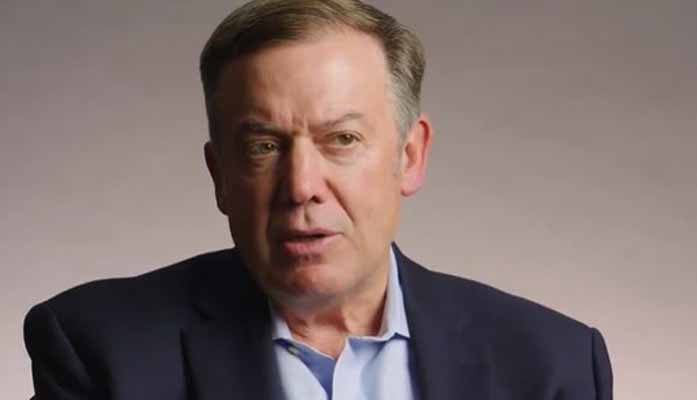
Arizona State University (ASU) President Michael Crow may not be in outright support of President Donald Trump’s plan to end the Department of Education (ED), but he does seem to favor the idea of reform at the very least.
In Politico coverage gauging university presidents’ sentiments toward another Trump administration, Crow voiced a desire for an ED overhaul. Crow made the remarks during the annual Higher Education-News Media Dinner-Discussion at the University of Pennsylvania Club of New York City (Penn Club), which he hosted.
Crow said that ED student loans largely prove to be a waste of taxpayer dollars, since a majority of recipients don’t graduate.
“The Department of Education is a mismatch of bank feeds that have been cobbled together over 50 years of congressional history or more,” said Crow. “If you look at the United States and our success, we have almost three quarters of a trillion dollars being spent on Pell Grants in the last few decades, and more than half of those individuals have never graduated from college.”
Crow went on to say that the federal student loans weren’t having their intended effects — more citizens with a higher education that, in all likelihood, would strengthen the economy, depress poverty, spur innovation, and raise the education level (and welfare) of subsequent generations — since most borrowers weren’t getting their degrees.
“Most of the people that have loans supported by the government of the United States have no diplomas, no certificates, no degrees of any kind,” said Crow. “Clearly, something is not yet perfected and so what we need is new designs, new models, new ways of doing things.”
Trump vowed to abolish ED in a campaign promise made last year. The proposal was released as part of his “Agenda47” platform outlining his plan for his second and nonconsecutive term.
In his campaign promise, Trump said he would revert education authority and responsibilities to the states entirely. The president-elect explained the low education outcomes weren’t worth the high rates of federal spending and bureaucracy.
“And one other thing I’ll be doing very early in the administration is closing up the Department of Education in Washington D.C. and sending all education and education work and needs back to the States. We want them to run the education of our children, because they’ll do a much better job of it. You can’t do worse. We spend more money per pupil, by three times, than any other nation. And yet we’re absolutely at the bottom. We’re one of the worst. So you can’t do worse. We’re going to end education coming out of Washington D.C. We’re going to close it up — all those buildings all over the place and yet people that in many cases hate our children. We’re going to send it all back to the States.”
Under the late Democratic president Jimmy Carter, the U.S. founded the ED in 1980 through legislation splitting the Department of Health, Education, and Welfare into two: ED, and the Department of Health and Human Services.
ED received about four percent of the fiscal year 2024 budget, and its budget sits at around $240 billion. ED provides over $150 billion in new and consolidated loans annually.
ED has the smallest staff of the 15 Cabinet agencies, consisting of about 4,400 employees.
Those employees are split among 17 offices within the department: Federal Student Aid; Institute of Education Services; Office of the Chief Information Officer; Office of Communications and Outreach; Office for Civil Rights; Office of Career, Technical, and Adult Education; Office of the Deputy Secretary; Office of English Language Acquisition; Office of Elementary and Secondary Education; Office of Finance and Operations; Office of the General Counsel; Office of Legislation and Congressional Affairs; Office of Postsecondary Education; Office of Planning, Evaluation and Policy Development; Office of the Secretary; Office of Special Education and Rehabilitative Services; and Office of the Under Secretary.
South Dakota Senator Mike Rounds introduced a bill to abolish ED, the Returning Education to Our States Act. The bill proposed to shift certain programs to other departments.
AZ Free News is your #1 source for Arizona news and politics. You can send us news tips using this link.