by Jonathan Eberle | Jul 6, 2025 | News
By Jonathan Eberle |
Governor Katie Hobbs signed legislation Wednesday creating a new Independent Correctional Oversight Office for Arizona’s prison system—but critics say the move rings hollow, as the Governor declined to provide any funding to make the office functional.
Senate Bill 1507, introduced by Senator Shawnna Bolick, was designed to increase accountability and transparency within the Arizona Department of Corrections, Rehabilitation and Reentry (ADCRR). The bill comes amid heightened scrutiny of the state’s prison system following recent inmate deaths and reports of systemic failures.
But while the bill was signed into law, supporters say its impact has been effectively neutralized by the Governor’s refusal to allocate funding to the new office. “I’m glad to see Senator Bolick’s SB 1507 signed into law. This is a long-overdue step toward accountability in our corrections system,” said Rep. Walt Blackman. “But a law without funding is just a press release.”
Senator Bolick, who chairs the Senate Regulatory Affairs & Government Efficiency Committee, expressed frustration with the Governor’s decision, accusing her of prioritizing appearances over action.
“Signing a bill and refusing to fund it is like buying a car and not putting anyone in the driver’s seat,” Bolick said. “The Governor is selling the illusion of progress while withholding the tools the office needs to function.”
The oversight office was envisioned as a neutral body to monitor Arizona’s prison system, investigate abuse, and ensure transparency—functions advocates say are urgently needed.
Supporters of the bill argue that the Governor’s rejection of all related budget requests undermines the very accountability the legislation was meant to establish. Without staff, resources, or operational funding, the office exists only on paper.
Bolick is now urging the Governor to take immediate steps to rectify the situation, suggesting Hobbs find funds either within her own office or by reallocating money from another agency.
“If she believes in this office,” Bolick said, “she needs to fund it.” For now, the Independent Correctional Oversight Office remains a concept without a functioning framework—leaving reform advocates wondering when, or if, oversight will become reality in Arizona’s prison system.
Jonathan Eberle is a reporter for AZ Free News. You can send him news tips using this link.
by Jonathan Eberle | Jul 5, 2025 | News
By Jonathan Eberle |
Arizonans will have the final say on whether drug cartels should be classified as terrorist organizations under state law, following the passage of House Concurrent Resolution 2055 by the Arizona Legislature. The measure, championed by House Speaker Steve Montenegro (R-LD29), will appear on the November 2026 general election ballot.
The resolution calls for the state of Arizona to formally recognize transnational cartels as terrorist organizations and directs the Arizona Department of Homeland Security to use every available tool to combat their operations. If approved by voters, the designation would not carry federal legal weight but would signal Arizona’s position on the issue and potentially influence state-level enforcement priorities.
“These cartels run brutal, organized operations that traffic women and children, flood our streets with fentanyl, and kill without consequence,” said Speaker Montenegro. “Arizona is on the frontlines of a war…By sending it to the ballot, we’re putting the decision where it belongs—with the people.”
Supporters of the measure say it reflects a growing public concern about border-related crime, fentanyl overdoses, and human trafficking. According to statistics cited by the resolution’s backers, U.S. Customs and Border Protection encountered 282 individuals on the terrorist watchlist at the southern border from 2021 to 2023—a sharp increase compared to previous years. Meanwhile, fentanyl seizures and related overdose deaths continue to climb.
The proposed ballot measure is part of the House Republican Majority Plan, which emphasizes border security and law enforcement. GOP lawmakers argue that Arizona must act independently to address what they see as federal inaction on border issues.
“House Republicans are taking action to protect Arizona,” Montenegro said. “We trust voters to make their voices heard and stand with us in this fight.”
Proponents insist that the measure would send a strong message and help marshal additional state resources to combat cross-border crime. Voters will weigh in on the measure during the 2026 election. If passed, Arizona would become one of the first states in the nation to define international cartels as terrorist groups under state law.
Jonathan Eberle is a reporter for AZ Free News. You can send him news tips using this link.
by Ethan Faverino | Jul 5, 2025 | Education, News
By Matthew Holloway |
The Arizona Department of Education sent information to the State Treasurer’s Office earlier this week regarding supplemental dollars to be sent to Arizona public schools following a shortfall this year. The information confirms funding will be sent to schools immediately, following the newly signed state budget.
As soon as the new state budget was signed into law, the Department of Finance personnel began working on this process, ensuring that schools would not face funding shortfalls.
This move by the Department of Education makes sure that schools will receive full payments for June and beyond, avoiding the crisis that emerged at the end of the 2025 fiscal year.
At the close of FY2025, Arizona’s education system faced a shortfall of just under $200 million, which was due to several factors.
The biggest factors in this shortfall were caused by recalculation of Statewide Average Daily Membership, the Qasimyar tax lawsuit, the Empowerment Scholarship Account, and the Qualifying Tax Rate Levy.
The recalculation of the state’s Average Daily Membership (ADM) caused a $45 million adjustment. This is the state’s method for counting enrolled students, which determines how much funding public schools receive per student. The state had overestimated student enrollment, likely due to increased withdrawals as families opted for other methods of schooling, some paid for by the Empowerment Scholarship Account (ESA).
In an unexpected blow to the state’s finances, Arizona settled Qasimyar v. Arizona. This was a tax lawsuit over disputed property assessments, resulting in a large payment of $69 million from the state’s general fund. This same fund also supports public education, causing a significant amount to be taken away from public schools across the state.
Arizona’s ESA program exceeded its projected cost by $52 million in FY2025. With more families taking advantage of the program than people anticipated, the general fund was strained even more, reducing resources for public schools.
The last big blow to public school funding was the Qualifying Tax Rate Levy, which is a property tax that contributes directly to school funding. This brought in $17 million less than what was projected.
Despite all the financial pressures, the Arizona Department of Education took early action. Before the new budget’s approval, ADE had already distributed roughly 63% of June’s payment.
With the new budget in place, the remaining balance will be paid immediately, restoring full funding levels for schools.
Matthew Holloway is a senior reporter for AZ Free News. Follow him on X for his latest stories, or email tips to Matthew@azfreenews.com.
by Ethan Faverino | Jul 4, 2025 | Economy, News
By Ethan Faverino |
Congressmen Abraham Hamadeh and Andy Biggs proudly cast their votes on Wednesday, in favor of the One Big Beautiful Bill, pushed by President Donald Trump.
Congressman Andy Biggs credited the collaboration “between President Trump and the Freedom Caucus for pushing the One Big Beautiful Bill over the finish line.
“I’m honored to stand with my great Freedom Caucus colleagues as we work in lockstep with President Trump,” said Biggs on X.
“Today, I proudly voted for the agenda that my constituents voted for when they sent me to Congress – the America First agenda. The agenda laid out by President Donald Trump during his historic, successful run to return to the White House,” stated Hamadeh. “The One Big Beautiful Bill delivers the largest tax cut for middle- and working-class Americans in history and secures increases in paychecks and take-home pay for the hardworking families in Arizona’s 8th Congressional District.”
The One Big Beautiful Bill is a foundation of President Trump’s economic vision, providing what supporters say are “significant benefits to American workers, seniors, and rural communities.”
Major elements of the bill include:
- Historic tax relief with an average of a 15% tax cut for Americans earning between $15,000 and $80,000, with no tax on tips, overtime, or Social Security benefits for seniors.
- Increased Standard Deduction, which raises to $23,625 for married couples and $15,750 for singles, boosting take-home pay over $10,000 annually for a typical family.
- Support for retirees (65+) by introducing a new tax deduction ensuring the average Social Security beneficiary pays zero taxes on their benefits, with relief phased out only at high incomes.
- Protection for social programs, like Medicaid and Medicare benefits, by maintaining full funding. Also, strengthening Medicaid for Americans with disabilities and implementing measures to eliminate fraud in Medicaid and SNAP programs.
- Investment in rural communities by expanding market access and providing historic support for farm families.
- Advancement of President Trump’s national security agenda, Peace Through Strength, by reinforcing America’s global leadership.
Congressman Hamadeh, a first-generation American and former U.S. Army Reserve Captain, highlighted the bill’s significance in countering economic challenges and misinformation. “For months, Americans have been bombarded with fake news accounts that stirred fear and anger and stoked resentment as part of the Democrats’ war on Capitalism,” he said. “Today, my Republican colleagues and I were able to ignore the noise bought and paid for by Green New Deal corporatists and hear the voices of the American workers.”
The One Big Beautiful Bill has gained significant attention for its bold approach to economic reform. Hamadeh’s vote reflects his commitment to addressing the soaring inflation and border security concerns that he identified as critical issues for Arizona’s 8th District during his 2024 campaign.
Ethan Faverino is a reporter for AZ Free News. You can send him news tips using this link.
by Jonathan Eberle | Jul 4, 2025 | News
By Jonathan Eberle |
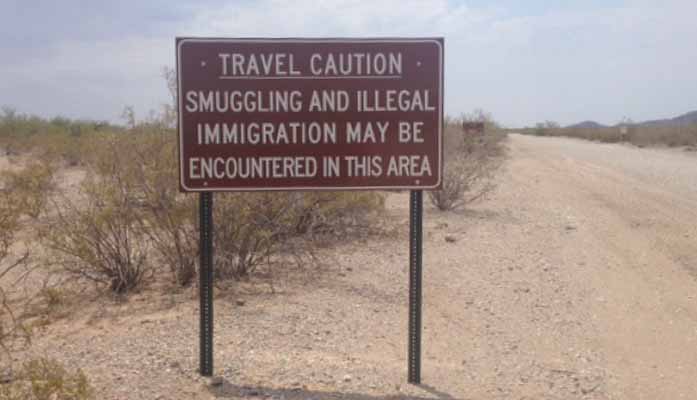
Federal prosecutors in Arizona charged 164 individuals last week with immigration-related offenses as part of a concentrated enforcement effort targeting illegal entry, re-entry, and human smuggling. The charges stem from coordinated operations that took place from June 21 through June 27, according to the U.S. Attorney’s Office for the District of Arizona.
The bulk of the cases involved illegal re-entry by previously deported individuals (84 cases) and unlawful entry into the United States (71 cases). Additionally, nine people were charged with smuggling others into or through Arizona.
The enforcement activity is part of Operation Take Back America, a national Department of Justice initiative aimed at combating illegal immigration, dismantling transnational criminal organizations, and increasing public safety. The operation brings together resources from federal law enforcement agencies, including U.S. Border Patrol, Immigration and Customs Enforcement (ICE), the FBI, DEA, U.S. Marshals Service, and the ATF.
Among the individuals charged is Jesus Alfred Salazar-Ruiz, who allegedly attempted to flee Border Patrol agents near the U.S.–Mexico border. Authorities say Salazar-Ruiz crashed through fencing and sped down a dirt road before abandoning his vehicle. He was later found with the vehicle’s keys in his possession, and three illegal alien passengers were also located. Salazar-Ruiz faces charges of transporting illegal aliens for profit.
In a separate case, Miguel Angel Mezo-Antele, a Mexican national, was apprehended while allegedly transporting four illegal individuals across Arizona with plans to drop them off in California and Oregon. He has been charged with transportation of an illegal alien.
Also charged was Dalesio Hernandez-Bautista, who had previously been removed from the United States in 2018 after a felony manslaughter conviction in Arizona. He now faces charges of illegal re-entry.
The week-long enforcement sweep is one of the latest steps in a broader federal effort to deter unlawful immigration and hold repeat offenders and human smugglers accountable. Officials say these operations will continue in the months ahead as part of a strategy that combines legal prosecution with coordinated federal law enforcement resources.
Jonathan Eberle is a reporter for AZ Free News. You can send him news tips using this link.
by Matthew Holloway | Jul 3, 2025 | Education, News
By Matthew Holloway |
The Arizona Department of Education (ADE) has issued guidance to public school districts and charter schools following a pause and review of five grants by the U.S. Department of Education (USED) pursuant to the proposed FY26 federal budget which eliminates them entirely. The action from USED has placed $6 billion in previously approved federal education grants to schools on hold.
ADE stated Tuesday that the USED has not issued grant award notifications for Title I-C Migrant (Migrant Ed), Title II (ESEA Consolidated), Title III, Title IV, Part A (ESEA Consolidated), Title IV, Part B (21st Century), and Adult Education Basic Grants for fiscal year (FY) 2026. Per Arizona Attorney General Kris Mayes, the hold impacts approximately $120 million in funds earmarked for Arizona schools. However, ADE said in a statement, “This does not affect any prior year’s funding that districts or charters may have available to use.”
As reported by USASpending.gov, one of the grants for $9.8 million was designated “to assist States in ensuring that migratory children have the opportunity to meet the same challenging State content and performance standards that all children are expected to meet.”
The USED told state officials in a message reported by NPR, “Given the change in Administrations, the Department is reviewing the FY 2025 funding for the [Title I-C, II-A, III-A, IV-A, IV-B] grant program(s), and decisions have not yet been made concerning submissions and awards for this upcoming year.”
The USED told the outlet that it “remains committed to ensuring taxpayer resources are spent in accordance with the President’s priorities and the Department’s statutory responsibilities.”
Without USED obligating funds for these programs on July 1 before completing a review of federal awards, the ADE cannot access federal monies earmarked for the affected programs.
According to a release from ADE:
“ADE will be taking steps to minimize confusion for interfacing with the affected programs in grants management for FY 2026 funding applications:
A) FY 2026 funding applications that have not been SEA Director approved will not be approved until a federal award has been provided by USED
B) FY 2026 funding applications that have already been SEA Director approved will have a programmatic hold placed to ensure that potential reimbursements from the affected programs are not drawn down
No adjustments will be made to FY 2025 funding applications, and Local education agencies (LEAs) may continue to use funds for the affected programs in the respective funding applications.
LEAs will be able to use FY 2026 funds to reimburse themselves for valid obligations made on or after the later of the following dates, contingent upon future grant awards from USED:
- The date the SEA may begin obligating funds (i.e., July 1, 2025), or
- The date the LEA submits its application to the SEA in substantially approvable form. (34 CFR §76.708(a))”
Matthew Holloway is a senior reporter for AZ Free News. Follow him on X for his latest stories, or email tips to Matthew@azfreenews.com.