by Daniel Stefanski | Oct 7, 2024 | Economy, News
By Daniel Stefanski |
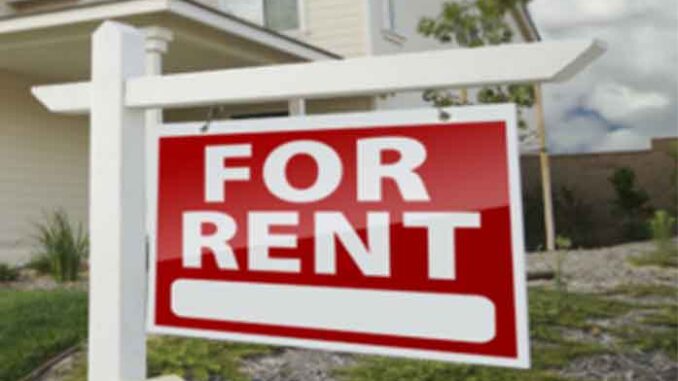
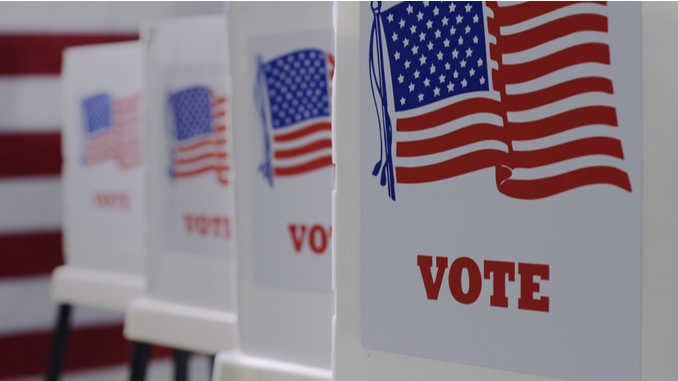
Arizona voters are increasingly worried about the rising cost of housing as the November General Election approaches.
Last month, Noble Predictive Insights (NPI) released the findings of a poll, showing that “affordable housing has officially cemented its status as a top-tier issue for Arizona voters.”
In the top issues facing Arizona for this survey, “Affordable Housing” registered third in importance. “Inflation” and “Immigration” were the top two issues on the minds of Arizonans.
Affordable Housing was ranked as the third-highest issue for Republicans, Democrats, and Independents alike. Inflation was also a top three issue for all three voter demographics.
“Immigration, abortion, inflation – when these issues come up, the parties know what they’re talking about. And voters know who they trust. Housing is a different animal. Housing costs are just too high, and it’s becoming a bipartisan concern,” stated David Byler, NPI Chief of Research. “This is a rare opportunity for both parties – an important issue where neither side has a pre-existing advantage or even a defined message. The party that figures out how to win on housing will benefit hugely.”
The survey conducted by NPI occurred in mid-August with just over 1,000 registered voters.
According to Zillow, the average home value in the State of Arizona is $431,492 as of August 31, which is up 2.4% over one year. Meanwhile, the average United States home value, per Zillow, is $361,282, which is up 2.9% over the past year.
Arizona Senate President Warren Petersen addressed the poll’s findings with AZ Free News, saying, “The American dream of homeownership has become unattainable for the working-class under the Biden-Harris Administration. We attempted to make homes more affordable last year for our citizens with the Arizona Starter Homes Act, but unfortunately, the Governor vetoed the bill after caving to pressure from special interests and the Biden-Harris Administration’s Department of Defense. To add insult to injury, the Governor halted home construction in two of the most booming areas of the Valley, worsening Arizona’s supply shortage. Republicans at the Legislature will continue to draft commonsense solutions to get government out of the way, and to speed up home construction, so prices can come down. We’re hopeful the Governor will do the right thing by signing those bills into law.”
In a piece for The Heritage Foundation this summer, EJ Antoni, a Research Fellow, wrote about the reasons for skyrocketing home values and costs in Arizona. He said, “Over the last four years, the federal government spent trillions of dollars it didn’t have and far more than it was capable of even borrowing. To cover the shortfall, the Federal Reserve created money for the Treasury to borrow and spend. While that solved the federal finance problem, it also unleashed the worst inflation in four decades and spawned a cost-of-living crisis. While inflation causes prices everywhere to rise, the housing market in particular has seen stratospheric increases in sales prices. Part of the Fed’s plan of creating trillions of dollars for the Treasury was keeping interest rates artificially low, and that made borrowing extremely inexpensive, including borrowing for a home.”
Antoni added, “Potential home buyers had access to so much cheap credit that they collectively bid up the prices of homes to never-before-seen levels. After the Fed’s low interests and easy credit created inflation, however, the central bank swung the monetary levers in the other direction and initiated fast interest rate hikes. That suddenly made borrowing prohibitively expensive for countless Americans.”
As Antoni concluded his piece, he stated that “in Arizona, it has reached the point where a single working adult needs to earn $97,000 to live comfortably. That’s over 50 percent higher than the median income for a single full-time worker. If you want to comfortably support a family of four in Arizona, you’ll need to earn $231,000. Even with two working adults, they’d need to each earn almost twice the median income of a full-time worker to hit that annual income.”
Daniel Stefanski is a reporter for AZ Free News. You can send him news tips using this link.
by Daniel Stefanski | Oct 3, 2024 | Economy, News
By Daniel Stefanski |
Last week, Arizona State Senator Shawnna Bolick issued a statement about economic calamities affecting families around her state.
Bolick said, “Since Kamala Harris and Joe Biden entered office, Arizona families have felt the weight of crippling inflation caused by their bad policies. In 2022, inflation hit its highest level in 40 years at 9%, and the price of every basic necessity skyrocketed. While the Federal Reserve reports inflation has since eased to near the target 2% threshold, and despite this month’s interest rate cut of 0.5%, conditions are not improving for hardworking Arizonans. Grocery store prices are 25% higher now than just before the pandemic. Homes are no longer affordable for our working class. Eviction filings have hit record highs in the Valley.”
Bolick added, “Republicans at the Legislature have made it our mission to lessen these burdens. We eliminated the tax renters pay on housing. We passed a ban on grocery taxes that sadly every Democrat voted against and the Governor vetoed. I vow to continue fighting for policies that will allow you to keep more of your money next legislative session.”
Last year, Arizona Governor Katie Hobbs signed SB 1131, which Republicans led through the state legislature. This legislation eliminated the rental tax for Arizona tenants.
According to Arizona Senate Republicans, “There are approximately 70 municipalities within our state charging this tax, while cities and towns continue to collect record revenues. From fiscal years 2019 to 2023, state-shared revenues from both sales and income taxes combined grew $733 million, or 59%. This increase is on top of any sales taxes or property taxes individually levied by each city. Between FY 2024 and FY 2025, those shared revenues are expected to grow by an additional $389 million.”
Senate President Warren Petersen issued the following statement in conjunction with the announcement: “Charging a rental tax is bad tax policy. In fact, Arizona is one of only two states in the nation currently allowing this. While our first attempt at eliminating the tax passed out of the Legislature with solely Republican support and was eventually vetoed by the Governor, we’re grateful our Democrat colleagues came to the table with us and realized the real tangible relief this reform will provide.”
Earlier that session, Hobbs vetoed SB 1063, which would have repealed the food municipal tax across the state.
After the governor’s action against the Republican proposal, Senate Majority Leader Sonny Borrelli said, “This veto is a disgraceful windfall for cities and an absolute gouge for families. We’re not only paying inflated prices to feed our families, but we’re also paying more in taxes as the cost of food rises. Food is not a luxury; it is a necessity. A tax on our groceries is regressive and hurts everyone. Over the next four fiscal years, cities and towns are estimated to receive an average of $2.3 billion per year in state-shared revenues, which is an increase of $844 million more than the average for the last four fiscal years. And yet the governor vetoed this bill, only padding cities’ bloated budgets instead of leaving more money in the wallets of hardworking taxpayers.”
Senator Bolick faces a tough General Election fight in November for her bid to return to the Arizona Legislature for another two years. Arizona Legislative District 2 is one of the most competitive in the state, with a 3.8% vote spread in the past nine statewide elections. It is very winnable for Republicans, however, as the party has emerged victorious in six out of those nine elections.
Daniel Stefanski is a reporter for AZ Free News. You can send him news tips using this link.
by Daniel Stefanski | Sep 24, 2024 | Economy, News
By Daniel Stefanski |
A leading small business advocacy organization has presented several Arizona lawmakers with its top award.
Earlier this summer, the National Federation of Independent Business (NFIB) presented a handful of Arizona legislators with its Guardian of Small Business Award. The individuals recognized with the award were as follows:
- Speaker of the House Ben Toma
- Representative David Livingston
- Representative Travis Grantham
- Senate President Warren Petersen
- Senator J.D. Mesnard
- Senator T.J. Shope
“These six lawmakers have gone above and beyond on behalf of Main Street Arizonans,” NFIB State Director Chad Heinrich said. “In this difficult economy, where costs continue to go up and open positions remain unfilled, it’s incumbent on lawmakers to not make it more difficult to own and operate a small business here in Arizona. Our members are grateful for each of these lawmakers’ commitment to free enterprise and sound policy.”
NFIB presented the award to Petersen in August.
NFIB presented the award to Shope in August.
NFIB presented the award to Mesnard in August.
NFIB presented the award to Toma earlier this month.
Toma responded to the award, stating, “Thank you. It is a great honor to be recognized by those dedicated to protecting and promoting small businesses.”
According to its website, “NFIB is the voice of small business, advocating on behalf of America’s small and independent business owners, both in Washington, D.C., and in all 50 state capitals. NFIB is nonprofit, nonpartisan, and member-driven. Since our founding in 1943, NFIB has been exclusively dedicated to small and independent businesses, and remains so today.”
Daniel Stefanski is a reporter for AZ Free News. You can send him news tips using this link.
by Daniel Stefanski | Sep 23, 2024 | Economy, News
By Daniel Stefanski |
Dozens of Arizona Republicans running for the state legislature received endorsements from a key organization for their support of small businesses.
Late last month, the National Federation for Independent Business Arizona PAC endorsed 51 individuals for their General Election races in the upcoming November contests.
“Locally-owned businesses are the foundation of our state’s economy, creating good-paying jobs and thriving communities,” NFIB State Director Chad Heinrich said. “A recent NFIB survey found that inflation and health care costs are taking a serious toll on our small business owners. These candidates understand the challenges small business owners face and support policies that will make it easier to do business in our state.
Heinrich added, “On behalf of our small business owner members, I’m proud to announce these endorsements for the 2024 general election, and ask all Arizonans to support these pro-small business candidates.”
Senator J.D. Mesnard, one of the Republicans who received an endorsement, said, “I’m proud to have been among a small group of Arizona legislators to receive the Guardian of Small Business Award from the National Federation of Independent Business (NFIB), the state’s leading small business advocacy organization. My colleagues, President Petersen and Senator Shope, also received this award for their work. NFIB holds legislators accountable for the way they vote on important small business issues. I believe that state government should follow the same financial guidelines that any responsible individual or family would follow: spend only what’s necessary, don’t rack up debt, invest in your learning, save for the future, and when times get tough, find responsible ways to trim. We should also create and protect policies that allow small businesses to thrive in our state. I have always voted on legislation with those beliefs in mind. This session, I received a 100% on the NFIB Arizona voting record.”
The NFIB endorsements are as follows:
Endorsed candidates:
Senate
District 01 Mark Finchem
District 02 Shawnna Bolick
District 03 John Kavanagh
District 04 Carine Werner
District 07 Wendy Rogers
District 10 David Farnsworth
District 13 J.D. Mesnard
District 14 Warren Petersen
District 15 Jake Hoffman
District 16 T.J. Shope
District 17 Vince Leach
District 19 David Gowan
District 25 Tim Dunn
District 27 Kevin Payne
District 28 Frank Carroll
District 29 Janae Shamp
House
District 01 Selina Bliss
District 01 Quang Nguyen
District 02 Ari Bradshaw
District 02 Justin Wilmeth
District 03 Joseph Chaplik
District 03 Alexander Kolodin
District 04 Pamela Carter
District 04 Matt Gress
District 07 Walt Blackman
District 07 David Marshall
District 09 Kylie Barber
District 10 Justin Olson
District 13 Jeff Weninger
District 13 Julie Willoughby
District 14 Laurin Hendrix
District 14 Khyl Powell
District 15 Neal Carter
District 15 Michael Way
District 16 Chris Lopez
District 16 Teresa Martinez
District 17 Rachel Jones
District 17 Cory McGarr
District 19 Lupe Diaz
District 19 Gail Griffin
District 23 Michele Peña
District 25 Michael Carbone
District 25 Nick Kupper
District 27 Lisa Fink
District 27 Tony Rivero
District 28 Beverly Pingerelli
District 28 David Livingston
District 29 Steve Montenegro
District 29 James Taylor
District 30 Leo Biasiucci
District 30 John Gillette
Daniel Stefanski is a reporter for AZ Free News. You can send him news tips using this link.
by Daniel Stefanski | Sep 23, 2024 | Economy, News
By Daniel Stefanski |
The Arizona House of Representatives continues to make inroads across the world.
Last week, members of the Arizona House of Representatives hosted a delegation from the Republic of Indonesia at the state capitol. According to the press release from the state House, the delegation from the foreign nation was comprised of 12 individuals and consisted of “elected officials, government representatives, and business leaders.” The release revealed that Rahayu Saraswati Dhirakanya Djojohadikusumo, “a recently elected member of the People’s Representative Council, Indonesia’s House of Representatives, and the Deputy Chairperson of the Great Indonesia Movement Party (GERINDRA),” led the delegation to Arizona.
House Speaker Ben Toma, Majority Leader Leo Biasiucci, Representative Justin Wilmeth, and other legislators met the Indonesian delegation. Wilmeth, the Vice Chairman of the House International Trade Committee, issued a statement after the visit from the overseas group. He said, “It was a privilege to meet with the Indonesian delegation and exchange insights on potential trade and investment opportunities between Arizona and Indonesia. Through our discussions, it was evident that Arizona and Indonesia share a strong interest in fostering new opportunities in education, mining, and technology manufacturing. We look forward to exploring ways to strengthen our economic ties and foster mutually beneficial partnerships in the future.”
The Indonesian delegation’s visit to Arizona is another episode in a growing list of relationships that have been cultivated by the Arizona Legislature – particularly through this trade committee. The Committee has been active in traveling outside of the United States and welcoming delegations to its house (no pun intended).
Daniel Stefanski is a reporter for AZ Free News. You can send him news tips using this link.
by Daniel Stefanski | Sep 22, 2024 | Economy, News
By Daniel Stefanski |
Many Arizona energy consumers are about to see some savings in their bills in time for the holidays.
This month, the Southwest Gas Corporation sent a notice to the Arizona Corporation Commission about a rate decrease to consumers effective at the start of October.
The statement from Doran A. Miller, a Regulator Manager, said, “Pursuant to Decision Nos 74595 and 79038, Southwest Gas is providing notice that the Gas Cost Balancing Account rate will decrease from $0.30911 per therm to $0.00 per therm effective October 1, 2024. This results in a decrease of approximately $7 per month for the average single-family residential customer.”
In an exclusive comment to AZ Free News, Republican Commissioner Kevin Thompson responded to the notice from Southwest Gas, saying, “Any significant savings for the ratepayer should be welcomed, particularly in this economy. The cost of natural gas fuel is required to be passed along to ratepayers as a monthly surcharge that the Commission regularly reviews to make sure customers are paying the actual cost. This helps ensure utilities don’t over collect or earn a profit on this necessary resource.”
Thompson added, “As volatility in domestic and international markets have subsided, and the cost of natural gas dramatically decreases, most Southwest Gas customers will see a noticeable decrease in their monthly gas bill beginning in October.”
Earlier this year, the Corporation Commission shared a report from WalletHub, which showed that Arizona had the second-lowest energy cost out of the 50 states in the North American union with a $400 bill.
According to the Corporation Commission, there were a handful of factors separating Arizona from other states:
- “Diverse generation sources – Arizona relies on a mix of generation sources, from nuclear, natural gas, hydropower, renewables, and battery storage.
- “Self-Sufficiency – Arizona is not dependent on imported power. We tap into the market if needed, but our utilities’ focus is providing Integrated Resource Plans to guarantee future readiness. The Commission diligently oversees upgrades and construction.
- “Proactive maintenance to ensure reliability – The Commission prioritizes daily maintenance and line work leading up to the summer to ensure the grid is ready for the extreme heat and high load.”
Republican Commissioner Lea Marquez Peterson reacted to the report from WalletHub, writing, “The data released in the report reflects the priorities of our Commission – reliable energy at the most affordable rates. I’m proud of the service and affordable rates we work hard to provide to ratepayers throughout the state.”
Daniel Stefanski is a reporter for AZ Free News. You can send him news tips using this link.