by Daniel Stefanski | Feb 11, 2025 | News
By Daniel Stefanski |
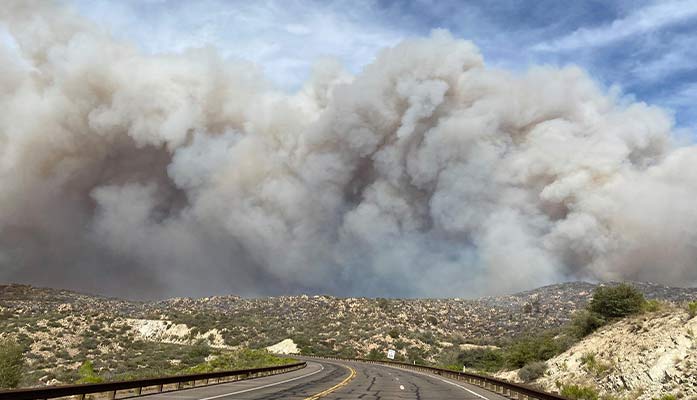
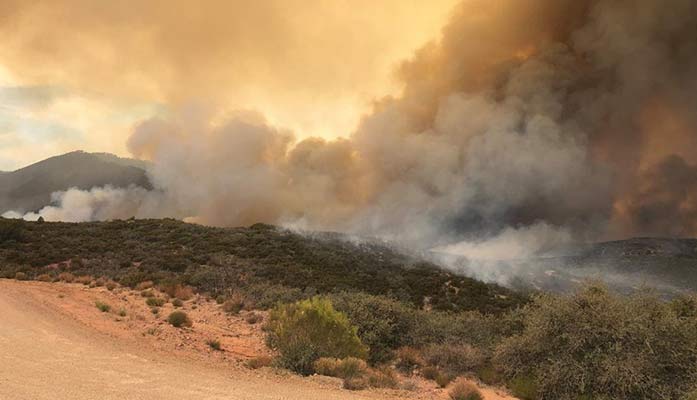
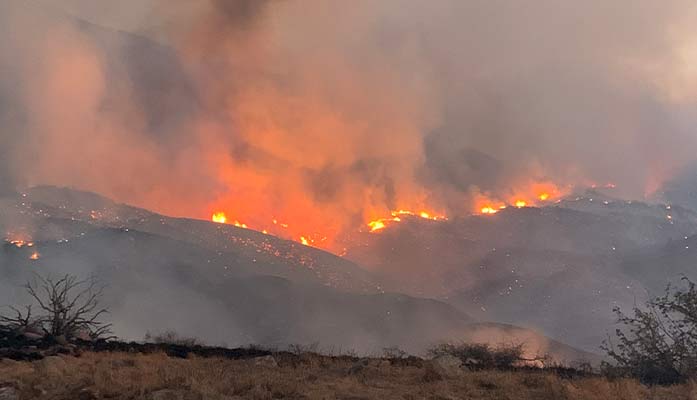
Arizona legislative Republicans continue to prioritize the state’s wildfire mitigation efforts in anticipation of another active season this summer.
Earlier this week, the Arizona Senate Republican Caucus issued a press release to update on two wildfire mitigation-related bills that had passed out of committees in the chamber.
One of those bills was SB 1297, which “directs $6.5 million to the Department of Administration for local fire departments to implement a Fire Incident management System, provid[ing] funding to equip fire engines with state-of-the-art communications systems that will improve coordination between local fire departments, emergency responders, and state authorities.” The proposal, which was sponsored by Senator Kevin Payne, passed the National Resources, Energy & Water Committee, with an overwhelmingly bipartisan 7-1 vote (one Democrat voting in opposition – Senator Sundareshan).
The other piece of legislation was SB 1285, which “appropriates $12.5 million to the Department of Forestry and Fire Management [to be] awarded as grants to fire districts for the purchase of tactical water tenders, as well as type 3 and type 6 fire engines for wildfire response.” This bill, which was sponsored by Senator David Gowan, was approved by the Appropriations Committee with a 9-0 result (with one member not voting – Senator Epstein).
In a statement, Senator Gowan said, “With the ongoing development of lands adjacent to natural forested and desert areas, the wildfire threat is front and center for Arizona communities. I am committed to providing our first responders with the resources they need to save lives and property from wildfire tragedy.”
Senator Payne added, “While California’s government prioritized progressive political agendas like DEI over the resources needed to fight wildfires efficiently, Arizona Senate Republicans remain focused on what truly matters – protecting our communities and preparing for the annual fire season. We will continue to invest in the tools and technology necessary to ensure our firefighters have what they need so that what happened in California never happens here at home.”
Fire Chief Jake Rhoades, the President of the Arizona Fire Chiefs Association, also weighed in on the efforts to pass these bills, writing, “Ensuring firefighters are properly trained and equipped to respond to wildfire emergencies is a top priority for fire districts across the state. The passage of SB 1285 and SB 1297 would significantly assist our efforts, by equipping our personnel with essential firefighting apparatus needed to complete the mission.”
The bills from Senate Republicans to help combat another dangerous fire season in Arizona come at the same time House Republicans are also attempting to pass similar proposals in their chamber. In a press release issued earlier this week, State Representative Lupe Diaz highlighted that Governor Katie Hobbs’ proposed budget “offers zero funding for hazardous vegetation removal or forest thinning despite recognizing that wildland fire costs have been ‘much higher in recent years’ due to neglected forest maintenance.” Hobbs did not mention plans to address wildfire mitigation efforts in her State of the State address to the Arizona Legislature at the beginning of the 57th Regular Session last month, which stood out due to the very recent example with the destructive Los Angeles fires.
Daniel Stefanski is a reporter for AZ Free News. You can send him news tips using this link.
by Daniel Stefanski | Feb 7, 2025 | News
By Daniel Stefanski |
A coalition of Arizona legislators are taking steps to improve the state’s wildfire mitigation efforts.
This week, State Representative Lupe Diaz, the Chairman of the House Committee on Land, Agriculture, and Rural Affairs, updated constituents on the progress of bills in the Arizona Legislature, which are meant “to protect lives, property, and communities from the growing threat of catastrophic wildfires.”
Those bills include:
- HB 2201, which was sponsored by Representative Griffin. The bill “requires utilities to develop and submit biennial Wildfire Mitigation Plans, which include clearing hazardous vegetation around power lines to prevent utility-caused wildfires.”
- HB 2219, which was sponsored by Representative Marshall; HB 2395, HB 2398, and HB 2400, which were sponsored by Representative Blackman; and HB 2694, which was sponsored by Representative Griffin. These bills “allocate funding for fire contingency planning and wildland firefighting efforts in Arizona’s high-risk areas.”
- HB 2456, which was sponsored by Representative Marshall. This bill would “establish fire incident management grants to assist districts across the state.”
- HB 2577, which was sponsored by Representative Griffin. The bill “cuts red tape to give the State Forester more flexibility to protect communities.”
- HB 2639, which was sponsored by Representative Griffin. This bill “extends the ‘healthy forest’ tax incentive to encourage responsible forest thinning and prevent catastrophic fires.”
In a statement, Representative Diaz said, “Public safety is more than law enforcement and border security – it means defending our communities from preventable disasters. Arizona has seen what happens when wildfires are mismanaged in places like California. We refuse to let that happen here. Our plan prioritizes proactive fire mitigation efforts, responsible forest management, and ensuring that Arizonans are protected when disaster strikes.”
Diaz added, “Preventing wildfires means enacting responsible management before disaster strikes. We are working with state agencies, local officials, and private utilities to get boots on the ground, clear hazardous areas, and stop wildfires before they start. This is what leadership looks like, and it’s exactly what Arizonans expect from us.”
Governor Katie Hobbs did not mention plans to address wildfire mitigation efforts in her State of the State address to the Arizona Legislature at the beginning of the 57th Regular Session last month. Chairman Diaz’s release highlights that the Democrat governor’s “proposed budget offers zero funding for hazardous vegetation removal or forest thinning despite recognizing that wildland fire costs have been ‘much higher in recent years’ due to neglected forest maintenance.”
Daniel Stefanski is a reporter for AZ Free News. You can send him news tips using this link.
by Corinne Murdock | Sep 21, 2021 | News
By Corinne Murdock |
Following Governor Doug Ducey’s announcement last week that the Biden Administration failed to award bids for forest and wildfire management, the Arizona House announced Monday a new ad hoc committee to undertake that task themselves. Members of the committee include State Representatives Gail Griffin (R-Hereford), Tim Dunn (R-Yuma), Andres Cano (D-Tucson), and Stephanie Stahl Hamilton (D-Tucson), with House Speaker Rusty Bowers (R-Mesa) serving as the chairman.
Ducey’s statement came a day after the Biden Administration suddenly canceled solicitations for the Four Forest Restoration Initiative (4FRI). The 4FRI aimed to restore fire-adaptive ecosystems in the Southwestern Region. The Biden Administration decided that the requirement for the restoration objectives weren’t “reasonably aligned to industry needs.”
In response, Ducey said that the Biden Administration’s decision put Arizonans at risk.
“The federal government’s lack of action is frustrating. The federal mismanagement of our forests poses an ongoing risk,” stated Ducey. “But Arizonans should know that we remain proactive in our pursuit of forest health and disaster prevention. We will continue to work with federal and community partners and safety personnel to protect people, pets and property.”
With this new ad hoc committee, the state government will be able to take action where the federal government won’t at present.
Wildfires have long been a plague for the Grand Canyon State. Arizona contains the key elements for one of these natural disasters to begin: high temperatures and drought that dry out vegetation, combined with low humidity and high winds. With those conditions in place, many things can ignite a wildfire: the sun’s heat, lightning strikes, discarded cigarettes or matches, unattended campfires, or fireworks, for example.
The worst wildfire in recent memory was the 2013 Yarnell Hill Fire, which claimed the lives of 19 firefighters. The high winds caused the fire to shift suddenly, intensifying the fire and cutting off the firefighters’ only escape route.
The tragedy of those Granite Mountain Hotshot firefighters inspired “Hotshots 19,” an annual memorial workout completed nationwide in May consisting of 6 rounds of 30 air squats, 19 power cleans at either 135 pounds for men or 95 pounds for women, 7 strict pull-ups, and a 400 meter run. The firefighters were known as “hotshots” because they were part of a “hotshot crew”: a team of 20 individuals assigned to handle the hottest part of wildfires.
This year, wildfires have occurred near the Juniper Mountains, the Verde River, and the Bradshaw Mountains in Yavapai County (Rock Butte Fires, Rafael Fire, and Tiger Fire); the Gila River and Pinal Mountains in Graham County (Bottom Fire and Pinnacle Fire, respectively); the Santa Rita Mountains in Pima County (Heavy Fire); and the southern border in Pima County (Alamo Fire).
Corinne Murdock is a reporter for AZ Free News. Follow her latest on Twitter, or email tips to corinne@azfreenews.com.