by Jonathan Eberle | May 9, 2025 | News
By Jonathan Eberle |
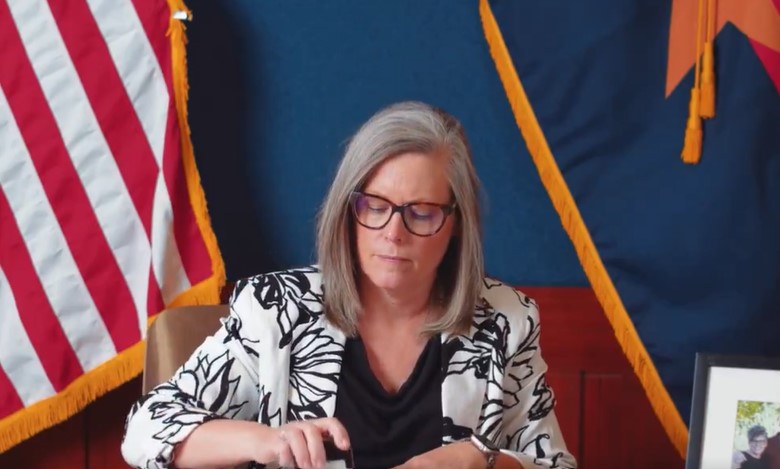
A bill aimed at increasing transparency and accountability in Arizona’s Medicaid contracting process has been vetoed by Governor Katie Hobbs, prompting strong criticism from Republican lawmakers who say the governor is shielding her administration from scrutiny.
The legislation, SB 1612, was sponsored by Senate President Pro Tempore T.J. Shope and would have implemented a series of oversight measures affecting how the Arizona Health Care Cost Containment System (AHCCCS) — the state’s Medicaid agency — awards contracts and handles procurement.
In a statement released late Friday, Hobbs vetoed the bill without an accompanying public explanation, though her office has generally opposed what it characterizes as politically motivated legislation. Shope, however, called the veto “an alarming example of the fox guarding the henhouse.”
“I drafted this legislation in response to potential wrongdoing revealed from a probe on how the Hobbs administration provided an unfair advantage when awarding $15 billion worth of state Medicaid contracts,” Shope said. “She appears to be providing favoritism to her friends, allies, and donors using taxpayer dollars.”
The legislation comes in the wake of a 2023 ruling by an administrative law judge that found AHCCCS had improperly awarded contracts related to the Arizona Long Term Care System (ALTCS), which provides care for roughly 26,000 elderly and disabled Arizonans. The judge cited violations of procurement statutes, flawed bid evaluations, and evidence that contract decisions were made based on the interests of the agency rather than the public. Compounding concerns, a June 2023 local media investigation revealed that Sunshine Residential Homes, a state-licensed group home with a record of deficiencies, received millions in contracts from the Arizona Department of Child Safety (DCS) after making campaign donations to Governor Hobbs and the Arizona Democratic Party.
SB 1612 would have removed a statutory exemption allowing AHCCCS to use its own procurement code, requiring adherence to statewide rules; prohibited destruction of internal documentation during request-for-proposal (RFP) evaluations; and required vendors responding to RFPs or applying for state-administered grants to disclose political donations made to the governor or associated campaign committees.
Critics of Hobbs say these measures were a direct response to growing concerns about transparency in her administration. “Had she signed this bill into law, she would have given the citizens of Arizona greater confidence in state government acting in their best interests — not the best interests of political campaign coffers,” Shope said.
Hobbs’ veto is one of more than 100 since taking office in 2023. With Republicans controlling both chambers of the Arizona Legislature and Democrats holding the governorship, partisan tensions over issues like procurement, immigration, and education have dominated the political landscape.
Supporters of SB 1612 say it was a common-sense effort to address documented problems in contract awards that affect the lives of thousands of vulnerable Arizonans. As scrutiny intensifies over both AHCCCS and DCS procurement decisions, it remains to be seen whether lawmakers will revisit the bill in another form or pursue an independent investigation into the allegations.
Jonathan Eberle is a reporter for AZ Free News. You can send him news tips using this link.
by Jonathan Eberle | May 8, 2025 | News
By Jonathan Eberle |
Arizona Governor Katie Hobbs has vetoed a Republican-sponsored immigration enforcement bill, drawing sharp criticism from Senator John Kavanagh and other GOP lawmakers who say the legislation was a necessary step toward protecting public safety.
SB 1610, introduced by Kavanagh, would have required county detention facilities to cooperate with federal immigration authorities by providing U.S. Immigration and Customs Enforcement (ICE) with access to information about non-citizen individuals arrested for certain serious crimes, including aggravated assault on a law enforcement officer, burglary, and offenses resulting in serious bodily injury or death.
Governor Hobbs vetoed the bill, saying it would have undermined trust between immigrant communities and law enforcement and could have led to racial profiling. Hobbs has previously said that Arizona should not be in the business of enforcing federal immigration law — a view aligned with many Democrats who argue that local entanglement in immigration enforcement can have unintended legal and social consequences.
Senator Kavanagh sharply disagreed, framing the veto as a dereliction of duty.
“Hobbs continues to give her veto stamp more attention than the citizens she’s required to protect,” Kavanagh said in a statement. “People are fed up with the massive tsunami of dangerous criminals who have entered this country illegally.”
He added that the bill was a way to align Arizona with federal deportation efforts and referenced the recent Laken Riley Act, a congressional proposal with bipartisan support that also centers on deportation of illegal immigrants convicted of violent crimes.
The bill comes at a time when immigration remains a political issue in Arizona, a border state that has long wrestled with foreign nationals attempting to enter illegally into the U.S. Republican lawmakers have increasingly advocated for state-level legislation to fill what they see as gaps in federal immigration enforcement. Democrats, however, claim that such bills often cast too wide a net and risk violating constitutional protections.
Governor Hobbs has issued more than 100 vetoes since taking office in 2023 — a record-setting pace that reflects the divided government in Arizona, where Republicans control the Legislature and Democrats hold the governor’s office.
With the latest veto, the clash between state lawmakers and the governor over immigration policy is likely to continue into the next legislative session and could become a focal point in upcoming elections.
Jonathan Eberle is a reporter for AZ Free News. You can send him news tips using this link.
by Matthew Holloway | Apr 20, 2025 | News
By Matthew Holloway |
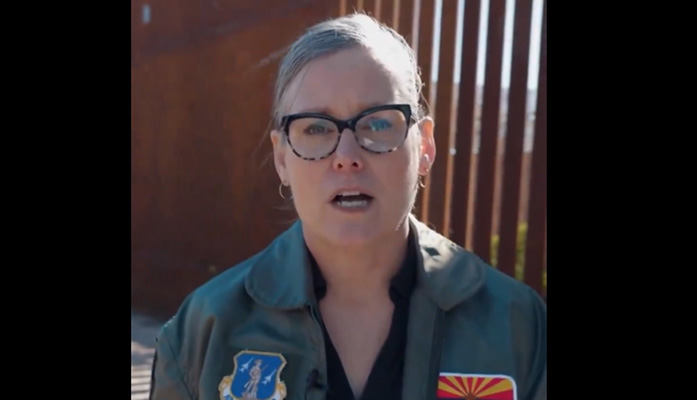
In a stark contrast to her efforts to rebrand herself as tough on the border, Governor Katie Hobbs has vetoed the Arizona Immigration Cooperation and Enforcement (ICE) Act, SB 1164. The bill would have required that every police department and sheriff’s office in the state comply with detainer orders from Immigration and Customs Enforcement.
Amidst her ongoing deliberate obstruction of the legislative process, labeled as a “moratorium” on signing new bills, Hobbs vetoed an additional 32 bills as well.
In Hobbs’ veto letter, she addressed Senate President Warren Petersen, seeming to attempt a conciliatory tone and saying in part, “You and I both disagreed with the previous administration’s immigration policies, and we may both disagree with the next administration’s immigration policies. I have worked productively with the federal government to secure our border, stopping fentanyl at our ports of entry through the Task Force SAFE, disrupting cartel operations with Operation Desert Guardian, and working across all levels of government to keep communities safe with the Border Coordination Office.”
She claimed, “I will continue to work with the federal government on true border security, but we should not force state and local officials to take marching orders from Washington.”
The Republican State Governor’s Association’s Rapid Response Director Kollin Crompton released a statement in response to Hobbs’ veto saying, “Katie Hobbs’ veto is no surprise — her record on the border is pitiful. Hobbs tried to fool Arizonans into thinking she was a border hawk, but this shameful veto shows she is unserious about addressing the border and protecting Arizonans from the violence and drugs coming into the state. She waited until 7:00 pm on Friday of a holiday weekend to try to hide from her open borders record. Arizonans are sick of Katie Hobbs’ window dressing — they deserve a governor who will actually work to secure the border and keep them and their families safe.”
As reported by AZ Free News in November of last year, Hobbs stated during her disjointed kick off of Task Force SAFE, “We will not be participating in misguided efforts that harm our communities. And I’ve been incredibly clear about that.”
Petersen described the bill as a measure to make Arizona a “partner and not an obstacle,” to the federal government’s efforts to enforce immigration law.
“It deals with this first wave of deportation that the Trump administration is focused on, which is removing the most dangerous criminals from our streets,” Petersen explained.
Matthew Holloway is a senior reporter for AZ Free News. Follow him on X for his latest stories, or email tips to Matthew@azfreenews.com.
by Jonathan Eberle | Apr 12, 2025 | Education, News
By Jonathan Eberle |
A bill designed to direct more tax revenue toward Arizona’s K-12 classrooms has been vetoed by Governor Katie Hobbs, prompting criticism from Republican lawmakers who say the measure would have strengthened public education funding.
SB 1050, sponsored by Senator Vince Leach (R-LD17), sought to amend the Government Property Lease Excise Tax (GPLET) program by prohibiting the abatement of school district-designated tax revenues. Under current law, cities and towns can lease government-owned property to private developers with reduced tax obligations, an incentive intended to promote commercial development.
The bill would have excluded school-related tax revenues from such incentives, allowing those funds to flow directly to local school districts instead of being waived under development agreements.
“This was a missed opportunity by the Governor,” said Leach. “She says she supports education funding, but her veto suggests otherwise.”
In her veto letter, Governor Hobbs explained that SB 1050 could “stunt Arizona’s economic development” by weakening a tool used by local governments to attract private investment. The GPLET program, though controversial, has been credited with revitalizing parts of urban Arizona by lowering upfront development costs in exchange for long-term gains.
Arizona schools continue to face funding pressures despite recent increases to the state’s education budget. Republican lawmakers have often pushed for reallocating existing tax revenues, while Democrats have generally sought new funding sources or changes to the state’s tax structure.
SB 1050 passed both legislative chambers before being vetoed, signaling at least some bipartisan concern about the balance between development incentives and education funding.
Senator Leach and other supporters of the bill may pursue similar legislation in future sessions or attempt a veto override, although success would require significant bipartisan support. Meanwhile, the broader debate over how to equitably fund Arizona’s public schools is likely to continue.
“This is about priorities,” Leach said. “We should be making sure our tax dollars are going to classrooms, not corporate subsidies.”
The Governor’s office has not indicated whether alternative proposals to increase school funding through tax reforms are in the works.
Jonathan Eberle is a reporter for AZ Free News. You can send him news tips using this link.
by Jonathan Eberle | Apr 2, 2025 | News
By Jonathan Eberle |
Arizona Governor Katie Hobbs has vetoed SB1119, a piece of bipartisan legislation aimed at prioritizing affordable and reliable utility services for Arizonans. The bill, sponsored by Senator Tim Dunn (R-LD25), sought to direct the Residential Utility Consumer Office (RUCO) to focus exclusively on minimizing utility rates rather than considering environmental policies that could contribute to higher costs.
In a press release following the veto, Senator Dunn criticized the decision, arguing that it would negatively impact consumers already struggling with rising costs. “SB 1119 would have required the Residential Utility Consumer Office to focus its efforts on fighting for the safest and most reliable utility service achievable at the lowest retail rate possible, instead of prioritizing any costly radical environmentalist agendas,” Dunn stated. He went on to say that the veto was “short-sighted” and would ultimately burden Arizona residents.
Utility costs have been a growing concern for Arizona residents, particularly in the wake of inflation and increased energy demand. The state’s energy policies have often been a point of contention, with debates centering around balancing affordability with sustainability. RUCO, an independent agency that represents residential utility customers, currently considers multiple factors when making policy recommendations.
Supporters of SB 1119 argued that the bill would have strengthened consumer protections by ensuring that RUCO prioritized affordability above all else. The veto is expected to spark further discussions among lawmakers and stakeholders on how to bring more affordable utility rates to Arizonans. As the state continues to grapple with rising utility costs, future legislative efforts may seek to address the concerns raised by both proponents and critics of SB 1119.
Jonathan Eberle is a reporter for AZ Free News. You can send him news tips using this link.