During a 12-minute video appearance at the 2025 Alliance for Responsible Citizenship (ARC) Conference held in London, Secretary of Energy Chris Wright told the audience that “Net zero by 2050 “is a sinister goal.”
That is a bold statement, especially given that it was delivered to an audience sitting in the United Kingdom, where both major political parties that have traditionally governed the country – the Conservative “Tories” and the far-left Labour Party – have spent the past decade pushing their country to meet its net zero goals as if it were a matter of religious faith. Regardless of the obvious negative economic and social consequences that have been heaped upon UK citizens, and equally obvious futility of the entire effort, leaders of both parties have kept the country on this ruinous path.
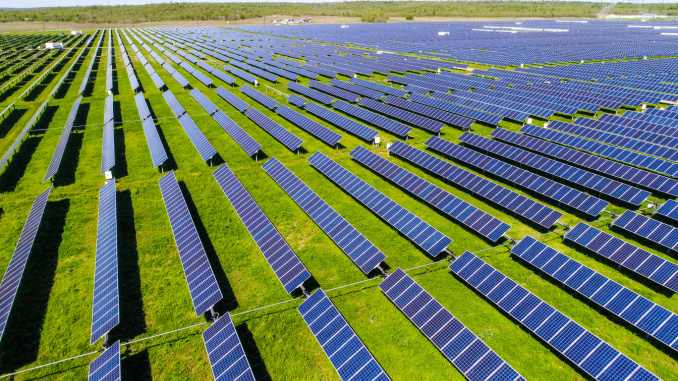
As Wright went on to point out, net zero by 2050 is “both unachievable by any practical means, but the aggressive pursuit of it…has not delivered any benefits, but it’s delivered tremendous costs.” This is objectively true, the most painful example being the rapid deindustrialization of the formerly strong British economy and the accompanying rapacious condemnation of thousands of acres of arable lands to become home to huge wind and solar installations.
As Wright points out, “no one’s going to make an energy-intensive product in the United Kingdom anymore.” A clear object lesson in that reality came in September when venerable steelmaker Tata Steel shut down the last existing steelmaking plant in the UK.
Climate zealots in both major parties celebrated that event, but we must ask what there really is to celebrate? Sure, the Labour politicos get to virtue signal about the elimination of X tons of carbon dioxide emissions, but in a global sense, that’s meaningless. The UK still needs steel – the only difference now is that the steel that used to be made by highly-paid workers in domestic mills will now be imported steel made by poverty waged workers in Pakistan, China and other mainly Asian countries.
Meanwhile, the emissions created by making the steel in those other countries with lower environmental regulations will be far larger than from steel that used to be made in the UK. As Wright pointed out at the ARC conference, “This is not energy transition. This is lunacy.”
He isn’t wrong.
On Feb. 13, the Center for Research on Energy and Clean Air (CREA) published a report showing that construction of new coal-fired power plants in China reached a ten-year high in 2024. CREA finds that “China approved 66.7 gigawatts (GW) of new coal-fired power capacity in 2024, with approvals picking up in the second half after a slower start to the year.” It all belies the favored narrative on the political left that China is leading the world in converting its power systems to renewables. In reality, the expansion of its coal sector may actually be accelerating again.
That renewed Chinese focus on expanding its coal power fleet is driven in large part by the zealous focus by globalist leaders in the UK and other western countries – Germany is another great example – on deindustrializing their own economies to satisfy their obsession over atmospheric plant food.
The making of steel and other heavy industrial processes requires reliable, affordable power generation that runs 24 hours every day, 7 days every week. Whether politicians like it or not, coal is the fuel that most reliably and consistently meets all those tests.
Thus, if China and other Asian nations are destined to inherit all the heavy industries being killed off by virtue signaling Western nations, they will need many more coal power plants to power them. This really isn’t complicated.
Meanwhile, the UK can no longer manufacture its own steel or myriad other industrial products that are essential to modern human existence. If the Labour government continues its policy of condemning vast swaths of British farmland to house more and more wind and solar sites, the kingdom will soon no longer be able to even feed its people.
All to satisfy this odd religious dogma based on an obsession over plant food. Lunacy, indeed.
David Blackmon is a contributor to The Daily Caller News Foundation, an energy writer, and consultant based in Texas. He spent 40 years in the oil and gas business, where he specialized in public policy and communications.
“It’s an absolutely sh*t situation.” That is the assessment of Norway’s energy minister, Terje Aasland, about his country’s electricity costs rising to record levels due to its exports of power to the United Kingdom, Germany, Denmark and other European countries.
It is an outcome that many warned the Norwegian government would come about as the decisions were made to build the interconnects to export power into the European Union and the UK. Those critics were of course ignored as those in charge of Norway’s fortunes at the time felt compelled to genuflect to the demands of the EU and other globalist organizations.
Norway derives the vast majority of its electricity from hydropower, which currently provides 90% of the country’s power generation. Most of the remainder comes from wind power, and the nation enjoys a large excess of generating capacity on most days. Thus, all other factors being equal, it made some financial sense to establish those interconnects to sell the surplus into other countries.
But it only made sense when those other countries were taking care to ensure the continuing health and adequacy of their own electric grids. That certainly has not been the case in either the UK or Germany, whose governments have in recent years chosen to discard a former wealth of reliable baseload capacity provided by coal and nuclear plants in favor of relying too heavily on intermittent, weather-dependent wind and solar.
Now, when the wind stops blowing and the sun isn’t shining, those customers of Norwegian power exports drain the host country’s surplus, causing the extremely high energy costs to flow back upstream, hitting Norwegians with abnormally high utility bills. It all came to a head this week when low wind speeds, combined with abnormally cold temperatures on the European mainland, caused power rates in Norway to spike to as high as €1.12 ($1.18) per kilowatt hour (kwh).
By comparison, the average electricity rate per kwh in New York is around 22 cents, while Texans typically pay around 15 cents per kwh. What that price spike meant for Norwegians on December 12 is that taking a 5-minute warm shower would have cost them $5. Doing the same in Texas would have cost around 16 cents.
Naturally, public outrage in Norway over these needlessly high electricity rates is now causing policymakers there to run for political cover. The Financial Times reports that both the ruling leftwing Labour Party and conservative Progress Party are now making plans to campaign next year on platforms to limit or end the export of electricity via these international interconnections.
That is a prospect that no doubt sparks fear in the hearts of the central planners in both Germany and the UK, where electricity imports from Norway play a central role in their own emissions reduction plans. Those plans involve the willful destruction of reliable baseload power stations and forcing power costs to dramatically increase, which in turn results in heavy industries like steelmaking and other manufacturing to leave the country. In that way, these governments are essentially exporting their emissions to China, whose own government is only too happy to serve as home to these heavy industries and power them with the hundreds of coal-fired power plants they build each year.
California Gov. Gavin Newsom and his fellow Democrats have pursued essentially the same strategies in California in this century, with predictable results: Californians pay among the highest power rates in the United States as their power grid has become overloaded with intermittent generation and increasingly reliant on imports from other states. Rather than exporting its emissions to China, California exports them to Nevada and Utah and other U.S. states.
The Biden administration has attempted to take the entire country down this same economically ruinous path for the past four years. Fortunately, voters awakened just in time this year to head off the most damaging impacts now being seen in Germany and the UK.
For Norway, is this an example of the law of unintended consequences setting in? Sure, to some extent. But it is also a clear example of entirely foreseeable consequences stemming from poor policymaking by multiple national governments flowing across borders. This “sh*t situation” was all avoidable, and frankly should have been.
David Blackmon is a contributor to The Daily Caller News Foundation, an energy writer, and consultant based in Texas. He spent 40 years in the oil and gas business, where he specialized in public policy and communications.