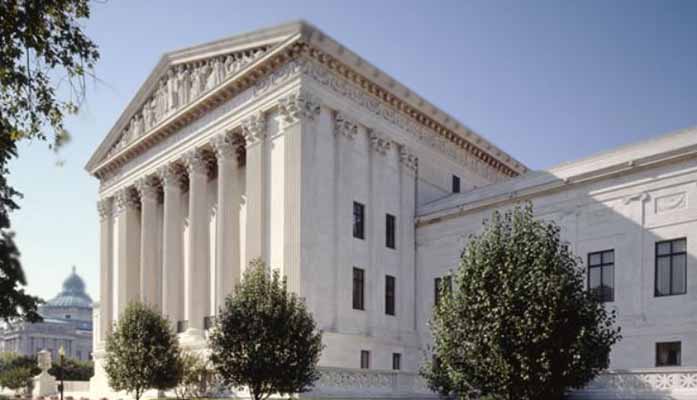
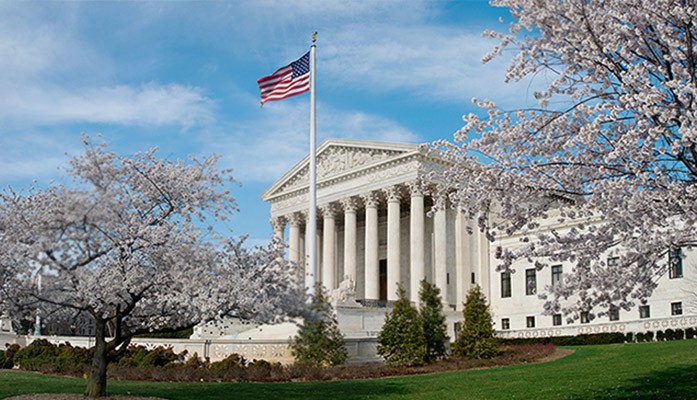
When the Supreme Court was debating the landmark Dobbs abortion case, Senate Majority Leader Chuck Schumer shouted threats (“you will reap the whirlwind…”) at them from the courthouse steps. Thus, the last doubt was obliterated that the unquestioned authority of the Court was under serious attack.
An independent judiciary is the key to maintaining our constitutional republic. It is the reckoning mechanism which keeps us on track, muting the potential excesses of popular democracy. Americans once understood this and valued our judiciary, even when it sometimes worked against their individual interests.
But the times, they are a’changin. Americans have now divided into warring classes who believe that in the pursuit of power and short-term goals, a conscientious judiciary is often in the way.
At least until recently, school children were taught that our founders, in order to dilute the power of centralized government, created three branches. The legislative makes the laws, the executive branch enforces the laws, and the judiciary ensures that laws are enforced in accordance with statutes and the Constitution.
In the 1930s, Franklin Roosevelt clashed with the Supreme Court when their rulings thwarted his plans to assert federal control over wide swaths of the American economy. The Justices could not find in the Constitution’s list of enumerated powers any which authorized the New Deal legislative barrage.
They were right, but Roosevelt’s response was to propose “packing the court,” expanding the number of Justices, and increasing his power. Roosevelt’s view of the court as an obstacle rather than a necessary guard rail shocked many Americans of the day. The plan eventually failed, although most of the New Deal was enacted anyway.
Yet the status of the judiciary branch in our federal system is showing deterioration today. Leftist ideologues conduct protests of court decisions in front of Justices’ residences when they render unpopular decisions. That’s clearly contrary to federal law yet they suffer no repercussions. The Biden Department of Justice simply ignores them.
Justices are personally harassed by activists. Angry partisans confront them and their families in restaurants and public spaces. The Justices, particularly those of the pro-Constitution persuasion, are faced with spurious charges of ethical violations and demands for recusal. That’s especially ironic in the case of Justice Clarence Thomas, who has a well-deserved reputation for willingness to vote against his own political positions.
The Arizona Supreme Court also passed down a controversial abortion decision, ruling that the Arizona legislature, following the reversal of Roe, had effectively reinstated a restrictive Civil War era law. In response, a special interest group known as “Vote Them Out” is attempting to remove justices Clint Bolick and Kathryn King for failing to support their pro-abortion policy agenda.
In Arizona, Supreme Court Justices and most lower court judges are not elected but appointed and then undergo periodic retention elections which are intended to weed out incompetent or corrupt judges. Although few judges are not retained, the system works to depoliticize the judicial selection process and give voters input into keeping judges.
It is this retention system itself which Vote Them Out is attacking by forcing Bolick and King to, in effect, run for their own seats in a political style campaign. There are no credible arguments that either Justice is incompetent or corrupt or that they didn’t provide constitutional authority for their rulings. The issue, again, is simply that their decision was unpopular, at least with Vote Them Out.
As Justice Bolick pointed out in an Arizona Republic op-ed, judges in a merit system are handicapped in a politics-based election. They can’t personally raise funds or seek endorsements. They have strict ethical limits on what they can discuss. Their opponents have no such restraints.
It’s telling that justices at all levels are commonly referred to as “liberal” or “conservative.” Such political labels should only matter if justices are policymakers, which they are not. The critical descriptor which matters for justices is “pro-Constitution” versus “pro-some interest group’s opinion.”
Americans seem to have little regard for the values and institutions which are the foundations of our own national greatness. Our independent judiciary distinguishes us from corrupt autocracies everywhere and throughout time. We disrespect it at our own peril.
Dr. Thomas Patterson, former Chairman of the Goldwater Institute, is a retired emergency physician. He served as an Arizona State senator for 10 years in the 1990s, and as Majority Leader from 93-96. He is the author of Arizona’s original charter schools bill.
Arizona Republican legislators continue to stand up in defense of the rule of law in the absence of the Democrat attorney general.
Late last month, the Arizona Legislature, led by Senate President Warren Petersen and House Speaker Ben Toma, signed onto a petition to the U.S. Supreme Court in Smith & Wesson Brand, Inc. v. Mexico. The Second Amendment-related petition was led by the State of Montana and joined by a number of other states from around the country.
In a statement for the Arizona Senate Republicans weekly newsletter, Senator Frank Carroll addressed the latest action in federal court for state legislators, writing, “In a federal lawsuit, Mexico is trying to blame American gun manufacturers for cartel violence, instead of their own government’s negligent policies. California and other blue states, along with anti-gun activists, are working to support Mexico’s efforts in an attempt to put gun manufacturers out of business. We recently joined 26 states to urge the U.S. Supreme Court to weigh in on this case.
Carroll added, “A foreign nation has no business using our court system to try to limit the rights of our citizens, yet that’s exactly what’s occurring with this $10 billion lawsuit. The bipartisan Protection of Lawful Commerce in Arms Act (PLCAA) prohibits civil liability actions from being brought against manufacturers for damages resulting from the misuse of their products. It was enacted nearly a decade ago for a reason. The fact that this case was revived after being previously dismissed is a threat to our Second Amendment rights, and has the potential to set a dangerous precedent moving forward, which is why we’re fighting for the highest court to weigh in.”
The coalition of states argue in the brief that the “PLCAA is part of a carefully calibrated regulatory scheme in which Congress – not just the judiciary – regulates the firearms industry, [that] the Court should grant the petition to enforce PLCAA and definitely address the scope of its exceptions, [and that] Mexico’s sovereign power undercuts any claim of proximate causation.”
This action from the Petersen and Toma-led Arizona Legislature is one of a growing number of instances where the Republican lawmakers have led their own challenges or joined other attorneys general in legal filings in federal court. Both the Arizona Senate and House have prioritized these actions over the past year with Democrats in the Governor’s and Attorney General’s Offices.
Daniel Stefanski is a reporter for AZ Free News. You can send him news tips using this link.
The assistant dean of University of Arizona (UArizona) law school admits that they have an ongoing system in place that effectively curtails the Supreme Court (SCOTUS) ruling prohibiting affirmative action.
The SCOTUS ruling ended race-based admissions in June, requiring colorblind criteria. Cary Lee Cluck, UArizona James E. Rogers College of Law assistant dean for admissions and financial aid, admitted that they still factor race in admissions during last month’s Association of American Law Schools (AALS) conference on affirmative action. Cluck was a key panelist tasked with discussing how law schools can achieve diversity without affirmative action.
Cluck shared that UArizona’s law school relies on a “holistic review” of applicants. In defining what a holistic review entails, Cluck explained that their admissions team reviews college transcripts and resumes to better understand what an applicant is all about, within the context of meeting the law school’s diversity goals. Cluck added that applicants who volunteer more information about themselves in their application are more likely to benefit, specifically citing race.
“When I say ‘holistic file review,’ we’re looking at all of those little pieces of things that we’ve asked you to give us and, some that are optional, that you can give us to get a fuller picture of who you are as a person,” said Cluck. “[I]ncluding other types of diversity beyond or alongside, you know, talking about your racial background is a good thing because it gives us, like we’ve been talking about, another piece or many more pieces of the puzzle to consider who you are in a holistic manner and trying to make a decision about you.”
Cluck said that they don’t proactively ask for a diversity statement, but do consider them when they’re submitted by applicants.
“It’s another piece of the puzzle […] that we take into consideration, when we are reading the application,” said Cluck. “They’re not always about racial discrimination or gender discrimination, but they can be a diversity statement about a lot of different things. They are very useful in the application process.”
It’s likely that applicants include a diversity statement into either materials containing their personal statement or “other considerations.” The law school requires applicants to submit a personal statement concerning personal characteristics and qualities, education and work experiences, talents and special interests, socioeconomic background, involvement in community affairs and public services, and “any other circumstances that have helped shape your life or given it direction.” The law school admissions team also reviews an unspecified slew of “other considerations.”
Both UArizona College of Law students and faculty sit on the admissions committee, but Cluck is the final arbiter.
In response to the SCOTUS ruling, UArizona issued a press release noting that Arizona law has already prohibited the consideration of race or ethnicity in university admissions since 2010. It appears that the university and its law school have had 13 years to find a workaround to the prohibition.
Watch the AALS conference below:
Corinne Murdock is a reporter for AZ Free News. Follow her latest on Twitter, or email tips to corinne@azfreenews.com.
Much has been said, debated, pontificated, blustered, and raged about the Second Amendment in the U.S. Bill of Rights. Major news media, political talking points, and even official speeches delivered by the President of the United States are filled with confusing and contradictory rhetoric posing as factual information. Quiz yourself and your friends with this “Two Truths and a Lie.” Can you spot what is true and what is not?
A. The Second Amendment refers specifically to the right to keep and bear guns. B. The Second Amendment is the only place in the U.S. Bill of Rights that includes the clause “shall not be infringed.” C. The Second Amendment refers to the “right of the people.”
A. LIE!The Second Amendment refers to “arms” which can be guns—rifles or handguns, knives, swords, bows and arrows, spears, axes, cannons, explosives, etc. As explained by The Tenth Amendment Center, “Today the word ‘arms’ refers collectively to offensive or defensive weapons. The word’s meaning has changed little since it was first used seven hundred years ago. Its definition has never restricted civilian use of military weapons, including when the Second Amendment was approved.”
B.TRUTH! The original text of the Second Amendment is a mere 27 words in length and ends with the clause “shall not be infringed.” This phrase is not found in any other amendment or in any other part of our Founding Documents. This speaks volumes to the vital importance of this amendment.
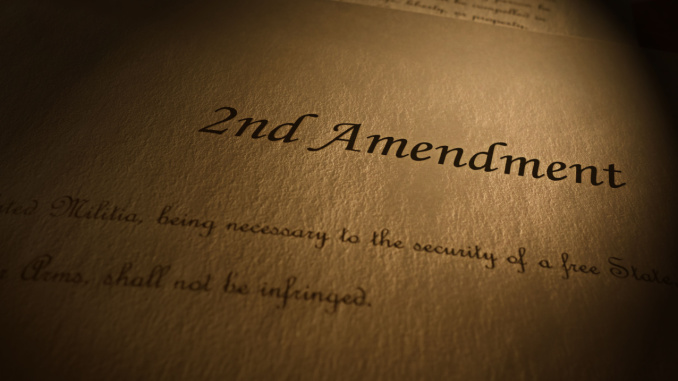
C.TRUTH! The text of the Second Amendment reads, “A well regulated Militia, being necessary to the security of a free State, the right of the people to keep and bear Arms, shall not be infringed.” While proponents of anti-Gun ideology hyper-focus on the first four words (“A well regulated Militia”) and ignore the following words that define and clarify (“the right of the people”), the United States Supreme Court (SCOTUS) has ruled on this issue multiple times. InHeller v. District of Columbia in 2008, inMcDonald v. Chicago in 2010, and most recently inNew York State Rifle & Pistol Association, Inc. v. Bruen, “[T]he Court points out, the primary purpose of the Second Amendment is to preserve the right of the people to keep and bear arms for self-defense.”
In summaries from these historic SCOTUS cases, the Justices have stated that “The Second Amendment protects the rights of law-abiding, adult citizens (‘the People’) to keep and bear arms, particularly weapons in common use. Therefore, any law restricting that right needs to be consistent with the Nation’s ‘historical tradition of firearm regulation.’” And, “The Second Amendment protects the right of law-abiding citizens to both possess and carry weapons for self-defense, particularly weapons that are in common use among the populace.”
Bottom Line:
The brilliance and foresight of our Founders have stood for centuries as a firewall preventing people in positions of power from whittling away at the freedoms of the average citizen. Since the ratification of the Bill of Rights in 1791, our Founders have been proven prophetic. Through regulations, legal maneuvers, politically-based compromises, propaganda, or tricky wordplay, infringements have been ever-eroding our right to own and use tools of self-defense. The U.S. Constitution and Bill of Rights are inspired documents, and so far the Supreme Court has upheld the power and significance of these documents, but it is the responsibility of each generation to reassert the principles that our Founders fought, bled, starved, and died to secure for our nation. Read the documents for yourself. Do not rely on others to interpret them for you. They are part of your precious and unique inheritance of Freedom and heritage of American values.
Cheryl Todd has an extensive history of being a Second Amendment Advocate. Along with being a Visiting Fellow for the Independent Women’s Forum, she is the owner of AZFirearms Auctions, Executive Producer & Co-Host of Gun Freedom Radio, the founder of the grassroots movement Polka Dots Are My Camo, and the AZ State Director for the DC Project.
Let us diagnose the problem, namely we have bureaucrats that are behaving as an unelected fourth branch of the federal government. It does not matter which agency we look at; they are oversized, bloated with funds allocated for redundancies, and worse, they are using our tax dollars to harass, investigate, and intimidate those that threaten their power.
We have come to the point where a former president has been indicted for acting lawfully regarding documents, and potentially indicted again for what is in essence a treason charge to prevent him from seeking the presidency in 2024. We have candidates for the United States House of Representatives (possibly the U.S. Senate as well) having their bank accounts closed to strangle off the flow of funds to run a campaign. Does anyone believe that the closures of accounts were not directed by these bureaucrats, or at the minimum, like social media companies in the 2020 election cycle, (likely occurring even now in the 2024 cycle) coordinated by and between the companies and the bureaucrats?
How do we stop these appointed office holders and faceless bureaucrats? Step one is restoring stronger investigative powers to the U.S. House of Representatives. Once the bad actors are identified, we de-monetize their offices or divisions in that agency and in some cases, terminate the federal employee abusing the powers of their office. Is this legal? YES!
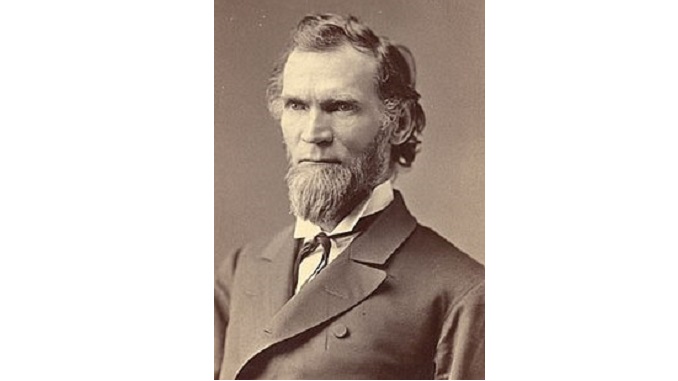
The Holman Rule (House Rule XXI, Clause 2(b)) was authored by William Holman of Indiana in 1876. The Rule amends appropriations legislation to reduce salaries or fire specific federal employees or cut existing programs (departments / divisions) within an established agency of the federal government.
The Rule was first in effect during the years of 1876 through 1895 and again from 1911 to 1983. Democrats pulled it from the “Rules of the House,” and it was not reinstated again until the 115th Congress (2017-2019). In the 116th Congress, Democrats yanked it from the Rules of the House once again. When Republicans, under the speakership of former Congressman Paul Ryan, took the House in 2017, the Holman Rule was brought back. However, then-Speaker Ryan, didn’t allow the Rule to be used in defense of a sitting president.
Rational Americans knew by mid-2019, at the latest, that the investigations into the president were politically founded and paid for by the Democratic nominee for president from the 2016 election. So why didn’t the House investigate and terminate the out-of-control bureaucrats? Some cited the only challenge of merit ever made against the Holman Rule in 1946.
At the height of McCarthyism, the U.S. Supreme Court ruled that the use of the Holman Rule to terminate 39 suspected communists was unconstitutional and cause for such terminations was not met. The Court ruled that terminations based only on political ideology were not cause for termination of a federal employee (while not citing free speech, it was implied). Even given the ruling, the Holman Rule was upheld as constitutional on its merits but was used outside the bounds of the Rule itself.
Effectively, the U.S. Supreme Court left cause-based salary reduction, termination, and liquidation of agency divisions as constitutional. How does that help in the 119th Congress coming into office in 2025? It gives those like me the ability to call for investigations of all federal agencies that are abusing their assigned powers.
Once the individual(s) or division(s) are identified, we can use the Holman Rule to terminate the individual employee or shut down the division in violation for cause. Those causes could be abuse of power, political targeting of opponents, malicious prosecution, and the list goes on and on.
In summation, there are those like me out there that will take the fight to them on your behalf but the funding and votes to win must come from you.
Paul “PT” Burton is a Republican candidate for the U.S. House of Representatives in Arizona’s 1st Congressional District.