A contentious legal battle over Arizona’s voter identification laws has once again found itself under the scrutiny of the U.S. Court of Appeals for the Ninth Circuit. Arizona Senate President Warren Petersen has vowed to bring the case back before the U.S. Supreme Court after the Ninth Circuit issued a ruling that undermines a decision previously made by the nation’s highest court.
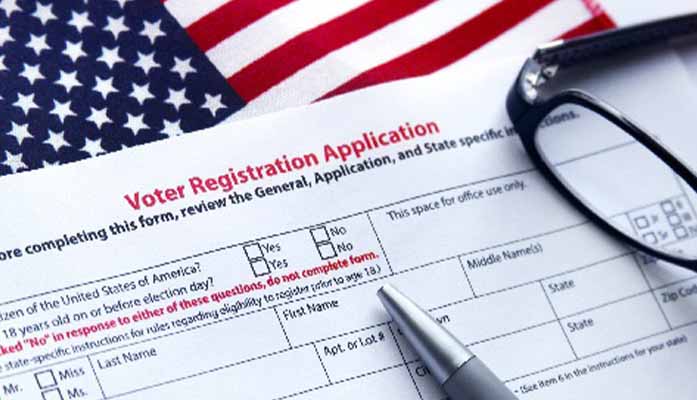
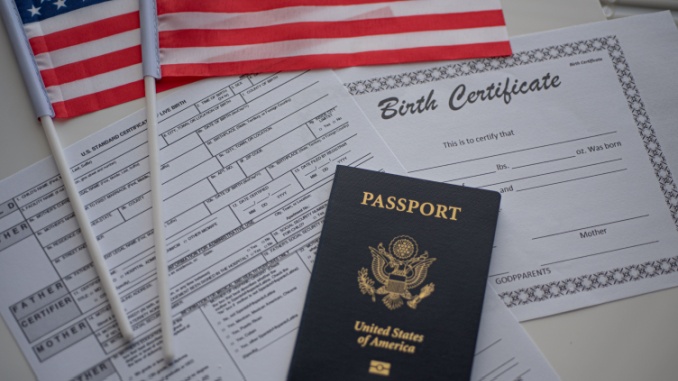
The case centers on a 2022 law passed by the Republican-controlled Arizona Legislature, which requires proof of citizenship for individuals to vote in state and federal elections. This law is designed to prevent non-citizens from casting ballots and aims at ensuring the integrity of Arizona’s elections after a long-standing debate over voter fraud and concerns about election security. The law, however, has faced resistance from various groups, including activists arguing that such requirements disproportionately disenfranchise certain voter groups.
Petersen, who has been a staunch advocate for the law, expressed frustration after the Ninth Circuit panel’s decision last week. “It’s a new year, but we have the same, old Ninth Circuit Court of Appeals, playing familiar games of judicial activism,” said Petersen in response to the ruling. “This radicalism undermines confidence in our judicial system, and it has negative consequences for the fabric of our Republic. Legislative Republicans are already working to return to the Supreme Court in defense of Arizona election integrity, and we intend to win.”
The issue came to a head last August when a three-judge panel from the Ninth Circuit vacated an emergency stay decision that had been issued by another Ninth Circuit panel. This earlier ruling allowed Arizona to enforce the proof of citizenship requirement when voters registered for federal elections, such as those for the U.S. Presidency and Congress.
The Ninth Circuit’s latest decision represents an ongoing point of contention, as it effectively permits voters to register using the state form without submitting proof of citizenship. This ruling creates a situation where voters can register without confirming their citizenship status, a move that proponents of the Arizona law argue goes against state sovereignty and undermines federal election integrity.
After the Ninth Circuit’s initial ruling, Petersen took the matter to the U.S. Supreme Court, seeking an emergency stay to ensure Arizona’s proof-of-citizenship requirement was upheld. The Supreme Court ruled in favor of Arizona, affirming that the state had the right to reject registration forms that did not provide evidence of citizenship. This ruling marked a significant victory for Arizona Republicans who had been pushing for stronger election integrity laws.
Jonathan Eberle is a reporter for AZ Free News. You can send him news tips using this link.
Earlier this week, the Ninth Circuit Court ruled against two Arizona laws requiring proof of citizenship to vote: HB 2243 and HB 2492.
HB2243 was passed in 2022 and signed by then-Governor Ducey to authorize birthplace disclosure and county recorders to authenticate a voter’s citizenship based on “reason to believe” the voter may not be a citizen.
HB2492 was also passed in 2022 and signed by then-Governor Ducey to enhance the legal guardrails of the Arizona voter registration process, ensuring that proof of citizenship is required to ensure only U.S. citizens are voting in our elections.
The Arizona Free Enterprise Club (AFEC) called the ruling “outrageous and unprecedented” in a press release.
Scot Mussi, AFEC President, accused the Ninth Circuit Court of partisanship. Mussi expressed hope that the Supreme Court would take on the case and overrule the circuit court.
“It’s clear this circuit court panel is motivated by radical ideology, and not the impartial judgment of the law,” said Mussi. “After months of legal wrangling over this law, and clear guidance from the nation’s high court, the Ninth Circuit still wrongly believes that it is the final arbiter of the U.S. Constitution and our laws. This ruling will continue to sow doubt into our system of government and will cost much more in taxpayer dollars thanks to the emergency appeal that will be again filed at the U.S. Supreme Court.”
HB 2492 was authored by the Arizona Free Enterprise Club and passed by the Arizona Legislature in 2022 to stop non-U.S. citizens from registering to vote and casting ballots in our state. Previously, a panel on the U.S. Court of Appeals for the Ninth Circuit allowed Arizona officials to reject state voter registration forms without proof of citizenship, which was part of the intent and purpose of the law in question. Yet, another panel on the same appeals court inexplicably overturned this order, vacating enforcement of the law concerning state voter registration forms, leading to an emergency appeal to the U.S. Supreme Court. The U.S. Supreme Court quickly overruled the Ninth Circuit’s order, allowing the provision on proof of citizenship for state voters to go into effect. This was the last court action in this case until the latest surprising decision by the Ninth Circuit.
Those involved in the lawsuit included pro-illegal immigrant activist organizations Poder Latinx and Chicanos Por La Causa.
In a press release announcing their victory, Poder Latinx executive director Yadira Sanchez claimed HB2492 amounted to voter suppression and enabled racial discrimination.
“Arizona’s ‘reason to believe’ policy was a clear attempt to suppress naturalized citizens by subjecting them to discriminatory scrutiny. This ruling affirms that no voter should be treated as less American based on where they were born,” said Sanchez. “While this is a step toward a fairer electoral system, voter suppression tactics continue to evolve, targeting communities of color and immigrants. Poder Latinx remains committed to our mission to ensure that every eligible voter has the opportunity to make their voice heard and fully participate in our democracy, and to fight any effort to silence our communities.”
Joseph Garcia, vice president at Chicanos Por La Causa, expressed a general opposition to restrictions on voting.
“This is a victory for the voters,” said Garcia. “We must make voting more accessible, not arbitrarily more difficult. It’s simple: Everyone who is eligible to register to vote should be allowed to register and vote.”
AZ Free News is your #1 source for Arizona news and politics. You can send us news tips using this link.
Exactly a century ago this year, the Supreme Court, in its decision in Pierce v. Society of Sisters, recognized the right of parents to direct the education of their children, writing that “[t]he fundamental theory of liberty upon which all governments in this Union repose excludes any general power of the State to standardize its children . . . The child is not the mere creature of the state.” Today, just as they did a century ago, parents rely on the courts to serve as a backstop against abusive government policy.
Sadly, some courts in America are shutting the door of justice in the face of parents seeking to vindicate their rights and the rights of their children. In a case out of Wisconsin called Parents Protecting Our Children v. Eau Claire Area School District in the Seventh Circuit, the federal court of appeals with jurisdiction over cases arising in Wisconsin, Illinois and Indiana, parents challenged the school district’s policy directing school officials to hide a child’s “social gender transition” from their parents. As the school told its employees, “parents are not entitled to know their kids’ identities.That knowledge must be earned.”
Incredibly, the Seventh Circuit found that the parents’ harm in that case was merely speculative. Apparently, since plaintiffs must show harm to have standing to sue, parents must wait until they find out that their son’s school has been helping him dress as a girl and use the girls’ restroom for six months before they can challenge the policy.
The Supreme Court chose not to review the Seventh Circuit’s decision in that case. Justice Samuel Alito wrote a short dissent, joined by Justice Clarence Thomas, explaining that the parents’ harm is not speculative and that “some federal courts are succumbing to the temptation to use the doctrine of Article III standing as a way of avoiding some particularly contentious constitutional questions.”
Nor is this an isolated incident of judges dodging the controversy of gender ideology. The Fourth Circuit, the appeals court with jurisdiction over Maryland, West Virginia, Virginia, North Carolina and South Carolina, came to the same conclusion in John and Jane Parents 1 v. Montgomery County Board of Education. A district court in Ohio did the same in Doe v. Pine-Richland School District.
Parents’ fundamental rights to direct the upbringing of their children, and the right of children to be free from ideological indoctrination by school officials, depends on courts that are willing to protect those rights. That is why Advancing American Freedom is filing an amicus brief asking the Supreme Court to take up Blake Warner’s challenge to an Eleventh Circuit rule which effectively requires parents to hire a lawyer before they can represent their children’s interests in court. Specifically, while people can bring their own claims in court without a lawyer, and parents can sue on behalf of their children, the Eleventh and some other courts have found that parents cannot sue on behalf of their children without hiring a lawyer. While Mr. Warner’s claim is not related to gender ideology, his challenge to this rule is essential because his success would ensure that parents who are unable to afford an attorney can still seek judicial protection for the rights of their children.
On Jan. 29, President Trump issued an executive order that, among other things, ordered the removal of federal funding from schools that engage in “social transitions of a minor student” and directed the attorney general to work with state and local officials “to enforce the law and file appropriate actions” against school officials who “facilitate the social transition of a minor student.” Trump’s order is important but know that gender ideologues will undoubtedly stage massive resistance. Parents must remain vigilant, and courts must begin to take their claims seriously. The Supreme Court should entrench parents’ rights by taking Mr. Warner’s case and striking down the counsel mandate.
The Left has done a great job of influencing the issue of birthright citizenship. Most Americans oppose granting automatic citizenship to children born to illegal immigrants, but they also believe that we’re stuck with this policy.
They’re told repeatedly that the practice is enshrined in the Constitution’s 14th Amendment, that it has been affirmed by the Supreme Court, that the jurisprudence around it is settled law, and that challenging the matter now is unconstitutional and disloyal.
None of that happens to be true, but in the meantime, we’re saddled with a logically incoherent immigration system. Yes, immigrants are central to America’s story. But immigration law must be dedicated to the common good, not the benefit of those willing to flout our laws.
Immigrants should be vetted to ensure that they are likely to assimilate and be of value to their adopted country. Instead, we incentivize illegal immigrant mothers to cross the border before birth so their offspring can be entitled to lifelong citizenship.
So, did the writers of the 14th amendment botch the job, subjecting their descendants to such a dysfunctional system? No. In language more commonly understood at the time, they plainly stated, “All persons born or naturalized in the United States and subject to the jurisdiction thereof, are citizens of the United States and the State wherein in they reside.”
The 14th amendment was written in 1868 to clarify that the newly emancipated slaves were granted all the privileges and rights of citizenship. There is nothing in the historical record to suggest that the authors had the slightest intent to grant citizenship to all born on American soil, much less those with parents living here illegally. The jurisdiction language was added specifically to prevent such an interpretation.
Advocates of constitutional originalism should also note that the author, Senator Jacob Howard of Michigan, explained it was meant to describe “a full and complete jurisdiction, the same jurisdiction in extent and quality as applies to every citizen of the United States now.”
He clearly is not describing an illegal alien. Senator Lyman Trumbull, an influential supporter of the amendment, also emphasized “jurisdiction meant not giving allegiance to anyone else.”
The legal scholar Lino Graglia points out that, as the authors would have understood it, those who are born to parents legally in the US “are subject to the jurisdiction there of and so would have constitutional claim to birthright citizenship.” Just as plain is the fact the 14th Amendment, as written, would not apply to those born to illegal aliens, soldiers posted in a foreign country, or foreign diplomats.
Birthright advocates claim that the 1897 Supreme Court case of Wong Kim Ark clinches their claim that children of illegal immigrants born here are entitled to the full citizenship. Wong had traveled back to China with his parents and was unjustifiably denied reentry until the decision was overturned by the Court. They ruled that to bar Wong would be “to deny citizenship to thousands of persons of [European] parentage who have always been considered and treated as citizens of the United States.”
That makes sense, since Wong had the necessary documentation and his parents had been on American soil legally at the time of his birth, there being no laws defining them otherwise at the time. This is exactly the reason why this much ballyhooed ruling does not apply to the practice of granting citizenship to the children of illegal aliens. In fact, the Supreme Court has never opined on the question.
The clear intent of the amendment, the language, and the historical record are all in accord. Yet the 14th Amendment has been completely untethered from its original meaning and impact. The Left and the Democratic Party have taken something meant to right a wrong and manipulated it to the advantage of those entering the country illegally.
There are at least 5 million children in America who have received citizenship inappropriately, or about one in eight U.S. births. That works well for those who relentlessly seek ways to produce millions of future Democrats.
The rest of us should continue to respect our Constitution and our history. The incredible privilege of citizenship should go only to those who merit it.
Dr. Thomas Patterson, former Chairman of the Goldwater Institute, is a retired emergency physician. He served as an Arizona State senator for 10 years in the 1990s, and as Majority Leader from 93-96. He is the author of Arizona’s original charter schools bill.
Republicans in the Arizona Legislature scored another legal victory with the nation’s high court granting cert on a case they had intervened in earlier this year.
On November 22, the Supreme Court of the United States agreed to hear FCC v. Consumers’ Research in its current term. The case will be consolidated with SHLB Coalition v. Consumers’ Research. This case involves a question of the nondelegation doctrine, which, according to the Legal Information Institute at Cornell, is “the principle that Congress cannot delegate its legislative powers or lawmaking ability to other entities.”
Great news! The Arizona Legislature joined the states’ amicus brief urging the Supreme Court to review this case. @AZHouseGOP@AZSenateGOP
The decision from the U.S. Supreme Court represents a significant victory for Republicans in the Arizona Legislature, who had joined an amicus brief from state attorneys general from around the country to urge the justices to hear arguments in this case.
On its X account, Consumers’ Research reacted to the order, writing, “American citizens and consumers alike deserve basic accountability in government and in the marketplace. Americans currently are forced to pay a tax with every phone bill, set by unelected bureaucrats, at the recommendation by the same private corporation that receives the revenue. This is absurd and we believe SCOTUS will agree as the 5th circuit did.”
BREAKING: The Supreme Court has granted certiorari on our lawsuit against the Federal Communications Commission (FCC).
Consumers' Research v. FCC is headed to the Supreme Court.
Arizona Senate President Warren Petersen, who was instrumental in the Arizona Legislature joining the efforts to support Consumers’ Research, told AZ Free News that, “These carriers are unlawfully taxing the public to the tune of billions of dollars. Congress should instead determine what taxes our citizens are to pay and by how much, not unelected Washington bureaucrats.”
The brief that the Arizona Legislature signed onto was joined by 15 other states, led by the West Virginia attorney general. The other states were Alabama, Arkansas, Indiana, Kansas, Louisiana, Missouri, Montana, Nebraska, Ohio, Oklahoma, South Carolina, Tennessee, Texas, and Virginia.
In their brief, the attorneys general argued that “the states – and our country – need guidance on the nondelegation doctrine,” that “those who mean to scare the court away from these issues are wrong,” that “preserving Congress’s legislative power protects the states’ interests,” and that “this court should evaluate this statute.”
They wrote, “Every year, the Federal Communications Commission extracts billions from American consumers based on a vague statute that says telecommunications providers ‘should make an equitable and nondiscriminatory contribution to the perseveration and advancement of universal service.’ The only limits on this multi-billion-dollar fee are vague notions like ‘quality’ service. And the Commission – an independent agency already shielded from accountability in its own right – doesn’t even set these rates itself. Instead, a private company picks a number that the Commission rubberstamps later.”
The attorneys general added, “Make no mistake: Amici States recognize the goal of securing universal telecommunications service is laudable. Congress can and should find a way to provide these services for everyone. But it’s a ‘fundamental principle that, no matter how laudable its purposes, the actions of our government are always subject to the limitations of the Constitution.’ Congress needs to be the one to act here, not a private band of unaccountable industry participants. The Court should grant the Petition to say so.”
The Court’s decision to hear arguments in this matter follows an opinion from the U.S. Court of Appeals for the Fifth Circuit in July, which found that “this misbegotten tax violates Article I, Section I of the Constitution.” The appeals court stated, “The Q1 2022 USF Tax is not only difficult to square with the Supreme Court’s public nondelegation precedents. It was also formulated by private entities. That raises independent but equally serious questions about its compatibility with Article 1, Section 1, which requires ‘[a]ll legislative Powers herein granted shall be vested in a Congress.’ We (1) explain that the scope of FCC’s delegation to private entities may violate the Legislative Vesting Clause by allowing private entities to exercise government power. Then we (2) explain that even if FCC’s delegation could be constitutionally justified, FCC may have violated the Legislative Vesting Clause by delegating government power to private entities without express congressional authorization.”
According to SCOTUSblog, this case will likely be argued before the U.S. Supreme Court in the spring of 2025. The justices’ opinion will be rendered in June or July at the conclusion of their term.
Daniel Stefanski is a reporter for AZ Free News. You can send him news tips using this link.