by William Beard | Jul 12, 2025 | Opinion
By William Beard |
Reprinted with permission from the Goldwater Institute.
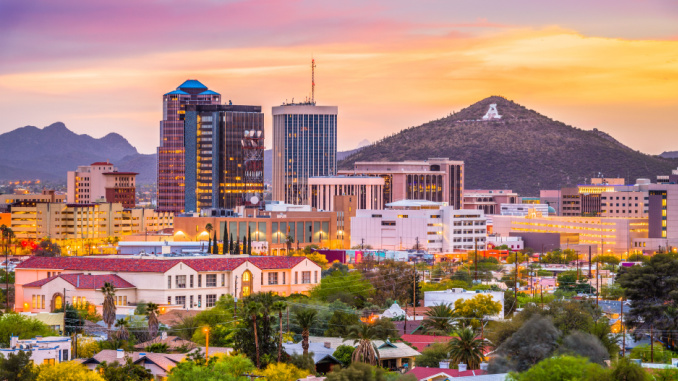
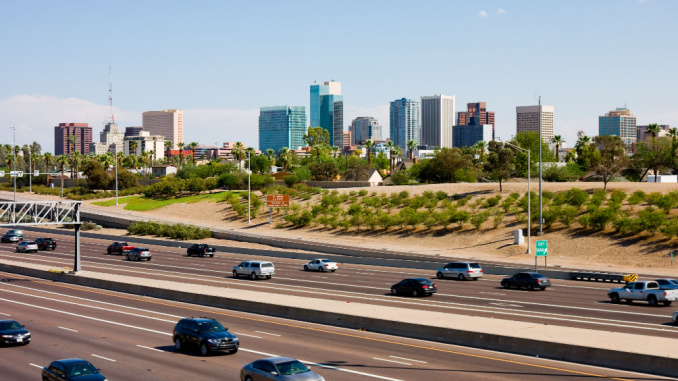
In 2006, voters in Pima County made a deal: an increase in the sales tax for better roads and infrastructure. But now, after nearly two decades of taxpayers holding up their end of the bargain, the results are underwhelming. Of the 35 projects originally promised, only 18 have been completed—and much of the unfinished work lies within Tucson’s jurisdiction. The question is no longer whether the plan was fulfilled, but why one city fell so far short.
The mismanagement is staggering. Tucson’s unfinished Regional Transportation Authority (RTA) projects are estimated to be $400–$600 million short. At the current pace—roughly $50 million in spending per year—completing the work would take at least eight more years. There’s one big problem, however: the sales tax that funds the RTA is set to expire in 2026, and time is running out. Tucson officials have responded by throwing up their hands and admitting defeat, postponing four projects for inclusion in a future “RTA Next” plan.
Every infrastructure plan faces risks, and Pima County’s strategy was no exception. The 2008 recession slowed tax collections, and inflation has since driven construction costs well beyond the 10% buffer allowed by law. Tucson, however, made matters worse by repeatedly altering project scopes to appease neighborhood groups, further delaying timelines and driving up costs. Each time, Tucson failed to take responsibility by allocating more supplemental resources. Instead, city leaders appeared to hope the problem would simply go away.
Tucson’s leaders clearly misunderstand the purpose of the RTA, viewing it more as a construction manager responsible for overruns than a basic funding mechanism distributing tax dollars. Each city was responsible for designing and building its own projects. Any change in scope—additional lanes, neighborhood preferences, unforeseen costs—was theirs to fund, not the RTA’s. State auditors reinforced this responsibility repeatedly over multiple years, including in 2017, 2022, and 2024. While overruns in other areas were previously paid for by partner municipalities under the RTA, Tucson now appears ready to go hat in hand to the rest of the county asking for a bailout.
Why should voters trust them this time around?
Taxpayers deserve clarity. Tucson’s chronic delays mean taxpayers will be asked to pay more. Approval of any extension or revision to the existing projects should depend on city leaders being transparent with the public. Why should all of Pima County be asked to pay for Tucson’s poor planning and execution? Kicking the can down the road is not a transportation strategy—it’s a sign of dysfunction. If Pima County taxpayers are expected to foot the bill yet again, they deserve full accountability before a single dollar is spent.
William Beard is the Municipal Affairs Liaison at the Goldwater Institute.
by Jonathan Eberle | Jun 26, 2025 | News
By Jonathan Eberle |
A former longtime public servant in Santa Cruz County has been sentenced to a decade in federal prison after pleading guilty to stealing tens of millions in taxpayer funds. On Monday, U.S. District Judge Rosemary C. Márquez sentenced 63-year-old Elizabeth Gutfahr of Rio Rico to 120 months in prison, followed by three years of supervised release. In addition, she was ordered to pay roughly $51.8 million in restitution to Santa Cruz County and the United States Treasury.
Gutfahr, who served as county treasurer from 2012 to 2024, admitted to orchestrating a wide-ranging fraud scheme that funneled approximately $38.7 million in county funds into fake companies she created. According to court documents, the companies conducted no legitimate business and were used to conceal the embezzlement.
“This sentence shows that abuse of public trust will be punished,” said U.S. Attorney Timothy Courchaine. “Ms. Gutfahr stole more than money from the people of her county — she betrayed the confidence of the voters who elected her.”
Over the course of ten years, Gutfahr executed nearly 200 fraudulent wire transfers. She circumvented internal financial safeguards by using the digital authentication token of a subordinate employee, allowing her to both initiate and approve transfers without oversight. She then falsified county records and investment reports to cover her tracks.
Federal investigators say Gutfahr used the stolen money to fund a lavish lifestyle, purchasing at least 20 vehicles, making real estate investments, and financing improvements to her family’s ranch and cattle business. None of the stolen funds were reported on her federal tax returns.
“Each act of greed and dishonor negatively affected fundamental aspects of the county’s operations,” said FBI Phoenix Special Agent in Charge Heith Janke. “The FBI continues to investigate public corruption cases, and we remain committed to identifying and pursuing those who violate the public’s trust.”
IRS Criminal Investigation Special Agent in Charge Carissa Messick echoed the sentiment. “Taxpayers deserve to know that their elected leaders are working in the community’s best interest — not just their own.”
The case was investigated by the FBI and IRS Criminal Investigation. Prosecutors included Assistant U.S. Attorney Jane L. Westby and Senior Litigation Counsel Nicholas W. Cannon of the Justice Department’s Public Integrity Section.
Gutfahr’s scheme unraveled after discrepancies were discovered during an internal audit, leading to a joint federal investigation and her eventual arrest and guilty plea to charges of embezzlement by a public official, money laundering, and tax evasion.
Jonathan Eberle is a reporter for AZ Free News. You can send him news tips using this link.
by AZ Free Enterprise Club | Jun 4, 2025 | Opinion
By the Arizona Free Enterprise Club |
In November 2022, Arizona voters narrowly approved Prop. 308, making Arizona the 24th state in the nation giving taxpayer-subsidized, in-state tuition rates to illegals. Its narrow passage on the ballot was preceded by its razor-thin passage at the state legislature, slipping out because two former Republican legislators, who since lost their seats to primary challengers, rolled their caucus and voted in lock step with Democrats to force it for a vote.
After making the ballot, the measure was bankrolled by a small but well-financed cohort within the political class, business community, and immigration activist organizations funded by George Soros. Even a handful of Republican elected officials and candidates jumped on board, including a few city council members and current candidate for the Republican nomination for Arizona Governor, Karrin Taylor Robson.
It was in part billed by proponents as only applying to “Dreamers,” or recipients of the Deferred Action for Childhood Arrivals (DACA) program established under the Obama administration. In reality, it allowed for anyone here illegally to get in-state tuition rates as long as they spent at least two years in an Arizona high school—signaling to the rest of the world that if you enter here illegally in time to go to an Arizona high school, American taxpayers will subsidize your tuition at our universities.
But they hid from the public one important fact. It unequivocally violates federal law…
>>> CONTINUE READING >>>
by AZ Free Enterprise Club | May 19, 2025 | Opinion
By the Arizona Free Enterprise Club |
Joe Biden caused a lot of damage in just four years as president. He undermined national security, cratered the economy, and weaponized the deep state against ordinary Americans and civil liberties. Considering these monstrous failures, the devastation he caused in transportation and infrastructure is largely overlooked. But shockingly, Biden’s USDOT director Pete Buttigieg made it pretty far down the road implementing a woke transportation agenda across the country.
In the past decade, environmentalists and central planners have linked arms with woke evangelists to radicalize transportation policy across the country. This was super-charged under Biden’s administration that pushed propaganda about roads being racist, rewrote rules and policies to force the Green New Deal, and made billions in grants to states and localities contingent on them adopting this woke agenda.
Now, Trump is hitting the brakes on the Left’s anti-car agenda, and in just 100 days Secretary of USDOT Sean Duffy has begun reversing course, cleansing the agency of DEI, environmental red tape, and wasteful and damaging spending…
>>> CONTINUE READING >>>
by Jonathan Eberle | Mar 14, 2025 | News
By Jonathan Eberle |
Arizona lawmakers are advancing a series of bills aimed at increasing transparency, accountability, and taxpayer protection. These measures tackle issues ranging from government spending on elections to school board meetings and travel, with a focus on ensuring that public funds are used responsibly and efficiently. With strong support from various groups, these bills reflect ongoing concerns about how taxpayer money is spent and how local government actions are conducted.
One of the most significant pieces of proposed legislation, HB2722, is backed by the Arizona Free Enterprise Club and sponored by Rep. Neal Carter (R-LD15). The bill seeks to prevent taxpayers from indirectly subsidizing private businesses through government gifts. Specifically, it targets “gift clauses” in state and local government contracts, which some argue allow for inappropriate use of taxpayer funds to benefit private entities.
The Arizona Free Enterprise Club has been vocal about the need for stronger protections against such expenditures. The organization has stated that this bill is necessary to curb the growing trend of government spending on private corporations without clear public benefit.
“Taxpayers should not be used as a backdoor financing mechanism for private companies,” said Arizona Free Enterprise Club officials. “This bill is about ensuring that public dollars are spent in a way that directly benefits the public, not private interests.” If passed, this bill would create stricter guidelines on how public funds can be spent and would allow taxpayers to hold officials accountable when misused funds are discovered.
Another bill making its way through the Arizona legislature is SB1036, supported by the Goldwater Institute and sponosred by Sen. John Kavanagh (R-LD3). This bill targets government spending on influencing elections, a topic that has sparked considerable debate in recent years. SB1036 would create a private right of action for taxpayers, allowing individuals to sue if they believe government funds are being spent on efforts that influence an election. This would make it easier for citizens to challenge the use of taxpayer money in elections, particularly when the spending appears to be partisan or otherwise improper.
The Goldwater Institute has argued that taxpayers have a right to ensure their money isn’t used to sway political outcomes. According to a recent report by the organization, there have been multiple instances of local governments spending taxpayer funds to advocate for policies that align with political interests, which has raised concerns about government overreach.
“Governments should not be using taxpayer money to influence the political process,” said Goldwater Institute officials. “This bill provides taxpayers with the ability to stand up for their rights and ensure public resources are not misused.”
Another bill, HB2169, which was introduced by Representative Matthew Gress (R-LD4), seeks to address transparency within Arizona’s public school districts. The bill would require school board meetings to be held in public facilities within the district, ensuring that they are easily accessible to the communities they serve. Additionally, the bill mandates that school boards must receive public approval before engaging in out-of-state travel, making it more difficult for administrators to make costly decisions without community oversight.
This legislation gained near-unanimous support, with proponents arguing that it ensures greater accountability for how public schools operate and how funds are spent. Critics of the current system have pointed to examples of school board members using taxpayer money for luxury travel without clear, public approval or benefit. A notable incident involved a local school district that faced backlash after spending taxpayer funds on extravagant trips while simultaneously requesting additional funding from voters for educational needs.
“Public education is about serving the community,” said Representative Gress in a statement. “We need to make sure that the actions of school boards are always in the public interest. This bill strengthens public trust in our school systems.”
Jonathan Eberle is a reporter for AZ Free News. You can send him news tips using this link.