Here’s an economics lesson that belongs in the text books.
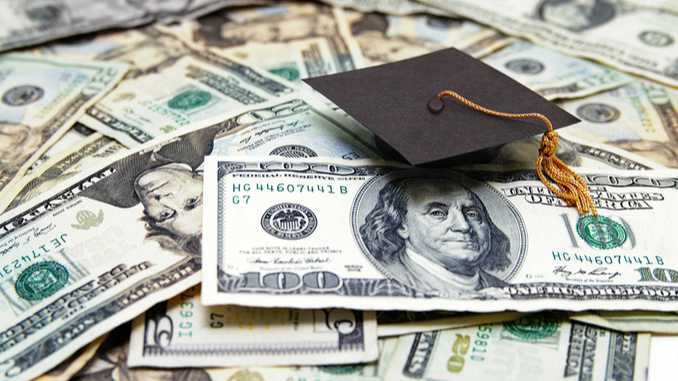
Student loan debt soared to more than $1.5 trillion during the Biden presidency and the response by Washington was to “forgive” hundreds of billions of these unpaid loans by deadbeat borrowers and let the taxpayers pick up the tab. It was never clear why the universities who charge exorbitant tuitions that have reached more than $75,000 a year at many elite schools shouldn’t bear the cost of the program – but that’s another story.
Those of us who watched these events upfold predicted that one result of this policy would be that many college graduates would stop paying back their loans. And guess what?
Just like clockwork, this headline from Bloomberg recently told the whole story:
“Student loans drive U.S. delinquency rate to highest since 2020”
Gee, who – except a bunch of head-in-the-sand- politicians in Washington – would have ever thought that forgiving as many people from paying their student loans as possible would increase future non-payments?
Well, the Biden administration for one. Now that the Department of Education is honestly reporting the data, we find that serious delinquency rates are over more than 10 times what the Biden Department of Education said they were.
There is an old saying in physics and economics: every action in the universe has a reaction. How many students in the future will pay back unpaid student loans when the next forgiveness program is right around the corner? So people who did the right thing and paid back their debts now have to pay more for the people who refused to pay back the money they owed.
In Washington, we love to reward vice and punish virtue.
As we said many times last year: expect student loan defaults to remain sky high for many years, as deadbeat borrowers wait for the next student loan amnesty program.
Fortunately, in the House of Representatives “Big Beautiful tax bill,” there are new caps of $50,000 on student loans for undergraduate students and $100,000 for grad students. This cap should help slow the stampede of higher tuition prices, which have grown two to three times the rate of overall inflation over the last thirty years. The availability of cheap student loans only fueled this stampede of tuition prices. The Wall Street Journal calls this move “The End of The College Free Lunch.”
The bad news is that we should anticipate bigger stashes of student loans to pile up at taxpayers’ doors in the years to come. The good news is that this scam has reminded us that in life incentives matter. This episode brought to light the financial foolishness of debt forgiveness programs and so hopefully we will never do this again.
Stephen Moore is a contributor to The Daily Caller News Foundation, a cofounder of Unleash Prosperity, and a former senior economic adviser to Donald Trump. His most recent book is “The Trump Economic Miracle.”
President Joe Biden’s time in the White House is mercifully coming to an end. He is now officially a lame duck with six months to go.
Biden was a victim here of a corrupt Democratic machine that — along with a complicit media — thought they could pull off a grand election-year deceit, despite his failing cognitive abilities. The Democratic establishment and a compliant media convinced millions of primary voters that Biden was of sound mind and ready to serve four more years. This lust for power put America in danger.
How could they be so unpatriotic?
So, where will Biden stand in the history books? He was not a failed president because of his declining cognitive abilities. It was his policies that wrecked America.
It is hard to point to a single policy that he got right. On the economy, he was catastrophically bad.
The trillions of dollars of debt he rung up bought nothing. He sent inflation to the highest levels in almost forty years.
The average family lost $2,000 of income after inflation during his reign. More people died of COVID during his presidency than Trump’s — despite the availability of the vaccine.
Interest rates rose. Biden declared war on American energy. He put America back into the Paris Climate Accord—and the rest of the world went on using more fossil fuels than ever. By impeding U.S. oil and gas production and pipelines he played into the hands of our enemies — China and Iran.
Gas prices rose. Small business confidence sagged. Poverty rates rose.
Then there was the sheer incompetence. The bungled Afghanistan withdrawal was a national security disaster. The border became a broken dam with millions seeking to illegally enter the country. The government spent $7.5 billion on electric vehicle chargers and only a handful got built.
Biden gave away hundreds of billions of dollars for an illegal and immoral student loan forgiveness program. He put regulators in charge of key agencies even though — or because — they hate business. A majority of his appointees had no business experience. It showed.
When he departs the White House in the months ahead he will leave the nation poorer, weaker, more divided, more in debt, more vulnerable, and less respected than when he entered office.
This was a man who pledged to unite the country and did just the opposite. He deserves to go down in history as one of the five worst presidents of the 20th and 21st century.
Here is my list starting with the worst: 1) Woodrow Wilson; 2) Herbert Hoover: 3) Jimmy Carter; 4) Joe Biden; 5) Barack Obama.
Now the Democrats want to run Vice President Kamala Harris, who was on board with every Biden policy and helped oversee the worst border catastrophe in modern history.
Just when you thought things could not get any worse.
Stephen Moore is a contributor to The Daily Caller News Foundation, visiting fellow at the Heritage Foundation, and a co-founder of the Committee to Unleash Prosperity.
Joe Biden loves to give away money, especially if it’s not his own. He has spent trillions of dollars for political benefit that didn’t need otherwise to be spent.
The recipients laud his compassion and generosity. Common Americans though are trapped in an inflationary spiral while our grandchildren face an unpayable bill.
Thus, in a recent presentation about his second attempt to forgive student loan debt, he actually bragged about the hundreds of billions it would cost. He twice mentioned the fact that many blacks would receive benefits.
He became so consumed in self-congratulation that he apparently lost awareness of how blatant his political pandering was. We know black voters are a key demographic in play in the upcoming election.
Biden’s sheer enthusiasm for spending again evidenced itself in his response to the Baltimore bridge collapse. His first reaction was to guarantee that the federal government would underwrite the entire cost of reconstruction. What a guy!
Neither offer made sense. Regarding the student loan debt, the Supreme Court had affirmed that the Constitution means what it says, that the power to initiate spending lies solely with Congress. Most public criticism focused on the obvious unfairness of the policy, how it would disadvantage those who had been responsible in favor of those who wished to renounce their legal obligations.
Biden’s bridge proposal was also nonsense. The bridge isn’t owned by the United States. There is no conceivable reason for the federal government to be deemed responsible for its repair. The bridge was demolished by a cargo ship, in an industry which insures heavily against such misfortunes. Other jurisdictions have also acknowledged partial responsibility.
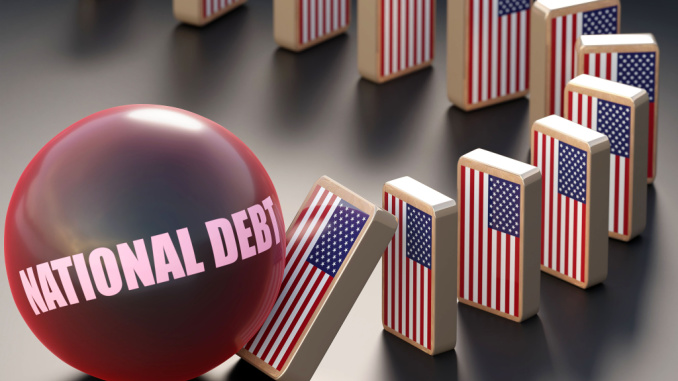
Here’s the problem with the mindset that it’s okay to get involved with all these giveaways: we don’t have the money. We’re seriously in debt, with expenses vastly exceeding our income and no plan in place for repayment or even deficit reduction.
Biden is hardly the only politician who has deduced that spending other people’s money (OPM) can win elections. Even many Republicans, to their shame, support the spending juggernaut. The spenders are the moral equivalent of a wastrel with no money and no job, with bankruptcy looming, who continues to pick up tabs and buy pricey gifts with credit cards he has no intention of paying off.
Still, the spenders know that Americans have mostly normalized excessive spending even when unnecessary. So, Biden was able to propose a whopping $7.3 trillion budget for next year (up $500 billion in the last year alone) without provoking much outrage.
The $2 trillion spent on COVID relief accomplished nothing. It was mainly an excuse to push more money out the door. At least it was supposed to be temporary. Biden’s budget though would pocket the COVID bump and add yet more permanent spending, mostly on programs for “climate change” and other boondoggles. A $10 trillion budget by 2033 is projected.
What can’t go on forever won’t. Our present course is unsustainable. Income tax revenues are soaring, yet the debt continues to grow. We are using borrowed money to pay the debt interest, which has surpassed all budget items except entitlement programs.
How do we get out of this death spiral? The left’s favorite solution is to raise taxes. That doesn’t work. The historical record shows that tax increases put us further in the hole.
For example, the Obamacare tax increases raised $1.4 trillion but so hindered economic growth, according to the Congressional Budget Office, that the feds lost $3.8 trillion in revenues. In contrast, President Clinton signed the 1997 Republican tax and spending cuts. Four years of budget surpluses ensued.
It’s well known that reform of Medicare, Medicaid, and Social Security is necessary for a balanced budget. Yet both parties are interested only in demagoguing the other if they catch them even considering the issue. If the politicians, including Donald Trump, continue to insist on prioritizing incumbent reelection, the only way out may be for the people to take matters into our own hands.
Anybody else interested in seriously revisiting the notion of amending the Constitution to mandate a balanced budget? Sure, it may (or may not) be difficult, but the consequence of doing nothing is surely worse.
Dr. Thomas Patterson, former Chairman of the Goldwater Institute, is a retired emergency physician. He served as an Arizona State senator for 10 years in the 1990s, and as Majority Leader from 93-96. He is the author of Arizona’s original charter schools bill.
Recipients of President Joe Biden’s student loan forgiveness program appear to be wrestling with shoulder angels and devils over how they should spend their relief funds.
According to a recent survey of 1,250 applicants by Intelligent, 75 percent expressed interest in spending on essential items like groceries while 73 percent expressed interest in spending on nonessential items like vacations. 60 percent of these applicants said that student loans had an adverse impact on their life.
66 percent were likely to pay off their rent or mortgage, 65 percent were likely to pay off credit card debt, 62 percent were likely to fund transportation costs, 60 percent were likely to pay off medical care or other debts, and 40 percent were likely to pay for childcare.
Comparatively, 52 percent were likely to buy new clothing and accessories, 46 percent were likely to go on a vacation, 46 percent were likely to eat out, 44 percent were likely to buy a smartphone, 43 percent were likely to invest in the stock market, 42 percent were likely to buy gifts, 36 percent were likely to buy a gaming system, 30 percent were likely to finance their wedding, 28 percent were likely to buy drugs or alcohol, and 27 percent were likely to go gambling.
Despite 73 percent of respondents saying that they would spend their forgiveness funds on nonessentials, 73 percent also said that doing so would be wrong. 84 percent of male respondents were likely to spend on nonessentials, versus 65 percent of female respondents; 80 percent of male respondents said that doing so would be wrong, versus 67 percent of females.
Twice as many Democratic applicants as Republicans insisted that these types of expenditures were acceptable.
The Eighth Circuit Court of Appeals blocked Biden’s student loan forgiveness program earlier this month (Missouri v. Biden). Despite the hold, the Biden administration told reporters that it continues to accept and review applications.
Biden predicted last Thursday that the order would soon lift, saying that his administration would be mailing checks sometime this week or the next. The funds wouldn’t be mailed in check form, but would be applied directly to their loan balances.
The president criticized Republicans for fighting the controversial program.
Nearly 22 million of 40 million eligible borrowers have applied for student loan forgiveness. Over 1.3 million Arizonans at least are eligible for relief. Applications don’t close until the end of next year.
Exactly one week ago, we launched our application where folks could apply for student loan debt relief. Over 22 million people provided the information we need to consider them for relief.
On Monday, the Biden administration announced reforms to other student loan forgiveness programs, such as relief for those victimized by colleges with false advertising or other forms of fraud. The administration also reformed rules for student loan forgiveness for government and nonprofit workers.
Join me at Delaware State University as I deliver remarks on student debt relief. https://t.co/itXrvGofUF