by Mike Bengert | Oct 23, 2025 | Opinion
By Mike Bengert |
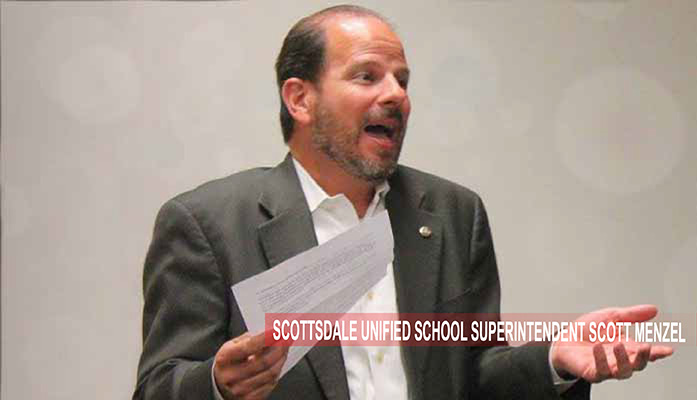
Scottsdale Unified School District (SUSD) is entering a period of upheaval, one that is very concerning to parents, teachers, and taxpayers. Superintendent Dr. Scott Menzel recently announced that the district staff will bring forward proposals for consideration by the Governing Board to deal with the impact of declining enrollment in SUSD, which will reshape several campuses and alter the educational landscape of Scottsdale for years to come.
The first recommendation by district staff under consideration is for Echo Canyon K–8, Pima Elementary schools, and Desert Canyon Elementary and Middle Schools to be repurposed. Dr. Menzel has not made clear exactly what repurposing means. The official explanation for this is straightforward: declining enrollment and a need for “operational efficiency.” But as anyone who has followed SUSD’s trajectory over the past several years knows, declining enrollment is not isolated to a few schools. It is a district-wide problem — one that has deep roots in leadership decisions, cultural conflicts, and misplaced priorities.
A District in Decline
Beyond these four schools, six others have been placed on a “watch list.” These campuses, too, are being monitored for potential closures or repurposing as enrollment continues to fall. Since Dr. Menzel’s arrival in July 2020, the district has lost more than 2,500 students, dropping from over 22,300 to 19,700, an 11% decline in just five years. This decline represents not only a fiscal crisis for the district but also a crisis of confidence among Scottsdale parents.
So, how did we arrive here?
The Menzel Philosophy: Disrupt and Dismantle
If you want to understand how we got here, you need to understand Dr. Menzel’s philosophy of education. In a 2019 interview titled “Public Schools and Social Justice: An Interview with Dr. Scott Menzel,” he explained that understanding how systems operate gives leaders “the opportunity to dismantle, disrupt, and then recreate something that’s socially just and more equitable.”
This wasn’t a throwaway line. It was a mission statement.
Since arriving in Scottsdale, Menzel has followed this blueprint:
- He has recommended firing respected teachers while hiring unlicensed social workers and “wellness” staff.
- He has proposed cutting classroom budgets while expanding administrative overhead.
- He has recommended reducing opportunities for public comment at board meetings.
- He has directed teachers not to inform parents about students’ gender transitions unless asked directly.
- He has consolidated power and minimized accountability, all while using district communications, podcasts, and social media to promote his leadership as a success story.
- He has championed the elimination of valedictorian honors and class rank.
Unfortunately for the students and parents, the board has approved every recommendation made by Dr. Menzel.
At board meetings, Menzel regularly dominates the discussion, often interacting with the board president as though he were chairing the meeting himself. He highlights a few exceptional student achievements as evidence of district success, perhaps a few hundred students out of nearly 20,000, while ignoring the systemic academic underperformance that affects the majority.
The Illusion of Success
The numbers tell a sobering story. In 2024, SUSD reported a 92% graduation rate (down from 94% in 2022) and a 98% promotion rate. Yet proficiency in core academic subjects remains around 52%. In other words, nearly half of all students graduate or advance to the next grade level without mastering reading, writing, math, or science at grade level.
When questioned about these numbers, Menzel points out that SUSD still outperforms the statewide average of roughly 30% proficiency. But comparing yourself to the bottom of the barrel isn’t a standard of excellence — it’s an excuse for mediocrity.
Despite this record, the Governing Board continues to reward Menzel with pay raises, bonuses, and contract extensions. Two successive boards have failed to impose any meaningful accountability or measurable academic goals.
The “Woke” Agenda and Its Consequences
In Scottsdale, Dr. Menzel’s leadership has been defined by his emphasis on Social Emotional Learning (SEL), Diversity, Equity, and Inclusion (DEI), gender identity programs, and related “woke” initiatives, all fully endorsed by the leftist majority on the current Governing Board. These programs were sold as a way to build empathy, inclusion, and belonging. Instead, they have deepened division, distracted from academics, and driven families out of the district.
At the same time, the district has invested heavily in administrative roles tied to “behavioral health,” “equity,” and “inclusion,” while cutting classroom teaching positions. This inversion of priorities is not only financially unsustainable, it’s academically disastrous.
Parents Are Walking Away
Arizona Superintendent of Public Instruction Tom Horne recently provided a candid explanation for the declining enrollment. In a public statement, he argued that “the promotion of woke ideology is a significant reason behind potential school closures in several school districts,” explicitly calling out SUSD’s efforts to promote gender ideology among elementary and middle school students.
He went further:
“This happens because of the expenditure of a large amount of campaign funds to elect woke school board members who do not represent their communities. Parents have a choice, so they move their children. The school boards in these districts have no one to blame but themselves for allowing the classroom to be corrupted from a place of learning to a venue for indoctrination in woke principles.”
Love him or hate him, Horne’s diagnosis resonates with many SUSD parents who feel that the district has prioritized social engineering over education.
The Voter’s Responsibility
While Dr. Menzel and the Governing Boards are directly responsible for what has happened to SUSD, the truth is that Scottsdale voters bear responsibility as well.
In the last election cycle, three board seats were up for grabs, an opportunity to shift power away from the progressive bloc that rubber-stamps every one of Menzel’s initiatives. Instead, voters elected candidates who reinforced the status quo: one a former superintendent from a failing Phoenix district, another who told parents to effectively butt out and leave education decisions to “experts,” and another whose own child attends private school, since it was a “better fit.”
Can SUSD Be Saved?
It’s a painful question to ask, but one that must be faced honestly: Can SUSD be saved under current leadership?
Dr. Menzel has shown no willingness to shift his priorities. The Governing Board has shown no appetite for holding him accountable. Parents are leaving, teachers are demoralized, and the district is closing schools while insisting that everything is fine.
The future of Scottsdale’s public schools doesn’t depend on clever slogans, glossy podcasts, or PR campaigns. It depends on leadership that values education over ideology and on citizens willing to demand it.
Scottsdale’s parents, taxpayers, and voters have few options. With the three progressive members’ terms extending to 2028 and the remaining two members up for re-election next year, the balance of power will remain firmly in Menzel’s camp for the foreseeable future. The progressive board members will allow Dr. Menzel to continue “dismantling and disrupting” SUSD until there’s little left to rebuild.
If we want to restore SUSD to its rightful mission, educating children in reading, writing, math, science, and the arts, parents need to speak up, and demand change now. Waiting for an election in 2028 will be too late.
You can start by attending the public meeting scheduled for November 13, 2025, at 6:00 p.m. in the Governing Board Room located at Coronado High School. The purpose of this meeting is to obtain public comment regarding the potential closure and repurposing of Echo Canyon K-8 School and Pima Elementary School. Each speaker will be given two minutes to voice their opinion on the closure/repurposing of the schools. Don’t feel constrained; you can also voice your opinion on Dr. Menzel and the board members’ actions that have led us to this point.
All SUSD parents should attend the meeting, even if their child does not attend Echo Canyon or Pima. Remember, as enrollment continues to decline, these schools are just the beginning; your child’s school may well be next.
Mike Bengert is a husband, father, grandfather, and Scottsdale resident advocating for quality education in SUSD for over 30 years.
by Mike Bengert | Sep 23, 2025 | Opinion
By Mike Bengert |
A young Christian man named Charlie Kirk was shot—simply for speaking his mind. A husband, a father, a voice for the next generation. Lord, why did it happen this way? How dare they steal the breath from a faithful man?
Charlie was not a violent agitator, not a man bent on tearing down, but one who stirred the hearts of the young. He spoke boldly where others remained silent, reminding his peers that they were created for more. He gave them courage. And for that, he was silenced.
“How dare they?” we ask. Indeed. Yet the truth is more sobering: they dare because of the cultural environment we now live in—an environment shaped, in part, by radical ideologies that have seeped into our schools, our politics, and even our everyday conversations. And right here in Scottsdale, that environment has been nurtured by leaders like Superintendent Menzel, current and former board members, and others who have steered the Scottsdale Unified School District (SUSD) away from academic excellence and into ideological experiments.
The Shift Away from Education
SUSD leaders claim to promote critical thinking, yet what they push is a one-sided agenda built on misinformation and half-truths. Instead of focusing on the basics—reading, writing, mathematics, science—SUSD has embraced policies that undermine families and confuse students. Here are a few examples:
- Telling children they can change their gender without parental involvement.
- Promoting Social Emotional Learning (SEL) in place of foundational academics.
- Teaching that America is a fundamentally racist nation.
- Undermining parental rights while telling families to “trust the experts.”
- Blocking parents from curriculum discussions while approving controversial materials, sometimes in violation of state law.
- Replacing qualified teachers with social workers and counselors.
- Conducting constant student surveys on mental health, sowing confusion rather than providing clarity.
This is not the recipe for a high-achieving school district. It is the foundation of a crisis.
The Failed Promise of Social Emotional Learning
Superintendent Menzel and his allies argue that focusing on student “emotional well-being” will, in turn, unlock academic achievement. This theory, rooted in social-emotional learning, posits that removing a child’s psychological “barriers” will allow them to thrive in the classroom.
But does it work? The evidence suggests otherwise. Independent researchers, particularly outside the U.S. educational establishment, have found little to no link between widespread, non-targeted mental health interventions and improved academic outcomes. In fact, research shows these programs may worsen student mental health.
In medicine, the term for this is iatrogenic harm: unintended damage caused by treatments meant to heal. In mental health, it refers to harm that arises from interventions that destabilize rather than stabilize. The endless surveys, the focus on fragility rather than resilience, and the substitution of therapy for instruction can actually make students more anxious, less confident, and less academically capable.
If SUSD’s policies worked, our students would be excelling. Instead, they are struggling.
The Numbers Don’t Lie
Let’s look at the hard data under Menzel’s leadership.
- Instructional spending: Down to 54.4% in 2024, compared to 54.6% in 2023, and trending toward a historic low. Over the past five years, instructional spending has dropped 1.7%.
- Student support spending: Up 2.6% over the past 5-year period.
- Administrative spending: 15% higher per student than peer districts.
- Enrollment: Down 8.4% over the past 5-year period.
- Staffing: In FY24, the district cut 59 instructional positions but added 71 student support staff and 44 administrative positions.
- Test scores: Math proficiency fell from 57% in 2019 to 55% in 2024. Science dropped from 64% to 41%. English Language Arts rose slightly, from 56% to 61%, but overall performance represents a 12% decline since 2019.
So: fewer teachers, lower academic spending, higher administrative costs, declining enrollment, and worse performance.
SUSD recently held its second mental health fair and sponsored a suicide prevention event. After 125 years of SUSD history, why is it only now that we need districtwide events to address student mental health and suicide? Could it be that the very programs meant to fix mental health are feeding the crisis?
The Culture War in the Classroom
The failures of SUSD are not isolated. They are part of a broader cultural radicalization. Across the nation, schools are less focused on knowledge and more focused on ideology. Students are taught to distrust their parents, question their identity, and view their country as irredeemably broken.
We see the results not only in academic decline but also in growing instability—emotional, social, and even violent.
This instability was on display here in Scottsdale when conservative board member Carine Werner was allegedly overheard making a disparaging comment, and leftist groups who celebrated Charlie Kirk’s death, seemingly collaborated to paint her in a bad light. Protesters immediately called for her resignation, parading signs that read “Protect Children: Werner Must Resign,” and “Ban Bigots, Not Books.”
But labeling Werner “ignorant” or “bigoted” ignores her record. As a state senator, she championed laws to make schools safer from predators and supported pay raises for law enforcement. As a board member, she pushed to remove sexually explicit material from schools, opposed social studies curricula that included anti-police rhetoric and glorified activism over academics, fought for stronger school security, introduced a common-sense policy that kept boys out of the girls’ bathroom, and even stood up to a transportation contractor after one of its employees sexually assaulted a student.
That’s not bigotry. That’s leadership.
The Consequences of Demonization
So how did we get here, where speaking truth—or even raising common-sense concerns—can cost you your reputation, your job, or even your life?
We’ve been told the problem is “radicalization on the dark web.” But you don’t need the dark web. Just watch mainstream media or scroll social media. From the highest levels of government on down, leaders tell us anyone who disagrees is a racist, a fascist, or a threat to democracy. Politicians openly encourage people to “get in their faces” and drive dissenters out of public life.
For someone already struggling with confusion, addiction, or emotional instability, this narrative can justify hostility—even violence—against those who dare to think differently.
That’s what happened to Charlie. He stood for free dialogue, for open exchange of ideas—values once core to American identity. For that, he was killed.
Diversity of Thought—or the Illusion of It
SUSD claims to celebrate diversity. But it is not diversity of thought. Instead, there is one sanctioned narrative: accept it, or be labeled hateful. We are told tolerance is a virtue, yet intolerance is practiced against anyone who challenges the prevailing orthodoxy.
We cannot allow this inversion of truth. Lies are not compassion. Half-truths are not education. And intolerance cannot be the foundation of a healthy community.
A Call to Parents
Superintendent Menzel and the SUSD Governing Board may not be directly responsible for Charlie’s death in Utah, but their policies contribute to the kind of environment where such tragedies become possible.
Parents, it is time to wake up. Our children are not experiments. Our schools are not laboratories for ideological reprogramming. The mission of education must return to the basics: truth, knowledge, critical thinking, and resilience.
We must demand accountability from school leaders. We must replace ideologically driven programs with proven academic strategies. We must protect our children—not only from physical threats but also from the corrosive cultural forces undermining their mental, emotional, and intellectual well-being.
Charlie’s voice has been silenced. But ours has not. If we remain quiet, more voices will be lost. If we speak boldly—as he did—we can reclaim truth, restore education, and protect the next generation.
The question is: will we dare?
Mike Bengert is a husband, father, grandfather, and Scottsdale resident advocating for quality education in SUSD for over 30 years.
by Peggy McClain | Jul 17, 2025 | Opinion
By Peggy McClain |
Recently, the Peoria Unified Governing Board made a necessary correction: They removed the superintendent from the dais, restoring a clear boundary between the elected and the employed. While some saw this as dramatic, the only real surprise was that the line had been blurred for so long.
Unfortunately, the Higley Unified School District went the opposite direction, and they did it quietly.
At what should have been a routine meeting last week, Superintendent David Loutzenheiser, attending his very first meeting as head of Higley Schools, took a seat on the dais without any board vote or public discussion. And unfortunately, his first moves were not in line with what he promised when interviewed.
Immediately after the meeting began, Board Member Anna Van Hoek read a detailed statement opposing the new seating arrangement. Her opposition was not just personal, it was procedural. According to Van Hoek, she learned about the change via email, without any discussion or vote among the five board members. She stated: “The dais represents the authority entrusted to us directly by the voters.”
Van Hoek is absolutely correct.
Per Arizona Statute §15-503, governing boards in Arizona are responsible for hiring and evaluating the superintendent. When an employee sits on the dais as if equal to the officials tasked with his oversight, it blurs the lines of authority. That distinction may be lost on those with long careers in education, but in the private sector, these boundaries are well understood. There is a reason the CEO does not share the boardroom table with the board of directors. It is not about ego, it is about structure, accountability, and ensuring each role is properly respected.
Employees, even highly paid ones, are assigned responsibilities, expectations, and standards of behavior. If a superintendent is perceived as a peer rather than an employee, will board members evaluate him objectively when the time comes? That is not a rhetorical question as it became reality just minutes into the meeting when Board Member Scott Glover asked the superintendent if it was “okay” to table the vote on his dais placement. That single moment flipped the chain of command upside down.
Superintendent Loutzenheiser oversees a district with a budget exceeding $100 million and is responsible for hundreds of employees. He will hold meetings with principals, department heads, and administrators to carry out the board’s direction. Will any of them be invited to sit beside him at his desk? Of course not. And yet, some expect him to sit shoulder to shoulder with his bosses. It is not just improper, it is dysfunctional.
According to Van Hoek’s statement, the superintendent requested to move to the dais, and Board President Amanda Wade approved the request entirely on her own. When Van Hoek received the email, she immediately requested the seating change be added as an action item for the July 8 board meeting. Had she not spoken up, the change would have gone forward without any transparency, just Wade’s quiet approval. That would have set a dangerous precedent.
While Loutzenheiser initiated the request, the greater failure lies with President Wade, who acted without board consensus. Tiffany Shultz, another board member, responded to Van Hoek’s concerns by claiming the new arrangement promotes collaboration and a “united front.” Yet collaboration was not on display in that email from the superintendent to board members. And the role of an elected official is not to present uniformity, but to represent the full range of community concerns, especially when those views differ.
There is no legal or ethical requirement for a school board to look united. In fact, the opposite is true. Voters should expect to see board members raise concerns, challenge decisions, and vote independently. When votes are unanimous and debate is absent, the public should worry, not applaud. Disagreement is not dysfunction. It is how oversight works.
Sadly, the obsession with unity and harmony is a symptom of a broader trend in public education, one fueled by Social Emotional Learning (SEL). SEL prioritizes emotional well-being and interpersonal bonding over academic rigor and role clarity. This focus has blurred the lines between teachers and parents, students and staff, and now board members and the superintendent. Meanwhile, test scores fall and academic achievement stalls.
The confusion SEL has introduced into the system is precisely why the Arizona Legislature passed laws like the Parents Bill of Rights, to restore proper authority to parents. In the same way, this dais debacle exposes a need to restore proper authority and boundaries at the board level.
President Wade claims she values her fellow board members. If that is true, why didn’t she involve them in the decision? Her words and actions while sitting on the dais say otherwise.
It is important that the public can identify district staff in their designated spaces. I have attended many board meetings and am shocked at the whispers and private conversations happening on the dais between board members. Now, the same thing can happen between the superintendent and whichever board member is seated beside him. That is a problem.
Superintendent Loutzenheiser is under a three-year contract with a base salary of $210,000, not including perks and bonuses. With that kind of compensation comes an obligation to honor the governance structure. If he wants to begin his tenure with integrity, he should respectfully return to his proper seat off the dais at the next board meeting.
It may seem like a small gesture. But it would speak volumes.
Because the dais is for the elected, and it must stay that way.
Peggy McClain is a concerned citizen who advocates for accountability in Arizona’s schools. You can follower her on Twitter here.
by Mike Bengert | Apr 10, 2025 | Opinion
By Mike Bengert |
At the April 1 meeting of the Scottsdale Unified School District (SUSD) Governing Board, the main topic of discussion was once again the FY2025-2026 budget. As usual, SUSD Chief Financial Officer Shannon Crosier presented slides filled with numerous figures and did her best to put a positive spin on the information, carefully avoiding direct answers to the questions posed. At times, questions from Board Members Pittinsky and Sharkey seemed to include the answers, perhaps as a reminder of the narrative they were expected to follow.
However, the information presented made it clear that Superintendent Dr. Menzel is once again cutting teachers and instructional staff to deal with the financial impact of declining enrollment. Much of this decline can be traced back to his mismanagement of the district and the implementation of controversial policies like social-emotional learning (SEL), which critics argue undermine academic instruction and teacher morale.
Proponents of SEL, including Dr. Menzel, argue that by addressing students’ psychological challenges, academic achievement will follow. However, independent research, especially outside the U.S. teaching establishment, shows little evidence supporting this theory. You don’t need another study to confirm this; just look at the student proficiency scores in the Arizona Auditor General’s annual school district spending analysis report.
In FY24, SUSD spent 54.4% of its budget on instructional services, slightly below its peer group’s average of 55.2%. Over the past five years, spending on instruction in SUSD has dropped by 1.7%, while spending on student support has increased by 2.6%. During this period, SUSD’s enrollment has decreased by 8.4%, a trend that directly correlates with Dr. Menzel’s tenure. In the 2024 financial report, SUSD cut 59 instructional positions, added 71 student support positions, and increased the number of support and administrative roles by 44. As enrollment continues to fall, instructional spending declines, while support services and administrative costs rise. Yet, despite this shift in priorities, the effectiveness of SEL in improving academic performance has not been proven. Rather, the opposite is true.
For example, in FY24, in SUSD, only 55% of students passed the state math assessment, 61% passed English Language Arts (ELA), and just 41% passed science—an average drop of 12% since 2019. These results point to an inverse correlation between increased spending on support services and academic performance. This fact is well-documented in various unbiased studies.
Dr. Menzel, however, seems undeterred by the data, continuing his agenda of reducing instructional positions while increasing funding for social-emotional support services, including hiring more social workers and psychologists. All of this is happening despite clear declines in academic achievement.
At the meeting, it was apparent that Dr. Menzel has little regard for Board Members Carney and Werner’s requests for cost-cutting measures they made during the first budget meeting. In response to a question from Member Pittinsky about the possibility of future funding, Dr. Menzel stated, “There’s a path to land the plane to address those priorities of the board.” A “path” to address the Board’s priorities? The Governing Board is legally responsible for the district’s financial performance, and Dr. Menzel’s role is to present options that align with the Board’s priorities now, not at some unspecified future date based on potential additional funds.
Crosier claimed that the district had reviewed its costs carefully and had cut 13 positions from district-level departments. However, when questioned, she revealed that only one of those positions was not vacant and that no one had lost their job or experienced a reduction in force. So, how does this translate to cost savings?
When Member Carney inquired about her request for cuts to discretionary spending—such as travel, conferences, and consulting fees, Crosier had no answer. Carney also asked what steps she had taken to preserve the full-time assistant principal positions, which were requested by the Board, community members, and teachers alike. Once again, no answer.
Dr. Menzel’s disregard for the Board’s requests, coupled with his continued expansion of district staffing in non-instructional areas, raises serious concerns. One slide presented during the meeting, titled “Department Level Positions History – All Funds,” listed changes for FY25-26, but the data presented was incomplete and lacked the actual number of staff in each department. Showing the true staffing numbers would prompt uncomfortable questions, such as, “Why are these positions necessary?” and “Are they more important than keeping teachers in the classroom?”
According to the Auditor General, SUSD’s per-student administrative spending is 15% higher than the peer group average. Meanwhile, the public comment portion of the meeting included heartfelt testimonies from teachers, including the president of the Scottsdale Education Association (SEA), who expressed the growing difficulty of teaching amid rising costs, particularly healthcare. Next year, the district plans to offer teachers only a 1% raise while shifting more of the healthcare burden onto the teachers.
We heard stories from teachers struggling to make ends meet, including one who is leaving the district after years of service, and others—one with 27 years of experience—facing insurmountable medical expenses.
Because state funding for education is based on enrollment, the root of the district’s financial troubles lies in the decline of enrollment, which has been exacerbated by Dr. Menzel’s policies and his focus on non-academic priorities. The Auditor General tracks school district enrollment and assesses the financial risks associated with declining enrollment. According to these trends, SUSD has been rated as “high risk” due to its decreasing enrollment numbers.
In FY24, while districts across the state facing declining enrollment worked to reduce operating costs, SUSD failed to make similar adjustments. The statewide average teacher salary increased by 34.6% between FY17 and FY24, reaching $65,113, while SUSD’s average teacher salary rose by just 27.7% to $63,151—$1,962 below the state average. This is a 1.5% decrease in the average teacher salary for FY24 from FY23. Moreover, the average base salary for teachers with less than three years of experience rose by 24.4%, while those with more than four years of experience saw an increase of less than 0.5%. This discrepancy is contributing to the loss of experienced teachers, many of whom are leaving the district. This creates a younger teacher population at SUSD. Recent teaching graduates are more likely to support Dr. Menzel’s policies than older graduates. This is what he wants.
Several speakers at the meeting called for more state funding to address these challenges. While their frustration is understandable, their anger is misplaced. The real issue, as outlined by the Auditor General, is not a lack of state funding but rather mismanagement by Dr. Menzel and the Governing Board, which has consistently approved budgetary decisions that prioritize administrative and support staff over instructional spending.
According to the Auditor General in FY24, statewide school district spending increased by over $500 million to $13.1 billion, with per-student increases, including instruction, over FY23. Despite this increase in funding, the district allocated a smaller portion of the increase in spending to instruction than in prior years. As a result, the FY24 instructional spending percentage is the lowest since the Auditor General started monitoring in FY2001.
The decline in enrollment, because of Dr. Menzel’s continued focus on implementing SEL and bloating administrative positions, will only worsen SUSD’s financial situation. The Governing Board will need to face this ongoing problem for years to come unless drastic changes are made.
Rather than calling for more state funding for education, the SEA should be calling for the removal of Dr. Menzel as the first step in making the changes needed in SUSD.
Unfortunately for students and parents alike, rather than “landing the plane”, what we are witnessing is a controlled crash of the SUSD plane.
Mike Bengert is a husband, father, grandfather, and Scottsdale resident advocating for quality education in SUSD for over 30 years.
by Tiffany Benson | Apr 1, 2025 | Opinion
By Tiffany Benson |
Many Americans believe the Supreme Court rulings on Engel v. Vitale (1962) and Abington School District v. Schempp (1963)—landmark cases banning prayer and Bible reading from public schools—effectively removed all forms of religious activity during educational hours.
As a result of these decisions, and the incessant drumming of “separation of church and state,” mainstream society now considers it unconstitutional to read Scripture or bow one’s head on government property. Every generation since 1963 has gone along with this diabolical rhetoric that blatantly violates the First Amendment to the U.S. Constitution:
“Congress shall MAKE NO LAW respecting an establishment of religion, or PROHIBITING THE FREE EXERCISE THEREOF; or abridging the freedom of speech…”
Truly, the progressive left succeeded in its efforts to (morally) overthrow the United States.
At issue, in 1962, was a nondenominational prayer recited alongside the Pledge of Allegiance in K-12 schools:
“Almighty God, we acknowledge our dependence upon Thee, and we beg Thy blessings upon us, our parents, our teachers and our Country.”
These 22 words pose no threat to anyone’s sincerely held beliefs. Although prayer was a standard part of every school day before 1962, students and staff members were not mandated to participate in the invocation. Nevertheless, anti-God activists have always deemed public prayer—that is, calling upon a higher power than government—an act that goes against the First Amendment. So, under the guise of nondiscrimination, several state laws were amended to abolish religious activities in public schools and bar educators from sharing their faith.
Don’t misunderstand what’s really at play. The false “church and state” narrative as well as the prohibition of Scripture and prayer are all aimed at one religion: Christianity. The progressive left wasn’t hellbent on expelling every god from mainstream society—they specifically intended to eliminate the God of the Bible (namely Jesus Christ) and silence His followers. Once God and Christianity were declared unlawful on school grounds, an alternative moral/religious code came into effect.
In the 1961 case of Torcaso v. Watson—just one year before God and prayer were banned from public education—the Supreme Court asserted that “secular humanism” (a form of atheism) was a religion fully protected by the First Amendment. If you will, the religion of unbelief is now considered to be legally and morally on par with Christianity. Yet only the former is allowed in public schools.
Of course, parents don’t recognize that their children are absorbing secular humanism because the doctrine is masked by minimal education requirements. Secular humanism is bright red lipstick on a filthy pig. If your child’s K-12 school requires a class or an assignment in the following subject areas, they’ve likely been indoctrinated with secular humanist dogma:
- Evolutionary Theory—secular Creation Story
- Social Studies—secular civil code (falsely teaches America is a democracy instead of a Constitutional Republic founded on Judeo-Christian principles)
- Ethnic Studies—secular race relations (includes Critical Race Theory)
- Diversity, Equity, Inclusion—secular ethics
- LGBTQ—secular human sexuality
- Social Emotional Learning—secular moral code (falsely teaches restorative justice)
God may not be permitted on school grounds, but the religion of secular humanism is alive and well.
In his 2007 book “Separation of Church and State: What the Founders Meant,” David Barton wrote:
“[F]ollowing the 1962-1963 court-ordered removal of religious principles from students, teenage pregnancies immediately soared over 700 percent, with the United States recording the highest teen pregnancy rates in the industrialized world. Similarly, sexual activity among fifteen year olds skyrocketed, and sexually transmitted diseases among students ascended to previously unrecorded levels. In fact, virtually every moral measurement kept by federal cabinet-level agencies reflects the same statistical pattern: the removal of religious principles from the public sphere was accompanied by a corresponding decline in public morality.
Furthermore, consider the fact that suicide is one of the top five leading causes of death among children aged 12 to 19. Homicide among 15 to 29 year olds makes up 40% of the total number of homicides worldwide each year. There’s not enough time to discuss the increase in school mass shooting incidents over the last two decades.
Every case of teen violence and sexual deviance may not be directly linked to secular humanistic education. However, after nearly 18 years of being told you evolved from nothing, you’re a “clump of cells” with no inherent worth or purpose beyond the present moment—what reaction should we realistically expect other than rage and rebellion?
Parents choose public schools for a number of reasons, ranging from convenience to affordability to sports. And while there’s no shame in keeping certain traditions, it’s clear that America’s public education system is on the verge of total moral collapse. The emergence of “trans” activists coupled with the lack of basic social/survival skills among youths is evident. Ignorance is willful at this point.
According to Proverbs 22:6, God holds parents primarily responsible for educating their children. If we don’t want them indoctrinated with a secular humanistic worldview—one that says gender is fluid, America is systemically racist, and God is dead—then it’s time to abandon public education. This is one sure way to conserve family values, strengthen our nation’s moral foundation, and secure the freedom of future generations.
Tiffany Benson is the Founder of Restore Parental Rights in Education. Her commentaries on education, politics, and Christian faith can be viewed at Parentspayattention.com and Bigviewsmallwindow.com. Follow on Facebook and Instagram.