by Ethan Faverino | Jun 30, 2025 | Education, News
By Ethan Faverino |
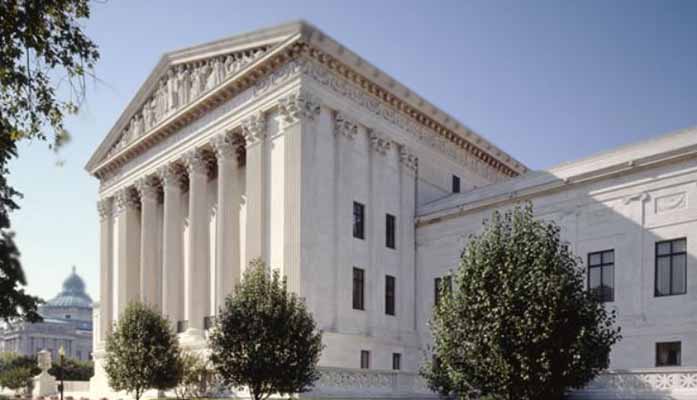
Arizona’s State Superintendent of Public Instruction Tom Horne is applauding the U.S. Supreme Court for its decision to allow parents to opt their kids out of inappropriate sexual classes. This ruling requires all schools to offer parents the option to withdraw their children when their religious beliefs conflict with course material.
In its decision on Friday, the U.S. Supreme Court ruled 6-3 that parents can opt their children out of public-school lessons containing inappropriate sexual content or LGBTQ+ themes that conflict with the family’s religious beliefs.
Horne praised this ruling, calling it a critical step in protecting young students from “inappropriate sexual lessons” and refocusing the classroom on core academics.
The case, Mahmoud v. Taylor, originated in Maryland, where parents challenged the local school board’s policy of not allowing opt-outs from lessons involving books with LGBTQ+ characters or sexual content. The Supreme Court’s decision sent the case back down to the lower courts for additional review but signaled strong support from parents all over the country.
The case involved “inclusivity” books that were announced in 2022 for students in pre-K through fifth grade in Maryland. Parents opposed the way the books defended controversial ideology around gender and sexuality.
For example, The Becket Fund noted one book tasks three and four-year-olds to search for images from a word list that includes “intersex flag,” “drag queen,” “underwear,” “leather,” and the name of a celebrated LGBTQ activist and sex worker.
Becket said another book advocates a child-knows-best approach to gender transitioning, telling students that a decision to transition doesn’t have to “make sense,” and teachers are instructed to say doctors only “guess” when identifying a newborn’s sex anyway.
“While scientific education regarding reproduction at an appropriate age is perfectly proper, there has been a trend to subject young children to sexual lessons that are inappropriate to their age,” said Horne. “Defenders of these programs say they want to be welcoming and inclusive. The proper way to do that is to include all students in education about reading, writing, math, science, history, and the arts. The inappropriate lessons about which parents are complaining are a distraction from these crucial academic subjects.”
Ethan Faverino is a reporter for AZ Free News. You can send him news tips using this link.
by Corinne Murdock | Mar 22, 2022 | News
By Corinne Murdock |
Last week, the Senate Education Committee passed HB2495, legislation to outlaw sexually explicit materials from K-12 schools.
State Representative Jake Hoffman (R-Queen Creek), the sponsor, noted that the legislation’s language incorporated some of the criminal code established in the 1960s banning obscenities from being exposed willfully to children. Hoffman argued that legislators in the 1960s couldn’t have imagined the materials given to minors as young as 9 years old in today’s age, referencing lewd cartoons, books depicting teenagers engaged in sexual acts, class skits requiring students to play out intimate or sexual relationships, surveys on sexual desires and fantasies, and reference materials with titles like “Dry Humping Saves Lives,” “It’s Okay to Have Sex With A Lot of People,” “How to View Porn,” and “Play With Yourself.”
“There’s truly nothing more sacred than the innocence of a child,” said Hoffman.
Hoffman added that scientific studies show that children are more vulnerable to sexually-explicit material because they have “mirror neurons,” which enhances what they see, and causes children to develop risky sexual behavior and intimacy disorders. He had to receive Department of Child Services (DCS) approval before showing to the committee some of the sexually explicit materials available to minors in K-12 schools.
ACLU of Arizona lobbyist Geoff Esposito argued that schools are perfectly capable of providing age-appropriate materials on their own without the interference of the legislature.
The Protect Arizona Children Coalition President Lisa Fink rebutted that inappropriate materials are, in fact, being taught in K-12 schools, citing multiple examples.
During the votes, State Senator Theresa Hatathlie (D-Coal Mine Canyon) said that while she doesn’t support pornography shown in K-12 schools, she believed that procedures existed in curriculum reviews outside the legislature. Hatathlie argued that the sexually inappropriate materials were occurring in a few schools, not many, and that perpetrators should be held accountable.
State Senator Christine Marsh (D-Phoenix) said she agreed with Hoffman’s examples of what was inappropriate, but said his legislation went too far and would create many unintended consequences. Marsh said that she doubted such inappropriate materials existed in classrooms, having never seen them herself before, but said that any teachers giving out those inappropriate materials should be punished.
State Senator Tyler Pace (R-Mesa) said he bought the contentious, allegedly sexually inappropriate books to review them for himself, and their presence at the house caused serious issues with his wife. Pace rebutted that the incidents cited weren’t as isolated as his Democratic colleagues would like to believe.
Early last month, the House passed the bill along party lines, 31-28.
Corinne Murdock is a reporter for AZ Free News. Follow her latest on Twitter, or email tips to corinne@azfreenews.com.