Have you heard the outrageous story of what happened recently in Harrisburg, Pennsylvania’s capital? Gov. Josh Shapiro (D-Pa.), elected in 2022, had campaigned on school choice for tens of thousands of children, mostly minorities, who are forced to attend failing public schools in places like Philadelphia.
“It’s what I believe,” Shapiro, then state attorney general, assured voters as he ran for governor. Last month on a national Fox News broadcast, Shapiro was unequivocal in his support for school choice because “every child of God” deserves “a quality education.”
But there’s a force far more powerful in politics than Shapiro’s convictions, such as they are. And that force is the teachers unions. They put on a full-court press to stop the roughly 10,000 vouchers for the poorest kids in Pennsylvania’s worst school districts even though the state budget bill gave billions more for the public schools. It didn’t matter that this voucher program comprised less than 0.5% of state spending. The union brass commanded Democrats to vote no on even a single penny going to schools that work.
In the end, Shapiro did a full flip-flop. He vetoed his own promise. He might as well have declared that black lives don’t matter.
Shapiro has presidential ambitions — so he figures he needs the teachers unions behind him. But if he can’t face down Randi Weingarten, how is he ever going to stand up to bullies like China’s President Xi Jinping or Russia’s President Vladimir Putin?
This story isn’t just about Josh Shapiro in Pennsylvania. In North Carolina, Democratic Gov. Roy Cooper declared a state of emergency in the Tar Heel State because the legislature wanted to fund vouchers for kids to go to the best schools possible. Egads!
In Arizona, Democratic Gov. Katie Hobbs wants to defund a school choice program that is already serving tens of thousands of kids, most of whom are Hispanic, with proven results of better performance and higher test scores. Why would she kill a program that is working? The teachers unions want the money and the kids under their control.
In New York City’s Harlem neighborhood, charter schools are flourishing. They are alternatives to public schools but are still regulated by the state. They are oversubscribed because parents want to choose the best school for their kids. Now, the Democrats want to put a cap on the charter schools because the teachers unions want to warehouse the kids in public schools where a majority of the kids can’t read or do math at grade-level proficiency. In other words, many of the public schools are worse than mediocre. And it’s not for lack of money. New York spends more than $20,000 per child in public schools.
Did I mention that in nearly every one of these cases across the country, the Democrats blocking private and Catholic school options went to private schools themselves? Or they send their kids to private schools. But poor black kids aren’t allowed that same opportunity? These are hypocrites with a capital H.
There’s a cruel historic irony here. Sixty years ago this summer, Alabama Gov. George Wallace stood before the doors of schools to prevent black children from attending the schools with white children. He was trying to preserve the stain of segregation.
Today, Democrats are employing the same tactic to keep minority kids from attending excellent schools. Why? They say that school choice will hurt public schools or cause more segregation.
Wrong on both counts. Monopolies are always bad for consumers and competition improves service. Education choice requires public schools to compete. Would you get good and friendly service if there were only one restaurant in town?
Instead of draining public schools of money, studies show that per-pupil funding rises when some kids take advantage of vouchers to attend alternative schools. Charter and Catholic schools tend to be, in most cases, more racially diverse than inner-city public schools.
I’m a parent of five boys, so I know that each of my kids has different skills, interests, behavior issues and attention spans. To warehouse them all in the same schoolroom is madness. Schools should be tailored toward the kids and serve their interests — not those of the $1 trillion a year public-school-industrial complex.
More importantly, as an economist, my biggest worry about America’s future is what happens when kids are graduating without being able to read their diplomas and with no useful skills. There are hundreds of schools around the country where not a single child can pass a basic math or reading test.
That’s an economic, civil rights and national security tragedy. Shame on Democratic leaders, and some Republicans, too, for putting their own political ambitions ahead of our nation’s children.
Stephen Moore is a contributor to The Daily Caller News Foundation, senior fellow at the Heritage Foundation, and a co-founder of the Committee to Unleash Prosperity. His latest book is “Govzilla: How the Relentless Growth of Government Is Devouring Our Economy.”
Americans’ support for school choice is on the rise.
A recent poll from Real Clear Opinion Research showed that school choice has the support of 71% of the 1,000 registered voters who participated in that survey. This number was a seven-point increase from an April 2020 poll.
— Christine Accurso (@ArizonaCatholic) July 12, 2023
In this June 27-30 poll, support for school choice came from 80% of Republican voters, 66% of Democrat voters, and 69% of Independent voters. Though the Republican and Democrat support was up from April 2020, the 9% increase in favor from Independents was the most among the political parties.
NEW POLL: 71% of Americans support school choice.
April 2020: 64% —> June 2023: 71%
7 percentage point jump in support since April 2020.
IT'S HAPPENING.
— Corey A. DeAngelis, school choice evangelist (@DeAngelisCorey) July 11, 2023
The question presented to voters on the survey was as follows: “School choices gives parents the right to use the tax dollars designated for their child’s education to send their child to the public or private school which best serves their needs. Generally speaking, would you say you support or oppose the concept of school choice?”
The CEO of American Federation for Children, Tommy Schultz, lauded the news about the growing support for school choice around the country, saying, “School choice support is here to stay, and politicians who ignore this reality do so at their own peril. Parents are the new interest group in town, and legislators would be wise to keep responding to their needs. The days of the old one-size-fits-all model are numbered, welcome news for the countless students who need something different to learn and thrive. AFC is thrilled to continue standing behind parents as they gain more options for their children’s education.”
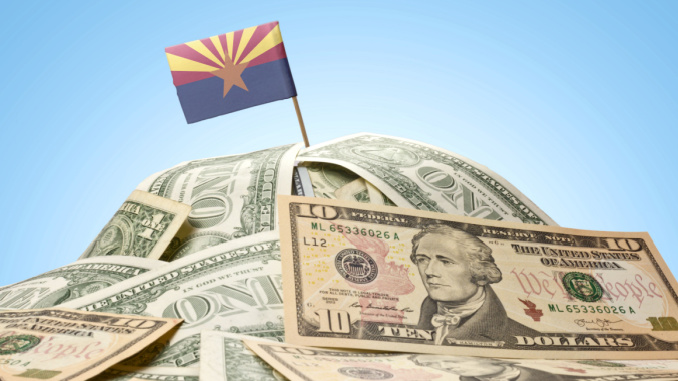
Arizona has been at the front lines of the surge in school choice support. Last year, the Republican-led Legislature passed a historic expansion of the state’s Empowerment Scholarship Account (ESA) Program, allowing any child in K-12 to apply. According to a June 30 update from the Executive Director of the ESA Program, Christine Accurso, 62,005 Arizona students have now been enrolled.
That same update also showed that the program, under the direction of Republican Superintendent of Public Instruction Tom Horne, had largely caught up with the backlog and influx of reimbursements to ESA account holders. As of June 30, the ESA Program only had 1,195 Reimbursement Orders in the queue – down from 24,409 on February 8.
When asked about the increasing support for school choice in Arizona and around the nation, Superintendent Horne told AZ Free News, “We have a lot of excellent public schools in Arizona. But no matter how good a public school is, it may not be able to meet the needs of all students. Rich parents have always had the ability to choose the best school to meet the needs of each of their children and people at all economic levels should have the same ability. In addition, competition improves public schools. The United States has been prosperous, and the Soviet Union was poor, because we had competition which drives people to do their best, while they were a government monopoly. As they used to say in Poland, ‘We pretend to work, and they pretend to pay us.’ The same applies in education. Competition causes everyone to do better.”
Daniel Stefanski is a reporter for AZ Free News. You can send him news tips using this link.
America is losing faith in its system of free public education. Test scores are down. Violence in schools is up. There’s a growing perception that things are out of control.
What’s odd about it all is how no one, seemingly, is interested in exploring why. State legislators don’t want to do it. Local school boards have other things on their minds. And the press is too busy covering real problems, like Donald Trump’s refusal to return classified documents to the National Archives, to spend any time exploring the reason kids are still being allowed to graduate from public schools without anything close to the mastery they need to get ahead in life.
Occam’s razor, named for its progenitor, 14th-century English philosopher and theologian William of Ockham, suggests the simplest answer is most likely the correct one. This would mean, one can infer, that the plight of our children is the fault of the teachers and administrators who run the schools.
Before continuing it is important to reflect on how teachers, especially, are like Members of Congress. Most voters believe, and have for decades, that while Congress as an institution is corrupt, moribund, and beholden to special interests, their representative is a fine, upstanding individual who is not part of the problem. That is also, the evidence suggests, how parents feel generally about the teachers whose responsibility it is to educate their children.
They too, it is reasonable to suggest, may fall victim to bureaucrats who, in telling them what to teach and how to teach it, end up perverting the process of education until our children’s minds are filled with mush.
Then again, perhaps not. It has been reported – but not as widely as it deserved – that some weeks back the Colorado Education Association, which claims to be the voice of 39,000 public educators in the Centennial State, adopted a resolution condemning capitalism. To wit:
The CEA believes that capitalism inherently exploits children, public schools, land, labor, and resources. Capitalism is in opposition to fully addressing systemic racism (the school-to-prison pipeline), climate change, patriarchy (gender and LGBTQ disparities), education inequality, and income inequality.
It is as alarming as it is illuminating. If most teachers in Colorado or indeed throughout the nation believe this, it becomes quite clear why the education system is failing our children. Those who teach are unable, unwilling, or unprepared to make our children see the world they are being prepared to enter as responsible adults.
Helpfully, and thanks of all things to the unnecessary pandemic-era lockdown of the nation’s schools undertaken at the apparent insistence of teachers’ unions and professional associations, parents have had enough.
There is no way to replace the learning and socialization lost to school closure. Leaders in some states like North Carolina, Oklahoma, Florida, and Arkansas are heeding the cries for help coming from parents by expanding education savings accounts and reforming the system so that education dollars follow the students rather than fund the systems.
To do this, they are showing great courage. They have taken on “Big Education” and in many places are defeating it by giving parents a role in deciding which school their child will attend.
As a practical matter, that means more and more children will be able to attend schools where Marxist doctrine is not presented as scientific fact, where a greater emphasis is placed on the “Three R’s” than the various ways to avoid pregnancy, and no one is going to be fighting over who gets to use what locker-room to shower and change after an athletic event.
Restructuring public education using free market principles like the supremacy of individual choice will break up the “Big Education” monopoly that is wrecking our children’s futures. Finally, after many years, there’s light at the end of the tunnel.
Peter Roff is a contributor to The Daily Caller News Foundation. A former UPI senior political writer and U.S. News and World Report columnist, he is a senior fellow at several public policy organizations including the Trans-Atlantic Leadership Network. Contact him at RoffColumns@gmail.com. Follow him on Twitter and TruthSocial @TheRoffDraft.
Democrats claim a new program will bankrupt the state. The opposite is true.
Is school choice bankrupting Arizona? That’s what Gov. Katie Hobbs and Democratic legislative leaders would have you believe, but simple math says otherwise.
Arizona’s choice program, Empowerment Scholarship Accounts (ESAs), “in its current form is not sustainable,” Ms. Hobbs tweeted last week. “We need to bring an end to this out of control and unaccountable spending, and I will work tirelessly to make that happen.”
With an ESA, parents can use a portion of their child’s state education funds—typically about $8,000 a year—to pay for private-school tuition, tutoring, textbooks, online courses, home-school curricula, special-needs therapy and other expenses.
Ms. Hobbs’s declaration came in the wake of the Arizona Department of Education’s latest projection that the program, which has about 58,000 participants, will serve 100,000 students by the end of fiscal 2024 at a cost of roughly $900 million.
“Without reform, Empowerment Scholarship Accounts will bankrupt our state & our public schools,” tweeted Rep. Andrés Cano, leader of the Democratic caucus in the Arizona House. He omitted the portion of the department’s letter noting that “many of the students that are enrolling now are coming from the public school system, which in the end saves the state money.”
That $900 million is barely 2% of total Arizona state spending of $80.5 billion in 2022. Arizona public schools spend about $14,000 per pupil, or $1.4 billion for 100,000 students. If the department’s enrollment projection is reached, school choice would serve roughly 8% of Arizona’s students for 6% of the $15 billion that Arizona will spend on public schools.
A new report by the Common Sense Institute finds that “current enrollment in Arizona public district and charter schools combined is over 80,000 students below pre-pandemic projections,” producing a savings of $639 million. Arizona’s population is growing, so the vast majority of those students left for private or home schools, for which they could avail themselves of Arizona’s two private choice policies. In addition to the 58,000 students using education savings accounts, last year school tuition organizations issued more than 32,000 tax-credit scholarships.
The attacks on school choice are more than a public relations campaign. When Ms. Hobbs’s budget retained last year’s school-choice expansion, Arizona’s Attorney General Kris Mayes used the “bankrupt the state” talking point as a pretext to threaten a lawsuit. In a public letter to Ms. Hobbs and the Legislature, Ms. Mayes decried the “catastrophic drain on state resources caused by universal Empowerment Scholarship Accounts.” She later went on television and threatened to investigate participating families for “waste, fraud, and abuse.”
Ms. Hobbs lacks the legislative support to roll back school choice, as Republicans have slim majorities. But she’s signaling what she would do if she could. Arizona families should take note.
Mr. Bedrick is a research fellow at the Heritage Foundation. Mr. DeAngelis is a senior fellow at the American Federation for Children.
Arizona’s public school system has ranked worst across the 50 United States of America for some time.
Scholaroo set out to find the most and least educated states in the country during the COVID-19 pandemic. In order to determine the best and worst school systems per state, the scholarship-centered website compared three key factors:
Student Safety – Arizona ranked 45 out of 50
Student Success – Arizona ranked 44 out of 50
School Quality – Arizona ranked 50 out of 50
According to Scholaroo, Arizona ranks 47th for the least educated, 38th for educational attainment, 48th for school quality, and 48th in the number of colleges/universities per 100,000 adults.
The AZ Schools Report card provides a myriad of statistics. For the most part, Arizona’s public schools are failing miserably with around a 50% proficiency in Mathematics and English among graduating students. Part of the problem is qualified teachers. As an example, Buena High School has 25% of its teachers as non-certified and/or teaching outside of their area of expertise.
I don’t believe it is a lack of funding for the schools. Arizona’s statewide average per-pupil spending for everything is $10,729 in the fiscal year 2022. This marks a nearly 8% increase in spending from the prior fiscal year. But surprisingly, with more students joining the Empowerment Scholarship Account (ESA) program, the state surplus has increased by over $1.4 billion. The ESA program has reflected a cost-savings program for the state because each ESA student receives half of what the state allocates for students per year. Therefore, ESAs are saving tax dollars while providing opportunities for parents to select the education source for their children.
When parents elect to move their child to another school or to homeschool, that does not increase the total cost of education. It simply shifts funding to another educational option. I believe parents should be allowed to determine which educational institute provides the best education for their child.
If the public schools want to increase enrollment, they will need to trim overhead, reduce the administrative burden on teachers, and make the education of the students a priority. If they wish to be competitive, they have to make radical changes. Students who cannot complete the basic aptitude tests for their grade level should be held back and tutored.
What does the ESA program offer? It allows parents to use the money allocated to educate their child, to pay for the education model determined by the parent. The state’s expanded ESA program provides up to $7,000 to participating students. Parents can use these funds to pay for private school tuition or to purchase home education courses, tutoring, materials, and supplies. After the COVID-19 debacle with schools closed for almost two years, tutoring to bring students up to the proper grade level is critical and should be a goal for every public school.
Why am I concerned since my children and grandchildren have grown? I see the deleterious effects of their education, and I do not wish that on any future generations. Too many children are being indoctrinated to accept things like socialism and communism, and a lot of that is taking place in our public schools. If we want to save our country, we must start with the education of our children.
I have been pushing for school choice for 40 years. I believe the public education system is ruled by the teachers’ unions, which need to be abolished, and plenty of leftist bureaucrats. Our students are being dumbed down by the current system, and until we get some competition among schools, the public school system will continue to fail our students. I believe there are many teachers who have not been corrupted by things like Critical Race Theory and want to be good teachers. But until we challenge public schools and make other alternatives for parents, the system will continue with their woke agenda. It’s time to take back the education of our children and stop the bureaucratic interventions in our lives. The ESA Program is a great start.
Steve Conroy is a retired military officer and has been actively involved in his community for over 30 years.