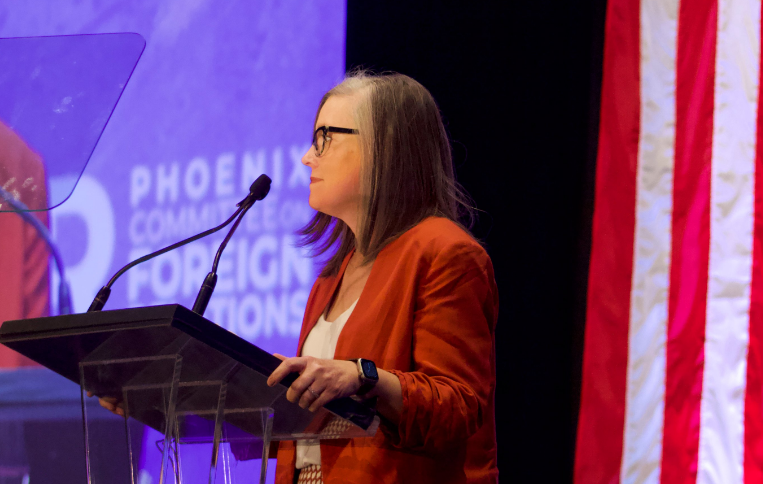
Legislation sent to Gov. Katie Hobbs last week would add an additional layer of legislative oversight before the Arizona Department of Revenue could adopt certain new legal interpretations that increase tax liability.
SB 1221, sponsored by Sen. J.D. Mesnard (R-LD13), would require the Arizona Department of Revenue to notify the chairmen of the Senate Finance Committee and the House Ways and Means Committee before adopting a proposed new interpretation or application of state tax law that would adversely affect taxpayers prospectively. An affected taxpayer would also be permitted to notify the committee chairmen of the proposed change.
🚨FOR IMMEDIATE RELEASE: Senator Mesnard Bill Protecting Taxpayers from Surprise Tax Hikes Heads to Governor
If the committee chairmen hold a hearing on the proposed interpretation or application, the Department of Revenue would be required to provide testimony explaining why the change is necessary.
The Arizona Senate Republican Caucus announced that the measure had passed the Legislature and was being transmitted to Hobbs for consideration. The caucus said the bill is intended to protect taxpayers from unexpected tax burdens and provide public scrutiny before agency interpretations take effect.
“Taxpayers should not wake up one day and discover a state agency has quietly changed the rules in a way that costs them money,” Mesnard said in a statement. “If the Department of Revenue wants to adopt a new interpretation of tax law that negatively impacts Arizona families, job creators, or small businesses, there ought to be transparency, public scrutiny, and accountability first.”
The measure would amend A.R.S. § 42-2078, which governs the Department of Revenue’s new interpretations or applications of tax law. Current law generally bars the department from applying newly enacted law retroactively or penalizing a taxpayer for complying with prior law unless expressly authorized by law.
Current law also provides that when the department adopts a new interpretation or determines that a tax law applies to a new or additional category of taxpayer, the change applies prospectively unless it is favorable to taxpayers. The department may not assess tax, penalties, or interest retroactively based on that change, and the change may be used as an affirmative defense in an administrative or judicial action involving retroactive assessments.
SB 1221 would add a step before that kind of adverse interpretation is adopted. The notice requirement would apply to proposed interpretations or applications of provisions under Title 42 or Title 43 of Arizona law, which govern taxation and income tax.
The bill specifies that a “new interpretation or application” includes policies and procedures adopted by administrative rule, tax ruling, tax procedure, or instructions to a tax return.
The proposal moved through the Legislature largely along party lines.
Mesnard, who chairs the Senate Finance Committee, said the legislation is aimed at giving taxpayers more certainty before state tax administration changes affect families, businesses, and employers.
“SB 1221 helps ensure taxpayers have a voice before government expands its reach, while providing the certainty and predictability people deserve when planning their finances and investments,” Mesnard concluded.
Arizona’s Democrat Governor and Republican legislators are engaged in an escalating political battle over the future of the state’s groundwater.
Last week, Arizona Governor Katie Hobbs took aim at a Republican-led solution to the state’s groundwater supply. Speaking at a conference in Tucson, Hobbs said, “I’m willing to work with any sponsors to pass legislation that’s real, effective and protects water supplies in rural areas. But should the bill remain unchanged it will not get my signature. The bill will silence rural communities and create a convoluted process that will make it nearly impossible for our communities to manage groundwater. It leaves us with the status quo where out of state corporate farmers come from around the world to take advantage of our aquifers, and small communities have their water pumped from beneath them. This is beyond unacceptable.”
The bill Hobbs attacked was SB 1221, which is sponsored by Senator Sine Kerr. The proposal would “establish a process for the designation of a basin management area (BMA) and an active BMA in any location not included in an active management area (AMA), to be initiated by petition to the Director of the Arizona Department of Water Resources, [and] outlines the goals of an active BMA, active BMA council makeup, rights to water, reporting requirements, and requirements for the continuation or termination of an active BMA” – according to the purpose provided by the Senate.
Senator Kerr responded to the Governor’s remarks, writing, “From the start, I’ve been proactive in spearheading meetings for collaboration from the Governor and her office on SB 1221, which would safeguard Arizona’s groundwater resources for generations to come. My goal has and will continue to be to reach a compromise on a solution that won’t hurt rural Arizonans’ livelihoods, their local economies, or their groundwater supply. Yet this week, Hobbs said she would veto the bill and recklessly called it a convoluted process that won’t protect our groundwater. That comment is merely a red herring meant to justify her proposal of big government overreach to regulate groundwater.”
At the conference, Governor Hobbs expressed an interest in working across the aisle to reach a compromise on the vital issue for her state. She said, “We in the state have many shared values: the desire to protect rural Arizona, protect rural water users and slow unmitigated depletion of our rural aquifers. We can and must find common ground to find a solution that works and puts politics aside.”
Kerr, who is the Senate’s Majority Whip and the Chair of the Committee on Natural Resources, clearly did not think that a Hobbs-endorsed proposal would meet the expectations or needs of her constituents and other stakeholders around the state. She added, “Energy and Water Rural Arizonans know what will and won’t benefit their local economies. I wholeheartedly support this proposal because I’ve listened and met with farmers, ranchers, and every other person, industry and organization across AZ who felt they were being alienated from the conversation. I believe in true collaboration, and will continue to work to reach a solution.”
This week, the Arizona House Committee on Natural Resources, Energy & Water considered the legislation and gave the bill its stamp of approval with a 6-4 party-line vote. Republican State Representative Austin Smith said, “The government picking winners and losers is bad policy. Rural Arizona in my district and across the state are facing the brunt of Hobbs draconian water restrictions. SB 1221 provides the tools necessary for everyone to be treated fairly. Thank you Senator Sine Kerr.”
The government picking winners and losers is bad policy. Rural Arizona in my district and across the state are facing the brunt of Hobbs draconian water restrictions.
House Democrats on the committee echoed the governor’s thinking on the featured bill before their panel, calling for another bipartisan piece of legislation to address their collective concerns.
Groundwater is being depleted “at an alarming rate” in rural AZ communities like Wilcox, Gila Bend & Mojave County. GOP water gatekeepers like Sen. Sine Kerr and NREW Chair Gail Griffin will keep it that way if their deeply flawed Sb1221 passes. Multiple rural residents testified… pic.twitter.com/c89znBQ9Db