by Ethan Faverino | Feb 25, 2026 | Education, News
By Ethan Faverino |
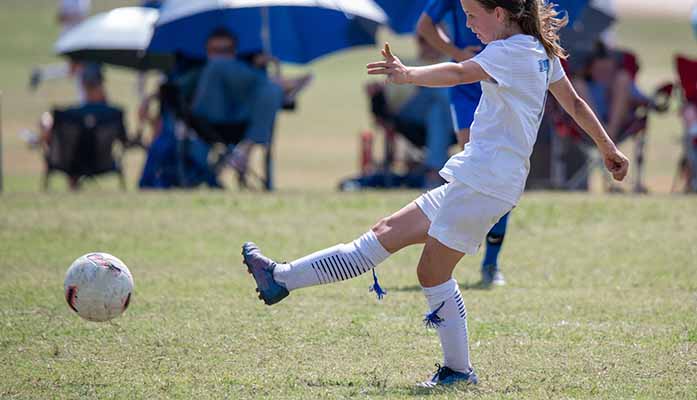
The Arizona House of Representatives passed HCR 2003, the Protect Girls’ Sports in Arizona Act, on February 23, 2026, in a vote of 32 ayes to 25 nays.
Sponsored by Rep. Selina Bliss (R-LD1), the measure now advances to the Arizona Senate. If approved by the Senate, it would refer the proposed law to Arizona voters for consideration on the November 2026 general election ballot.
HCR 2003 seeks to require schools and athletic associations to designate interscholastic and intramural athletic teams or sports as “males/men/boys,” “females/women/girls,” or “coeducational/mixed,” based on an individual’s biological sex as recorded at birth on the original birth certificate. Teams designated for females would not be open to biological male athletes.
The resolution also includes stronger privacy protections, prohibiting schools and athletic associations from authorizing individuals to use restrooms, locker rooms, shower rooms, or other private athletic facilities not designated for their biological sex, effective January 1, 2027.
The measure restores and strengthens elements of Arizona’s 2022 Save Women’s Sports Act (SB 1165), which faced partial blocks by the Ninth Circuit Court of Appeals, creating uncertainty for schools, families, and athletes.
“Today the House acted to protect fair competition for girls across Arizona,” stated Rep. Bliss. “Women’s sports were created because biological differences matter. When those differences are ignored, girls lose roster spots, scholarships, and opportunities they earned. HCR 2003 gives voters the chance to protect female athletes and establish clear, durable rules for schools.”
Additional provisions of the proposed law include:
- Allowing athletes to participate on teams aligned with their biological sex or on coeducational teams.
- Prohibiting government entities, licensing organizations, accrediting bodies, or athletic associations from taking adverse action against schools or associations that maintain separate teams for female athletes.
- Providing a private cause of action for athletes deprived of opportunities or harmed by violations, including for injunctive relief, damages (including for psychological, emotional, or physical harm), attorney fees, and costs.
- Protecting against retaliation for reporting violations, with similar legal remedies available.
- Applying to public and qualifying private schools serving K-12.
“Court rulings have created uncertainty for schools and families,” Rep. Bliss added. “This referral allows Arizona voters to decide whether girls’ sports should remain for girls. It protects privacy in locker rooms and showers and restores clarity statewide.”
HCR 2003 now heads to the Arizona Senate for further consideration. If approved, it will be on this year’s general election ballot.
Ethan Faverino is a reporter for AZ Free News. You can send him news tips using this link.
by Matthew Holloway | Jan 14, 2026 | News
By Matthew Holloway |
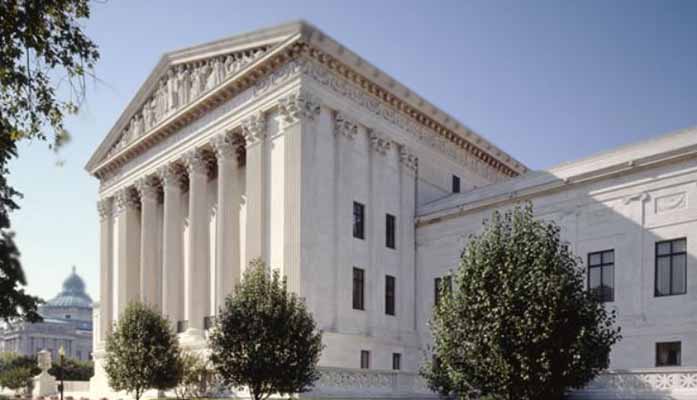
Arizona Senate President Warren Petersen (R–LD14) said he believes the U.S. Supreme Court is likely to uphold state laws that protect girls’ and women’s sports, following oral arguments in a closely watched case on whether biological males may compete in female athletic competitions.
Petersen attended oral arguments in West Virginia v. B.P.J. in Washington, D.C., where the Court heard challenges to state-level laws restricting participation in girls’ sports based on biological sex.
“It was an incredible experience to be in the Supreme Court with the justices in the room hearing their arguments,” Petersen said in an interview with AZ Free News following the hearing. “If I’m reading the room, I think we win this six to three.”
Petersen explained that much of the questioning from the Justices centered on the definition of sex under the law, rather than transgender status itself. “What it’s really boiling down to is the definition of sex,” he said. “They’ve conceded that it’s about sex. They’re not even arguing that it’s about transgender status.”
He described a moment during questioning in which Justice Alito pressed attorneys defending the challenge to the laws on how to define the term “woman,” calling the exchange revealing.
Petersen and House Speaker Steve Montenegro (R-LD29) joined the case through an amicus brief in September 2025 after Arizona Democrat Attorney General Kris Mayes declined to defend the Save Women’s Sports Act. Under Arizona statute, that authority shifted to legislative leadership.
“Unfortunately, you have an attorney general who’s not willing to defend our laws,” Petersen said. “But fortunately, the statute gives the Senate President and the Speaker standing. We were able to intervene and defend the law, and we’ve taken it all the way here.”
Petersen characterized the law as “common sense” and said lawmakers felt compelled to see it defended at the highest level.
“This is the same Women’s Sports Act to protect our girls and make sure they have these opportunities,” he said. “This law needed to be defended.”
Beyond athletics, Petersen said the case raises broader questions about state authority and federal overreach. “If they get this wrong, it would be devastating,” he said. “It would mean that your daughters, your granddaughters, your sisters—their chances to compete in sports and be champions—those dreams are shot.”
Petersen noted that while most states have enacted protections for girls’ sports, a Supreme Court ruling striking those laws down nationwide would leave states with no recourse. “At least if they leave it to the states, there would be some safe harbors,” he said. “If they ruled against everybody, there would be nowhere girls could go.”
Critics of the laws argue that they discriminate against transgender individuals. Petersen rejected that framing, saying the laws preserve opportunities while maintaining fairness.
“They still have opportunities,” he said. “They can be part of a co-ed team; they can play with people of the same biological sex or even create their own leagues. What they can’t do is play in biological girls’ sports.”
He added that the issue is necessary and unavoidable, pointing to female athletes who have lost titles and opportunities under policies that allow biological males to compete in girls’ categories.
If the Supreme Court upholds the laws, Petersen said no new legislation would be required in Arizona. “We already have the law,” he said. “We just want the law that we passed to be upheld.”
If the Court issues a narrow or adverse ruling, Petersen said lawmakers may be forced to explore alternative legislative approaches, though he cautioned that a sweeping loss could take years—or longer—to undo.
“That’s why it’s so critical they get it right,” he said. “If they get it wrong, it’s no different than Roe v. Wade. It could be decades, if ever, until it gets fixed.”
The Court is expected to issue its ruling as late as June this year, according to Petersen.
Matthew Holloway is a senior reporter for AZ Free News. Follow him on X for his latest stories, or email tips to Matthew@azfreenews.com.
by Jonathan Eberle | Dec 29, 2025 | Education, News
By Jonathan Eberle |
Arizona voters could be asked to decide how school athletic teams are classified and how privacy is handled in sports facilities under a ballot referral introduced at the State Capitol. The proposal, HCR2003, was introduced by Selina Bliss and would place the issue on the November 2026 general election ballot. The resolution would require school sports teams and competitions to be designated as male, female, or co-ed, while adding new privacy protections in locker rooms and showers.
“Sports designations must be clear and grounded in basic fairness,” Bliss said in announcing the measure. “My referral requires teams and competitions in Arizona schools and sports associations to be designated as male, female, or co-ed. This lets every student compete safely and on fair terms.”
The referral seeks to restore and strengthen elements of Arizona’s 2022 Save Women’s Sports Act, portions of which were blocked by the Ninth Circuit Court of Appeals. Under the proposal, placement on male or female teams would be determined by the sex listed on an athlete’s original birth certificate, a standard Bliss said would provide consistency for schools and families navigating evolving legal rules.
Supporters of the measure argue that litigation has created uncertainty in states like Arizona, leaving districts without clear direction. Bliss said voters should have the opportunity to weigh in directly rather than relying on ongoing court decisions. “Voters should decide this issue and give young women the opportunities they deserve,” she said. “Passing this referral will protect female athletes and give families confidence that the rules will not shift again in court.”
Bliss also cited her personal background in athletics as informing her perspective on the issue. “As someone who competed in athletics and as a mother who watched her daughter compete, I understand the value of a fair field of play,” she said. “Sports help young people build confidence, discipline, and healthy habits.”
Similar proposals are advancing in other states, including Colorado, Maine, Washington, and Nevada. If approved by the Legislature, HCR2003 would allow Arizona voters to make the final decision at the ballot box.
Jonathan Eberle is a reporter for AZ Free News. You can send him news tips using this link.
by Warren Petersen | Dec 16, 2025 | Opinion
By Sen. Warren Petersen |
For years, Arizona has been an emerging bastion of conservative leadership. Recently the AZ Republic called the Legislature the “most conservative” ever. Over the last decade it has passed landmark policies and defended critical laws around the country, setting an example for the rest of the nation to emulate.
This conservative advantage was threatened a few short years ago, when Katie Hobbs and Kris Mayes assumed their positions as Arizona governor and attorney general, respectively, after an extremely volatile election cycle. These two have stopped at nothing to insert their radical agenda as they seek to transform our state into a liberal utopia to please their friends in California and New York.
While Hobbs has sought to remake Arizona’s policies from her perch as the state’s chief executive, Mayes has been busy on the legal side. Throughout her tenure in office, Mayes has either done the bare minimum or nothing at all to defend key Arizona or national laws. Instead, she has spearheaded the left’s efforts to undermine President Trump’s work to make America great again.
Thankfully, however, the Arizona Legislature, under my leadership as Senate President, has stepped in the gap to uphold laws of great importance to our citizens. Despite our state’s top prosecutor missing in action as she seeks affirmation from her colleagues in New York and California, we have led or joined dozens of lawsuits and legal briefs to preserve conservative laws across our state and nation. These efforts have largely been unprecedented, as legislatures typically defer to their state attorneys general or other government prosecutors on the legal fronts. From early on, though, in Arizona’s divided government, I determined that our state could not afford to sit on the sidelines as Mayes hijacked our legal apparatus for her extremist ways. As a result, Arizona has again asserted itself as a national example, showing other states how to maintain the rule of law in the face of divided governments.
Here are some of the highlights of the cases:
Protecting Election Integrity
In the absence of the state’s attorney general taking action, the Arizona Legislature has been engaged in a prolonged legal battle to protect the integrity of our state’s elections, defending two laws that restrict voters who do not provide documentation that confirm their American citizenship. After I filed an emergency stay application at the U.S. Supreme Court, the Justices affirmed Arizona’s right to reject state form registrations that do not include proof of citizenship. This case is ongoing because of activist judges on the Ninth Circuit Court of Appeals who are attempting to circumvent the Supreme Court’s ruling. Arizona will continue to defend our own law, and we will come to the aid of any state working to require proof of citizenship.
Protecting the Integrity of Women’s Sports
Over half the states in America have enacted legislation to preserve fairness in sports, including Arizona, which passed the Save Women’s Sports Act, to ensure that girls’ athletic events at public schools are reserved for biological females. Arizona’s law, like most other states, remains tied up in federal litigation, with the Legislature itself stepping in to defend the statute after Mayes declined to do so. We defended Arizona’s law up to the U.S. Supreme Court, in addition to filing briefs of support for other states’ fights. We cannot allow activist judges and radical groups to erase protections that women and girls have fought for generations to secure.
Protecting Children
The Arizona Legislature defended the state’s lifetime registration and reporting requirements for convicted sex offenders, giving families and law enforcement greater abilities to track high-risk offenders. Despite the importance of the protections, Mayes failed to defend the law, abandoning the state’s responsibility to safeguard communities. However, we refused to allow the safety of our children to be jeopardized, and we recently won in federal court. The judge’s ruling in this case was a victory for every parent in Arizona.
Protecting the Second Amendment
The Arizona Legislature joined a national coalition to urge the U.S. Supreme Court to end Mexico’s frivolous lawsuit against U.S. firearm manufacturers for crimes committed by Mexican cartels in that country. Earlier this year, the Court agreed with our position, ruling that the lawsuit infringes on U.S. sovereignty by trying to impose restrictions on Second Amendment rights and to control how the American firearms industry is regulated. We were proud to work with other states to uphold our nation’s sovereignty, protect Americans’ right to bear arms, and safeguard lawful gun manufacturers from those attempting to destroy this industry. I will always engage in legal battles to protect our Second Amendment rights when Mayes refuses to do so.
Protecting Against Federal Land Grabs
Two years ago, the Biden-Harris administration confiscated nearly a million acres of land in northern Arizona, designating this space as a “national monument.” This unlawful designation will result in fewer jobs, diminished state trust land values, and billions in lost tax revenues. I sought to overturn this action in federal court to free our state from the grasp radical environmentalists had over the previous administration. As we argued throughout this case, Biden’s maneuver had nothing to do with protecting actual artifacts, but halting all mining, ranching, and other local uses of federal lands that are critical to our independence from adversary foreign nations, our food supply, and the strength of our economy.
Protecting America’s Energy
After the Arizona Legislature joined a national coalition to challenge a radical and costly rule imposed by California requiring trucking companies to retire their diesel-fueled models, the state agreed to repeal its ‘Advanced Clean Fleets’ mandate. This rule would have created dire impacts to the supply chain, raising costs for local trucking companies and their customers. For years, California has operated with near impunity as its leaders passed unconstitutional regulations that brought great harms to Arizona consumers. In the absence of our attorney general holding California accountable to the rule of law, the state Legislature gladly stepped up to protect our citizens from this egregious abuse of power and emerged victorious.
Warren Petersen is the President of the Arizona State Senate and represents Legislative District 14.
by Jonathan Eberle | Sep 23, 2025 | News
By Jonathan Eberle |
Arizona Senate President Warren Petersen and House Speaker Steve Montenegro announced that Arizona’s legislative leaders have filed amicus briefs in two companion cases before the U.S. Supreme Court: Little v. Hecox (Idaho) and West Virginia v. B.P.J. The cases, expected to be argued this fall, address whether states may preserve the integrity and safety of girls’ and women’s sports by limiting participation to biological females.
Petersen emphasized that the cases offer the Court an opportunity to uphold fairness and safety in female athletics. “These cases give the Court an opportunity to affirm what science and common sense already make clear: biological males hold inherent physical advantages that make women’s athletic competitions unfair and unsafe when they are allowed to participate,” he said.
Speaker Montenegro echoed these sentiments, highlighting Arizona’s legislative action. “Arizona passed the Save Women’s Sports Act to keep competition fair for girls,” he said. “It’s unacceptable that our state’s top lawyer refuses to defend that law. While Attorney General Mayes stands aside, House Republicans are doing the job she won’t—standing up for Arizona’s daughters and every female athlete who trains and competes. The Ninth Circuit sidelined our law; I’m confident the Supreme Court will correct course and affirm what parents and coaches know: girls’ sports are for girls.”
The Save Women’s Sports Act, signed into law in 2022, restricts participation in girls’ athletic events at public schools to biological females. After Attorney General Mayes declined to defend the statute, Republican leaders in the House and Senate intervened in federal court. While the Ninth Circuit recognized the state’s interests in competitive fairness, student safety, and equal athletic opportunities, it left the act enjoined as applied to two transgender, biologically male athletes.
Arizona’s briefs in the Idaho and West Virginia cases urge the Supreme Court to uphold state laws that maintain female-only sports to protect safety, fairness, and equal athletic opportunities. The filings assert that the federal injunction against Arizona’s law has already harmed girls, impacting placements, roster spots, and playing time. They also argue that courts should defer to elected legislatures—rather than unelected athletic bodies—when setting uniform participation standards, particularly in areas involving scientific and medical disputes.
“Girls deserve a level playing field,” Speaker Montenegro said. “House Republicans will continue to vigorously defend Arizona’s law and support states working to keep girls’ sports fair and safe.” The Supreme Court’s rulings in the Idaho and West Virginia cases will likely shape the future of Arizona’s law and similar legislation across the country.
Jonathan Eberle is a reporter for AZ Free News. You can send him news tips using this link.