by Daniel Stefanski | Oct 31, 2024 | News
By Daniel Stefanski |
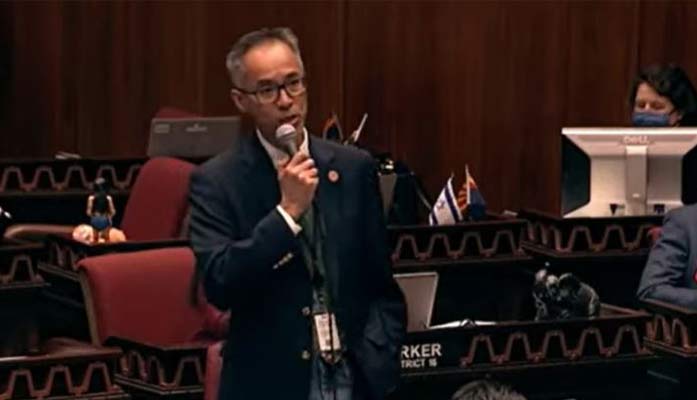
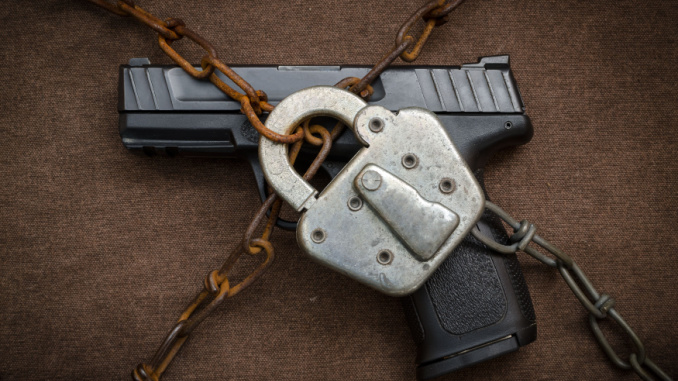
A rural Arizona legislator received an honor for his defense of a timeless right embedded in the Bill of Rights.
Earlier this month, State Representative Quang Nguyen, a Republican, received the 2024 “Legislator of the Year” award from the Arizona Citizens Defense League (AzCDL) for “his steadfast commitment to protecting Second Amendment rights.”
In a statement accompanying his announcement of the award, Nguyen said, “I’m deeply honored to receive this recognition from the Arizona Citizens Defense League. Protecting the Second Amendment is a responsibility I take seriously, and I will continue to stand with the citizens of Arizona to ensure their rights are not infringed upon. The AzCDL plays a vital role in protecting our constitutional freedoms of firearm owners across our state. I’m proud to work alongside this important organization in this ongoing effort to safeguard the liberties of all Arizonans.”
According to his press release, Representative Nguyen “plays a key role in advancing legislation that defends the rights of gun owners in Arizona, while blocking efforts aimed at undermining those protections.” Nguyen serves as the Chairman of the all-important House Judiciary Committee, where much of these proposals originate.
Last year, Nguyen’s seatmate, Representative Selina Bliss, earned the same award from the Second Amendment organization.
Demonstrating his watchful eyes over the Second Amendment rights of Arizonans, Nguyen recently sent a letter to municipal leaders in the City of Sedona, requesting that they review an ordinance dealing with firearms. He highlighted that the prohibition in the ordinance “on carrying firearms is not consistent with Arizona Revised Statutes § 13-3108,” thus making it “invalid and unenforceable because it exceeds what state law authorizes.
Nguyen was previously named to “a select group of Republican legislators nationwide chosen for GOPAC’s 2024 Class of Emerging Leaders, an honor which recognizes a member’s strong sense of service, purpose, and effective leadership in the State Legislature.”
According to its website, AzCDL “is a non-profit 501(c)(4), all volunteer, non-partisan grassroots organization dedicated to the principles contained in Article II, Section 2 of the Arizona Constitution that ‘All political power is inherent in the people, and governments derive their just powers from the consent of the governed, and are established to protect and maintain individual rights.’”
The organization’s goals for Arizona are as follows:
- Freedom to Carry – Restore and protect the right of law-abiding citizens to carry a firearm openly or discreetly anywhere they have a right to be.
- Fewer restrictions on the lawful carrying of firearms on public property (state and local government buildings, parks, etc.).
- Restaurant Carry – The ability of law-abiding citizens to dine out while carrying a firearm.
- Continued strengthening and preservation of the right of presumed innocence in self-defense situations.
- Strong State Preemption – Firearms laws should be consistent throughout the State.
- Liability responsibility for property owners who ban firearms.
- Continued improvements to CCW laws.
Daniel Stefanski is a reporter for AZ Free News. You can send him news tips using this link.
by Daniel Stefanski | Oct 26, 2024 | News
By Daniel Stefanski |
Arizona Republicans highlighted a questionable appearance by a controversial figure on behalf of swing-district legislative Democrats.
Last week, Jane Fonda landed in Phoenix to appear with State Senator Christine Marsh and her other running mates for the critical Legislative District 4.
Karen Gresham, who is running for State House of Representatives, posted, “Climate change is on the ballot and Jane Fonda is in town! Here she is helping Kelli Butler, Christine Marsh and me launch our first canvass of this all-important weekend. Let’s Get Out the Vote.”
Arizona Senate President Pro Tempore T.J. Shope immediately called out the trio of Democrats for this association with Fonda, writing, “I didn’t have Dems campaigning with Hanoi Jane on my bingo card but, here we are. Just another example that AZ Democrats are too extreme and too far left to be given the levers of power in Arizona.”
State Representative Quang Nguyen added, “Jane fonda??? Isn’t she the jerk sitting at the NVA anti-aircraft guns yucking it up about shooting down American aircrafts during the VN War? Now I know where you all stand. Disgusting!!!”
Fonda also appeared at a Legislative District 2 rally, helping other vulnerable Democrats get out the vote. Democrat Judy Schwiebert is running for state Senate in this district. Both Marsh and Schwiebert did not appear to post about Fonda’s appearance on their X accounts.
Republican consultant Constantin Querard opined on Fonda’s assistance for these Democrats. He said, “Pretty much abandoning the moderate label and going full Fonda is interesting. Going hard left at this late stage suggests your effort is more about turning out your base instead of growing it. Imagine building your brand around celebrities famous for being so anti-American?”
Meanwhile, Schwiebert’s Republican opponent for the all-important state Senate seat, incumbent Shawnna Bolick, contrasted her actions and activities with her rival’s. She wrote, “While my leftwing general election opponent was chumming it up with Hanoi Jane – the same Jane Fonda who hung out with North Vietnamese troops atop an anti-aircraft gun being used to target American planes in 1972, I was being recognized by the Arizona Conservative Policy Alliance Action Committee as the 2024 recipient of ‘Advocate for Arizona’s Youth’ for my work protecting our youth. One of the many pieces of legislation signed into law this session was my lemonade stand bill helping to protect youth entrepreneurs. Thank you to ACPA and my fellow award recipients in the West Valley.”
Senator Bolick faces a tough General Election fight in November for her bid to return to the Arizona Legislature for another two years. Arizona Legislative District 2 is one of the most competitive in the state, with a 3.8% vote spread in the past nine statewide elections. It is very winnable for Republicans, however, as the party has emerged victorious in six out of those nine elections.
Legislative District 4 is another competitive seat with a 3.4% vote spread between Republicans and Democrats in the past nine statewide elections, according to the Arizona Independent Redistricting Commission. Republicans have won five of those contests, compared to four for Democrats.
Daniel Stefanski is a reporter for AZ Free News. You can send him news tips using this link.
by Daniel Stefanski | Oct 22, 2024 | News
By Daniel Stefanski |
A Republican state legislator is standing up for the Second Amendment in a municipal matter.
Last week, State Representative Quang Nguyen transmitted a letter to Sedona Mayor Scott Jablow. The letter, which was also sent to city councilmembers, addressed the validity of Ordinance 12.30.090, which states that “[i]t shall be unlawful to carry or discharge into any park, trail, or open space area firearms or projectile weapons… or other device capable of causing injury to persons or animals or damage or destruction to property.”
In a press release accompanying the announcement of his letter, Nguyen said, “I urge the City of Sedona to review Ordinance 12.30.090 to ensure it complies with Arizona law. It’s important that local ordinances do not infringe upon the constitutional rights of Arizonans or conflict with state statutes.”
In his letter, Representative Nguyen highlighted that the prohibition in Sedona’s Ordinance “on carrying firearms is not consistent with Arizona Revised Statutes § 13-3108,” thus making it “invalid and unenforceable because it exceeds what state law authorizes. He pointed out that “cities may…enact ordinances ‘[l]imiting or prohibiting the discharge of firearms in parks and preserves’ when certain statutory conditions are met.”
The northern Arizona lawmaker requested that the city leaders “conduct a legal analysis of the validity of Ordinance 12.30.090 and contact me at your earliest convenience to discuss your findings and any next steps you intend to take to ensure that Ordinance 12.30.090 complies with state law.”
Daniel Stefanski is a reporter for AZ Free News. You can send him news tips using this link.
by Daniel Stefanski | Jul 30, 2024 | News
By Daniel Stefanski |
Two Arizona legislators are expressing concern over a recent closure of a Maricopa County shooting complex.
Earlier this month, State Representatives Quang Nguyen and Selina Bliss wrote a letter to Maricopa County Sheriff Russ Skinner to “express concerns regarding the Joe Foss Shooting Complex.” They stated that it was their understanding that this complex was closed to the public on June 30, 2024, and they “strongly urge[d] the Sheriff “to reopen the shooting range to the public as soon as possible.”
The legislators shared that “According to the Maricopa County Parks and Recreation, the reason for this closure was to allow for more officers and deputies to be able to learn, qualify, and requalify with firearms and reduce the wait time for such training.”
“The Joe Foss Shooting Complex has been an important resource in Arizona for many years, gaining many consistent, loyal members,” wrote the lawmakers. “Many civilians, most being long-time members of the JFSC community, are frustrated with their favorite shooting range closing.”
They added, “With this closure, we have heard concerns regarding the places to which people will start taking their shooting business – some say that those once-loyal members of the Joe Foss Shooting Complex will start shooting in the desert instead. Keeping the Joe Foss Shooting Complex open to the public would eliminate that concern and avoid other unanticipated problems or unintended consequences.”
The Maricopa County Parks and Recreation posted an update to the situation on July 15, saying, “We appreciate the valuable feedback from residents concerned about the closing of the Joe Foss Shooting Complex at Buckeye Hills Regional Park. As a result, Maricopa County Parks and Recreation will conduct further analysis of the site’s condition and use and reevaluate whether there may be opportunities to provide public shooting again going forward. Site analysis will be done by an independent firm with specialty in range repair and mitigation. No decision about future activities at Joe Foss will be made until after their report is complete and repairs are finished. The range will remain closed during that time.”
Daniel Stefanski is a reporter for AZ Free News. You can send him news tips using this link.
by Daniel Stefanski | Apr 24, 2024 | News
By Daniel Stefanski |
A Republican State Representative is being recognized for his leadership.
Last week, Arizona State Representative Quang Nguyen, the Chairman of the House Judiciary Committee, announced that he was “among a select group of Republican legislators nationwide chosen for GOPAC’s 2024 Class of Emerging Leaders, an honor which recognizes a member’s strong sense of service, purpose, and effective leadership in the State Legislature.”
In a statement to commemorate the news, Representative Nguyen said, “In my time as a legislator, I’ve dedicated myself to addressing the challenges that our state and communities face. I very much look forward to this unique opportunity presented with the Emerging Leaders Program and will seek to apply what I learn to my legislative efforts and serve the people of Arizona.”
According to the press release issued by Nguyen’s Office at the Arizona House of Representatives, the GOPAC Emerging Leaders Program “is an annual initiative designed to develop the next generation of Republican leadership. Candidates are nominated by their state’s legislative leaders and chosen by GOPAC for their potential to effect positive changes in their states and rise within Republicans ranks.”
Representative Nguyen serves Yavapai County in Legislative District 1.
Daniel Stefanski is a reporter for AZ Free News. You can send him news tips using this link.