by Jonathan Eberle | Sep 17, 2025 | Economy, News
By Jonathan Eberle |
Arizona residents could collectively lose millions of dollars to fake gambling websites this fall, according to a new study analyzing Federal Trade Commission (FTC) scam reports. The report, conducted by online gaming marketplace Chicks Gold, found that Arizona consumers reported $7.9 million in losses between April and June of this year from scams linked to fake gambling and gaming sites. Analysts warn those numbers could rise sharply as the NFL season, the most bet-on sport in the United States, fuels a wave of online wagering.
“Scammers know there’s likely to be a surge in inexperienced bettors searching online for wagering platforms,” said Al Alof, CEO of Chicks Gold and spokesperson for the study. “That makes them especially vulnerable to fake sportsbooks or offers that appear too good to be true.”
The study examined scams across five FTC subcategories connected to fraudulent gambling platforms: malware and exploits, online shopping, tech support, social networking, and prizes, sweepstakes, and lotteries. Nationally, 106,531 reports were filed in Q2, totaling nearly $192 million in losses, or an average of $1,965 per report. Arizona’s losses were significantly higher: 2,830 reports led to nearly $7.95 million stolen, averaging $2,811 per report—43% higher than the national average.
The most damaging category for Arizona residents was prizes, sweepstakes, and lotteries, which accounted for $4.1 million lost across just 408 reports, averaging more than $10,000 per incident. That placed Arizona sixth in the nation for per-report losses linked to these types of scams, behind Montana, Maine, South Dakota, Wyoming, and North Dakota.
According to the study, fraudulent gambling and gaming operations exploit consumers in several ways:
- Malware and exploits: Fake casino sites that prompt users to download spyware disguised as “mods” or “cheat tools.”
- Online shopping scams: Fake sites selling in-game items, currency, or memberships that never arrive.
- Tech support fraud: Pop-ups or sham help desks convincing players to share sensitive information.
- Social networking scams: Fake or hijacked profiles distributing phishing links in gaming communities.
- Prizes, sweepstakes, and lotteries: Lures promising jackpots or loot boxes that require upfront payment or personal data.
“These scams thrive on community and urgency,” Alof said. “Gamers searching for new releases or fans eager to place bets can be tricked into handing over money or sensitive information.” The rise in gambling scams has also been noted by the Better Business Bureau (BBB), which reports that complaints about online gambling platforms more than doubled since 2023. Users described problems ranging from malfunctioning slot games and altered wagers to deceptive ads and phishing attempts.
To protect themselves, Alof urged consumers to:
- Verify licensing and URLs: Legitimate sportsbooks are licensed by state regulators. Misspelled domains or unofficial app stores are red flags.
- Avoid unrealistic offers: “Guaranteed wins” or oversized bonuses are often bait for scams.
- Use secure payments: Credit cards or PayPal provide better protection than wire transfers or gift cards. Enabling two-factor authentication also reduces risk.
Analysts caution that both sports bettors and traditional gamers face exposure. Beyond the NFL betting surge, Alof noted that the release of popular video games creates another avenue for fraud. When legitimate gaming sites crash under demand, players may turn to unverified download links, which scammers exploit. With Arizona already posting losses above the national average, experts warn vigilance will be crucial in the months ahead.
Jonathan Eberle is a reporter for AZ Free News. You can send him news tips using this link.
by Corinne Murdock | Jan 28, 2023 | News
By Corinne Murdock |
On Wednesday, the city of Phoenix rescinded the NFL’s authority to regulate free speech via signage throughout the Super Bowl season. The city’s resolution, issued Wednesday, followed their court loss last week in Paulin v. Gallego, in which a resident challenged the city’s resolution granting the NFL authority to approve or deny residents’ signage.
The change comes with less than one month left to go before the Super Bowl.
The city has a significant financial incentive to cater to the NFL’s requests. When the city last hosted an NFL game in 2015, they experienced a $700 million boost. Gallego told Scripps News this month that they anticipate over one million visitors to the downtown area.
“These events and activities will bring significant revenue and media exposure to the City of Phoenix during the event period,” stated the city’s original resolution.
In anticipation of this lucrative opportunity for exposure, the city enacted a resolution in October granting the NFL and Arizona Super Bowl Host Committee the authority to reject signage within a “clean zone” constituting two square miles in downtown Phoenix.
Direction on whether existing signage had to remain was unclear: the city issued contradictory instructions on its website, in one post declaring that temporary signage had to be removed by last Halloween, while another post declared that the signage rule didn’t take effect until Jan. 15.
Additionally, the city’s signage rule applied to all types of signage: menus, political yard signs, and trespassing warnings. The ordinance only left alone any permitted permanent signs — not temporary ones.
Local business owner Bramley Paulin challenged the city’s initial resolution; the rule prevented him from advertising on his property. Paulin wanted to advertise to the upwards of 1.5 million people anticipated to attend a nearby music festival in the week leading up to the Super Bowl. Yet, any potential business partners told Paulin they could not advertise on his property since he was in the city’s “clean zone,” and they were considered non-NFL partners.
In an email exchange, Coca-Cola informed Paulin that they would receive a cease-and-desist letter if they attempted to advertise within the “clean zone.”
Any business seen as competition to the NFL couldn’t advertise — effectively giving the NFL a monopoly over their allotted downtown area.
In response, Paulin sued the city with the help of the Goldwater Institute. In the lawsuit, the Goldwater Institute asserted that the city’s ordinance gave power to unaccountable private actors and stripped Paulin of his right to limited, accountable, and transparent government.
“The [city’s] resolution further violates the separation of powers by giving the NFL and the Hosting Committee unchecked power to make decisions about Arizonans’ constitutional rights, without the panoply of safeguards by which citizens can hold their governments accountable, such as public hearings, record requests, and elections,” stated the lawsuit.
READ PAULIN V. GALLEGO HERE
A trial court judge issued a temporary injunction on the city’s ordinance; a more permanent block of the rule was contingent on the city removing it completely in Wednesday’s meeting.
The Goldwater Institute noted on its online profile of the lawsuit that cities in recent years have begun enacting similar, restrictive “clean zone” ordinances to cater to mega-events like the Super Bowl.
Corinne Murdock is a reporter for AZ Free News. Follow her latest on Twitter, or email tips to corinne@azfreenews.com.
by Terri Jo Neff | Jan 13, 2023 | News
By Terri Jo Neff |
A judge has been asked to put an end to a City of Phoenix ordinance which grants the NFL and the Arizona Super Bowl Host Committee authority over how and where residents and property owners can exercise their free speech rights before and after the Feb. 12 Super Bowl.
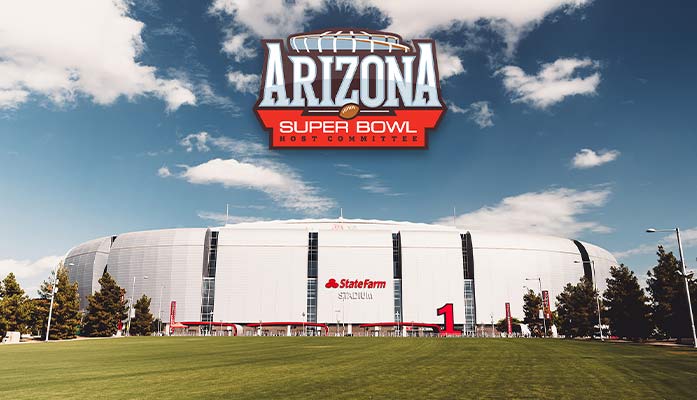
Although Super Bowl LVII is being played at Glendale’s State Farm Stadium, many of the NFL’s pregame festivities will be held in Phoenix. As a result, the Phoenix City Council quietly approved an ordinance establishing a nearly two-square-mile Special Promotional and Civic Event Area which encompasses most of downtown.
Anyone in the event area, also known as the “Clean Zone” is barred for the three weeks before the big game and one week after from displaying any temporary signage without the approval of the city as well as the NFL and the Arizona Super Bowl Host Committee.
The Goldwater Institute warned city officials weeks ago to put an end to the prohibitive ordinance or face legal action. There was hope the matter would be resolved Tuesday when council members met in a non-public Executive Session on Tuesday.
But when the ordinance was not repealed, the Goldwater Institute followed through on its pledge to defend those whose constitutional rights are being infringed by the ordinance. Its lawsuit filed Wednesday seeks an injunction blocking enforcement of the ordinance.
Phoenix resident Bramley Paulin is the plaintiff represented by the Goldwater Institute, while Mayor Kate Gallego and City Manager Jeff Barton are defendants in their official capacity along with the city as a municipal corporation.
“The Phoenix signage restrictions are just the latest instance in a disturbing, years-long nationwide trend of local governments forcing their own citizens to beg the NFL’s permission to speak freely. But Goldwater intends to stop this trend,” according to John Thorpe, an attorney for the Goldwater Institute.
READ MORE
Thorpe says Paulin, who is also a local business owner, has suffered firsthand the effects of city’s special deal with the NFL.
“While Bramley would like to lease his property for temporary signage placements, businesses won’t even talk to him because they’re afraid to do anything – even on private property, in compliance with all the regular city ordinances – without the express approval of the NFL.”
Thorpe argues that the signage restrictions violate the Arizona Constitution’s free speech protections while also flouting the Constitution’s due process of law guarantee by infringing on residents’ rights without providing any of the minimum procedural safeguards the Constitution requires.
“Moreover, the restrictions violate the Arizona Constitution’s principles of separation of powers, giving two unaccountable private entities—the NFL and the Arizona Super Bowl Host Committee—a blank check to wield government power against private citizens,” Thorpe says.
It is estimated the ordinance encroaches on the rights of hundreds of businesses and thousands of residents.
Paulin issued a statement after the lawsuit was filed on his behalf. He said it is not right that Phoenix city officials are letting the NFL decide what he can and cannot say on his own property.
“The government shouldn’t censor business owners like me, or any residents of the downtown area, when we communicate with the public—and it certainly shouldn’t let private companies decide what we can say,” Paulin said.
Terri Jo Neff is a reporter for AZ Free News. Follow her latest on Twitter, or send her news tips here.
by Terri Jo Neff | Dec 19, 2022 | News
By Terri Jo Neff |
Although Super Bowl LVII will be played in Glendale, the residents, property owners, and business owners in downtown Phoenix must obtain permission from the NFL to place temporary signage on their own property before and after the big game.
Phoenix city officials passed Resolution 22073 earlier this year to designate nearly all of downtown as a Special Promotional and Civic Event Area in connection with the Super Bowl game being played at State Farm Stadium on Feb. 12.
The NFL has planned several pregame events at venues across the area, including downtown Phoenix. As a result, a little publicized provision of the city’s resolution restricts “all temporary signage” unless approved by city staff, the NFL, and the Arizona Super Bowl Host Committee.
“In other words, the city has banned hundreds of businesses, and thousands of residents, from speaking freely without permission from the government and two of the government’s handpicked entities,” explains John Thorpe, an attorney for the Goldwater Institute which is fighting back on the constitutional restriction.
Thorpe sent a letter on behalf of a Phoenix property owner to City Attorney Julie Kriegh last week demanding an end to the unconstitutional free speech restrictions.
“The ordinance also violates constitutional guarantees regarding due process and improper delegation of government power by broadly authorizing two private entities—the NFL and the Arizona Super Bowl Host Committee—to regulate private citizens’ speech with unfettered discretion and no procedural safeguards,” Thorpe wrote.
The signage restriction went into effect Nov. 1 with no fanfare from city officials. It remains in effect until Feb. 19, 2023, a full week after the Super Bowl. The Goldwater Institute became involved after Bramley Paulin sought to work with city officials so he could post temporary signage to advertise that his property is available to be leased.
Instead, Paulin was informed the property is within the “Clean Zone” covered by the Special Promotional and Civic Event Area. As a result, he cannot utilize the signage without authorization from the NFL and the host committee.
The city’s actions have already imposed substantial harm on Paulin, Thorpe told the city attorney. The letter seeks assurance that Paulin or his representatives may advertise on his property “without unreasonable restriction and without any input or review by the NFL or the Super Bowl Host Committee.”
It is unclear how city officials believe such an overreaching censorship deal is legal, let alone in the best interest of its residents. It does not appear that such restrictions were implemented in Inglewood, California during this year’s Super Bowl.
And there is no record of such restrictions back in 2015 when the Super Bowl was last played in Arizona, also in Glendale at what is now known as State Farm Stadium.
Thorpe acknowledges that hosting Super Bowl festivities is an exciting opportunity for many Arizonans, but he argues no benefits of any sporting event should come at the cost of forcing Arizonans to surrender their constitutional rights.
“And decisions about the free expression rights of downtown residents should not be delegated to unaccountable private parties,” he added.
AZ Free News has reached out for a comment about the free speech restrictions from Fox Sports and the Westwood One radio network, which are broadcasting Super Bowl LVII. A similar request was sent to Apple Music, the sponsor of the halftime show, as well as Roc Nation Management which represents Super Bowl halftime performer Rihanna.
No responses were received by press time.
Terri Jo Neff is a reporter for AZ Free News. Follow her latest on Twitter, or send her news tips here.
by B. Hamilton | Jun 3, 2021 | News
By B. Hamilton |
Rep. Reginald Bolding’s demand that the National Football League (NFL) reject Arizona as the site for future Super Bowls because legislators have dared to pass election integrity reforms have apparently been ignored. On Wednesday, the City of Glendale and the NFL announced that Super Bowl LVII will be played at State Farm Stadium on Sunday, February 12, 2023.
The Super Bowl is the annual championship game of the NFL. It has served as the final game of every NFL season since 1966.
As previously reported by AZ Free News, Bolding broached the issue in a May 11 letter to NFL Commissioner Roger Goodell on the same day the Senate passed SB1485, a bill which could remove more than 100,000 names from the early voting list of voters who continually fail to utilize the early ballot option.
RELATED ARTICLE: Rep. Bolding Raises Possibility Of NFL Pulling Super Bowl LVII From Arizona
According to the economic study cited in the AZ Free News report, after last year’s Super Bowl LIV in Miami showed that visitor spending -including spectators, media, teams, and NFL – brought in nearly $250 million to the Greater Miami area. There were also millions in short term labor income, and a $34 million bump in local and state tax revenues connected to the event.