by Jonathan Eberle | Mar 14, 2025 | News
By Jonathan Eberle |
Arizona lawmakers are advancing a series of bills aimed at increasing transparency, accountability, and taxpayer protection. These measures tackle issues ranging from government spending on elections to school board meetings and travel, with a focus on ensuring that public funds are used responsibly and efficiently. With strong support from various groups, these bills reflect ongoing concerns about how taxpayer money is spent and how local government actions are conducted.
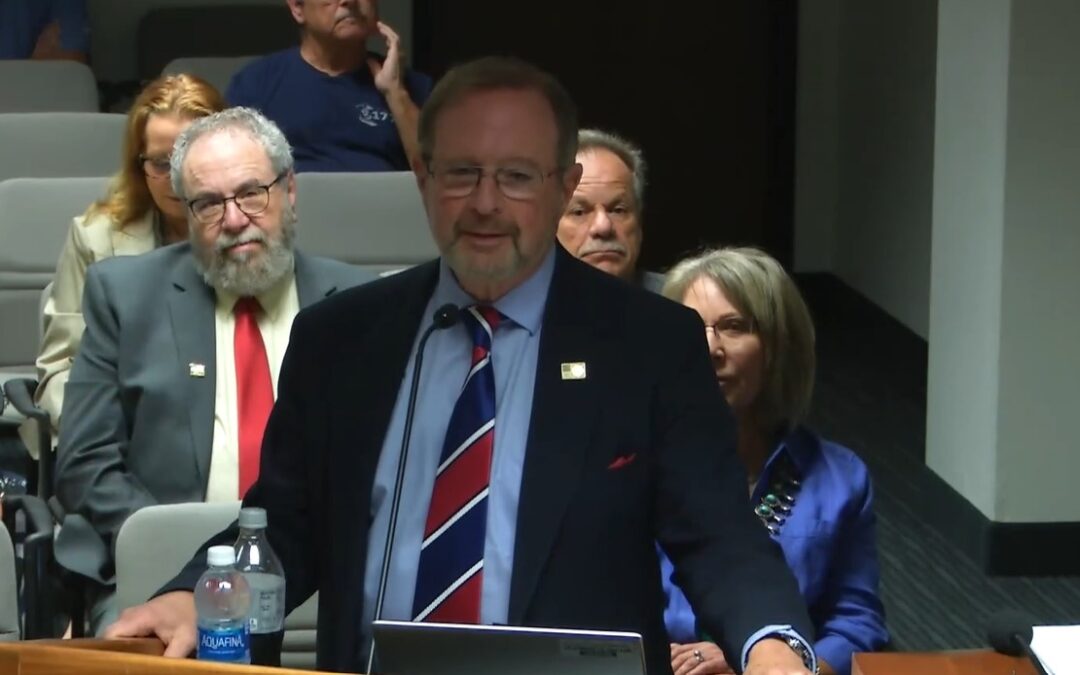
One of the most significant pieces of proposed legislation, HB2722, is backed by the Arizona Free Enterprise Club and sponored by Rep. Neal Carter (R-LD15). The bill seeks to prevent taxpayers from indirectly subsidizing private businesses through government gifts. Specifically, it targets “gift clauses” in state and local government contracts, which some argue allow for inappropriate use of taxpayer funds to benefit private entities.
The Arizona Free Enterprise Club has been vocal about the need for stronger protections against such expenditures. The organization has stated that this bill is necessary to curb the growing trend of government spending on private corporations without clear public benefit.
“Taxpayers should not be used as a backdoor financing mechanism for private companies,” said Arizona Free Enterprise Club officials. “This bill is about ensuring that public dollars are spent in a way that directly benefits the public, not private interests.” If passed, this bill would create stricter guidelines on how public funds can be spent and would allow taxpayers to hold officials accountable when misused funds are discovered.
Another bill making its way through the Arizona legislature is SB1036, supported by the Goldwater Institute and sponosred by Sen. John Kavanagh (R-LD3). This bill targets government spending on influencing elections, a topic that has sparked considerable debate in recent years. SB1036 would create a private right of action for taxpayers, allowing individuals to sue if they believe government funds are being spent on efforts that influence an election. This would make it easier for citizens to challenge the use of taxpayer money in elections, particularly when the spending appears to be partisan or otherwise improper.
The Goldwater Institute has argued that taxpayers have a right to ensure their money isn’t used to sway political outcomes. According to a recent report by the organization, there have been multiple instances of local governments spending taxpayer funds to advocate for policies that align with political interests, which has raised concerns about government overreach.
“Governments should not be using taxpayer money to influence the political process,” said Goldwater Institute officials. “This bill provides taxpayers with the ability to stand up for their rights and ensure public resources are not misused.”
Another bill, HB2169, which was introduced by Representative Matthew Gress (R-LD4), seeks to address transparency within Arizona’s public school districts. The bill would require school board meetings to be held in public facilities within the district, ensuring that they are easily accessible to the communities they serve. Additionally, the bill mandates that school boards must receive public approval before engaging in out-of-state travel, making it more difficult for administrators to make costly decisions without community oversight.
This legislation gained near-unanimous support, with proponents arguing that it ensures greater accountability for how public schools operate and how funds are spent. Critics of the current system have pointed to examples of school board members using taxpayer money for luxury travel without clear, public approval or benefit. A notable incident involved a local school district that faced backlash after spending taxpayer funds on extravagant trips while simultaneously requesting additional funding from voters for educational needs.
“Public education is about serving the community,” said Representative Gress in a statement. “We need to make sure that the actions of school boards are always in the public interest. This bill strengthens public trust in our school systems.”
Jonathan Eberle is a reporter for AZ Free News. You can send him news tips using this link.
by Jonathan Eberle | Mar 11, 2025 | News
By Jonathan Eberle |
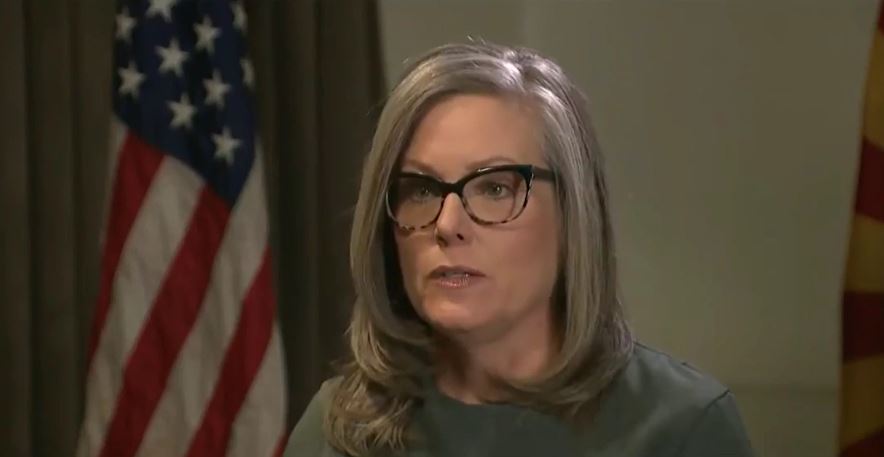
Arizona’s House Republican leadership has issued a strong condemnation of Governor Katie Hobbs’ handling of the state’s Developmental Disabilities (DDD) program, citing a $122 million budget shortfall and accusing the administration of gross mismanagement. The joint statement, released last week, criticized the governor for reckless spending decisions and a lack of consultation with the legislature, which they say has contributed to a financial crisis in the program.
House Speaker Steve Montenegro, Majority Leader Michael Carbone, Majority Whip Julie Willoughby, and Speaker Pro Tempore Neal Carter joined forces to decry what they called Hobbs’ failure to take responsibility for the growing issues facing the program. The DDD program, which serves Arizona’s most vulnerable citizens—those with developmental disabilities—has seen its financial situation worsen due to an unsustainable increase in costs.
The Arizona Developmental Disabilities program is a $4 billion initiative that provides essential services and care for individuals with developmental disabilities. According to the House Republicans, the program is on track to double in cost from fiscal year 2023 to fiscal year 2026, creating a serious budget shortfall that the governor’s office has failed to adequately address.
Republican leaders were especially vocal in their criticism of Governor Hobbs’ management of the program, accusing her of making “reckless spending decisions” that have led to the current crisis. The lawmakers pointed out that the governor’s administration had failed to work collaboratively with the legislature to develop solutions, instead opting for unilateral actions that have only exacerbated the problem.
“Governor Hobbs’ gross mismanagement puts Arizona’s most vulnerable citizens at risk,” the joint statement reads. “Her administration’s reckless spending decisions—made without consulting the Legislature—have bankrupted the DDD program, creating an avoidable crisis. Now, she’s demanding a taxpayer bailout without accountability or reforms.”
Adding fuel to the fire, the House Republicans also highlighted the recent shake-up within the governor’s administration. Governor Hobbs’ budget director resigned, she demoted the director of the Department of Economic Security (DES), and removed her health policy advisor—all actions that Republican lawmakers argue signal a lack of leadership and accountability within the administration.
Instead of collaborating with lawmakers to address the growing concerns, House Republicans claim that Governor Hobbs has deflected blame, choosing to focus on political tactics rather than on solving the issue at hand. They argue that these leadership changes are a direct result of the administration’s inability to manage the program effectively.
Jonathan Eberle is a reporter for AZ Free News. You can send him news tips using this link.
by Daniel Stefanski | Jan 26, 2025 | Economy, News
By Daniel Stefanski |
The State of Arizona is fast-tracking a tax reduction policy through the legislature that became a staple of President Donald J. Trump’s campaign platform over the past year.
This week, the Arizona House of Representatives Committee on Ways and Means passed HB 2081, which would exempt taxation on tipped wages from the state’s individual income tax.
State Representative Gail Griffin, a Republican who was the sponsor of this legislation, said, “I worked in the service industry years ago and understand the challenges tipped employees face. Tips are an expression of appreciation from customers for services provided. Tips are gifts and, in my opinion, should not be taxed. HB 2081 ensures that Arizonans who rely on tips to support themselves and their families can keep more of their hard-earned money. I’m grateful to Chairman Olson for making this the committee’s first bill for the session.”
Another Republican lawmaker, State Representative Neal Carter, added, “A key feature of a good taxation system is voluntary compliance and simplicity of administration. Tips are often paid in real time and in strange amounts. Taxing tips simply punishes the honest because strict compliance is difficult to achieve.”
As a candidate for President, Trump announced his plan for no federal taxes on tips back in June in the State of Nevada. Shortly after Trump’s announcement last summer, his Democrat opponent, then-Vice President Kamala Harris, mirrored his proposal in an attempt to woo voters on the campaign stump. On Inauguration Day this week, the newly minted Commander in Chief riffed that he thought his campaign may have secured the State of Nevada’s electoral votes in the November General Election because of that promise.
A poll from The Associated Press-NORC Center for Public Affairs Research earlier this month showed that 54% of respondents would strongly or somewhat favor eliminating taxes on earnings from tips.
The U.S. Bureau of Labor Statistics estimates that there are 2,277,900 waiters and waitresses across the country.
The bill passed the Arizona House committee along a party-line vote – 5-3, with one Democrat member absent.
According to the Arizona Legislature’s Request to Speak system, representatives from the Republican Liberty Caucus of Arizona, Arizona Licensed Beverage Association, and Fraternal Order of Police AZ State Lodge, signed in to support the bill. Representatives from Living United for Change in Arizona, the Arizona Center for Economic Progress, and Rural Arizona Action opposed the legislation.
HB 2081 will soon make its way to the floor of the Arizona House of Representatives for a vote from the full chamber.
Daniel Stefanski is a reporter for AZ Free News. You can send him news tips using this link.
by Corinne Murdock | Sep 6, 2023 | News
By Corinne Murdock |
The Arizona House Ad Hoc Committee on Oversight, Accountability and Big Tech convened on Tuesday to discuss the influence of Big Tech on free speech.
Chairing the committee was State Rep. Alex Kolodin (R-LD03); the two other members were State Reps. Neal Carter (R-LD15) and Cesar Aguilar (D-LD26). The committee heard testimony from Robert Epstein, a renowned psychologist and Big Tech data researcher, and James Kerwin, senior counsel for Mountain States Legal Foundation. More individuals were reportedly scheduled to testify, but Kolodin disclosed that they were unable to do so for fear of retribution by Google.
Kolodin opened the committee meeting with allegations of the “disturbing parallels” between modern society and the fictional world depicted in the book “1984” by George Orwell. Kolodin referenced the Orwellian concepts of “thoughtcrime” and “newspeak,” claiming further that they exist currently.
“That crime was thoughtcrime, and the crime was not merely that you said something wrong, the crime was that you thought wrong, that you weren’t purely of a mind that matched the party’s ideology,” said Kolodin. “There is a fear that is exactly what’s going on in our country today. There’s an attempt to redefine free speech as misinformation.”
Epstein was the first guest speaker. He summarized his ongoing, near-decade data collection of Google’s practice of creating “ephemeral experiences,” or persuasive search engine results, to influence voters. The term was discovered to be regularly used by Google internally via their company emails.
Epstein dubbed Google’s practice the “Search Engine Manipulation Effect” (SEME).
Based on multiple experiments on SEME conducted domestically and abroad, Epstein determined that the practice consistently influenced voters to shift their voting preferences anywhere from 20 to 80 percent.
“The most disturbing set of scientific findings that I’ve ever encountered in my life. The more we have learned, the more disturbed I have become at what I’m finding,” said Epstein.
AZ Free News reported last November that there was an apparent, consistent bias for two Democratic candidates — then-gubernatorial candidate Katie Hobbs and then-secretary of state candidate Adrian Fontes — over their respective Republican opponents, Kari Lake and Mark Finchem.
We reported that search results for “Katie Hobbs” brought up her campaign website first, followed by news reports that portrayed her favorably, her Twitter feed, her Wikipedia page, an endorsement by Emily’s List, her Ballotpedia, and her Facebook.
By contrast, a search for “Kari Lake” didn’t yield her campaign website on any of the first 11 search result pages, and didn’t appear even when omitted results were included. Her search results yielded a Wikipedia page first alongside unfavorable media coverage.
It wasn’t until after our report was published that search results for Kari Lake were modified. Epstein declared during Tuesday’s meeting that Google’s interference resulted in a race-determining advantage for Hobbs.
“If you took Google out of that picture, Kari Lake would’ve won,” said Epstein.
According to Epstein’s data collection, Google would also discriminately deploy voting reminder graphics to certain voters at certain times, with reported favoritism to Democratic voters. Some voters reportedly didn’t get a reminder to vote.
Epstein disclosed that he voted for both Hillary Clinton in 2016 and Joe Biden in 2020, but that he was concerned with Google’s influence over private decision-making.
“I object to the fact that a private company that is not accountable to the public in any way is messing with our elections,” said Epstein.
Epstein proposed implementing a monitoring system that would prevent manipulation from Google in the future.
After an hour break, Kerwin testified on the relationship between government and Big Tech concerning censorship. He explained that government wording in its communications determines whether a constitutional violation occurred. In most cases, Kerwin declared that the open relationship between government and social media companies to monitor speech exists in a “gray area” within the law.
Kerwin cited the ongoing case, Missouri v. Biden, as a “watershed” case on this gray area. The Biden administration was sued for coordinating with social media companies to flag and remove posts, and the federal judge in the case determined that the plaintiffs were likely to prevail based on preliminary evidence produced.
That’s when Kerwin broached the subject of Gov. Katie Hobbs. Kerwin reviewed several emails from Hobbs’ secretary of state staff requesting that Twitter remove certain tweets they classified as misinformation or disinformation.
“This suggests a troubling intention on part of a government official to stamp out speech they disagree with,” said Kerwin.
Corinne Murdock is a reporter for AZ Free News. Follow her latest on Twitter, or email tips to corinne@azfreenews.com.
by Corinne Murdock | Aug 15, 2023 | News
By Corinne Murdock |
Gov. Katie Hobbs had a major drafting error in last week’s emergency declaration over the summer heat: it expired weeks before its announcement.
It appears that the governor had the emergency declaration drafted for release on or around June 30, but opted to wait until after the state legislative session ended.
The timing of Hobbs’ emergency declaration further evoked curiosity when contrasted with the release of another breaking news story concerning the governor: emails revealing Hobbs’ years-long coordination with social media companies to control online speech.
The evidence of Hobbs’ cozy relationship with social media companies came out on Thursday. Late Friday evening, Hobbs issued her emergency declaration to address the summer heat, which she called “extreme.”
In an interview with KJZZ, Hobbs called the revelation a “sideshow.” The governor didn’t deny allegations of maintaining unscrupulous relationships with major social media companies. Rather, Hobbs laughed off the discovery as a means for her desired ends: water conservation, public housing expansion, and public education growth.
“I’m glad we’ve solved water, the public housing crisis, and public education — and have time for this sideshow,” said Hobbs.
This latest email trove revealing Hobbs’ coordination with social media companies prompted elected GOP leadership to take action. House Speaker Ben Toma announced the Ad Hoc Committee on Oversight, Accountability, and Big Tech.
The committee, led by State Rep. Alexander Kolodin (R-LD03) will review legal standards and issues concerning censorship arising from government working with social media, as well as conduct any relevant investigations into state officials and executive officers falling short of fulfilling their constitutional duties.
State Rep. Neal Carter (R-LD15) and a Democrat, yet to be announced, will also serve on the committee.
The committee will first convene on Sept. 5.
As of this report, the erroneous emergency declaration remains listed on the governor’s website.
In addition to the emergency declaration, Hobbs also issued an executive order directing:
- the Governor’s Office of Resiliency to develop an Extreme Heat Preparedness Plan by March 1, 2024, propose legislation to counter heat, and administer $13.3 million in Infrastructure Investment and Jobs Act federal funding;
- the Director of the Office of Strategic Planning and Budgeting to allocate an unspecified amount of financial resources to counter “extreme” heat;
- the Director of the Arizona Department of Health Services to contribute to the Extreme Heat Preparedness Plan, compile data reports on heat-related issues and infrastructures such as emergency room visits and cooling centers, and create public awareness materials on heat;
- the Director of the Department of Emergency and Military Affairs to contribute to the Extreme Heat Preparedness Plan with plans to coordinate resources and emergency response systems, and how to quantify and define heat-related emergencies;
- the Director of the Arizona Department of Administration to contribute to the Extreme Heat Preparedness Plan by identifying state-owned assets and equipment that could be appropriated for heat relief efforts, staff state employees at cooling centers and heat relief efforts while receiving their regular duty pay, and amend the State of Arizona Accounting Manual to allow the purchase of heat relief-related supplies;
- the Director of the Residential Utility Consumer Office to contribute to the Extreme Heat Preparedness Plan with plans to coordinate with utility companies and energy cooperatives on heat relief efforts;
- the Director of the Department of Economic Security to contribute to the Extreme Heat Preparedness Plan with proposed improvements to the Low Income Home Energy Assistance Program;
- the Director of the Department of Housing to contribute to the Extreme Heat Preparedness Plan with arguments on the importance of housing for all;
- and the Director of the Industrial Commission of Arizona to contribute to the Extreme Heat Preparedness Plan with the results of their newly-created state emphasis program ensuring availability of water, rest, and shade in at-risk workplaces.
Corinne Murdock is a reporter for AZ Free News. Follow her latest on Twitter, or email tips to corinne@azfreenews.com.