by Ethan Faverino | May 8, 2026 | News
By Ethan Faverino |
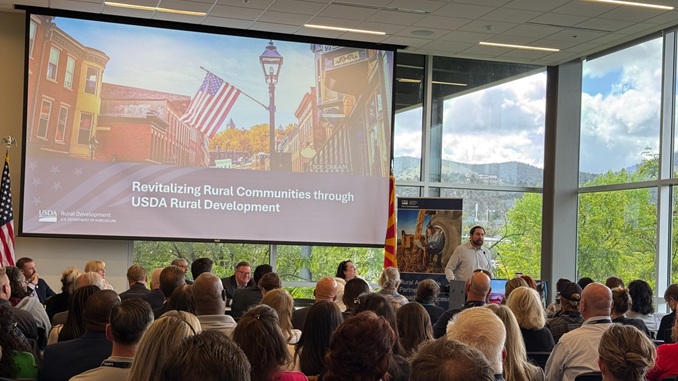
Congressman Eli Crane (R-AZ-02) participated in a Federal Partners Forum focused on addressing the distinct needs of Arizona’s rural communities, joining representatives from the U.S. Department of Agriculture (USDA) Rural Development and other federal agencies.
The event, held on May 5 at Yavapai College’s Center for Learning and Innovation in Prescott, convened more than 120 local and regional leaders alongside state and federal officials.
Senior Representatives from multiple federal agencies attended, including the National Park Service, U.S. Department of Health and Human Services (HHS), U.S. Department of Housing and Urban Development (HUD), U.S. Department of Veterans Affairs (VA), and the U.S. Small Business Administration (SBA).
During the forum, agency officials presented information on available federal resources and programs designed to support rural Arizona. Discussion topics included expanding access to healthcare, boosting small business growth, modernizing infrastructure, increasing affordable housing options, and enhancing broadband connectivity.
Participants were able to engage directly with federal partners to foster relationships, explore partnership opportunities, and identify practical solutions for long-term community development in rural areas.
“While our state faces many unique challenges, including Washington’s longstanding tendency to prioritize urban and coastal areas, we’re grateful to the Trump administration for putting rural interests at the forefront,” stated Rep. Crane. “Yesterday’s forum served as a catalyst for new opportunities and partnerships across local, state, and federal levels. I appreciate Yavapai College for hosting, and I’m thankful to Lori Urban, Lori Corbin, and everyone who helped make this event a success.”
The Federal Partners Forum is part of ongoing efforts to bridge gaps between rural communities and federal resources, ensuring Arizona’s rural priorities receive targeted attention and support.
Ethan Faverino is a reporter for AZ Free News. You can send him news tips using this link.
by Matthew Holloway | Dec 4, 2025 | News
By Matthew Holloway |
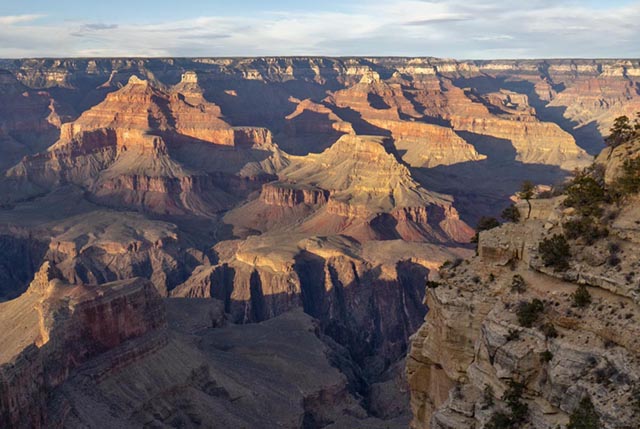
Beginning Dec. 6, 2025, all in-park hotels on the South Rim of Grand Canyon National Park, including El Tovar, Bright Angel Lodge, and Trailer Village, will shutter indefinitely to overnight guests. The closure decision was prompted by a series of significant breaks in the 12.5-mile Transcanyon Waterline supplying the park’s water, the National Park Service revealed Tuesday.
As of mid-November, water is no longer being pumped to the South Rim, the National Park Service said, forcing park officials to suspend overnight stays and dial back visitor amenities. The NPS reported that overnight stays at accommodations outside of the park in nearby Tusayan are unaffected.
According to NPS, “The waterline has exceeded its expected lifespan and experiences frequent failures, which require expensive and continuous maintenance work to repair leaks. The National Park Service started construction in 2023 on a multi-year, $208 million rehabilitation of the Transcanyon Waterline and upgrades to the associated water delivery system. This crucial investment in infrastructure will ensure the park is able to meet water supply needs for five million annual visitors and approximately 2,500 year-round residents. The project is expected to be completed in 2027.”
The Park Service is asking year-round residents to help conserve water by taking steps to reduce usage, such as limiting showers to 5 minutes or less, turning off faucets while shaving or brushing teeth, flushing toilets only when necessary, washing laundry only with full loads, and reporting leaks to the appropriate authorities.
In a Tuesday press release, the agency said that “Dry Camping,” requiring campers to transport their own water, will continue to be permitted, with water spigot access available at the Mather Campground check-in kiosk; however, spigots inside the campground have been shut down. Faucets in park bathrooms will also remain operational.
Grand Canyon National Park Public Affairs Officer and Communications Lead, Joëlle Baird, suggested that the closure could be resolved relatively quickly, saying, “If all planned work proceeds without additional issues, we anticipate being able to restore water service and begin reopening overnight lodging as early as next week.”
The outlet reported that welding repairs to the 1960s-vintage pipeline were progressing on Wednesday despite a fresh snowfall, and the current repair schedule calls for flushing and recharging the system over the next several days.
In the aftermath of the devastating Dragon Bravo fire, hotel closures are an additional blow to parkgoers. In addition, a complete prohibition on all fires remains in place for the South Rim and inner canyon areas, such as “outdoor wood burning and charcoal fires, including campfires, warming fires, and charcoal barbeques.”
Matthew Holloway is a senior reporter for AZ Free News. Follow him on X for his latest stories, or email tips to Matthew@azfreenews.com.
by Matthew Holloway | Oct 27, 2025 | News
By Matthew Holloway |
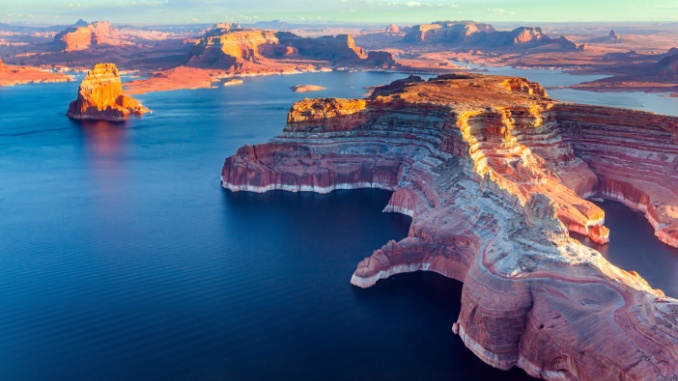
U.S. Rep. Eli Crane (R-AZ02) led a bipartisan group of Arizona lawmakers in sending a letter to the National Park Service (NPS) last week, requesting $28.36 million to upgrade aging water infrastructure serving Page and surrounding communities.
The funding, sought under the Great American Outdoors Act (GAOA), would rehabilitate systems managed by Page Utility Enterprises (PUE) that supply water to Page, nearby Navajo Nation areas, and the Glen Canyon National Recreation Area. Cosigners on the letter addressed to Acting NPS Director Jessica Bowron included Reps. Andy Biggs (R-AZ), Paul Gosar (R-AZ), and Greg Stanton (D-AZ).
In a post to X, Crane wrote, “Despite the ongoing shutdown, my team and I remain focused on #AZ02. Yesterday, we urged @NatlParkService to help upgrade the water delivery system serving Page and nearby communities that serve as a gateway to the North Rim of the Grand Canyon.”
The current aging infrastructure, over 60 years old, includes a 12-inch intake pipeline through Glen Canyon Dam that is undersized and vulnerable to fluctuations in Lake Powell’s water levels, according to the letter. Peak seasonal demand often exceeds capacity, and if lake levels drop below the intake level, PUE could lose the ability to deliver water to customers.
Recent wildfires, including the Dragon Bravo and White Sage fires, have burned thousands of acres in northern Arizona, further straining the drought-impacted region and highlighting the need for long-term solutions, the lawmakers wrote.
The proposed project would involve installing a new water intake and pump station on the south side of Lake Powell, along with an 18-inch replacement pipeline. This would double daily delivery capacity from 3.3 million gallons to 6.6 million gallons.
The GAOA, enacted in 2020, provides up to $1.3 billion annually through 2025 for public lands infrastructure and recreation access. The representatives noted that the Page project aligns with the program’s goals and should be prioritized if remaining funds are available or if the act is reauthorized.
“I’m proud to lead this bipartisan letter to ensure Page and surrounding communities have reliable water delivery infrastructure,” Crane said in a statement.
“With the Dragon Bravo and White Sage fires devastating the region, we must do more for what is a critical gateway to the North Rim of the Grand Canyon. I’m grateful to Reps. Stanton, Gosar, and Biggs for joining this effort, and we will continue pushing for a positive outcome.”
The bipartisan letter from the Arizona congressmen emphasized the project’s role in supporting public health, economic stability, and tourism in the region, which relies heavily on the national recreation area.
Matthew Holloway is a senior reporter for AZ Free News. Follow him on X for his latest stories, or email tips to Matthew@azfreenews.com.
by Matthew Holloway | Jul 23, 2025 | News
By Matthew Holloway |
Congressman Paul Gosar (R-AZ09) joined a growing bipartisan chorus calling for an investigation into the Dragon Bravo Wildfire.
Gosar’s statement differed slightly, however, from Democrat leaders in one key concern: the culpability of the Biden administration.
Raging across the North Rim of the Grand Canyon National Park, the wildfire escalated quickly, destroying the historic Grand Canyon Lodge as well as park administrative offices and residences. As of this report, the massive blaze is currently 8% contained and has burned over 12,000 acres. Approximately 70 buildings have been destroyed.
According to the Grand Canyon National Park Service, the fire was started by a lightning strike on July 4th and was allowed to burn for a few days for “resource objectives.” It was behaving as planned until “really strong aggressive winds” arose from the canyon and “changed the fire behavior dramatically very quickly,“ National Park Service Public Affairs Officer Joëlle Baird told AZ Family.
Robert Rickey, a National Weather Service science operations officer in Flagstaff, told the outlet that a mixture of high-pressure, disappearing humidity, and high winds triggered the explosive expansion of the fire.
“We had this big area of high pressure. All that moisture basically evaporated,” he said. “In terms of humidity, we consider 15% to be a critical threshold, so when we’re seeing humidities in the single digits, I mean that’s about as low as it can possibly get.”
Wind gusts at Grand Canyon National Park reportedly hit as high as 40 mph.
“The winds shifted more toward the northwest, and I think that really caused them some issues,” Rickey said per AZ Family. “When you get more of a northerly flow at night time, all that air just drops right down into the Grand Canyon and so basically it accelerates right along the rim.”
In a single day, the fire exploded from 120 acres to 1,500 acres.
Ken Phillips, a 27-year veteran employee at the Grand Canyon and former chief of emergency services told The Guardian that he believes the decision to “control and contain” the fire initially was a mistake.
“The North Rim did not need to burn the way it did and put firefighters in harm’s way,” he said. “There is a history of escaped managed wildfires at Grand Canyon. It is very tragic that the lessons learned from those fires weren’t heeded in this situation.”
Rachel Pawlitz, a National Park Service (NPS) spokeswoman, offered a different view in an interview with the Arizona Republic. She defended the park’s response saying, “The National Park Service and our interagency partners actively fought the Dragon Bravo fire employing tactics that met the suppression objectives and mitigated risk. Firefighters had constructed containment lines and were prepared to conduct a defensive firing operation before conditions rapidly changed.”
NPS told the outlet that the fire was “expertly handled.”
In a statement to the Republic, Gosar’s spokesman, Anthony Foti, said, “The Congressman is both sickened and troubled by the fire. As the dean of the Arizona congressional delegation and as member of both the House Oversight and Government Reform Committee and the House Natural Resources Committee he will be calling for a full and complete investigation. More details very soon.”
Congressman Gosar said in a statement, “I am concerned that the Dragon Bravo Wildfire is the direct result of recently inherited policies from the Biden Administration.”
“We must not waver in our efforts to seek answers for the people of Arizona. Today, I call on Secretary of the Interior, Secretary Burgum, to seek answers for the people of Arizona, who want answers as to the causes of this disaster and what can be done to prevent tragedies like this in the future.
“The people of Arizona will not be calling for answers alone. I will continue to seek answers and solutions, because these wildfires deeply impact Arizonans and our state.”
In a letter to Secretary of the Interior Doug Burgum, Gosar wrote, “I am concerned that the spread of the Dragon Bravo Wildfire is the direct result of the recently inherited policies from the previous administration. Specifically, the Biden-Harris administration promoted policies that allowed for the mass overgrowth of brush, prohibited effective fuel reduction operations, and locked up the lands from resource development.”
He added, “President Trump’s Executive Order 14308, published on June 12, 2025, sought to correct this mismanagement and empower the Department of the Interior (DOI) to identify the steps necessary for innovative wildfire response—with some actions already identified by Congress, like forest thinning and improved suppression response times.”
Matthew Holloway is a senior reporter for AZ Free News. Follow him on X for his latest stories, or email tips to Matthew@azfreenews.com.
by Ethan Faverino | Jul 15, 2025 | News
By Ethan Faverino |
The Dragon Bravo Fire, raging across the North Rim of the Grand Canyon National Park, has escalated quickly, destroying the historic Grand Canyon Lodge and an estimated 50-80 structures including National Park Service administrative buildings and visitor centers.
Around 3:30 p.m. on July 12, 2025, the North Rim water treatment facility caught fire, resulting in a release of chlorine gas.
Chlorine gas, which is heavier than air, settled into lower elevations like the inner canyon. This prompted the immediate evacuation of all firefighters, hikers, and staff from the North Rim and inner canyon areas.
All river trips were instructed to bypass the Phantom Ranch to avoid risk exposure.
By 10:30 p.m. the fire intensified, driven by constant winds of 20-40 mph, joined with hot temperature and low humidity.
Despite efforts by firefighters, including aerial bucket drops near the Grand Canyon Lodge and Transept Trail, the chlorine gas leak prevented the use of aerial retardants in critical areas, hindering containment efforts.
Firefighters worked through the night under dangerous conditions to slow the fire’s spread but lost the Grand Canyon Lodge and other significant structures.
As of July 13, fire managers initiated retardant drops on the east side of the developed area, focusing on the Roaring Springs drainage, as part of an aggressive full-suppression strategy.
The fire remains highly active, fueled by persistent winds and dry conditions.
Preliminary damage assessments confirm the destruction of 50-80 structures, but no injuries or fatalities have been reported, and all staff and residents were safely evacuated prior to the fire’s escalation.
The North Rim of Grand Canyon National Park will remain closed to all visitors for the remainder of the 2025 season. The following inner areas are also closed until further notice:
- North Kaibab Trail
- South Kaibab Trial
- Bright Angel Trail below Havasupai Gardens
- Phantom Ranch
- All associated campgrounds
Ethan Faverino is a reporter for AZ Free News. You can send him news tips using this link.