by Matthew Holloway | Dec 31, 2025 | News
By Matthew Holloway |
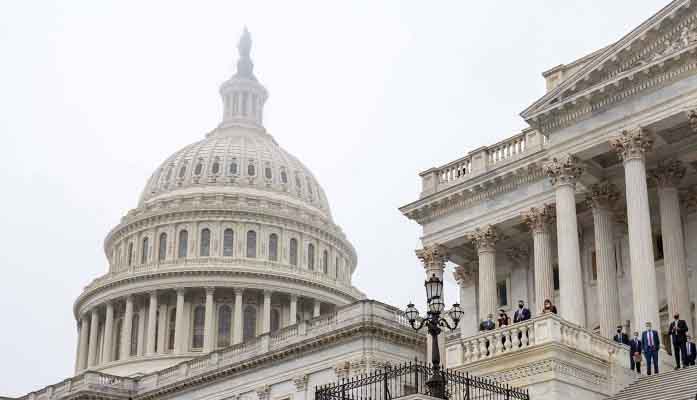
Arizona manufacturing and business groups can claim a policy win in Washington, D.C., after the U.S. House of Representatives passed a major federal permitting reform bill they had urged Congress to advance.
On December 18, the House approved the Standardizing Permitting and Expediting Economic Development (SPEED) Act, H.R. 4776, in a 221–196 vote. The legislation is designed to streamline environmental reviews and speed federal permitting for large energy infrastructure projects, data centers, factories, and other major developments.
The bill, sponsored by House Natural Resources Committee Chairman Bruce Westerman (R–AR) and Rep. Jared Golden (D–ME), amends the National Environmental Policy Act (NEPA) to shorten review timelines, clarify when NEPA applies, and limit how long lawsuits can delay projects. A committee summary says the measure is intended to “modernize NEPA,” reduce permitting backlogs, and curb what supporters describe as “abusive litigation” that has slowed infrastructure and energy projects nationwide.
In a press release on the day of the vote, Westerman called the SPEED Act’s passage “a win for America” and urged the Senate to move quickly. The committee noted that more than 375 organizations nationwide backed the bill.
The House vote followed a coordinated push by national and Arizona manufacturing advocates in early December, when congressional leaders signaled they would take up permitting reform over a two-week stretch.
In a December 10 article, Chamber Business News reported that the National Association of Manufacturers (NAM) and Arizona business groups were urging Congress to act on what NAM branded the “12 Days of Permitting Reform.” NAM called on lawmakers to move several bills — including the PERMIT Act and the SPEED Act — to simplify federal reviews and shorten timelines for major infrastructure, energy, and industrial projects.
NAM President and CEO Jay Timmons said at the time that Congress had an opportunity “over the next 12 days to demonstrate strong, bipartisan momentum on comprehensive permitting reform,” and encouraged policymakers to make it easier and more cost-efficient for manufacturers to advance job-creating projects.
For Arizona, business leaders framed the debate as directly tied to the state’s ability to keep pace with growth in sectors such as power generation, semiconductor fabrication, aerospace and defense manufacturing, and AI-driven data centers, all of which depend on predictable federal approvals.
Arizona Chamber of Commerce & Industry President and CEO Danny Seiden said modernizing federal permitting is critical for Arizona’s economic future, arguing that “manufacturers can’t meet demand, onshore supply chains, or power new AI and data-center growth without a permitting system that works.”
“Arizona’s economy depends on major projects moving on predictable timelines. Congress should advance the PERMIT Act and the SPEED Act so companies can build the infrastructure and capacity our economy requires,” Seiden added.
Grace Appelbe, executive director of the Arizona Manufacturers Council, told Chamber Business News that long, unpredictable federal reviews create significant challenges for small and mid-sized manufacturers trying to expand, upgrade equipment, or bring new technologies online, and said reforms could lower costs and improve Arizona’s competitiveness for new investment.
The House Natural Resources Committee describes the SPEED Act as a structural update to NEPA’s review process. Key provisions include:
- Shorter, defined timelines for environmental reviews on major federal actions.
- Clearer triggers for NEPA, by defining “major federal action” more narrowly.
- Streamlined documentation, intended to reduce the length and complexity of NEPA analysis.
- Limits on litigation, including a 150-day window for filing NEPA challenges, to reduce long-running court delays.
External reporting has noted that industry groups, such as energy and infrastructure advocates, welcomed the bill as the first significant federal permitting reform effort since NEPA was enacted in 1969, while environmental organizations have urged the Senate to reject or significantly revise the measure, warning that looser standards could weaken environmental protections and public participation.
With House passage secured, the SPEED Act now moves to the U.S. Senate, where lawmakers in both parties are working on broader permitting legislation and have signaled potential changes to the House bill, Axios reports.
Arizona manufacturers and business groups, which spent early December calling for action on the SPEED Act and related measures, are expected to continue pressing for a final package that delivers the permitting certainty they say is needed for long-term investment and for meeting the state’s projected load and infrastructure demands.
Matthew Holloway is a senior reporter for AZ Free News. Follow him on X for his latest stories, or email tips to Matthew@azfreenews.com.
by Matthew Holloway | May 9, 2025 | Economy, News
By Matthew Holloway |
Kelly Loeffler, Administrator of the U.S. Small Business Administration (SBA), stopped in Arizona as part of her nationwide tour for National Small Business Week.
During an interview with Arizona’s James T. Harris on KFYI, Loeffler described the disastrous state of the SBA as she took office following her confirmation, and her efforts alongside President Donald Trump to get both the SBA and the small businesses it supports back to work.
Asked by Harris what happened when the SBA building went from a “ghost town,” to “workers actually show up and do the job,” she said, “It’s incredible. And it’s great to be part of President Trump’s restoration of main street across every corner of this great nation. He believes in the American worker. He believes in American industry. And he believes in getting the government back to work. And that’s what I did on my first day when 90% of the office was empty. We got people back to work real quick, and that’s thanks to President Trump’s leadership. And also, thanks to the fact that we have a lot of work to do getting back to working for the American people on main street not the globalists. Working for our job creators and not bureaucrats.”
Posting to X, Loeffler wrote, “Our job creators have endured endless challenges over the last four years. It’s great to see the optimism returning to Main Streets across America – including here in Arizona.”
Asked how American small businesses are driving the revival of the U.S. economy, Loeffler was fulsome in her praise:
“Well, it’s been incredible. I’ve been out across the country visiting our manufacturers of which there are thousands in this country, and they all tell me we have been fighting for two decades to make sure that people understand we can make it in America. And they’ve been hiring, they’ve been building. And now that President Trump is back in, they’re investing because reassuring and onshoring our supply chains is absolutely critical. It creates tremendous economic opportunity. If you think about the towns, the small towns, the urban areas that were just left behind. And I’ve seen it from Gary, Indiana, to you know out west everywhere. We had 70,000 factories closed in the last 30 years that cost us 5 million jobs that were exported out of Detroit to Beijing. And we have to make sure that we’re restoring American strength and job creators.”
“You know small businesses, let’s just level set here what are small businesses? Well, they represent 99% of all businesses in this great nation, and also of the manufacturers most of them, 99% of them, also are small businesses,” continued Loeffler. “And so, what they’re seeing is a president who wants to cut regulation. He wants to cut taxes, and he’s doing it. And he wants to make sure that we stand up to our allies and adversaries alike and say, ‘We’re not gonna be taken advantage of any longer. We’re gonna have fair trade.'”
Loeffler detailed the “Made in America” Manufacturing Initiative as well, telling Harris that the administration is working to make lending capital more available for American small businesses.
“What we are doing is focusing on, first of all, delivering access to capital is what I’m hearing from manufacturers across this country. That if they can just get a little bit larger loan size, then they can invest in that new CMC machine. They can hire more people. They can build out parts for their factory. What’s happening in these factories is incredible. It’s next generation smart manufacturing, and the investment in the equipment is, you know, you need computers you need people to run them. So we’re going to make sure the capital access is there, so our loans are doubling up from 5 million to 10 million.”
Loeffler also laid the blame firmly on the Biden administration for dropping stifling regulations on American businesses.
She said, “We’re working on deregulating because unfortunately under Joe Biden, he imposed about $1.7 trillion of excessive regulation. Most of that fell on the backs of our small businesses and our manufacturers. So, we’re working hard to deregulate. And then we’re also just advocating for developing a skilled workforce that doesn’t necessarily need a four-year degree. This is just helping have those on ramps into the modern economyfor these great blue collar or new-collar jobs and made in America.
Loeffler concluded, “That’s a tremendous opportunity. Only 9% of our country is involved in manufacturing of today. I used to be 35% in the 1950s. So somewhere in the middle is probably where we need to get back to. Because we don’t even make our fasteners anymore, nuts and bolts and screws. We’re dependent on China for that. We’ve… that can’t persist. We can’t become dependent on China for anything ever again. We saw that during COVID, so we’re helping turn that around, and President Trump understands that. It’s his job to fight for the American people. He’s the only one with the backbone to do it.”
Matthew Holloway is a senior reporter for AZ Free News. Follow him on X for his latest stories, or email tips to Matthew@azfreenews.com.
by Terri Jo Neff | Jan 18, 2022 | Economy, News
By Terri Jo Neff |
The National Institute of Standards and Technology (NIST) is seeking comments about eight emerging technology areas: Artificial Intelligence, Internet of Things in Manufacturing, Quantum Computing, Blockchain Technology, New and Advanced Materials, Unmanned Delivery Services, Internet of Things, and Three-dimensional Printing, to assist in the preparation of a report to Congress.
A Request for Information (RFI) was announced in the Federal Register under the Consolidated Appropriations Act of 2021 by the Secretary of the U.S. Department of Commerce, who is directed to coordinate with the Federal Trade Commission and other federal agencies to complete a study of the eight emerging technology areas.
The RFI seeks comments about public and private sector marketplace trends, supply chain risks, legislative, policy, and the future investment needs of the technology areas to help identify, understand, refine, and guide the development of the eight emerging technologies. Those eight areas are, more specifically:
- Artificial Intelligence—on the state of the artificial intelligence industry and the impact of such industry on the United States economy,
- Internet of Things in Manufacturing—on the use of internet-connected devices and internet-connected solutions in manufacturing in the United States,
- Quantum Computing—on the state of the quantum computing industry and the impact of such industry on the United States economy,
- Blockchain Technology—on the state of the blockchain technology industry and the impact of such industry on the United States economy,
- New and Advanced Materials—on the state of the new and advanced materials industry, including synthetically derived materials or those with enhanced natural properties, and the impact of such industry on the United States economy,
- Unmanned Delivery Services (air or ground)—on the impact of unmanned delivery services on businesses conducting interstate commerce and the impact of such industry on the United States economy, rules and regulations,
- Internet of Things—on the state of the internet-connected devices industry and the impact of such industry on the United States economy, and
- Three-dimensional Printing—on the state of the three-dimensional printing industry and the impact of such industry on the United States economy.
For each emerging technology area, NIST needs input useful to the fostering of economic growth and competitiveness across the United States for benefit all Americans.
As a result, the NIST is inviting stakeholders throughout the scientific research, standards, advocacy, industry, and non-scientific communities, as well as the general public, to provide comments. From the comments, a Congressional report will be developed “in a manner consistent with its mission to promote U.S. innovation and industrial competitiveness,” according to the RFI.
Comments must be received by 5:00 p.m. Eastern time on Jan. 31. To submit comments electronically, go to www.regulations.gov and enter NIST-2021-0007 in the search field. Click on the “Comment Now” icon and complete the required fields, and then enter or attach your comments.
More information about the RFI is available at https://www.federalregister.gov/documents/2021/11/22/2021-25428/study-to-advance-a-more-productive-tech-economy
Page 1 of 11