by Warren Petersen | Nov 26, 2025 | Opinion
By Sen. Warren Petersen |
As we approach the Thanksgiving holiday, there’s a lot we have to be thankful for as Americans – family, provisions, jobs, faith, and so much more.
This year, I’m thankful for the freedoms we enjoy in this country. All Americans should be the most grateful people in the world because we live in the freest nation in the history of humanity.
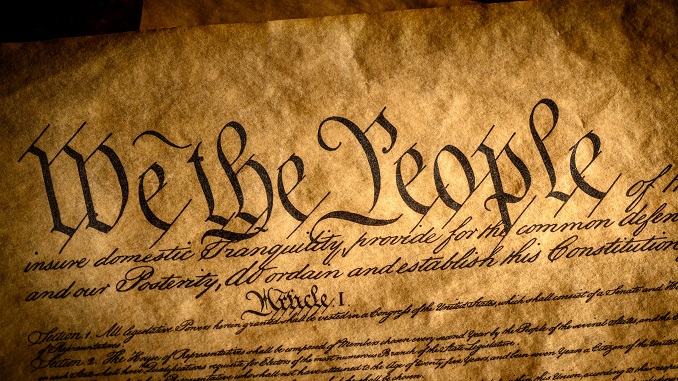
There are so many freedoms we have as Americans. Today, these inspired notations enshrined in the Bill of Rights to the United States Constitution are easily taken for granted. One historian said about the first ten amendments to the Constitution, “The Bill of Rights is the United States. The United States is the Bill of Rights. Compromise the Bill of Rights and you dissolve the very foundation upon which the Union stands… Nowhere in the Bill of Rights are the words ‘unless inconvenient’ to be found.”
Truer words have rarely been spoken. As Patrick Henry exclaimed, “Show me that age and country where the rights and liberties of the people were placed on the sole chance of their rulers being good men, without a consequent loss of liberty?” Henry’s question hits home to students of history. We have seen all too often throughout the annals of world—and even American—history, that rulers are not to be trusted without absolute power—no matter how trustworthy or ‘good’ they might be deemed by their citizens. Our founders were extremely wise to amend the Constitution to protect against abuse by future governments.
And what are these rights?
The first is that “Congress shall make no law respecting an establishment of religion, or prohibiting the free exercise thereof; or abridging the freedom of speech, or of the press; or the right of the people peaceably to assemble, and to petition the Government for a redress of grievances.”
Many regard this amendment as the most important, and it packs several different—yet similar—rights together. As we observed during the COVID-19 era just a handful of years ago, tyrannical government officials attempted to dictate, in the name of health safety, what churches and people of faith could or could not do in the expression of their religion(s). Thanks to this amendment, though, these out-of-control local governments were ultimately stopped. However, other people of faith in countries around the world did not enjoy the same fate, as their governments were not harnessed by anything in their charters to prevent such violations.
The other two provisions of this amendment are just as important, starting with the freedom of the press. Despite how some complain about the biases of the press (much like sports fans gripe about calls of officials), any journalist in America can work without fear of retribution from the government. There are other countries around the world where such employees do not have this luxury, essentially acting as agents of the state. The amendment concludes with protections for citizens to peaceably assemble and petition their governments. Most Americans probably can’t comprehend the antithesis of this stipulation. The fact that anyone can wake up on any given day to gather with others for any lawful purpose, or to contact their government official to criticize some action being taken, is absolutely unheard of in much of the world. And yet these rights are our American birthrights. This reality gives us much to be thankful for as Americans.
The second amendment is that “a well regulated Militia, being necessary to the security of a free State, the right of the people to keep and bear Arms, shall not be infringed.”
This amendment is also critical to our nation’s future and has received significant backing in recent years from the Supreme Court of the United States. The Second Amendment gives people necessary protections to defend their personal liberties and functions as a check against a future government that could threaten to overwhelm the freedoms of law-abiding citizens. George Mason said in 1788, “To disarm the people…[i]s the most effectual way to enslave them.” James Madison added, “A well regulated militia, composed of the body of the people, trained to arms, is the best and most effective defense of a free country.”
Each year, we hear of how governments in other parts of the world—especially in, but not limited to, underdeveloped countries—exploiting, harming, or killing people simply because they can. These terrors, in large part, are due to the population being devoid of personal protections to deter against government aggression. However, the benefits of an armed populace extend beyond protections against a tyrannical government to defense of private property or personal rights. Government officials can’t be everywhere, and armed citizens are necessary to stop those who are intent on depriving innocent people of their God-given rights of life, liberty, and the pursuit of happiness. Without good people carrying weapons—and using them in lawful ways—dangerous criminals would rule the streets, causing chaos and fear in our communities. So, the Second Amendment gives us much to be thankful for as Americans.
There are many other freedoms in the Bill of Rights and subsequent amendments to the U.S. Constitution. Those freedoms include a prohibition of unreasonable searches and seizures, protection of due process, guarantee of public trials, equal protection, privacy, voting, and more. These amendments have been tried and tested for generations, ensuring that American freedoms are passed down from our fathers to our children.
So, this Thanksgiving season, I’m thankful I have the opportunity of living in the United States of America to enjoy these God-given freedoms. They are ours to enjoy as long as we remain true to the Constitution. Happy Thanksgiving—and may God bless America!
Warren Petersen is the President of the Arizona State Senate and represents Legislative District 14.
by Earl Taylor | Oct 3, 2024 | Opinion
By Earl Taylor, Jr. |
There are many reasons why America’s Founders wanted a republican form of government rather than a democracy. Theoretically, a democracy requires the full participation of the masses of the people in the legislative or decision-making processes of government. This has never worked because the people, as good as they might be, become so occupied with their daily tasks that they will not properly study the issues, nor will they take the time to participate in extensive hearings before the vote is taken. The Greeks tried to use democratic mass participation in the government of their city-states, and each time it ended in tyranny.
James Madison, the father of the Constitution, summarized the Founders’ thinking by writing:
“Democracies have ever been spectacles of turbulence and contention; have ever been found incompatible with personal security or the rights of property; and have in general been as short in their lives as they have been violent in their deaths….” (Federalist Papers, No. 10)
“…and to the Republic, for which It stands…”
Madison continues:
“We may define a republic to be … a government which derives all its powers directly or indirectly from the great body of the people and is administered by persons holding their offices during pleasure for a limited period, or during good behavior. (Federalist Papers, No. 39)
The Founders knew that if the people were continually presented with the many issues and problems of government, they would soon tire of it and become disinterested in studying the issues in order to make intelligent decisions. They would tend to yield to the enticing emotions presented to them by those who have the power to control the masses. They chose, rather, to place such decisions in the hands of wise representatives or agents who would be specifically chosen to take the time to hold committee hearings, analyze data, and consider consequences of proposed laws. The main decision for the people would be who will represent us, and it would happen on a regular periodic basis, say every two or four years.
Even in making the choice of President of the United States, the Founders rejected a vote of the people. They knew, once again, as good as the people may be, they will not take the time to study the issues or the candidates in order to make such an important decision. Hence was born the original, brilliant, electoral college system, which, while we still have it somewhat, has since been terribly abused and distorted.
The People Are to Choose Qualified Representatives, Not Decide Issues
Since issues are always changing, the Founders advised to not continually excite the people about issues, but instead choose honest, experienced representatives to tackle issues as they come. In early New England, it was customary to have a respected clergyman give what was called an “Election Sermon” prior to an election. Samuel Langdon gave that before the Massachusetts legislature in 1788. He declared:
“On the people, therefore, of these United States, it depends whether wise men, or fools, good or bad men, shall govern…. Therefore, I will now lift up my voice and cry aloud to the people…. From year to year be careful in the choice of your representatives and the higher powers [offices] of government. Fix your eyes upon men of good understanding and known honesty; men of knowledge, improved by experience; men who fear God and hate covetousness; who love truth and righteousness, and sincerely wish for the public welfare…. Let not men openly irreligious and immoral become your legislators….”
A Frustrating Ballot
One only has to look at the current Arizona ballot to appreciate the wisdom of the Founders. It is two long pages of not only candidates, but also many propositions and laws to be voted on directly by the people. Every registered voter also receives, by mail, several multi-page pamphlets explaining the legal details of the proposed laws and the submitted arguments both for and against. Who will read all this stuff? Emotion and ignorance will reign again at the ballot box!
Citizens of Arizona may be interested to know that our Initiative measure in our Arizona Constitution which allows all these laws to be voted on by the people is a technical violation of the U. S. Constitution, which requires a republican form of government, not a democracy, in every state. (U. S. Constitution, Article IV, Section 4)
Perhaps, Benjamin Franklin saw what was happening in our day when he reportedly described what they had given us by saying, “A Republic, if you can keep it!”
Ah, the wisdom of the Founders!
Earl Taylor, Jr. is the President of The National Center for Constitutional Studies.
by Earl Taylor | Sep 2, 2024 | Opinion
By Earl Taylor, Jr. |
One of the principles of liberty our Founders adhered to is that only limited and carefully defined powers should be delegated to government, all others being reserved to the people. This principle is clearly followed in Article 1, Section 8, of the U.S. Constitution wherein is outlined the 20 or so areas in which Congress can make law. This concept was abandoned decades ago as Congress began legislating in many other areas not mentioned in Article 1, Section 8.
James Madison clearly explained this principle in Federalist Paper 45: “The powers delegated by the proposed Constitution are few and defined. Those which are to remain in the state governments are numerous and indefinite.” Unlike the federal Constitution, you will not find in state constitutions specific areas in which state legislatures can make law because there are so many.
How, then, are we to understand the limits our state legislatures, our city councils, our county board of supervisors have in making law? The answer to this question lies in the constitutional phrase “promote the General Welfare.” If one observes the 20 or so powers in Article 1, Section 8 of the U. S. Constitution, they are all areas that benefit the whole people like: military defense, a monetary system, a postal system, a system of weights and measures, a federal court system, etc. In other words, general welfare means if you tax all the people, then you only spend that money for things that benefit the whole people. Under “general welfare” there is to be no tax money going to individuals, special groups, or specific geographic locations, or any other kind of “specific” welfare.
This same principle should apply to state and local governments. For example, city councils should ask themselves what are the things that benefit all the people and that all the people use? The answer would include such things as: good streets, a well-functioning domestic water system, a good sewage system, good police protection, a fair local court system, etc. These are things individuals all want and are willing to spend money to obtain because they use them. It’s really what makes us want to live in a community rather than out in the wilderness. And furthermore, there is usually not much argument or contention about these things because we consider them things that make our lives comfortable.
But what happens when government officials try to use our tax money to provide things most of us don’t want and don’t use, such as: light rail and bus systems, sports stadiums, homeless facilities, conference centers, arts centers, museums, libraries, electric vehicle charging stations, narrower streets and more bike lanes? They try to sell us on these ideas as “Quality of Life” issues. These are issues that do not pay for themselves and therefore are a significant burden paid for mostly by taxpayers who do not use them. These are also issues that cause the most disagreement and contention in a community.
But the true purpose of government is to only protect equal rights so that people can be free to invent and produce items that give us real quality of life. This also leaves more resources in the hands of the people to give compassionate service to the truly needy.
The authority to govern rests innately with the people. Government only has the authority that the people give it. If a person has no authority to take from one person and give to another (stealing), then how can he give his agent, the government, the authority to forcibly take money from citizen A and give it to citizen B so he can, for example, be transported from point A to point B? Isn’t that stealing also? Someone may say, “Well, that’s why we vote.” But can the vote take away a person’s property by legalizing stealing? Of course not!
When we vote this November, hopefully we will choose those who respect the rights of all citizens and reject those who endorse programs which use the power of government to do what individuals can’t do – steal from the people.
Earl Taylor, Jr. is the President of The National Center for Constitutional Studies.