by Paul Parisi | Aug 19, 2024 | Opinion
By Paul Parisi |
A modern-day example of voter integrity is the picture of an Iraqi woman holding up her finger colored in purple indelible ink, indicating that she voted. In 2005, an Iraqi woman posed for an iconic picture after leaving a polling station in Southern Iraq in the country’s first free election in over a half-century. She did so in defiance of deadly suicide bombings and mortar strikes at polling stations.
The recorded history of democracy dates back to the 5th century in ancient Greece. The word democracy is derived from two Greek words – demos, which means people and kratos, which means rule. In the first elections in Athens, only the ruling class could vote.
Even though the United States of America is a democratic country, the path to “one person, one vote” has been a checkered one. In 1789, when the US Constitution was ratified, most states only allowed white landowners to vote.
The 15th Amendment to the US Constitution in 1870, gave Black men the right to vote. It wasn’t until 1920 when the 19th Amendment was passed that women in all states were allowed to vote. The passage of the Voting Rights Act of 1965 put teeth in prohibiting racial discrimination when voting.
Though we have come a long way since the concept of democracy was born, voter integrity is still on the forefront. The recent phenomena of widespread mail-in ballots have created a whole new potential of voter fraud. Ballot harvesting, which is legal in many states, puts the concept of the secret ballot into question. Is the person filling out the ballot actually the person registered to vote?
Congress has recently passed the Safeguard American Voters Eligibility Act (SAVE). This bill is waiting to be heard in the Senate. The act requires that all people registering to vote provide proof of citizenship in federal elections. Though it’s already against the law for non-citizens to vote in federal elections, the National Voter Eligibility Act of 1993 prohibits states from confirming citizenship status in federal elections.
On August 1, 2024, the 9th Circuit Court put a stay on a recent Arizona law that required showing proof of citizenship in all elections including federal. In 2020, 11,600 individuals voted in Arizona on federal only ballots without showing proof of citizenship. The 9th Circuit Court decision is now being appealed to the US Supreme Court.
With the recent influx of undocumented individuals entering the United States, the importance of citizens only voting is a front burner issue that the SAVE Act might resolve. Just showing ID when registering to vote and casting your ballot at the polls will bring back a level of confidence in our elections.
With stronger legislation addressing voter integrity, Americans may have even more trust in our elections—akin to the Iraqis proudly holding up their purple-stained fingers.
Paul Parisi is the Arizona Grassroots Director for Our America.
by Daniel Stefanski | Oct 15, 2023 | News
By Daniel Stefanski |
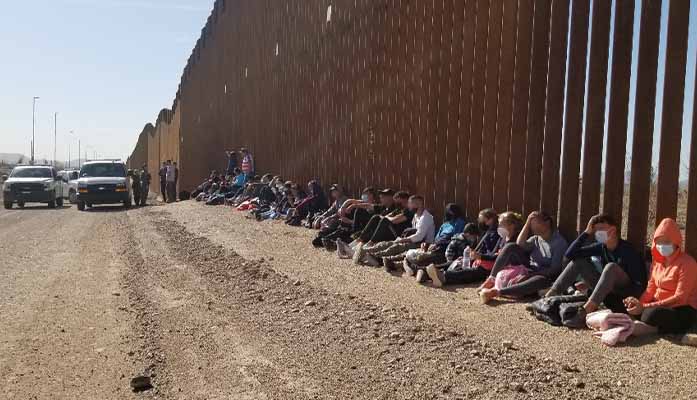
Thousands of migrants from potentially troublesome countries are being apprehended at America’s southern border, while many others could be slipping past law enforcement.
On Tuesday, Fox News journalist Bill Melugin reported that “Internal CBP data provided & confirmed by CBP sources reveals thousands of ‘special interest aliens’ from mostly Middle Eastern countries have been apprehended by Border Patrol while crossing into U.S. illegally over last 2 years.”
Melugin clarified that “a special interest alien is a term used by the U.S. government to refer to people coming from countries that have conditions that favor or harbor terrorism, or pose a potential national security to the U.S.”
From 10/1/2021 to 10/4/2023, the following apprehensions by nation of origin were reported:
- Syria: 538
- Yemen: 139
- Iran: 659
- Iraq: 123
- Afghanistan: 6,386
- Lebanon: 164
- Egypt: 3,153
- Pakistan: 1,613
- Mauritania: 15,594
- Uzbekistan: 13,624
- Turkey: 30,830
The decorated reporter added some concerning context for his report, writing, “Border Patrol sources tell me they have extreme concerns about who is coming into the country because they have little to no way of vetting people from these special interest countries. I’m told unless they have committed a crime previously in the US, or they are on some sort of federal watchlist, there’s no way to know who they are because most of their home countries don’t share data/records with the US so there is nothing to match a name to when BP agents run fingerprints.”
The number of apprehensions from ‘special interest countries’ follows continuing reports of an increase in the number of suspected terrorists who have been encountered this fiscal year, along with the ‘gotaways’ who have escaped detection from law enforcement. Over 150 suspected terrorists have already been nabbed over the past eleven months, which was a stark rise from the previous year (when 98 suspected terrorists were arrested at the southern border). According to CBP data, only 26 total suspected terrorists were apprehended at the southern border from Fiscal Years 17-21.
If the issues of “special interest nations” and “suspected terrorists” apprehensions weren’t bad enough for the country, the number of ‘gotaways’ present a far-greater problem for the United States. More than 1.5 million of these individuals are estimated to have escaped capture by border officials, meaning that they likely are anywhere within the American homeland. Adding to fears from law enforcement, the identities and motives of these aliens are almost entirely unknown.
Arizona Senate President Warren Petersen addressed this danger in his statement about the horrific terrorist attack in Israel over the weekend. Petersen said, “Our own country must remain vigilant, as our wide open border, ignored by Joe Biden and Democrats, remains one of the greatest threats to our national security. This same situation can happen at anytime on our own soil, and we call on the federal government to take immediate action.”
Daniel Stefanski is a reporter for AZ Free News. You can send him news tips using this link.
by Dr. Thomas Patterson | Sep 29, 2023 | Opinion
By Dr. Thomas Patterson |
At the end of the Cold War in 1989, the common understanding was that, with the emergence of the United States as the world’s single superpower, an era of order and peace would ensue. The perpetual struggle between nations vying for hegemonic dominance was over.
America had won, and the world was better for it. Compared to Nazis, Communists, Islamists, and others seeking control, America, as the world’s leading democracy, was clearly the least self-seeking and most committed to the common welfare.
It hasn’t worked out that way. Unfortunately, over the ensuing decades, Americans have elected a series of manifestly unqualified leaders. Two undistinguished leaders of small southern states, two scions of a well-respected family with limited leadership instincts, and a leftist “community organizer” who had been an inconsequential member of a state legislature, but who orated well and wore great suits.
We most recently elected a lifelong politician with a reputation as an incompetent plagiarizer and a weakness for outrageous lying and corruption. At this writing, he seems set for a rematch in the next election against another incumbent who must be one of the most incurious, entitled, and self-absorbed people to ever achieve high office.
Elections have consequences. America’s record of electing mediocre-at-best leaders has created a world very different from 1989. America’s standing in the world has sharply declined. Competition and chaos once again dominate international affairs.
America’s leaders no longer understand the critical importance of peace through strength. Instead, they seem to believe that successful statecraft is based on accommodation and concession. In a nuclear world, acting forcefully with enemies is just too risky. Better to make nice with autocrats and hope not to rile them up.
So, we get the contrivances of “leading from behind” and “red lines” which disappear when needed to obscure the lack of resolve. Autocrats just read the concessions as weakness. Allies learn to not depend on us.
For example, by 2010, the U.S. was on the verge of a lasting victory in the Iraq war, which had been brokered by the Bush administration. But Obama, in his eagerness to respond to America’s war-weariness, botched the job.
He needlessly interfered in an Iraqi election, destroying the fragile coalition that had contained the terrorists. Then he mishandled the withdrawal of U.S. troops, ignoring the agreements that had been forged with the Iraqis. The result was the collapse of American goals in Iraq and the resurgence of Islamist terrorism. A new organization called ISIS was inflicted on the world
In August 2021, President Biden ordered the immediate evacuation of troops and personnel from Kabul to end the Afghanistan War, based, he said, on the advice of senior U.S. military officers and information that a collapse of the Afghan government was highly unlikely. But no such advice was actually given.
Instead, Biden’s haste to end the war without proper preparation squandered 20 years of American blood and sacrifice. Thirteen U.S. service members were killed in a terrorist attack, hundreds of Americans were abandoned, and our trusted interpreters and local advisers were left in the lurch.
Military weaponry worth billions was simply abandoned as the Taliban once again assumed de facto control of the country. Sharia law and Islamist oppression of women resumed. Biden to this day insists he did nothing wrong.
America also regularly folds like an accordion in hostage negotiations. The deserter Bowe Bergdahl and basketball star Brittney Griner were both exchanged for pennies on the dollar in strategic value.
Recently, our negotiating geniuses agreed to swap five higher-value Iranian military personnel for five American civilians—and we even sweetened the pot by releasing $6 billion to the Iranians, which could only be used for humanitarian efforts.
Whoops! The Iranians immediately announced they would use the funds for whatever they pleased, including enriching uranium ore to near weapons-grade levels. State Department spokesman John Kirby explained that the deal was “the best we could achieve.” The impotent superpower was humbled once again.
In a democracy, voters get what they deserve. Our leaders’ obvious mistakes are ours for electing them.
America needs to elect leaders who are principled, competent, and decisive. Our next chance is coming up in 2024. It could be our last.
Dr. Thomas Patterson, former Chairman of the Goldwater Institute, is a retired emergency physician. He served as an Arizona State senator for 10 years in the 1990s, and as Majority Leader from 93-96. He is the author of Arizona’s original charter schools bill.