by Daniel Stefanski | Jan 27, 2025 | News
By Daniel Stefanski |
Republicans in the Arizona Legislature are wasting no time to improve the state’s groundwater situation in this 57th Regular Session.
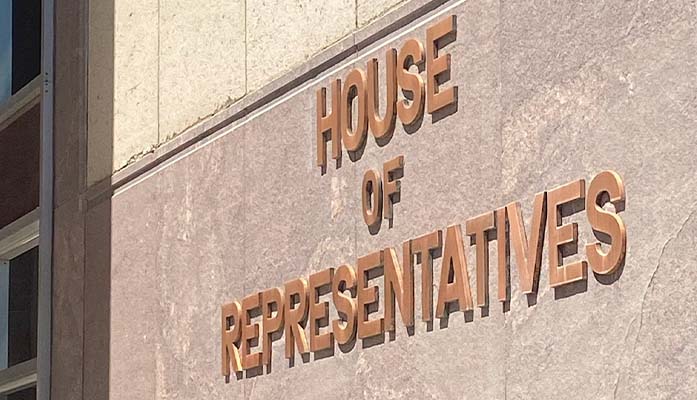
On Tuesday, the Arizona House of Representatives Committee on Natural Resources, Energy & Water gave a green light to House Concurrent Memorial 2003, which “states the Legislature’s interest in having the Arizona Department of Water Resources and the Arizona State Land Department focus on increasing groundwater recharge through groundwater recharge infrastructure projects,” according to the overview provided by the State House of Representatives.
In a statement, State Representative Gail Griffin, the measure’s sponsor, said, “County supervisors, flood control districts, and natural resource conservation districts have the authority to construct stormwater detention basins and other constructive infrastructure that increase groundwater recharge. Local and county officials should push the Governor’s Department of Water Resources and State Land Department to develop these projects within their communities to increase local water supplies.”
Griffin added, “Over 95 percent of rainfall in the state evaporates before it can naturally recharge aquifers. Increasing the amount of natural recharge by only a few percentage points would increase the amount of local water supplies substantially. The solution to unleashing economic prosperity in rural Arizona through increased water supplies is investing in additional groundwater-stormwater recharge. Local communities have tools to address groundwater issues. We need to work together to utilize those tools to secure our long-term water supplies.”
The press release from the Arizona House Republicans Caucus shared that “projects like Horseshoe Draw Recharge Project in Cochise County and Hualapai Flood Control Project in Mohave County are examples of projects that increase local supplies without expanding the size of government or imposing top-down government regulations on rural industries.” There are “331 sites on state trust land that the agencies have identified as suitable for maximizing groundwater recharge.”
According to the Arizona Legislature’s Request to Speak system, representatives from the Arizona Farm and Ranch Group, Audubon Arizona / National Audubon Society, and Arizona Cotton Growers Association, signed in to support the bill. Representatives from the Sierra Club – Grand Canyon Chapter and CHISPA Arizona – A Program of League of Conservation Voters, signed in to oppose the legislation.
Republicans and Democrats will continue to do battle over water issues in this divided state government, as they have for the previous two years. Governor Katie Hobbs has been largely unwilling to adopt Republican policies on these matters, vetoing bills over the past two sessions that would have strengthened Arizona’s position on water conservation, management, and proliferation for current and future generations. The two sides still appear to be far apart on water issues as another legislative session heads into its second month.
Daniel Stefanski is a reporter for AZ Free News. You can send him news tips using this link.
by Matthew Holloway | Dec 15, 2024 | News
By Matthew Holloway |
The State of Arizona has engaged in legal battle against a Saudi Arabian firm: Fondomonte Arizona, LLC., on allegations that the agribusiness has violated public nuisance law by aggressively pumping groundwater from the Ranegras Plain Basin of La Paz County. The move could signal a split between Democrats Attorney General Kris Mayes and Governor Katie Hobbs whose chief campaign advisor is partnered with a lobbyist for the Saudi company.
Announcing the lawsuit on Wednesday, Mayes said the company, which enjoys a strong lobbying connection to Democrat Gov. Katie Hobbs, does not have “the right to endanger an entire community’s health and safety for its own gain,” according to KJZZ. She added, “The law is clear on that point.”
Mayes said the consequences are immediate and visible. She cited that the firm has operated in the Ranegras basin since 2014 and has several wells that pump up to 4,000 gallons of water per minute. She also shared that in 2023, it used approximately 31,196-acre feet of water.
“Fondomonte came to Arizona to extract water at an unreasonable and excessive rate because doing so was banned in its home country – another arid desert with limited water,” the lawsuit claims. “Fondomonte is taking advantage of Arizona’s failure to protect its precious groundwater resource.”
The Saudi firm called Mayes’ allegations “totally unfounded,” according to spokesman Barrett Marson.
“We believe the attorney general is setting a dangerous precedent attempting to penalize farming and the wider agricultural industry within the state of Arizona. The company complies with all state and local regulations.”
The amount of water drawn by the alfalfa farms is reportedly enough to serve approximately 93,000 single family homes. Neighboring wells serving homes less than a mile away went dry about five years ago. Mayes noted that the well for the Friendship Baptist Church a little under two miles away ran dry in 2017.
“The land is literally sinking in La Paz County with as much as 9.8 inches of subsidence documented in the immediate vicinity of Fondomonte’s farms,” she told reporters adding that under the nuisance law, action can be taken. However the AG pointed to what she described as the Arizona legislature’s failure to regulate the water use of corporate farms outside active management areas. “They have been completely AWOL when it comes to addressing rural Arizona’s water needs and these situations where people are being harmed,” she said, according to the outlet.
According to the Associated Press, Mayes said, “While laws regulating groundwater pumping could have prevented this situation, the legislature’s inaction has allowed the crisis to grow. When the legislature fails to protect our most basic resources, the attorney general must step in.”
Republican La Paz County Supervisor Holly Irwin praised the move, while castigating Arizona lawmakers for failing to weigh in. “That is why we are seeing foreign companies come over to these areas, purchase land and pump water out so that they can supplement their alfalfa and send it back home,” said Holly.
“Attorney General Kris Mayes is the first one who has stepped up and done anything about it. I know my constituents will be thrilled that somebody’s actually paying attention to the real problems here, which are wells that are going dry, the land subsidence that we’ve seen, and the concern that we have for the future of our basin.”
In March, Fondomonte was reportedly stripped of the ability to use Arizona’s water resources when the State Land Department inspected the company’s land leases in western Arizona’s Butler Valley and determined they were no longer irrigating in the area. The company allegedly pumped over 5.3 billion gallons of groundwater in Butler Valley throughout 2022, stopping after Gov. Hobbs canceled their leases on its thousands of acres of land in October according to The Center Square.
Mayes said in a statement at the time, “The Arizona Attorney General’s Office worked closely with Governor Hobbs’ administration on these inspections, which confirmed what we have suspected — Fondomonte has been in violation of its leases for many years.”
However, she was critical of the delayed reaction. “And while today’s announcement is commendable, it should have been taken by state government much earlier. The failure to act sooner underscores the need for greater oversight and accountability in the management of our state’s most vital resource.”
As reported by AZ Free News in July, Chad Guzmán, who co-manages the lobbying firm Fillmore Strategy with Hobbs’ senior campaign advisor, Joe Wolf, is now working as a lobbyist for Fondomonte. The move came after Fondomente enlisted Guzmán’s company, Signal Peak Consulting, according to a Fondomonte spokesman. Wolf referred to the development as a “nothingburger” at the time, telling the Arizona Republic the he is no longer paid by the Hobbs campaign and has no business dealings with Fondomonte.
Speculation is rife that Mayes could seek to challenge Hobbs in the 2026 Democrat Primary for the Governor’s office, though the Arizona Capitol Times reported in November that Mayes said she is looking at running for a second term as AG in 2026. Stacey Barchenger, state politics reporter at the Arizona Republic, confirmed to KJZZ’s Laren Gilger a day later that she had reached out to Mayes who indicated she intends to seek re-election as Attorney General. Despite these assurances, the outlet noted that the groundwater controversy has proven to be a high-profile dispute between the two Democrats.
With Hobbs’ favorability ratings critically low, the divide on groundwater, an issue that often garners bipartisan support for regulation, could prove to be a wedge issue in 2026 that places Mayes in a position to challenge Hobbs on equal footing, despite the Governor’s hefty $3 million war chest.
Matthew Holloway is a senior reporter for AZ Free News. Follow him on X for his latest stories, or email tips to Matthew@azfreenews.com.
by Daniel Stefanski | Jun 27, 2024 | News
By Daniel Stefanski |
Thanks to a veto from the governor, Arizona’s attempt to find solutions for the future of its groundwater supply was marked ‘incomplete’ following the conclusion of the state’s legislative session.
Last week, Governor Katie Hobbs vetoed multiple pieces of legislation pertaining to the vital issue of water in the state of Arizona, while signing a series of those bills.
The most contentious of the latest round of vetoes appeared to be SB 1172, which would have “allow[ed] a person who owns land with an irrigation grandfathered right within an active management area to permanently retire the land from irrigation use and to retain a physical availability credit” – among other things, according to the purpose from the Arizona State Senate. The bill was sponsored by Senate President Pro Tempore T.J. Shope.
Senate President Warren Petersen was extremely disappointed in the governor’s veto of the proposal. He issued a statement over the past weekend, saying, “It’s incredibly disappointing the Governor did not sign SB 1172. Although we engaged her office on this proposal in January, they waited until May to do their due diligence and reneged last minute on an agreement. Her administration dropped the ball, and homebuyers will be the ones losing out because of her inaction.”
Petersen did note that Hobbs had signed three other groundwater-related bills, though he said that those proposals were meant to align with SB 1172 to have the maximum impact for the state. He added, “Three bills to increase housing supply while reducing groundwater pumping in Arizona, sponsored by Senate Leadership, were signed into law. All three measures transition higher-water-use land to lower-water- use housing developments through voluntary programs. While it was important for the state to look for new supplies, we get an equal benefit from reducing the demand on our aquafers. This legislation will allow Arizona to both conserve and grow. However, these bills were part of a package of four that would have made a far greater impact had they all been signed.”
In explaining why she had vetoed SB 1172, Hobbs wrote, “The concept at the core of this bill – conversion of agricultural lands to lower water use development – is a policy that has broad potential benefits and is one that my Administration supports. However, it is critical that the legislation be carefully crafted to ensure that the water conservation savings and consumer protections are guaranteed. It is clear that the unique data among Arizona’s Active Management Areas (AMAs) does not support universal adoption of this program across all four of the state’s initial AMAs (Phoenix, Pinal, Prescott, and Tucson), and that more time is needed to develop this concept in collaboration with stakeholders and lawmakers to ensure the legislation is crafted appropriately.”
The governor said that she “remain[s] committed to these discussions and finding a path forward to responsibly enact this concept.”
At the end of her veto letter to Arizona Legislative leadership, Hobbs highlighted that she had signed three water-related bills. She said, “While more work needs to be done on the ‘ag-to-urban’ legislation, I have signed several key pieces of legislation that promote responsible development and continued sustainable growth, including SB 1081, SB 1181, and SB 1242.”
Those bills were sponsored by Senators Sine Kerr, Petersen, and Shope.
Daniel Stefanski is a reporter for AZ Free News. You can send him news tips using this link.
by Daniel Stefanski | May 20, 2024 | News
By Daniel Stefanski |
Arizona Republicans continue to promote rural interests when it comes to the state’s groundwater policies and future.
This week, State Representative Gail Griffin released comments over her – and others in the Arizona Legislature – efforts to “increase groundwater recharge in rural Arizona communities that have had challenges with groundwater.”
Representative Griffin said, “Throughout rural Arizona, residents have had challenges with groundwater and asked leaders to take action to help address rural groundwater. For years, lawmakers have answered the call and worked on implementing policies that would increase groundwater recharge for local communities. In 2016 and 2021, we passed legislation to direct the Arizona Department of Water Resources and State Land Department to identify sites that could be utilized to develop groundwater recharge facilities. As a result of the legislation, the agencies identified over 300 locations statewide that could be utilized immediately to increase local water supplies for rural communities.”
She added, “Let’s focus on developing these proposed statewide sites and utilizing other tools available to increase groundwater, rather than top-down government mandates that would negatively affect local economies and job opportunities. Let’s work together for a win-win scenario that puts water in the ground and provides sensible solutions that protect rural Arizona.”
Griffin’s statements followed some from one of her colleagues in the other state legislative chamber, Senator Sine Kerr. Over the weekend, Kerr highlighted two bills working through the legislative process, dealing with housing and water supply. Kerr said, “Average working-class Arizonans can’t afford to purchase homes right now because of supply shortages. The prospect of homeownership has become out of reach for anyone making less than $120,000. To keep up with demand and bring prices down, economic experts say Arizona needs between 40,000 and 50,000 new homes. Unfortunately, current water policies are preventing new homes from being built in the most affordable markets.
“This year, legislative Republicans have introduced bills to save groundwater and increase housing supply in the Phoenix metro area. SB 1172 would allow developers to retire agricultural lands outside of cities and replace those lands with lower-water use, single- family homes. HB 2589 would allow developers to move forward with proposed projects, if they are willing to accept a 15% reduction to future demand in pumping. Together, these proposals could save over 320,000 acre feet of water annually.”
SB 1172 currently resides in the Arizona House of Representatives, after passing the state Senate in February. HB 2589 was approved by the state House in February, and has been stalled in the state Senate.
In a joint op-ed at the beginning of the month, both lawmakers championed their side’s approach to the groundwater issue, encouraging Governor Hobbs to enact the policies espoused in the aforementioned bills if and when the Arizona Legislature finished its work on those efforts. They wrote, “Sensible groundwater policies, like those proposed by Republicans, save billions of gallons of water for future generations and reduce upward price pressure on new homes by allowing the housing supply to increase in this state. This supports affordable housing in Arizona and the economy. When the governor signs these bills, it will help housing affordability and protect Arizona’s precious water resources at the same time, thus providing a win-win for everyone.”
Daniel Stefanski is a reporter for AZ Free News. You can send him news tips using this link.
by Daniel Stefanski | Mar 13, 2024 | News
By Daniel Stefanski |
A Republican proposal for groundwater policy is making its way through the Arizona State legislature.
Late last month, the Arizona State Senate passed SB 1221, which “establishes a process for the designation of a basin management area (BMA) and an active BMA in any location not included in an active management area (AMA), to be initiated by petition to the Director of the Arizona Department of Water Resources, [and] outlines the goals of an active BMA, active BMA council makeup, rights to water, reporting requirements, and requirements for the continuation or termination of an active BMA” – according to the purpose provided by the chamber.
The proposal passed the State Senate with a 16-12 vote (with two members not voting).
In a statement after the vote, Senator Sine Kerr, the bill’s sponsor, sharply criticized the state’s Democrat governor for the process and policies of her work on this issue. Kerr said, “In her State of the State Address, Hobbs made it clear she would work with the Legislature to enact groundwater policy. Sadly, she reneged on this commitment. I sent a letter this week to the Arizona Dept. of Water Resources urging the immediate withdrawal of her Administration’s proposal for an Active Management Area designation for the Gila Bend Groundwater Basin. Circumventing the Legislature sets a dangerous and undemocratic precedent in which our citizens did not approve of.”
The southwest Valley lawmaker added, “For months, I’ve committed time to researching and developing a tool that empowers rural Arizonans to manage, measure, conserve, and protect the groundwater within their communities for the benefit of their citizens and their local economies. Although still a work in progress, SB 1221 reflects the input of the actual water users whose voices were diminished within the Governor’s Water Policy Council. Her executive action promises to have detrimental impacts on rural Arizonans.”
When Senator Kerr introduced her bill, she compared her legislation to the “alternative proposals that would hand over the fate of local basins to the Executive Branch located hundreds of miles away, and under appointments all made from Phoenix.” Kerr was previously a member of Democrat Governor Katie Hobbs’ Water Policy Council, which was created last year “to analyze and recommend updates, revisions and additions to the 1980 Arizona Groundwater Management Act (GMA) and related water legislation, which shall include without limitation, analysis and recommendations for groundwater management outside current Active Management Areas.” Hobbs referred to this council as “bipartisan,” though Senator Kerr, resigned from her post in October, alleging that the Council was “nothing more than a forum to rubberstamp the progressive environmental goals of special interest groups,” and that “this community (of Arizona citizens and stakeholders) is not being provided with fair representation at the table.”
Along with Kerr, the Arizona Farm Bureau also announced its withdrawal from the Council that month, opining, “…the outcome of the greater Council appears to be pre-determined as essentially a cross between the seriously flawed attempts of the past and an AMA (Active Management Areas).”
At the end of November 2023, the Governor’s Water Policy Council reported back with its recommendations. Those included “a launch point and guidance for drafting new rules for an Alternative Designation of Assured Water Supply (ADAWS) program,” as well as “a foundational framework to craft legislation for creating a new groundwater management program for rural Arizona.”
In Hobbs’ second State of the State address this past January, she took time to discuss the importance of water for Arizona and her past and future work on this front. Hobbs said, “Let us remember that water and drought do not care about party registration or job titles or whether you live in an urban or rural community. We can only protect our water supply by working together. I stand ready to work with you to pass legislation that makes the changes we need today – all to safeguard Arizona’s water for tomorrow. And those who have spent years refusing to act: if you don’t, I will.”
That last line earned the Democrat governor an ovation from her allies in the Arizona House chamber, yet a warning of legal repercussions from two powerful lawmakers who were listening to her words.
Senate President Pro Tempore T.J. Shope responded, “Yeah, I don’t think she has that type of authority to act alone but she seems willing to bend the State Constitution to her will pretty often so I’m sure she’ll try and I’m sure we’ll see her in court.”
Shope’s colleague, Senate President Warren Petersen, added on to the comment, writing, “Kind of like when she broke the law by appointing 13 fake directors?”
SB 1221 will now be considered by the Arizona House of Representatives.
Daniel Stefanski is a reporter for AZ Free News. You can send him news tips using this link.