by Ethan Faverino | Aug 18, 2025 | Economy, News
By Ethan Faverino |
The One Big Beautiful Bill Act (OBBBA) marks the most transformative overhaul of federal tax policy since the 2017 Tax Cuts and Jobs Act (TCJA).
The OBBBA locks in the TCJA’s individual tax provisions, avoiding a tax increase for approximately 62% of tax filers in 2026, according to the Tax Foundation.
The group’s recent analysis also shows that the law will reduce federal taxes for individual taxpayers in every state, with an average national tax cut of $3,752 per taxpayer in 2026.
The economic impact is equally as big, with 938,000 new full-time equivalent jobs created over the long term, including 132,000 in California, 81,000 in Texas, and down to 1,800 in Vermont.
In Arizona, the Tax Foundation says that the OBBBA will deliver an average tax cut of $3,521 per taxpayer in 2026, providing relief to families and individuals across the state.
Maricopa County will see an average tax cut of $4,049 per taxpayer in 2026, driven by key provisions like:
- Income Tax Rate Cuts and Bracket Changes: $1,613 in savings per taxpayer.
- Standard Deduction Expansion: $821 in savings
- Child Tax Credit Expansion: $630 in savings
- Tip and Overtime Deductions: $50 and $229 in savings
- Business Provisions: $1,321 in savings
Other counties in the state will see major tax cuts in 2026, including Coconino County, with $3,096, Yavapai County, with $3,066, Greenlee County, with $3,011, Pima County, with $2,781, and Pinal County, with $2,553.
The Tax Foundation also projects that Arizona will gain approximately 18,014 full-time equivalent jobs in the long run, boosting local economies and supporting communities across the state.
OBBBA’s long-term outlook remains strong, with average tax cuts projected to dip to $2,505 in 2030 due to the expiration of temporary provisions like the tip and overtime deductions, before rising to $3,301 by 2035 as inflation enhances the value of permanent cuts.
Arizona’s business-friendly provisions, such as permanent 100% bonus depreciation and research and development (R&D) expense, will continue to drive investment and job creation.
Ethan Faverino is a reporter for AZ Free News. You can send him news tips using this link.
by Jonathan Eberle | Aug 3, 2025 | Economy, News
By Jonathan Eberle |
As Arizona counties finalize their budgets for Fiscal Year 2026, the majority are preparing to raise property taxes, with 11 of the state’s 15 counties proposing increases totaling nearly $54.8 million, according to the Arizona Tax Research Association’s (ATRA) July 2025 newsletter. The moves come amid population growth, infrastructure demands, and rising costs, but they have also triggered requirements under Arizona’s Truth in Taxation (TNT) law aimed at ensuring transparency.
ATRA’s analysis reveals that under state law, primary property taxes — which fund the general operations of county governments — are subject to TNT provisions. These rules require counties to notify taxpayers if their proposed tax levy exceeds the previous year’s amount, excluding new construction. Notifications must be published in newspapers of general circulation, and a public hearing must be held before any vote to approve the increase.
TNT also applies to some countywide special taxing districts, including those for libraries, flood control, and public health. While counties are allowed to raise taxes up to a constitutional limit — 2% above the previous year’s levy, plus new construction — only Apache and Coconino counties currently tax at that maximum level.
According to ATRA, of the counties planning tax hikes, Pima County stands out with the largest proposed increase: $33 million. This includes a nearly 25-cent hike in the primary property tax rate above TNT limits. Pima is also planning to exceed TNT thresholds for both its flood control and library districts.
Maricopa County, Arizona’s most populous, is proposing its first primary property tax increase in five years — not by changing the rate, but by holding it steady. Due to growth in the tax base, this would still result in a $12.5 million increase, exclusive of new construction.
In Coconino County, library district taxes are slated to rise 11.5% over TNT, generating approximately $780,000 in additional revenue. The county also plans to levy the maximum amounts for its primary property tax, as well as for its flood control and public health districts. Altogether, Coconino’s tax increase would total around $1.8 million.
Mohave County is eyeing a 7% increase in primary property taxes, which would raise about $3.2 million. Four counties — Graham, Greenlee, La Paz, and Pinal — have opted not to increase property taxes this fiscal year, bucking the statewide trend.
County officials say the proposed increases are necessary to sustain essential public services amid rising costs and growing populations. Still, the hikes are expected to generate scrutiny from taxpayers, especially in counties proposing large percentage increases or exceeding TNT thresholds.
Jonathan Eberle is a reporter for AZ Free News. You can send him news tips using this link.
by Corinne Murdock | Dec 4, 2022 | News
By Corinne Murdock |
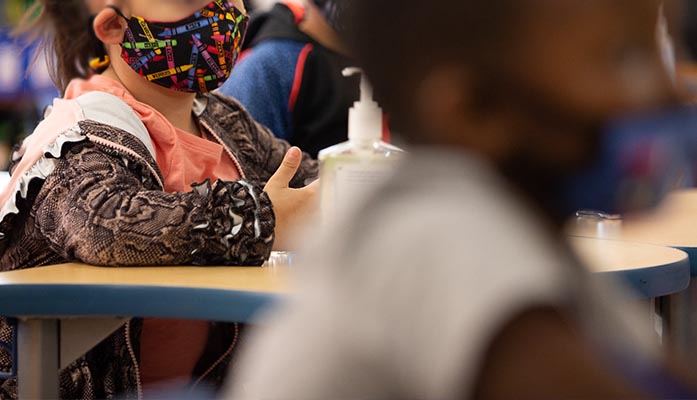
Two years and nine months after “15 days to slow the spread,” the Arizona Department of Health (AZDH) is again asking Arizonans to mask up.
On Tuesday, AZDHS issued a blog post advising indoor masking due to the high levels of COVID-19 infections in eight counties: Apache, Cochise, Gila, Greenlee, La Paz, Navajo, Pima, and Yuma counties.
AZDHS noted that the remaining seven counties have medium community levels.
The renewed guidance follows several years of scrutiny over the efficacy and safety of prolonged mask wearing.
Last April, State Senator Kelly Townsend (R-Mesa) highlighted studies expressing concern over the safety of the graphene coating present on masks. Some, but not all, masks contain graphene. The presence of the carbon atoms isn’t distinguished by any color or design on a mask, and manufacturer labels don’t always disclose its presence.
This past legislative session, lawmakers passed several bills to prohibit mask mandates. HB2616 requires schools to defer to parents when it comes to children wearing masks in schools. HB2453 prohibits government properties from requiring mask wearing on the premises.
Current COVID-19 case breakdowns are as follows: Maricopa County, over 168,000 cases; Pima County, over 41,800 cases; Pinal County, over 16,300 cases; Yavapai County, over 8,100 cases; Apache County, over 7,700 cases; Navajo County, over 7,300 cases; Mohave County, over 7,100 cases; Coconino County, over 6,300 cases; Yuma County, over 5,800 cases; Cochise County, over 5,300 cases; Gila County, 3,000 cases; Santa Cruz County, over 2,100 cases; La Paz County, over 500 cases; and Greenlee County, over 300 cases.
These case totals are less than the spikes that occurred in June and July. Weekly case totals are about 54 percent of what they were this time last year, and about 41 percent of what they were this time in 2020.
The highest number of cases week-over-week occurred throughout January earlier this year.
There have been over 31,700 deaths attributed to COVID-19 since the start of the pandemic. That’s about 962 deaths per month. The most deaths occurred between mid-December 2020 and the end of January 2021.
72 percent of all COVID-19 deaths occurred in those over the age of 65. 15 percent of deaths occurred in those between the ages of 55 and 65. Eight percent of deaths occurred in those between the ages of 45 and 54. Five percent of deaths occurred in those between the ages of 20 and 44. Approximately zero percent of deaths, a total of 73 persons, occurred in those under the age of 20.
Compared with pre-pandemic years, Arizonan deaths in 2020 and 2021 increased by an average of 10,600 both years. From 2012 to 2019, Arizona deaths increased every year by an average of over 1,600.
There were 60,100 deaths in 2019, 75,700 deaths in 2020, and over 81,400 deaths in 2021. It appears that this upward trend won’t continue this year. So far, there have been over 60,700 deaths (present data goes through October): a decline of over 5,000 compared with this same time last year. If death counts for November and December amount to the yearlong average of 6,000 deaths every month, then this year’s total deaths would amount to 72,900.
Nationally, the total number of mortalities increased by 17.6 percent in 2020 nationwide. In 2019, there were over 2.8 million deaths; in 2020, there were over 3.3 million deaths.
Deaths attributed to COVID-19 weren’t the sole cause of the spike. Of the near-504,000 difference, COVID-19 deaths accounted for over 345,000. Heart disease deaths increased by over 31,800; unintentional injury deaths increased by over 19,100; stroke deaths increased by about 9,000.
Deaths attributed to chronic lower respiratory diseases, cancer, and suicide decreased by nearly 8,700 altogether. Deaths from chronic lower respiratory diseases accounted for the greatest decline: over 5,300.
Prior to 2020, year-over-year death increases averaged over 35,500 from 2015 to 2019, or about 1.2 percent every year.
Corinne Murdock is a reporter for AZ Free News. Follow her latest on Twitter, or email tips to corinne@azfreenews.com.
by Terri Jo Neff | Dec 14, 2021 | News
By Terri Jo Neff |
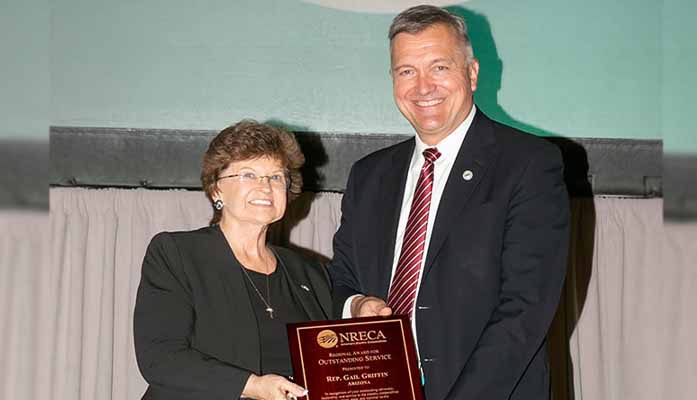
The National Rural Electric Cooperative Association has recognized Arizona State Rep. Gail Griffin with the organization’s 2021 Regional Award for Outstanding Service. The award recognizes outstanding service at the regional or state level to electric cooperatives.
Griffin (R-LD14) serves areas of Cochise, Graham, Greenlee, Graham, and eastern Pima counties. She was nominated for the award by Grand Canyon State Electric Cooperative Association (GCSECA) and Sulphur Springs Valley Electric Cooperative (SSVEC).
In nominating Griffin, SSVEC Chief Executive Officer Creden Huber touted the representative’s myriad efforts to assist Arizona’s Cooperatives, including her protection of the capital credits program, her willingness to work together to solve policy problems, and her understanding of cost and maintenance concerns involving pole attachments by cable and telecommunication companies.
Huber also noted Griffin’s appointment as chair of House Natural Resources, Energy & Water Committee gives her responsibility for ensuring legislation that may negatively impact Cooperatives is addressed in committee. Griffin previously chaired the Senate’s NREW Committee.
“For the past 20 years, your guidance, passion and dedication to the electric co-op family gained you a reputation as a great leader in the electric cooperative program,” NRECA CEO Jim Matheson wrote in the award notification. “Your strong commitment to the seven cooperative principles and work on advocacy, education and training had a profound effect throughout the State of Arizona.”
Griffin takes pride in being a strong proponent of Arizona’s electrical cooperatives throughout her time in the Legislature.
“They are consumer owned, not-for-profit entities that ensure their members are provided with reliable and affordable service,” she said upon receiving the award. “I will continue to champion electrical cooperatives for the vital role they play in strengthening rural Arizona.”
NRECA represents more than 900 consumer-owned, not-for-profit electric cooperatives, public power districts, and public utility districts across America.
Page 1 of 11